


When drivers replace a car battery, there is always a tempting option on the shelf:
“Should I try a refurbished car battery?”
The price is much lower, and the description often claims it can last for years.

If you are reading this, you probably have one or more of these questions:
- Are refurbished car batteries reliable, and how long do they actually last?
- Which is more cost-effective in the long run, a refurbished battery or a brand-new one?
- Can a refurbished starter battery safely power an RV or camping setup?
This article will walk you through three key points:
- What a refurbished car battery really is, and how it compares with a new battery.
- In which scenarios a refurbished car battery can save money, and when you should absolutely avoid it.
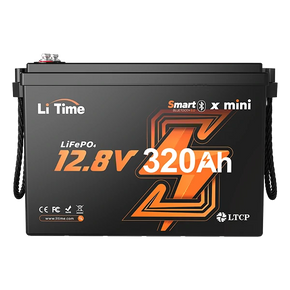
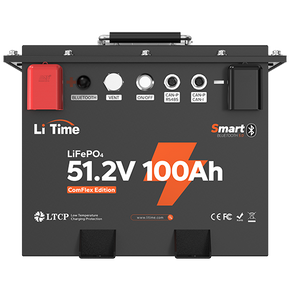
- Why many RV and mobile-power users upgrade to LiFePO₄ lithium batteries (for example, LiTime batteries) instead of experimenting with refurbished starter batteries.
Table of Contents
- 1.What Is a Refurbished Car Battery?
- 2.Refurbished Car Battery vs New Battery – Saving Money, but with Trade-offs
- 3.In What Situations Is a Refurbished Car Battery “Just About Acceptable”?
- 4.Starter Batteries ≠ Deep-Cycle Batteries – Why Many People Misuse Refurbished Units
- 5.Why Refurbished Car Batteries Are a Poor Choice for RV and Camping Power
- 6.Deep-Cycle Lead-Acid vs LiFePO₄ – How to Choose for Stable RV Power
- 7.Upgrading from a Refurbished Car Battery to a LiTime Lithium Battery – How RV Owners Think
- 8.A Simple Decision Checklist – Is a Refurbished Car Battery Right for You?
- 9.Conclusion – Refurbished for Emergencies, Lithium for the Long Haul
- 10.Refurbished Car Batteries – FAQ
1. What Is a Refurbished Car Battery?
In most shops, a “refurbished” or “reconditioned” car battery is simply a used lead-acid starter battery.
These old batteries go through a refurbishment process that includes inspection, cleaning, and recharging.
Only the units that meet the shop’s internal criteria are relabeled and sold as refurbished car batteries.
A typical refurbishment process can be broken into several steps.
First, technicians measure voltage, internal resistance, and cranking performance to screen out severely degraded batteries.
Second, they clean the terminals and case to remove corrosion and dirt.
Third, they top up or replace the electrolyte and use special equipment to “desulfate” the plates.
Finally, the battery is subjected to multiple charge–discharge tests.

Only batteries that stay within a certain voltage and discharge-capacity range are sold as “qualified refurbished batteries.”
Even then, the internal plates are already “veterans” that have been used for years.
The process can restore part of the performance, but it can never completely bring the battery back to a brand-new state.
Example reference:
- U.S. Environmental Protection Agency, Lead-Acid Battery Management – composition and end-of-life handling of lead-acid batteries.
2. Refurbished Car Battery vs New Battery – Saving Money, but with Trade-offs
1. Advantages of a Refurbished Car Battery
The first and most obvious advantage is price.
Industry information and shop quotes commonly show that refurbished batteries cost only about 50%–70% of a new battery of the same specification.
For drivers on a tight budget, this price gap is very attractive.
Second, refurbishment has some environmental benefits.
By refurbishing an old battery and using it for another one or two years, you reduce the number of batteries that need to be recycled or discarded.
Life-cycle assessment studies on lead-based products also suggest that extending service life can lower the environmental burden per unit of service.
Third, a refurbished battery can solve an urgent “I need the car running today” problem.
If your car has to be on the road right now and you do not want to pay full price for a new battery, a refurbished car battery can serve as a reasonably cost-effective stopgap solution.
Example reference (English):
- Life-cycle research on lead-based products in a Springer journal, with participation from hthe International Lead Association.
2. The Weak Points of a Refurbished Car Battery
Official and industry sources provide rough lifespan ranges for automotive batteries.
According to the American Automobile Association (AAA), under normal use and maintenance, a new car battery typically lasts about 3–5 years.
Industry experience suggests that refurbished batteries more often fall into the 1–3-year range, which is a clear difference.
Quality also varies widely among refurbishers.
Some shops test rigorously and follow a disciplined process, so their products are relatively reliable.
Others perform only a quick charge and then resell the battery, meaning lifespan and performance depend heavily on luck.
Warranty terms are another common pitfall.
New batteries usually come with a limited warranty of one to three years.
Refurbished batteries may offer only a few months of coverage, or even just a short exchange period.
For people who commute daily, drive for ride-hailing, or run cargo deliveries, these uncertainties are real risks.
If the battery suddenly fails, the cost is not just “buying another battery.”
It may also include lost work hours, towing fees, and potential safety issues.
Refurbished Car Battery vs New Battery – Comparison Table
The lifespan ranges below draw on AAA’s guidance on car-battery life, combined with typical industry experience for refurbished units.
| Metric | Refurbished Car Battery (Reconditioned Lead-Acid) | New Lead-Acid Car Battery (Starting Battery) |
|---|---|---|
| Typical price | About 50%–70% of a new battery | 100% (baseline) |
| Typical service life | Roughly 1–3 years in many real-world cases | Average of about 3–5 years per AAA |
| Performance consistency | Highly variable; strongly affected by the battery’s previous history | Performance closer to the manufacturer’s rated specifications |
| Warranty | Often short and inconsistent; sometimes only a few months | Usually 1–3 years of limited warranty |
| Environmental profile | Extends battery life and reduces the number of units discarded per service hour | Requires new production; depends on high recycling rates to limit impact |
3. In What Situations Is a Refurbished Car Battery “Just About Acceptable”?
1. An Older Car You Plan to Sell or Scrap in One to Two Years
If the vehicle itself is already quite old, and you do not plan to keep it for many more years, your goal may simply be to keep it running at low cost for a while longer.
As long as you are not too picky about starting comfort, and occasional slow cranking does not bother you, a refurbished car battery can be a reasonable option.
For example, older pickups or vans in rural areas often have relatively low resale value.
The owners care more about “getting another couple of years out of it” than “perfectly stable performance.”
In this scenario, a refurbished battery can make financial sense.

2. A Seldom-Driven Second Car or Project Car
Many households have one main daily-driver and another older car that is rarely used.
The second car might only be started a few times a year, kept mainly as a backup for peace of mind.
If it is not the only means of transport, and a breakdown would not seriously affect your income, using a refurbished battery in that vehicle is understandable.
The same logic applies to enthusiasts with project cars.
Some of these vehicles spend long periods parked in a garage.
The owner may be more concerned about keeping costs down than about having the most robust battery on the market.
3. Extremely Tight Budget – You Just Need the Car to Run
There is also a very practical situation.
If you simply cannot afford a new battery right now but still need the car for work, family, or daily errands, a refurbished car battery can act as a temporary solution.
The key is to be honest with yourself: you are buying a short-term fix, not a long-term investment designed for three to five years.
As long as your expectations match reality, you will not feel “cheated” by the refurbished product.
4. Starter Batteries ≠ Deep-Cycle Batteries – Why Many People Misuse Refurbished Units
Many drivers hear the word “battery” and assume all types are similar.
In practice, starter batteries and deep-cycle batteries are designed with very different goals in mind.
Understanding this difference helps you avoid using a refurbished car battery in the wrong application.
1. What Does a Starter (Cranking) Battery Do?
The core job of a starter battery is to deliver a large burst of current in a very short time.
It needs to spin the starter motor fast enough for the engine to fire up within a few seconds.
During normal driving, only a small fraction of the battery’s capacity is discharged.
Once the engine is running, the alternator quickly recharges the battery.
Because of this operating pattern, a starter battery usually works in “shallow-cycle” mode.
The internal plates are relatively thin, which helps achieve high instantaneous current output.
If you frequently discharge it from 100% down to 10% and then recharge it, the battery will age very quickly.
Under deep-cycle use, its lifespan is far shorter than its design life.
2. What Does a Deep-Cycle Battery Do?
A deep-cycle battery is engineered for a completely different purpose.
It is meant to deliver power steadily over a long period and to withstand repeated charge–discharge cycles.
Typical applications include RV house batteries, marine house banks, and trailer power systems.
According to materials from Ohio State University Extension, deep-cycle lead-acid batteries can usually tolerate about 200–400 deeper discharge cycles.
A conventional starter battery used in deep-cycle conditions may show obvious degradation in fewer than 100 such cycles.
This highlights the fundamental differences in structure and cycle-life design.
Example references:
- Ohio State University Extension, AEX-892.2.02 “Battery Safety for Trainers and Supervisors”.
- University of Cincinnati, class material "Deep Cycle Battery Manufacture".
Starter Battery vs Deep-Cycle Battery – Comparison Table
| Metric | Starter Battery (Starting Battery) | Deep-Cycle Lead-Acid Battery |
|---|---|---|
| Main purpose | Short bursts of very high current to start an engine | Provide power over longer periods and tolerate repeated cycling |
| Typical operating pattern | Shallow discharge, quickly recharged by the alternator | Deeper discharge and recharge as part of everyday use |
| Plate design | Thinner plates to maximize instantaneous current | Thicker plates to maximize durability |
| Deep-cycle lifespan | Often struggles to exceed ~100 deep cycles | Roughly 200–400 deep cycles in many designs |
| Typical applications | Passenger-car and truck starter batteries | RV house banks, boats, trailers, some backup systems |
The key takeaway is simple.
Most refurbished car batteries are, in fact, refurbished starter batteries.
They are not designed as long-duration energy-storage batteries.
Using them as RV house batteries is like forcing a sprinter to run a marathon.
5.Why Refurbished Car Batteries Are a Poor Choice for RV and Camping Power
Many RV and camping enthusiasts start with a money-saving idea.
“If I buy a few cheap refurbished car batteries and add an inverter, don’t I have an RV power system?”
On paper, the battery cost looks low.
In practice, the experience and total cost often make this the most expensive option.
Consider the typical loads in an RV or camping setup.

A fridge, lights, fans, water pump, and phone or laptop chargers are used for hours every day.
Some users also run a CPAP machine at night.
All of these impose long-duration loads that translate into frequent deep discharges – a very demanding environment for any battery.
As noted earlier, starter batteries are not built for repeated deep cycling.
A refurbished car battery has already gone through one full life as a starter battery and then been brought back into service.
In a high-frequency deep-cycle environment, its capacity will decline quickly.
At first it might last through the night, then only half the night, and eventually it fails before morning.
The “hidden costs” are even more significant.
Losing power in the middle of the night can stop your fridge, fan, or CPAP machine, directly affecting comfort and health.
On a remote campsite or back road, a sudden loss of power may also create safety concerns.
Chasing short-term savings can end up costing you far more in reliability and peace of mind.
6. Deep-Cycle Lead-Acid vs LiFePO₄ – How to Choose for Stable RV Power
Once you look at RV and camping power seriously, you face a key decision.
Should you stay with deep-cycle lead-acid batteries, or upgrade to LiFePO₄ lithium batteries?
The following simplified comparison helps build an intuitive picture.
Academic and engineering studies generally agree that LiFePO₄ offers much longer cycle life than traditional lead-acid chemistries.
For example, a Princeton University paper on LFP cells reports relatively small capacity loss even after more than 1,000 cycles.
Other long-term tests estimate total life in the range of several thousand cycles under appropriate conditions.
Deep-Cycle Lead-Acid vs LiFePO₄ – Comparison Table

The table below shows typical ranges, comparing a reasonably good deep-cycle lead-acid battery with a quality LiFePO₄ battery.
Deep-cycle lead-acid cycle data are based on Ohio State University Extension; LiFePO₄ cycle ranges draw on multiple university and journal studies.
| Metric | Deep-Cycle Lead-Acid Battery | LiFePO₄ Lithium Battery (e.g., LiTime) |
|---|---|---|
| Recommended depth of discharge (DOD) | Commonly kept at ≤ ~50% | Often usable to 100% of capacity |
| Typical cycle life | About 200–400 deeper cycles(2~3years) | Commonly 4,000+ cycles or more in tests(10 years) |
| Charge/discharge efficiency | Around 75%–85% | Up to roughly 95% |
| Weight and volume | Heavier and bulkier at the same capacity | Lighter and more compact for the same capacity |
| Maintenance | Requires proper charging; some types need water top-ups | Essentially maintenance-free, with BMS protection |
| User experience | Noticeable voltage sag; end-of-discharge feels “soft” | Flatter voltage curve; better for inverter loads |
Example references:
- Ohio State University Extension – deep-cycle battery information.
- Princeton University – LFP cycle-life research paper.
7. Upgrading from a Refurbished Car Battery to a LiTime Lithium Battery – How RV Owners Think

LiTime is one of the more frequently discussed LiFePO₄ brands in the RV community in recent years.
It offers 12 V, 24 V, and other lithium-battery models for RVs, marine use, golf carts and home backup power.
Many overseas reviews note that LiTime batteries have clear advantages in weight and cycle life compared with similar-capacity lead-acid batteries.
Take a 12 V 100 Ah LiFePO₄ battery as an example.
With proper use, you can safely draw more than 80 Ah of usable capacity.
If you cycle it once a day, it can still retain a high percentage of capacity after years of service.
For people living in their RVs or traveling frequently, this level of predictability is crucial.
If you tried to achieve the same experience using refurbished car batteries, you might need to replace them every year or even sooner.
Each replacement involves hauling heavy batteries, checking wiring, and facing the risk of mid-trip failure.
Over the long run, that pattern is unlikely to be cheaper than investing once in a LiFePO₄ system.

Real-world user stories make the contrast even clearer.
Some RV owners start with two refurbished lead-acid batteries to power a fridge and lights.
After a little more than a year, capacity drops sharply, and night-time outages become common.
They then switch to LiFePO₄ and finally say goodbye to “waking up at 3 AM because the power died.”
8. A Simple Decision Checklist – Is a Refurbished Car Battery Right for You?
Step one: clarify what you need the battery to do.
If it is only for starting an old car, driving short distances, and you have alternative transport, a refurbished car battery can be a money-saving but riskier option.
If you want long-term power for an RV or camping setup, do not rely on refurbished starter batteries.
Step two: ask how critical this power system is to your life.
If a battery failure only means one extra trip to the repair shop, that is a small problem.
If failure will affect your job, business income, or health, that is a big problem.
In “big problem” scenarios, the safer option should always outrank the cheaper one.
Step three: stretch the time horizon and calculate total cost.
A refurbished battery may need replacement every one to two years.
A deep-cycle lead-acid battery, used correctly, might work for around three years.
A LiFePO₄ battery can often deliver thousands of cycles while maintaining substantial usable capacity.
If you are a heavy RV or camping user, the real comparison is “deep-cycle lead-acid vs LiFePO₄ lithium,” not “which refurbished car battery is cheapest.”
These are two completely different levels of solution.
9. Conclusion – Refurbished for Emergencies, Lithium for the Long Haul
To sum up, a refurbished car battery is essentially a reconditioned lead-acid starter battery.
It is genuinely cheaper and can help in situations involving older cars, backup vehicles, or very tight budgets.
However, its lifespan and reliability are generally weaker than those of a new battery.
It is especially unsuitable as the main power source for RV and camping setups that require deep cycles and frequent use.
In those scenarios, even a proper deep-cycle lead-acid battery is far more stable than a refurbished starter battery.
LiFePO₄ lithium batteries (such as LiTime) go a step further, offering clear advantages in longevity, user experience, and long-term cost.
If your only goal is “keeping an old car alive for another year or two,” a refurbished car battery is worth considering.
If your goal is “having home-like power comfort inside an RV,” then you should start planning with deep-cycle lead-acid or, better yet, LiFePO₄.
Treat refurbished car batteries as emergency solutions, not as long-term house batteries for RV living.
That way, you will not expect a refurbished battery to do a job it was never designed to handle.
10. Refurbished Car Batteries – FAQ
Are refurbished car batteries as good as new ones?
No. Refurbished batteries can regain part of their capacity but rarely match a new unit in reliability or lifespan.
Data from the American Automobile Association (AAA) show that new lead-acid batteries last about 3–5 years, while refurbished ones usually last 1–3 years.
How long can a refurbished car battery last?
Most refurbished car batteries provide service for roughly one to three years under light to moderate driving conditions.
The U.S. Environmental Protection Agency notes that reused lead-acid cells degrade faster due to prior sulfation and material fatigue.
Can car batteries be refurbished?
Yes, technicians can recondition lead-acid starter batteries by cleaning terminals, desulfating plates, replacing or refreshing electrolyte, and performing multi-stage charging cycles.
However, the Ohio State University Extension explains that such processes can only restore limited capacity and do not reverse permanent material loss.
What is a refurbished car battery called?
It is often referred to as a “reconditioned battery” or “second-life lead-acid battery.”
Government and academic publications categorize these as reused or recycled batteries within the secondary-battery lifecycle in circular-economy discussions.

