



48V LiFePO4 Lithium Batteries
Discover LiTime’s 48V LiFePO4 battery collection for long-lasting power and high efficiency—ideal for solar, golf carts, and backup systems. Upgrade to a reliable 48v lithium ion battery and shop now!











FAQ
What are the benefits of using a 48V LiFePO4 battery over other types?
A 48V LiFePO4 battery delivers more usable power with higher efficiency and lower system current than lower-voltage banks or lead-acid options.
At higher voltage, you get the same watts with much less amps—meaning less heat loss, thinner/cheaper cables, and less voltage drop over distance, which is ideal for high-demand loads (solar, inverters, EV/golf carts). LiFePO4 chemistry also offers long cycle life (often 4,000+ cycles) and much lower weight than traditional lead-acid, reducing replacements and improving performance.
Recommended article: 48V VS 12V Battery Systems: What’s the Difference
What's the difference between 48V and 51.2V LiFePO4 batteries?
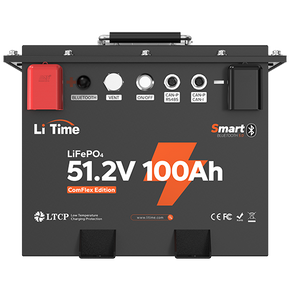
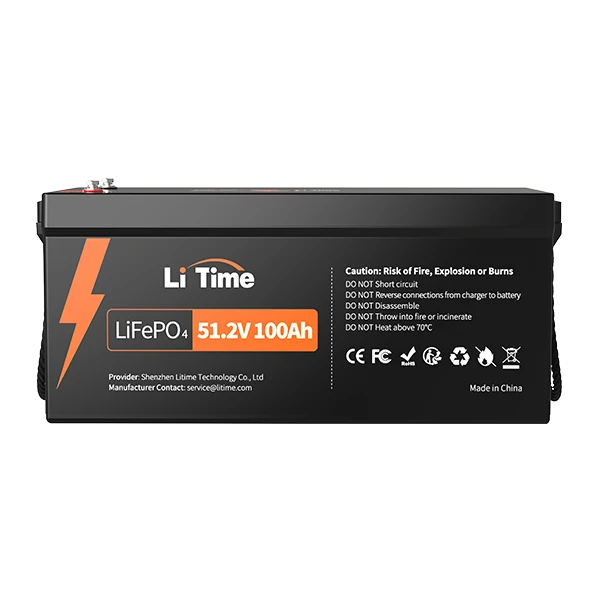
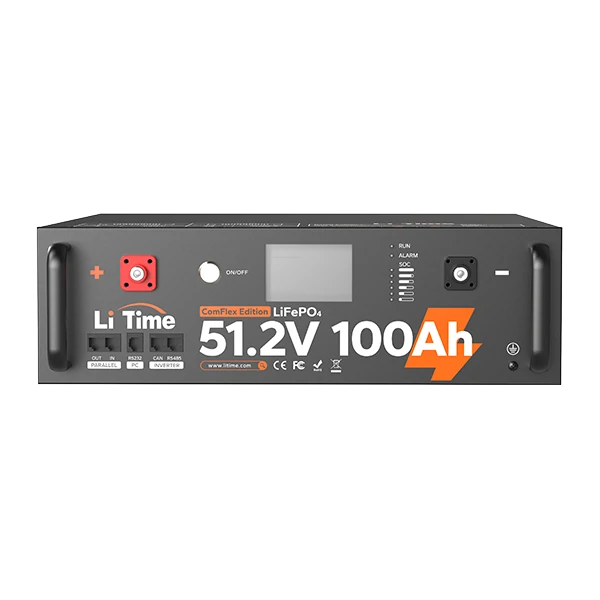
The 51.2V LiFePO4 Battery Is a kind of powerful battery designed to replace lead-acid battery.
Our 51.2V LiFePO4 battery is commonly called a "48V" battery to align with standard terminology in the industry. Many customers and applications have long used 48V lead-acid batteries, so maintaining this naming convention helps with easier understanding and compatibility.
Technically, the battery’s nominal voltage is 51.2V, reflecting the true voltage output of lithium iron phosphate (LiFePO4) cells, which operate at 3.2V per cell. By keeping the "48V" label, customers familiar with traditional 48V setups can seamlessly upgrade to lithium technology, enjoying the benefits of higher capacity, longer life, and more consistent performance without confusion about compatibility.
So while our battery may be called "48V," rest assured it’s engineered for more powerful and efficient output, making it the ideal replacement for conventional lead-acid systems in any 48V-compatible application.
Read on What's the Differences Between 48V VS 51.2V batteries for more information.
What should you do when you receive a new battery?
When you receive your battery, it may have a low state of charge (SOC) due to transportation and storage. To ensure optimal performance, charge the battery immediately to avoid over-discharge.
Batteries with Bluetooth functionality may arrive in an off state, showing a terminal voltage between 3V and 5V, and you won't be able to connect them to your phone. This is because they are shipped powered off, similar to mobile phones, to minimize self-discharge and extend the battery's lifespan.
There are 2 ways to solve the problem: using an AC-DC lithium battery charger or an MPPT solar charge controller to charge it for 3 to 10 seconds, then the battery can be used normally.
If you plan to store the battery for a long time, charge it to a SOC of 50% and perform maintenance every three months. This will help preserve its functionality and performance.
How many cycles can I expect from a 48V lithium ion battery?
LiTime's 48V LiFePO4 batteries are rated for 4,000 cycles at 100% depth of discharge, giving them an expected lifespan of around 10 years with regular use.
Can I use a 48V LiFePO4 battery with my solar power setup?
Yes, these 48v lithium batteries are compatible with solar setups. For best performance, use an MPPT solar charge controller designed for LiFePO4 batteries to maximize charging efficiency.
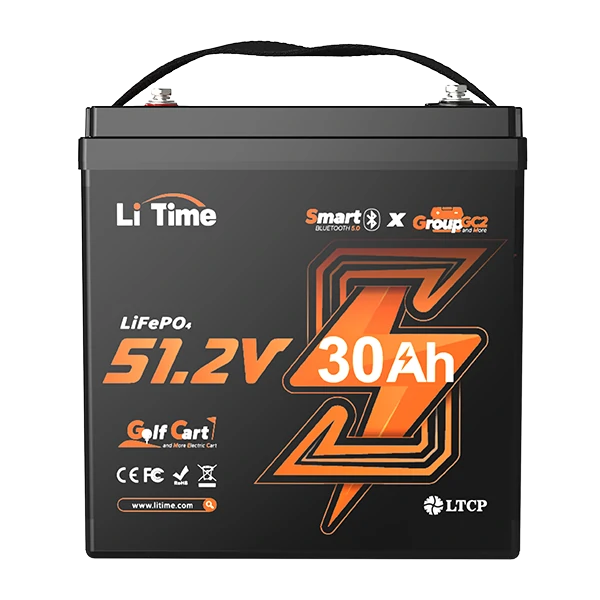
Is a 48V LiFePO4 battery safe for my golf cart?
Yes, LiTime 48 volt lithium batteries are well-suited for golf carts, providing a steady, reliable power source without the maintenance or risk of acid spills associated with lead-acid batteries.
LiFePO4 is an inherently safe chemistry and the most stable lithium-type battery on the market. LiTime lithium cells are certificated by FCC, CE, RoHS, and UN38.3 to ensure their quality and safety.
All LiTime LiFePO4 batteries come with an internal What is LiFePO4 Battery Management System (BMS) – LiTime-US, which protects against under-voltage during discharge, over-voltage during charge, over-current during discharge, over-temperature during charge and discharge, and short-circuit protection – protects battery cells from damage. Additionally, LiTime LiFePO4 Lithium batteries have been tested to be free from the risk of fire.
Can I connect multiple 48V LiFePO4 batteries to increase capacity?
Yes, multiple batteries lithum ion 48V can be connected in parallel to increase the overall capacity, although series connections to increase voltage are not recommended for these batteries.
To connect batteries in series or parallel, they must meet the following conditions:
- They should be identical batteries with the same capacity (Ah) and battery management system (BMS) rating (A).
- They must be from the same brand, as lithium batteries from different brands have unique BMS configurations.
- They should be purchased within a close timeframe (ideally within one month).
Is it bad to completely drain a LiFePO4 battery?
It is not recommended to fully discharge LiFePO4 batteries. Although these batteries can handle deep discharges better than lead-acid batteries, frequently discharging them to 0% can reduce their lifespan and performance. It's best to recharge the battery before it drops below a very low level, ideally at 20% or higher.
Is it OK to fully charge LiFePO4 batteries?
Yes, LiTime LiFePO4 batteries can be charged to 100%. LiFePO4 batteries are designed to handle full charges without significant risk of damage. However, for optimal longevity, it’s often recommended to keep the battery's SOC between 20% and 80% for regular use.
How to charge the LiTime LiFePO4 48V lithium batteries?
Here are the charging options for LiTime lithium golf cart batteries:
1)AC-DC lithium battery charger: Choose a charger with the correct charging voltage to safely charge the battery.
2) Solar panels: When using solar panels, ensure you connect a solar charge controller for safe charging.
3) Alternator/Generator:
a. If your alternator or generator supports DC output, a DC-to-DC charger is needed to connect the battery.
b. If your alternator or generator supports AC output, use a compatible battery charger as recommended in the product manual to safely connect the battery and generator.
Due to the different charging requirements compared to lead-acid batteries, we recommend using a LiFePO4 lithium battery charger for charging.