



12V LiFePO4 Lithium Batteries
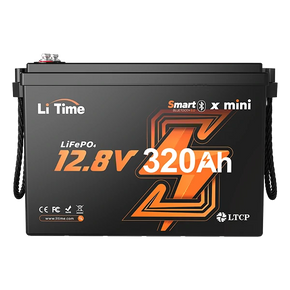
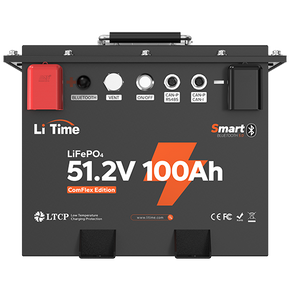
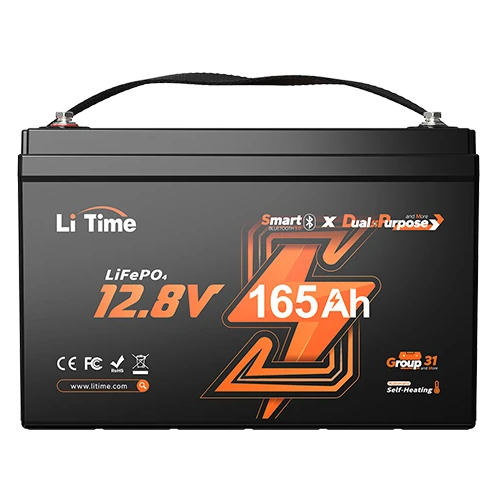
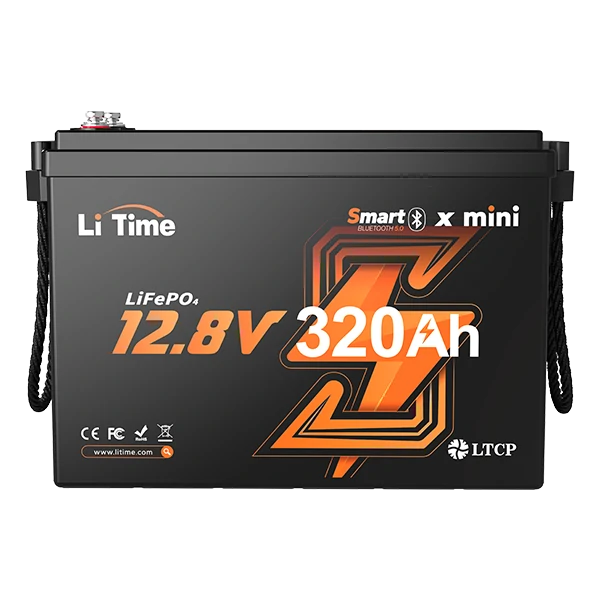
Upgrade your power setup with LiTime 12V batteries built on reliable LiFePO4 chemistry. Choose from 12Ah to 460Ah capacities and multiple sizes. Each 12V lithium battery delivers steady voltage for RVs, boats, trolling motors, off-grid solar, and backup power.







FAQ
Are LiTime 12V LiFePO4 batteries safe?
Yes. LiFePO4 is an inherently safe chemistry and the most stable lithium-type battery on the market. LiTime lithium cells are certificated by FCC, CE, RoHS, and UN38.3 to ensure their quality and safety.
All LiTime 12V LiFePO4 batteries come with an internal Battery Management System, which protects against under-voltage during discharge, over-voltage during charge, over-current during discharge, over-temperature during charge and discharge, and short-circuit protection – protects battery cells from damage.
Additionally, LiTime LiFePO4 Lithium batteries have been tested to be free from the risk of fire.
Is it OK to charge 12V Lithium ion batteries to 100%?
Yes, LiTime li-ion 12 Volt batteries can be charged to 100%. LiFePO4 batteries are designed to handle full charges without significant risk of damage. However, for optimal longevity, it’s often recommended to keep the battery's SOC between 20% and 80% for regular use.
Is it bad to completely drain a 12V deep discharge battery?
It is not recommended to fully discharge lithium 12V batteries. Although these batteries can handle deep discharges better than lead-acid batteries, frequently discharging them to 0% can reduce their lifespan and performance. It's best to recharge the battery before it drops below a very low level, ideally at 20% or higher.
Is it OK to leave a LiTime 12 Volt lithium battery on the charger?
Although it is generally safe to leave a LiFePO4 battery on the charger, as both the charger and the battery itself have protection mechanisms to prevent overcharging, it’s still best to monitor the charging process.
Once the 12 volt battery is fully charged, disconnecting it promptly is recommended to avoid unnecessary damage.
For convenience, LiTime offers chargers with Anderson connectors, allowing you to stop charging simply by unplugging the Anderson connector without needing to separate the battery terminals from the screws after charging.
However, for optimal safety, it’s advised to first unplug the AC plug before disconnecting the Anderson connector.
Can I charge LiTime 12V lithium batteries with solar panels?
You can charge a LiTime 12 Volt deep cycle battery with solar panels by using a solar charge controller between the panel and the battery to regulate charging and prevent overcharge.If you need, learn more about What Size Solar Panel Do I Need to Charge a 12V Battery.
In addition to the solar panels, LiTime lithium batteries can also be charged by
AC-DC Lithium Battery Charger: Select a charger with the appropriate voltage to safely charge the battery.
Alternator/Generator:
- DC Output: If your alternator or generator provides DC output, you will need a DC-to-DC charger to connect the battery.
- AC Output: If it provides AC output, use a compatible battery charger as specified in the product manual to safely connect the battery and generator.
What's the warranty of the LiTime 12v deep rechargeable battery?
LiTime offers a 5-year warranty on our 12V lithium batteries. We also provide returen and refund service.
- 30-day return policy: You can request a return for any item within 30 days of receiving it for a full refund, provided it is in original condition.
- Free return shipping for LiTime errors: If the return is due to an error on our part (e.g., defective item or wrong shipment), we will cover the return shipping costs.
- Refund processing: Once we receive and inspect your returned item, approved refunds will be processed within 3 business days.
- Proof required for damaged items: If your item arrives damaged or defective, you must provide photos or videos as proof to initiate a return.
- Customer pays for return shipping for personal reasons: If you are returning an item due to a change of mind, you will be responsible for the return shipping costs.
- Order cancellation: You can cancel your order within 1-2 business days for a full refund if the order has not yet shipped. If it has shipped, you will need to refuse the package for a refund.
For more details, please visit our Return & Refund Policy.
What is the difference between 12V battery and 48V battery systems?
12V battery systems are simpler and widely used for automotive and smaller installs, while 48V systems are typically better for higher-power, more efficient setups.
Because watts = volts × amps, LiTime shows a 48V 100Ah system can provide about 4800W, while a 12V 100Ah system provides about 1200W. To deliver the same 4800W, 48V draws ~100A but 12V would need ~400A, so 48V usually allows thinner wiring and less voltage drop over distance. View more: 48V VS 12V Battery Systems.
How to Choose the Right 24V and 12V Lithium Battery for Your Mobile Kitchen?
Choose 12V or 24V based on your cooking style and appliance wattage—LiTime notes induction cooktops/electric grills (about 1000–1800W) are the biggest power draws.
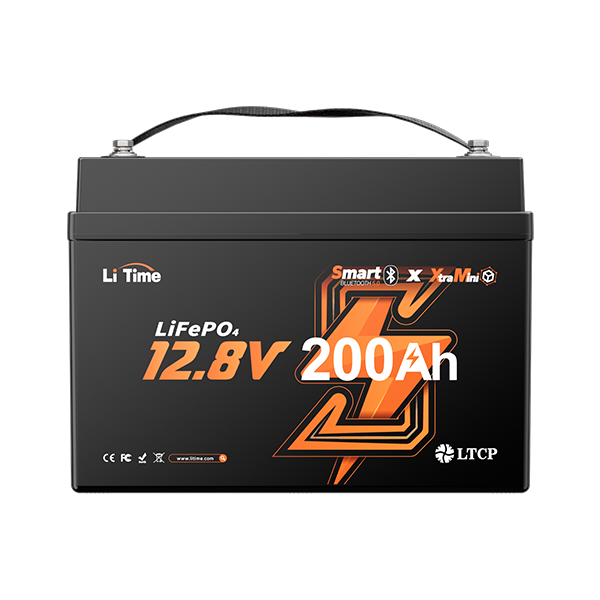
For occasional cooking, an entry 12V 100Ah (~1280Wh) setup can cover basic needs, while frequent cooking with a ~1500W cooktop is better matched to about 2kWh (e.g., 12V 200Ah ~2560Wh) plus a pure sine wave inverter sized above your largest load (LiTime suggests 1500W → 2000W+).
For RV/family “multi-appliance” and long-duration use, LiTime recommends a 24V system for lower current (thinner cables/less heat), improved stability, and easier expansion. Full guide: Choose the Right Lithium Battery for Your Mobile Kitchen.