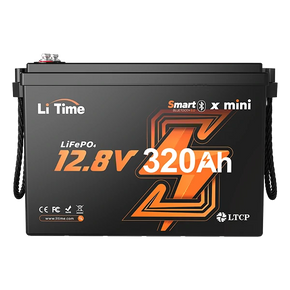


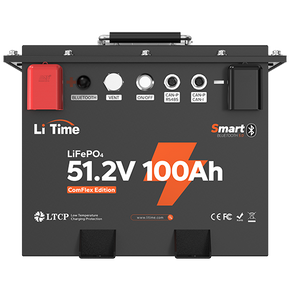

What is Self-Recovery overcurent protection? In the application scenarios of lithium batteries—whether for RV camping, home energy storage, or driving trolling motors—the BMS (Battery Management System) is the core safety line. Among its many functions, the one that brings the most “peace of mind” yet is often misunderstood is the “Automatic Self-Recovery Overload Protection” function.
Many users panic when the battery suddenly shuts down, thinking it is broken. In fact, this is often the BMS silently protecting your equipment. Today, LiTime will use two common scenarios to help you understand this “intelligent self-recovery maximum overcurrent protection” technology.
Part1: What does Battery Overcurrent Protection Mean?
.webp)
Battery overcurrent means the battery is carrying more current (amps) than it is designed to handle safely, which can happen because of excessive load, a short circuit, faulty wiring, or too much charging current.
Battery Self-Recovery Overcurrent Protection is the built-in safety feature, usually managed by the BMS, that automatically limits or cuts off the current when it exceeds the battery’s safe rated range, helping prevent overheating, damage, and system failure.
Part2: Why Do We Need Overcurrent Protection?
Although lithium batteries have high energy density, they are most vulnerable to two things: short circuits and overcurrent (overload) . If the current continuously exceeds the battery’s safe threshold, the internal temperature rises sharply, which can damage the cells or even cause safety hazards.
The design purpose of the self-recovery function is to find a balance between “protecting the equipment” and “not affecting the user experience”—it doesn’t shut down permanently but gives the user a chance to “correct the error.”
Part3: Two Cases to Understood Overcurrent Protection
Case 1: The “Multi-Device Conflict” in RVs/Camping

Scenario:
Imagine you are enjoying a cozy camping trip in your RV. You are using a LiTime lithium battery to power an electric kettle, which is steadily boiling water at its rated power of 1000W. At this moment, your partner returns from fishing, wet and cold, and plugs in a 2000W hairdryer.
What Happened?
Kettle (1000W) + Hairdryer (2000W) = Total Power 3000W.
This value instantly exceeds the maximum continuous output power set by the battery BMS (e.g., for a 12V 100Ah battery, the continuous power is usually around 1200W-1500W).
At this point, the BMS acts like a meticulous power manager, instantly triggering overload protection and cutting off the output.
How Does Self-Recovery Work?
You don’t need to go to the compartment to manually reset the switch. The system enters a waiting period (usually 30 seconds) after the shutdown.
- Troubleshooting: You unplug the hairdryer (removing the overload source).
- Auto-Recovery: After the 30-second countdown, the BMS detects that the load has returned to normal, and the kettle automatically resumes power to continue boiling water.
Case 2: The “Stall Protection” in Marine Scenarios

Scenario:
You are driving a trolling motor powered by a LiTime lithium marine battery while fishing on the lake. When passing through a patch of weeds, the propeller suddenly gets tightly entangled, causing the motor to stop spinning.
What Happened?
When the motor is running normally, the current is stable. However, in a stall condition, the motor acts like a “low-resistance conductor,” and the current instantly surges to several times or even more than ten times the normal value (stall current).
If this huge surge current lasts for a few seconds, it will burn the motor coils or the battery’s MOSFETs. When the BMS detects the instantaneous high current (exceeding the peak current threshold), it immediately activates overload/short circuit protection and cuts off the power.
How Does Self-Recovery Work?
- Correction Window: The battery stops output, giving you a valuable 30 seconds.
- Action: You use these 30 seconds to quickly lift the trolling motor and clear the entangled weeds.
- Auto-Restart: After the 30-second protection period, if the load returns to normal (no short circuit or stall), the BMS automatically lifts the protection, and the motor resumes operation automatically.
- Smart Retry: If the weeds are not completely cleared and the motor stalls again upon restart, the battery will protect itself again. This “protection-attempt-reprotection” logic ensures that neither the battery nor the motor burns out due to human oversight.
Part3: Deep Dive: The 30-Second of LiTime BMS
You may have noticed that in the two cases above, “30 seconds” is the key number. Why 30 seconds?
- Enough Time to Correct: 30 seconds is sufficient for a user to unplug a device or lift a trolling motor out of the water to clear weeds. Too short (e.g., 5 seconds) leaves no time to react; too long (e.g., 5 minutes) affects the user experience.
- Enough Time to Cool Down: After cutting off high current, the BMS chip and MOSFETs need a brief cooling-off period. 30 seconds is a well-established “cool-down and retry” cycle in industrial design, protecting the hardware while achieving a seamless recovery.
Conclusion
For users, a battery is not just a box for energy storage; it is a reliable “power manager.” All LiTime lithium battery series are equipped with an advanced smart BMS system, featuring comprehensive protection against overcurrent, short circuit, over-voltage, under-voltage, and over-temperature, all of which support the self-recovery function.
Whether it’s multiple appliances running simultaneously in an RV or sudden stall situations on the water, LiTime ensures your equipment operates in the safest condition. Even if protection is triggered, there is no need for professional tools or factory returns. Simply troubleshoot the issue, wait a moment, and it will be back to full strength.

