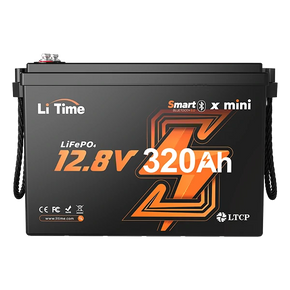


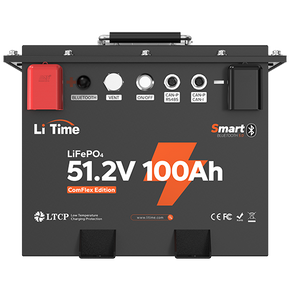

Have you ever experienced your RV battery suddenly running out of power during a camping trip? Or felt uncertain about your boat’s remaining battery capacity while out on the water? For anyone relying on off-grid power systems, having an accurate and reliable battery monitoring solution is essential.
Today, two major solutions are available: battery monitors with physical displays and modern Bluetooth smart shunts. What are the differences between them? Which option is better for your RV, marine, or off-grid system?
This guide explains how smart shunts and traditional battery monitors work, compares their installation methods, features, user experience, and cost, helping you choose the right solution.
Part1: What is a Smart Shunt?
A smart shunt represents the next generation of battery monitoring. It integrates high-precision current sampling and voltage measurement with wireless communication, eliminating the need for a separate physical screen.
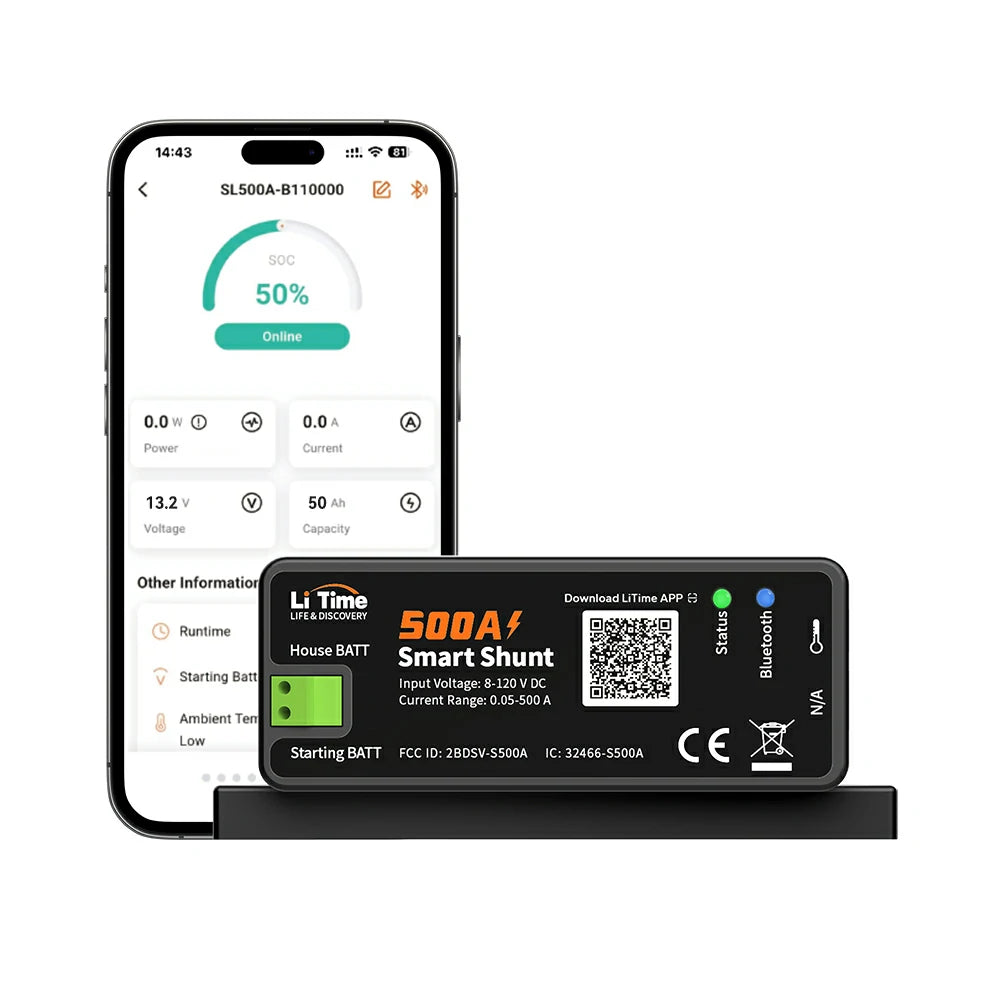
Take the LiTime 500A Smart Battery Shunt as an example. The unit itself houses a high-precision sampling resistor and a Bluetooth 5.0 module. It connects directly to the negative terminal of your battery bank, collecting data on voltage, current, and temperature. This information is then calculated into real-time SOC (State of Charge) and remaining capacity, which is beamed wirelessly to a dedicated app on your smartphone or tablet. By turning your mobile device into a portable dashboard, it removes the constraints of wired connections and fixed displays.

Part2: What is a Battery Monitor?
The traditional battery monitor is a wired system that typically comes as a kit: a standard battery shunt, a dedicated display screen, and the necessary communication cables. A classic example is the LiTime 500A Battery Monitor with Shunt.
In this setup, the shunt sits in the main negative circuit to gather data, which is then sent via a physical cable to a display mounted in a fixed location. To check your battery’s status—such as voltage, current, or remaining power—you must physically walk over to where the screen is installed. It’s a robust, "always-on" solution that doesn't rely on secondary devices like phones.
Part3: Key Differences: Smart Shunt vs Battery Monitor
we will break down their key differences across components, installation, data access, and performance features to help you clearly identify which solution best fits your RV, marine, or off-grid power system.
| Feature | Smart Shunt | Battery Monitor |
|---|---|---|
| Core Components | Integrated Shunt + Mobile App | Shunt + Dedicated Screen + Cables |
| Primary Display | Your Smartphone or Tablet | Fixed Physical Display |
| Installation | Simple. No signal wires or hole-drilling required. | Moderate. Requires mounting the screen and routing cables. |
| Data Access | Remote. Monitor from up to 15m away via Bluetooth. | Local. Must be at the screen's location. |
| Advanced Features | High. Includes historical charts and custom alerts. | Basic. Focuses on real-time core parameters. |
| Data Logging | Comprehensive. Tracks discharge curves and usage habits. | Minimal. Usually shows real-time data only. |
| Cost | Slightly higher (offset by easier installation). | Generally lower (but adds installation labor). |
Part4: How to Install and Use a Smart Shunt and Battery Monitor
Smart Shunt Installation
- Disconnect battery power and install the smart shunt in the negative circuit.
- Connect the voltage sensing wire.
- Secure the device with screws or cable ties without installing a separate display.
- Restore power and begin monitoring.
Once powered, you simply download the LiTime app, pair it with the shunt via Bluetooth, and you’re ready. Beyond just reading numbers, the app often allows you to set battery type, voltage, and review historical data to optimize your energy management.
Traditional Battery Monitor Installation
- Disconnect the battery power and install the shunt in the battery negative circuit.
- Connect the voltage sensing wire between battery positive and the shunt.
- Select a location for the display and install the screen.
- Connect the signal cable between the shunt and display.
- Restore power and complete calibration.
Daily operation requires checking the fixed display to read battery information.
Part5: Which One Should You Choose?
When to Choose a Traditional Battery Monitor
Pick a standard battery monitor if you’re on a tight budget and want an affordable basic unit. It also suits users who prefer physical dash displays over phone operation, as well as industrial cabinet installations where phones are inconvenient.
When to Choose a Smart Shunt
Opt for a smart shunt to skip complicated wiring and drilling. You can check battery data wirelessly anywhere within Bluetooth coverage, and access historical charts to analyze power consumption. It’s ideal for anyone seeking a neat, app-controlled wire-free system.
LiTime Product Recommendations
With over 15 years of experience and 350,000 users worldwide, LiTime offers industry-leading solutions for both preferences:
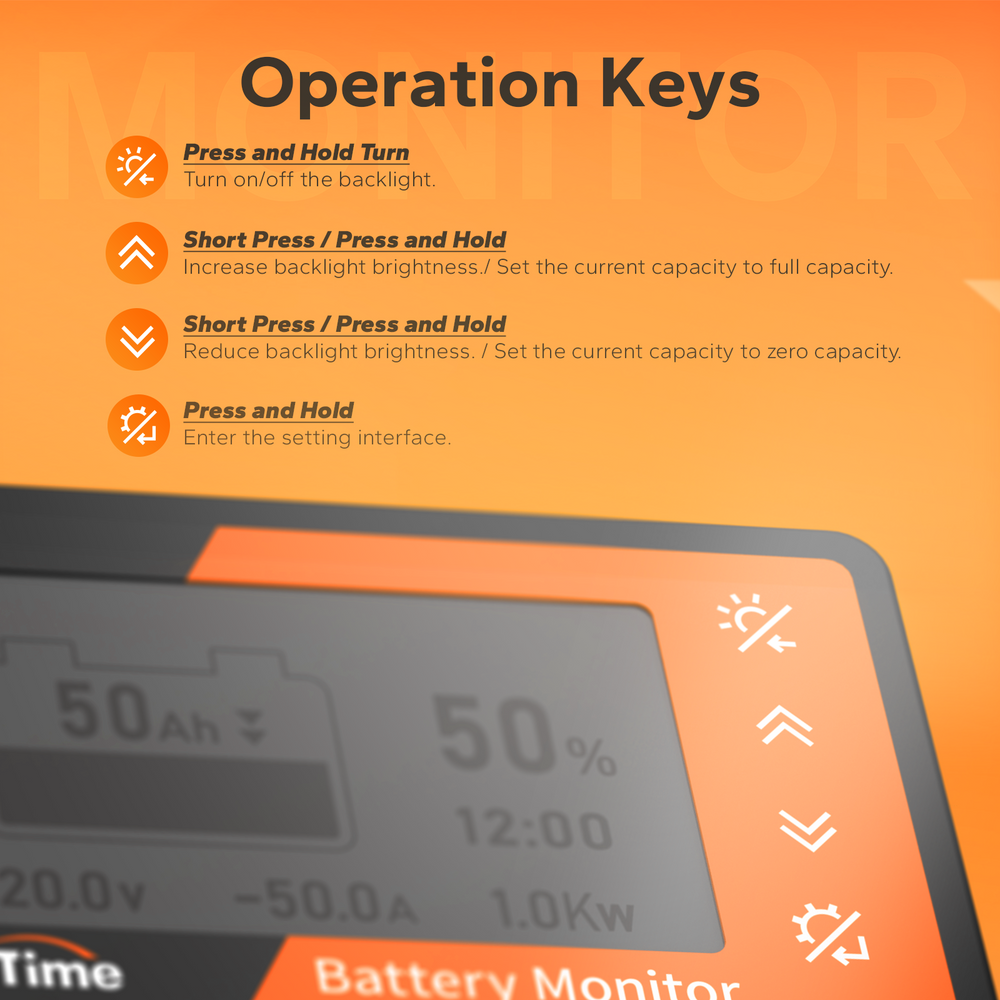
- For the Traditionalist: The LiTime 500A Battery Monitor with Shunt features a high-definition screen and a 20ft shielded cable for flexible mounting.
- For the Modern User: The LiTime 500A Smart Battery Shunt offers Bluetooth 5.0, 8 types of smart alarms, and 13 historical data points for deep analysis.
Both models support a wide voltage range (8V-120V) and are compatible with LiFePO4, AGM, and Lead-Acid batteries.
Part6: FAQs About SmartShunt and Battery Monitor
Q: Can I use these with 24V or 48V systems?
A: Absolutely. LiTime shunts are designed with a wide DC voltage range (8V-120V), making them compatible with 12V, 24V, 36V, and 48V battery banks.
Q: Does the Bluetooth shunt drain my battery?
A: Not at all. The power consumption is extremely low (less than 0.1W), meaning it has virtually zero impact on your overall capacity.
Q: What if my phone is dead or I'm out of range?
A: The shunt continues to monitor and record data even when not connected. Once you reconnect, all historical data and trends will sync to your app automatically.
Conclusion
Traditional battery monitors remain a reliable solution with physical displays and simple operation. However, Bluetooth smart shunts represent the future of battery management with easier installation, wireless monitoring, intelligent alarms, and powerful data analysis.
For modern RV, marine, and off-grid users, the LiTime 500A Smart Shunt provides a smarter, simpler way to understand and manage your battery system.

