


Choosing the right RV battery size is one of the most critical decisions for every RV owner. Your RV battery size directly determines your off-grid runtime, appliance load capacity, system compatibility, and overall camping experience. Many RV users struggle with weak power, frequent charging, or system failures simply because they pick the wrong RV battery size for their travel habits and onboard devices.
In this complete guide, we break down everything about RV battery sizes chart, including a practical RV battery size chart, real-world runtime data, professional selection tips, series & parallel connection rules and installation steps to help you find the perfect RV battery size for your need.
- Part1: What is RV battery size?
- Part2: RV battery size chart
- Part3: LiTime RV battery size chart
- Part4: How long different rv battery size lasts?
- Part5: How choose the best rv battery size?
- Part6: How Parallel and Series Connections Affect RV Battery Size
- Part7: RV Battery Fitment and Installation Checklist
- Part8: FAQs about rv battery size
- Conclusion
Part1: What is RV battery size?
RV battery size primarily falls into two core evaluation dimensions: physical dimension size, and electrical specifications including voltage and capacity.
Physical size:RV batteries follow unified BCI group standards, with different lengths, widths and heights that determine whether the battery can fit the RV’s built-in battery tray and installation space.
Voltage & capacity:it covers mainstream 12V and 24V system voltages and variable Ah/Wh capacity ratings, which directly govern energy storage volume and off-grid power endurance.
Part2: RV battery size chart
To help you easily pick a compatible, high-performance RV battery, we’ve compiled practical multi-dimensional RV battery size charts.
2.1 RV Battery Group Size Chart
RV battery group size is the primary reference for confirming whether a battery fits the RV’s built-in battery tray. Below is the complete battery standard group size chart with precise parameters for mainstream 12V RV batteries:
| BCI Group Size | Voltage | Typical Capacity | Physical Dimensions (L×W×H) | Fit Feature |
|---|---|---|---|---|
| Group 24 | 12V | 75–85Ah | 10.28 × 6.81 × 8.94 in (261 × 173 × 227 mm) | Compact size for small RV trays |
| Group 27 | 12V | 90–110Ah | 12.06 × 6.81 × 8.94 in (306 × 173 × 227 mm) | Universal fit for most standard RVs |
| Group 31 | 12V | 100–130Ah | 13.00 × 6.81 × 9.44 in (330 × 173 × 240 mm) | Factory default size for full-size RVs |
| 4D | 12V | 150–200Ah | 20.75 × 8.75 × 9.81 in (527 × 222 × 250 mm) | Large size for spacious battery compartments |
| 8D | 12V | 200Ah+ | 20.75 × 10.81 × 9.81 in (527 × 275 × 250 mm) | Oversized for heavy-duty RV systems |
Read More: Group 24 vs Group 27 Batteries: What’s the Difference?
2.2 RV Battery Capacity Chart by RV Type

Different RV types have distinct internal space and power load configurations. Matching battery capacity to your RV model avoids insufficient power or space waste.
| RV Type | Recommended Voltage | Best Battery Capacity | Matching Advantages |
|---|---|---|---|
| Pop-up Camper / Small Trailer | 12V | 75–100Ah | Compact size fits limited space, meets basic lighting and charging needs |
| Standard Travel Trailer | 12V | 100–200Ah | Balanced capacity and size, supports daily medium-power appliances |
| Class B Camper Van | 12V/24V | 100–200Ah (12V) / 50–100Ah (24V) | 24V size reduces current loss, suitable for modified vans |
| Class A/C Motorhome | 12V/24V | 200–400Ah (12V) / 100Ah+ (24V) | High capacity supports high-power devices and long-term off-grid use |
2.3 RV Battery Size Chart by Usage Scenario
Your camping habits and off-grid usage duration are core factors for battery size selection. Different usage scenarios require matched battery capacity to balance usability and cost.
| Usage Scenario | Recommended RV Battery Size | Applicable Description |
|---|---|---|
| Occasional Weekend Camping | 12V 75–100Ah | Suitable for 1–2 days of short outdoor camping, powers basic low-power devices |
| Regular Short-Term Travel | 12V 100–200Ah | Supports 3–5 days of off-grid use, meets daily camping power demands |
| Long-Term Off-Grid Camping | 12V 280–300Ah / 24V 100Ah | Handles continuous medium and high loads for 7+ days of independent power supply |
| Full-Time RV Living | 12V 400Ah / 24V 100Ah+ | Stably supports all household appliances, air conditioners and full-time off-grid life |
Part3: LiTime RV battery size chart

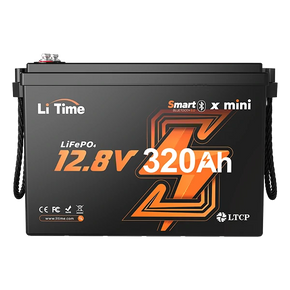
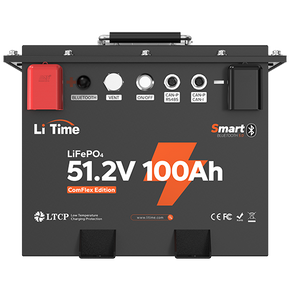
LiTime offers a full lineup of user-friendly LiFePO4 RV batteries, covering nearly all common sizes to fit most RV battery trays and everyday camping power needs. To help you skip the guesswork and quickly find the right model for your rig, we’ve put together a complete LiTime RV battery spec chart below.
| LiTime RV Battery Model | Rated Voltage | Rated Capacity | Physical Dimensions (L×W×H) | Compatible BCI Group Size | Core RV Application Scenarios |
|---|---|---|---|---|---|
| 12V 100Ah Group24 Bluetooth Self-heating LiFePO4 | 12.8V | 100Ah / 1280Wh | 10.24 × 6.61 × 8.27 in | Group 24 | Small pop-up campers, weekend casual camping, basic low-power RV devices |
| 12V 100Ah smart LiFePO4 Battery | 12.8V | 300Ah / 1280Wh | 12.09 × 6.81 × 8.86 in | Group 27 | Large Class A/C motorhomes, long-term off-grid camping, heavy-load RV power systems |
| 12V 100Ah LiFePO4 Battery | 12.8V | 100Ah / 1280Wh | 13.00 × 6.77 × 8.43 in | Group 31 | Standard travel trailers, daily short-distance RV travel, factory battery replacement |
| 12V 200Ah Xtra Mini RV Lithium Battery | 12.8V | 200Ah / 2560Wh | 13.11 × 6.93 × 10.04 in | Group 31 | Medium-size RVs, 3–5 days off-grid family camping, regular RV travel |
| 24V 100Ah Bluetooth LiFePO4 Battery | 25.6V | 100Ah / 2560Wh | 13.11 × 6.93 × 9.45 in | Group 31 | Class B camper vans, modified RV high-power systems, low-current-loss off-grid setups |
Part4: How long different rv battery size lasts?
To accurately estimate the sustainable runtime of your RV battery, you first need to master two core calculation formulas, which are universally applicable to all RV battery sizes and types:
1. Basic Runtime Calculation Formula
Sustainable Runtime (Hours) = Total Usable Battery Energy (Wh) ÷ Total Operating Power of RV Devices (W)
2. Total Usable Energy Calculation Formula
Total Usable Energy (Wh) = Battery Rated Voltage (V) × Battery Rated Capacity (Ah) × Safe Depth of Discharge (DOD)
The following table is based on the mainstream 12V RV battery system, with 100% DOD of lithium batteries as the benchmark, and clearly lists the total rated energy corresponding to common RV battery sizes, as well as the sustainable runtime under different common camping load levels:
| RV Battery Size (12V System) | Total Rated Energy (Wh) | Sustainable Runtime Under 100W Basic Load (Hours) | Sustainable Runtime Under 300W Medium Load (Hours) | Sustainable Runtime Under 600W High Load (Hours) |
|---|---|---|---|---|
| 100Ah | 1280 | 12.8 | 4.3 | 2.1 |
| 200Ah | 2560 | 25.6 | 8.5 | 4.3 |
| 280Ah–300Ah | 3584–3840 | 35.8–38.4 | 11.9–12.8 | 6.0–6.4 |
| 400Ah | 5120 | 51.2 | 17.1 | 8.5 |
In general, the larger the RV battery size, the longer your off-grid runtime. Upgrading your RV battery size is the most effective way to extend camping endurance without modifying your RV circuit system.
Part5: How choose the best rv battery size?
Choosing the perfect RV battery size is not about picking the largest capacity blindly. Instead, you need to match the battery specification to your actual camping habits, electrical loads, and RV hardware configuration. Below are five step-by-step, actionable criteria to help you accurately determine the ideal RV battery size for your rig:
4.1 Calculate Your Daily Power Use
Your daily power consumption is the core basis for sizing an RV battery. You need to calculate the total energy consumption by summing up the running wattage and daily usage hours of all onboard devices.
Common RV Appliance Power Draw:
- RV Lights: 10–50W
- 12V RV Refrigerator: 60–150W
- Water Pump: 50–100W
- Roof/Table Fans: 20–80W
- Starlink Router: 30–50W
- Microwave: 800–1200W
- Coffee Maker: 600–1000W
After calculating your total daily Wh consumption, match it with the corresponding battery capacity: under 1500Wh daily load fits a 12V 100Ah battery, while 2000–3500Wh daily consumption requires a 12V 200Ah–300Ah large-capacity battery.
4.2 Decide How Many Days You Want to Stay Off-Grid
Your off-grid camping duration directly determines your required battery bank capacity. Short-term casual camping and long-term boondocking require completely different RV battery sizes to avoid power exhaustion.
Weekend Casual Camping (1–2 days): A compact 12V 75–100Ah battery is enough to support daily basic devices without redundant cost or weight.
Regular Short-Term Travel (3–5 days): A 12V 200Ah battery is the most balanced option for daily medium-load power needs.
Long-Term Full Boondocking (7+ days / full-time RV living): Upgrade to 12V 300Ah–400Ah or 24V 100Ah+ battery sizes to maintain stable independent power supply.
4.3 Choose Battery Chemistry (Lithium vs AGM vs Lead-Acid)
Battery chemistry greatly affects usable capacity, which further changes your actual required RV battery size. Different battery types have distinct safe depth of discharge (DOD), making their real available power totally different even with the same marked Ah capacity.
Lithium LiFePO4 Battery: Supports 100% safe depth of discharge. The marked capacity is fully usable, with no power waste. It features long cycle life and is the most cost-effective option for long-term RV use.
AGM Battery: Only 50%–60% usable capacity. Deep discharge will cause irreversible capacity loss and shorten service life.
Read More: AGM vs. Lithium Batteries: Which is Better for RV and Marine
Flooded Lead-Acid Battery: Only 40%–50% safe usable capacity. It is easy to damage after frequent deep discharge, requiring users to purchase a much larger marked capacity to meet the same power demand.
4.4 Match Your Solar and Inverter Setup
Always match your RV battery size with your solar panel and inverter system specifications. If your battery capacity is too small for high-power supporting devices, it will cause system mismatch and low efficiency.
RVs equipped with small solar setups (100W–200W) and low-power inverters work well with 12V 100Ah–200Ah batteries. For RVs installed with 400W+ large solar arrays and 2000W+ high-power inverters, you need a large-capacity battery bank (12V 300Ah–400Ah or 24V system batteries) to store excess solar energy and bear peak loads, avoiding frequent over-discharge and system overload.
4.5 Check Space, Weight, and Cable Compatibility
Before finalizing your RV battery size, confirm physical installation conditions to avoid unworkable upgrades. First, measure your RV battery tray and compartment space to ensure the battery’s BCI group size and physical dimensions fit perfectly — oversized 4D/8D batteries cannot be installed on standard small trays.
Second, check weight limits, especially for Class B camper vans with limited load capacity. Finally, match the cable gauge: batteries within 100Ah adapt to 10–12 AWG wires, while 200Ah+ large-capacity batteries require thick 6–8 AWG cables to prevent overheating, voltage drop, and potential safety hazards.
Part6: How Parallel and Series Connections Affect RV Battery Size
When single RV battery size cannot meet your power needs, you can connect multiple batteries in series or parallel to expand voltage or capacity. These two connection methods completely change your overall battery bank performance and require strict size matching.
| Connection Type | What Changes | Practical RV Example |
|---|---|---|
| Parallel Connection | Increases total battery capacity (Ah), system voltage stays the same | Two 12V 100Ah RV batteries in parallel = 12V 200Ah battery bank |
| Series Connection | Increases system voltage, total battery capacity (Ah) stays the same | Two 12V 100Ah RV batteries in series = 24V 100Ah battery bank |
| Series-Parallel Connection | Increases both system voltage and total battery capacity (Ah) | Four 12V 100Ah batteries (2 series + 2 parallel) = 24V 200Ah battery bank, ideal for large high-power RV systems |
Critical Safety & Performance Rules
- Never mix batteries of different sizes, brands, ages, or rated capacities in the same battery bank. Mismatched batteries will cause uneven charging, overheating, irreversible capacity loss, and greatly shortened battery lifespan.
- Always follow the battery manufacturer’s official instructions and RV electrical safety specifications before installation. Ensure all wiring, connectors, and protection devices meet the current and voltage requirements of your battery bank to avoid safety hazards.
Part7: RV Battery Fitment and Installation Checklist
Choosing the correct RV battery size is only half the battle. To ensure safe fit, stable power output, and long battery lifespan, you need to complete a full installation check before powering on your system.
Follow this step-by-step checklist based on your selected RV battery size for a professional, safe installation:
1. Measure Battery Tray Internal Dimensions
Before purchasing and installing, fully measure the length, width, and height of your RV’s factory battery tray or compartment. Compare the data with your new battery’s physical size to ensure a proper fit. Always reserve a small gap for air circulation and heat dissipation, especially for large-capacity 200Ah+ batteries.
2. Check Battery Terminal Clearance
Verify sufficient clearance around battery terminals. Avoid tight compartment spaces that may cause wire extrusion, short circuits, or inability to connect cables. Different BCI group sizes and lithium battery layouts have varying terminal positions, so this step is critical for safe installation.
3. Confirm Cable Length and Wire Gauge
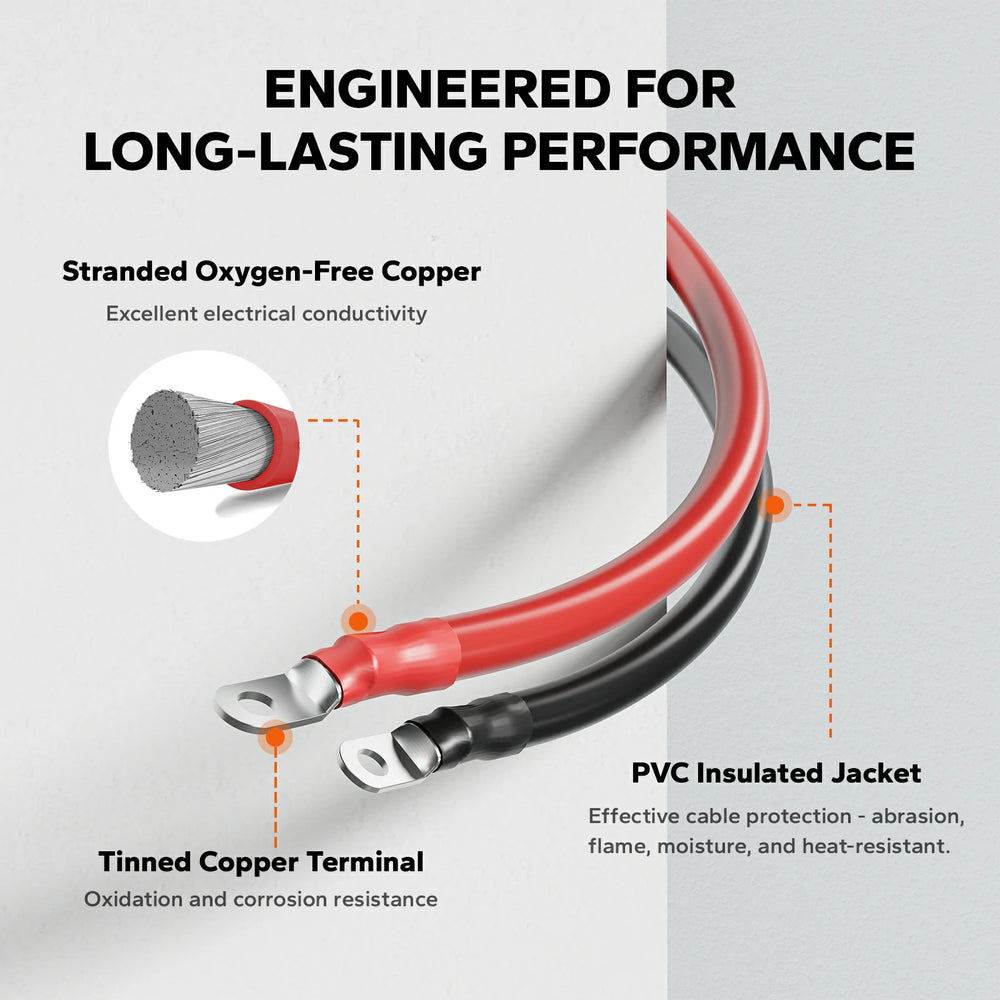
Match cable specifications to your RV battery size to prevent voltage drop and overheating. Small batteries (100Ah and below) suit 10–12 AWG cables, while 200Ah and larger high-capacity batteries require thicker 6–8 AWG heavy-duty wires. Meanwhile, confirm the cable length is reasonable for tidy routing without excessive slack or tension.
4. Inspect Battery Hold-Down Brackets
Check whether the original RV battery brackets fit your new battery size. Large and heavy batteries need reinforced fixed brackets to prevent shaking, sliding, or collision during RV driving, which effectively protects the battery shell and internal cells from damage.
5. Verify RV Battery Charger Compatibility
Confirm your onboard battery charger matches your new battery’s chemistry and voltage specifications. Lithium LiFePO4, AGM, and lead-acid batteries require different charging profiles. Mismatched charger settings will lead to slow charging, floating charge failure, or even battery damage.
6. Calibrate Inverter and Solar Controller Settings
If your RV is equipped with an inverter and solar power system, update the device parameters according to your new RV battery size and voltage. Adjust low-voltage protection values, charging voltage thresholds, and discharge limits to adapt to the actual capacity of the new battery bank.
7. Install Matched Fuse or Circuit Breaker
Always install a properly sized fuse or circuit breaker between the battery bank and main electrical system. The protective device must match the battery’s maximum discharge current, which effectively prevents circuit overload, short circuits, and electrical safety hazards.
8. Secure Battery Firmly Before Driving
After completing all wiring and connections, double-check the battery fixation status. Ensure the battery is completely fixed without shaking or displacement. This final check is essential for safe RV travel and long-term battery stability.
Part8: FAQs about rv battery size
What is the most common RV battery?
The most common RV battery sizes are Group 27, Group 31, and 12V 100Ah lithium batteries. Group 31 is the most popular physical size for factory-installed RV batteries, while 12V 100Ah and 12V 200Ah LiFePO4 batteries are the most upgraded choices for modern RV owners due to their lightweight, long cycle life, and deep discharge advantages.
Does RV battery size matter?
Yes, RV battery size matters greatly. A too-small RV battery size leads to insufficient power, short off-grid runtime, and frequent deep discharge damage. An excessively large RV battery size wastes installation space and budget. Choosing the matched RV battery size ensures stable power supply, safe system operation, and optimized camping experience.
Conclusion
Understanding and selecting the correct RV battery size is the foundation of a reliable RV power system. From standard group sizes and capacity charts to runtime estimation, size selection skills, series/parallel connection rules, and installation checklist, every detail determines your off-grid power performance.
For most RV users, 12V 100Ah–200Ah battery sizes are ideal for daily camping, while full-time RV dwellers can upgrade to 280Ah–400Ah large-capacity sizes. Always match your RV battery size to your power load, installation space, and travel habits to enjoy stable, long-lasting off-grid power on every trip.

