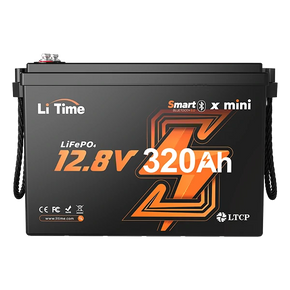


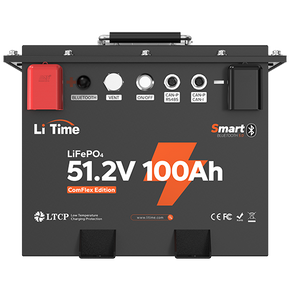

This guide explains when one lithium battery can power both boat and RV applications, and when separate batteries are the safer choice. A properly sized LiFePO4 deep cycle battery can support Marine RV Batteries use if it matches voltage, capacity, charging, discharge current, and installation requirements.
If you own both a boat and an RV, you may wonder whether one lithium battery can serve both lifestyles. The answer is yes—one properly selected lithium battery can power both boat and RV applications, as long as it matches the voltage, capacity, discharge current, charging system, and installation requirements of each setup.
Instead of buying separate power solutions for every recreational vehicle, many users want one reliable deep cycle battery that can support electronics, appliances, lighting, trolling motors, solar charging, and long periods away from shore power or campground hookups.
However, “can” does not always mean “should” in every situation. A battery that works perfectly as an RV house battery may not be suitable for marine cranking. A battery that powers fish finders and trolling motors may not have enough capacity for an inverter, refrigerator, microwave, and air conditioner in an RV. The key is understanding how marine and RV power demands overlap—and where they are different.
This guide explains what Marine RV Batteries are, when one lithium battery can be used for both boats and RVs, what specifications matter most, and how to choose a safe, long-lasting LiFePO4 power solution.
Table of Contents
- What Are Marine RV Batteries?
- Marine vs. RV Battery Needs: What Is the Difference?
- Can One Lithium Battery Be Used for Both Marine and RV Applications?
- When One Marine RV Batteries Is Enough?
- When Should You Use Separate Marine or RV Batteries?
- Best LiTime LiFePO4 Battery recommendations
- Conclusion: Can One Lithium Battery Power Both Boat and RV Applications?
- FAQ About Marine RV Batteries
What Are Marine RV Batteries?
Marine RV Batteries are batteries designed or selected for both marine and recreational vehicle power systems. In most cases, they are deep cycle batteries that provide steady energy over long periods instead of delivering only a short burst of power.
In a boat, a battery may power a trolling motor, fish finder, GPS, navigation lights, bilge pump, livewell, radio, cabin lights, or other onboard electronics. In an RV, a battery may power LED lights, fans, water pumps, refrigerators, TVs, phone chargers, inverters, and solar energy storage.
These batteries are usually available in lead-acid formats such as flooded, AGM, and GEL, as well as lithium LiFePO4. Because both boats and RVs often operate away from grid power, they need a battery that can handle repeated charging and discharging. This is where lithium iron phosphate, or LiFePO4, batteries are especially useful. Compared with traditional lead-acid batteries, LiFePO4 batteries are typically lighter, more efficient, longer-lasting, and better suited for deep cycle use.
Marine vs. RV Battery Needs: What Is the Difference?
Marine and RV power systems overlap, but they are not identical. Understanding the difference helps you choose Marine RV Batteries that are safe and practical.
What Marine and RV Have in Common
The biggest shared need is deep cycle performance. Both boats and RVs often power accessories for hours at a time, which means the battery needs to deliver steady energy rather than only short bursts of starting power.
Both applications also benefit from:
- Low maintenance.
- Good vibration resistance.
- Strong cycle life.
- Compatibility with solar or off-grid charging systems.
This is why lithium has become increasingly popular in both categories. It is lighter, more efficient, and often lasts much longer than conventional flooded lead-acid batteries.

Differences Between Marine Batteries and RV Batteries
The key difference is the environment. Marine batteries need to handle water exposure, salt spray, and harsher corrosion risk, especially in coastal use. RV batteries, on the other hand, usually deal more with interior mounting, temperature swings, and long off-grid storage periods.
Installation location matters too. In boats, batteries are often placed in tighter compartments and exposed to more vibration and moisture. In RVs, you may have more room, but you also need to think about inverter loads, solar charging, and long-term power management.
Marine vs RV Needs
The battery chemistry can be the same, but the operating conditions are not. Marine systems face salt, humidity, vibration, and compact storage spaces, while RV systems often face larger energy demands, long runtime expectations, and frequent cycling during travel or off-grid camping.
| Feature | Marine Use | RV Use |
|---|---|---|
| Common loads | Trolling motor, fish finder, GPS, lights, pumps, radio | Lights, fan, fridge, water pump, TV, inverter, solar storage |
| Environment | Moisture, vibration, salt air, waves | Road vibration, heat, cold, dust, long storage |
| Main battery type | Starting, deep cycle, or dual purpose | Mostly deep cycle house battery |
| Key concern | Water resistance, secure mounting, marine-safe installation | Capacity, solar charging, inverter support, long runtime |
| Best lithium option | Marine-grade LiFePO4 or dual-purpose lithium | Deep cycle LiFePO4 house battery |
In simple terms, boats often demand stronger protection against moisture, vibration, and marine corrosion. RVs often demand higher energy storage for daily living. A lithium battery that can serve both should be rugged enough for marine conditions and powerful enough for RV loads.
Safety Features to Look For
Good Marine RV Batteries should include safety features that match both environments. Look for a high-quality BMS, low-temperature charging protection, over-current protection, short-circuit protection, over-voltage protection, and over-discharge protection.
For marine use, also consider water resistance, corrosion-resistant terminals, strong casing, secure mounting, and vibration resistance. For RV use, consider temperature range, Bluetooth monitoring, capacity expansion, and compatibility with solar and inverter systems.
If the battery is to be installed on a boat, follow marine electrical best practices and local installation requirements. A lithium battery should be mounted securely, protected from direct water exposure when possible, properly fused, and connected with correctly sized cables.
Can One Lithium Battery Be Used for Both Marine and RV Applications?
Yes, one lithium battery can be used for both marine and RV applications if it is designed for deep cycle use and meets the electrical and environmental needs of both systems.
However, there are three important conditions.
First, the battery must match the system voltage. Most small boats, trolling motors, campers, travel trailers, and RV house systems use 12V batteries, but some trolling motors use 24V or 36V systems, and some large RV or off-grid systems use 24V or 48V battery banks.
Second, the battery must have enough capacity. A 12V 100Ah lithium battery may be enough for basic lighting, electronics, and short trips, but longer RV camping or high-power marine use may require 200Ah, 300Ah, or multiple batteries in parallel.
Third, the battery must be used correctly. If you need a battery for engine starting, do not assume every deep cycle lithium battery can be used as a cranking battery. Starting an outboard or vehicle engine requires high cranking amps, and only batteries designed for starting or dual-purpose use should be used for that job.
For most users, the best choice is a LiFePO4 deep cycle battery. It can store energy from solar panels, shore power, a DC-DC charger, or a compatible battery charger, then deliver stable power to 12V devices and inverter loads. This makes it useful for weekend boating, fishing trips, RV camping, van life, overlanding, and emergency backup power.

Shop LiTime Marine Batteries
Explore LiTime lithium batteries for marine power, trolling motors, onboard electronics, house loads, and solar charging.
- Marine lithium batteries for trolling motors and boat electronics
- LiFePO4 options for longer runtime and lower maintenance
- Suitable for fishing boats, weekend boating, and marine solar systems
Shop LiTime RV Batteries
Find LiTime LiFePO4 batteries for RVs, vans, campers, solar storage, long trips, and off-grid living.
- Deep cycle lithium batteries for RV house power and solar storage
- Ideal for lights, fans, refrigerators, inverters, and daily camping loads
- Available in multiple capacities for short trips or extended off-grid use
When One Marine RV Batteries Is Enough?
One lithium battery can be a smart choice if you use your boat and RV at different times and want a flexible power source. For example, a 12V LiFePO4 battery can power a small fishing boat during the weekend and then support RV lights, fans, and small appliances during a camping trip.
It is also useful for people who want portable off-grid energy. If the battery is installed in a portable power box with proper fusing, connectors, and charging access, it can be moved between applications more easily.
One battery also makes sense if your loads are moderate. For fishing electronics, small trolling motors, lights, phone charging, fans, and compact refrigerators, a properly sized lithium battery can perform well in both environments.
One battery is enough when:
- You use moderate accessory loads.
- You want lighter weight.
- You value low maintenance.
- You use solar or off-grid charging.
- You want to simplify both boat and RV setups.
In this scenario, lithium is usually the best fit because it offers higher usable capacity and longer service life than traditional lead-acid batteries. That matters especially if you travel often or spend long weekends away from shore power.
When Should You Use Separate Marine or RV Batteries?
Using one battery is not always the best solution. You should consider separate batteries if your boat requires engine starting and your RV requires deep cycle house power. Starting batteries and house batteries have different jobs, and combining them can create performance or safety issues if the battery is not designed for both.
Separate batteries may also be better if both the boat and RV are used frequently, if each system has different voltage requirements, or if your RV has large inverter loads. For example, a boat with a high-demand trolling motor, saltwater exposure, and frequent charging cycles may benefit from a marine-specific setup, while an RV with larger house loads may need a dedicated battery bank. Air conditioners, microwaves, induction cooktops, and other high-power appliances may require a larger dedicated battery bank.
You should also avoid moving batteries back and forth if the installation is not convenient. Loose wiring, repeated reconnection, poor mounting, or incompatible chargers can create more problems than the money saved by sharing one battery.
Subscribe for More LiTime Deals & Battery Tips
Subscribe to our newsletter to get the latest limited-time discounts, new product information, and practical battery usage tips.
How to Choose the Right Marine RV Battery
When comparing Marine RV Batteries, look beyond the price and amp-hour rating. The right battery should match your boat or RV system, daily power use, charging setup, and installation space.
- Voltage: Choose 12V, 24V, 36V, or 48V based on your system. For example, most RV house systems and small trolling motors use 12V, while larger trolling motors may require 24V or 36V.
- Capacity: Capacity is measured in amp-hours (Ah) or watt-hours (Wh). For example, a 12V 100Ah lithium battery may be enough for lights, a fish finder, phone charging, and a small fridge. For longer RV trips or solar camping, 200Ah or 300Ah may be more suitable.
- Continuous discharge current: This must support your daily loads and inverter. For example, a small fan and LED lights need much less current than a 1,000W inverter or a high-speed trolling motor.
- Peak discharge or cranking rating: This matters if the battery will start a boat engine. For example, a deep cycle LiFePO4 battery is good for house power, but engine starting requires a battery rated for cranking or dual-purpose use.
- BMS protections: A quality Battery Management System helps protect against overcharge, over-discharge, over-current, short circuits, and temperature issues. This is especially important when the battery is used in both marine and RV environments.
- Low-temperature protection: If you camp or boat in cold weather, choose a battery with low-temperature charging protection. For example, winter RV camping or early-season fishing may expose the battery to freezing conditions.
- Water and dust resistance: This is especially useful for marine use. For example, a battery used in a fishing boat or kayak should be better protected from splashes and moisture than one installed inside a dry RV compartment.
- Weight and size: Make sure the battery fits your battery tray or compartment. For example, a 12V 100Ah lithium battery is easier to move between a boat and RV, while a 300Ah battery may be better for fixed installation.
- Charging compatibility: The battery should work with your charger, solar controller, DC-DC charger, or onboard marine charger. For example, if your RV has solar panels, the charge controller should support LiFePO4 charging.
- Warranty and support: Choose a battery with clear warranty terms and reliable technical support. This is useful if you need help with wiring, charging settings, or troubleshooting during long-term use.
A good rule is to choose a battery with extra reserve capacity. If your estimated daily use is close to the battery’s limit, consider the next size up. For example, if a 12V 100Ah battery barely covers your daily RV loads, a 12V 200Ah battery will give you more flexibility for cloudy days, longer trips, or extra devices.
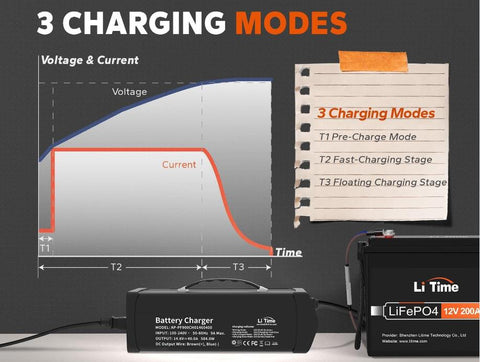
Charging Guide
7 Mistakes To Avoid When Charging Marine / RV Lithium Batteries – LiTime
Learn common charging mistakes that may affect lithium battery performance, lifespan, and safety in marine or RV use.
Why LiFePO4 Is a Strong Choice for Marine RV Batteries
Lithium LiFePO4 is often the strongest choice for Marine RV Batteries because it combines high usable capacity with low weight and long life. Compared with lead-acid batteries, lithium can provide more consistent voltage output and can be discharged more deeply without the same performance drop.
LiFePO4 batteries are popular for Marine RV Batteries because they solve many problems that boat and RV owners experience with lead-acid batteries.
First, LiFePO4 batteries provide more usable capacity. Traditional lead-acid batteries are often limited by how deeply they should be discharged, while lithium batteries can typically provide a much higher usable portion of their rated capacity. This means a 100Ah lithium battery can often deliver more practical runtime than a similar-sized lead-acid battery.
That matters for both boats and RVs because onboard systems often need stable power for hours at a time. If you run a refrigerator, lights, fish finder, water pump, inverter, or charging devices, lithium tends to deliver a smoother experience and fewer maintenance headaches than flooded lead-acid batteries.
Second, lithium batteries are lighter. Weight matters on boats because it affects speed, balance, and fuel efficiency. Weight also matters in RVs because every pound counts toward payload capacity.
Third, LiFePO4 batteries maintain a more stable voltage during discharge. This helps sensitive electronics, refrigerators, inverters, navigation equipment, and trolling motors run more consistently.
Fourth, they recharge efficiently. When paired with a compatible lithium charger, solar controller, or DC-DC charger, a LiFePO4 battery can recharge faster and waste less energy than traditional battery types.
Finally, quality lithium batteries include a Battery Management System, or BMS. The BMS helps protect the battery from overcharging, over-discharging, short circuits, excessive current, and unsafe temperature conditions.
Best LiTime LiFePO4 Battery recommendations
If you are looking for reliable Marine RV Batteries, LiTime offers several LiFePO4 options for different boat and RV power needs. Whether you need a compact 12V battery for light loads, a larger-capacity battery for longer trips, or a 24V battery for trolling motors, the right model depends on your system voltage, runtime expectations, and installation space.
LiTime 24V 100Ah Group 31 Marine Lithium Battery
The LiTime 24V 100Ah Group 31 Marine Lithium Battery is a strong option for boat owners using a 24V trolling motor system. Instead of connecting two 12V batteries in series, this battery provides a dedicated 24V solution in a Group 31 size, making installation cleaner and more space-efficient.
It is especially suitable for anglers, fishing boats, and marine users who need stable power for longer trolling motor runtime. For users comparing Marine RV Batteries, this model is best for marine-focused applications rather than a standard 12V RV house battery setup.

LiTime 24V 100Ah Group 31 Marine Lithium Battery
- It is especially suitable for anglers, fishing boats, and marine users who need stable power for longer trolling motor runtime.
- For users comparing Marine RV Batteries, this model is best for marine-focused applications rather than a standard 12V RV house battery setup.
- Best for: 24V trolling motors, fishing boats, marine power systems, users who want fewer battery connections.
LiTime 12V 200Ah Xtra Mini Marine Lithium Battery
The LiTime 12V 200Ah Xtra Mini Marine Lithium Battery is a good choice for users who want higher capacity without taking up too much space. With 200Ah capacity, it can support a longer runtime than a standard 100Ah battery, making it suitable for RV house power, fishing trips, solar camping, and marine electronics.
This model is a practical option if you want one lithium battery that can handle both boat and RV use. For example, it can power RV lights, a refrigerator, fans, a water pump, and small inverter loads, while also supporting marine applications such as trolling motors and onboard electronics.

LiTime 12V 200Ah Xtra Mini Marine Lithium Battery
The LiTime 12V 200Ah Xtra Mini Marine Lithium Battery is a good choice for users who want higher capacity without taking up too much space. With 200Ah capacity, it can support a longer runtime than a standard 100Ah battery, making it suitable for RV house power, fishing trips, solar camping, and marine electronics.
- This model is a practical option if you want one lithium battery that can handle both boat and RV use.
- For example, it can power RV lights, a refrigerator, fans, a water pump, and small inverter loads, while also supporting marine applications such as trolling motors and onboard electronics.
- Best for: longer RV trips, weekend fishing, solar camping, marine electronics, users who want more capacity in a compact size.
LiTime 12V 100Ah Group 24 Deep Cycle Battery with Self-Heating
The LiTime 12V 100Ah Group 24 Deep Cycle Battery with Self-Heating is ideal for users who camp, fish, or travel in cold-weather conditions. Its self-heating feature makes it more suitable for winter RV camping, early-season boating, and cold mornings when standard lithium batteries may face charging limitations.
Because it comes in a compact Group 24 size, it is also easier to fit into smaller RV battery compartments, camper setups, and portable power systems. If your main concern is cold-weather reliability rather than maximum capacity, this model is a smart choice.

LiTime 12V 100Ah Group 24 Deep Cycle Battery with Self-Heating
The LiTime 12V 100Ah Group 24 Deep Cycle Battery with Self-Heating is ideal for users who camp, fish, or travel in cold-weather conditions. Its self-heating feature makes it more suitable for winter RV camping, early-season boating, and cold mornings when standard lithium batteries may face charging limitations.
- Because it comes in a compact Group 24 size, it is also easier to fit into smaller RV battery compartments, camper setups, and portable power systems.
- If your main concern is cold-weather reliability rather than maximum capacity, this model is a smart choice.
- Best for: cold-weather camping, winter RV use, ice fishing, compact battery compartments, users who need self-heating protection.
LiTime 12V 100Ah Deep Cycle Marine Battery for Trolling Motor
The LiTime 12V 100Ah Deep Cycle Marine Battery for Trolling Motor is designed for users who need dependable 12V marine power. It is a good fit for small fishing boats, kayaks, trolling motors, fish finders, and other onboard electronics.
Compared with heavier lead-acid batteries, this LiFePO4 option offers lighter weight, longer cycle life, and steadier power output. It is also a good entry-level choice for users who want to upgrade from lead-acid to lithium for marine use.

LiTime 12V 100Ah Deep Cycle Marine Battery for Trolling Motor
The LiTime 12V 100Ah Deep Cycle Marine Battery for Trolling Motor is designed for users who need dependable 12V marine power. It is a good fit for small fishing boats, kayaks, trolling motors, fish finders, and other onboard electronics.
- Compared with heavier lead-acid batteries, this LiFePO4 option offers lighter weight, longer cycle life, and steadier power output.
- It is also a good entry-level choice for users who want to upgrade from lead-acid to lithium for marine use.
- Best for: 12V trolling motors, small boats, kayaks, fish finders, marine electronics, lightweight lithium upgrades.
Conclusion: Can One Lithium Battery Power Both Boat and RV Applications?
Yes, one lithium battery can power both boat and RV applications when it is properly sized, correctly installed, and compatible with both charging systems. For most users, a LiFePO4 deep cycle battery is the best foundation because it offers long runtime, lighter weight, stable voltage, efficient charging, and built-in protection through a BMS.
However, not every lithium battery is the right choice for every job. If you need engine starting, choose a battery specifically rated for cranking or dual-purpose use. If you need long RV runtime, choose enough amp-hour capacity for your daily energy needs. If you use the battery on a boat, pay close attention to marine-grade installation, water protection, secure mounting, and proper wiring.
The best Marine RV Batteries are not just batteries that fit both places. They are batteries that match the real demands of water, road, weather, vibration, charging, and off-grid power. Choose the right LiFePO4 battery, and one power source can support both your boating adventures and your RV lifestyle with confidence.
FAQ About Marine RV Batteries
Are Marine RV Batteries the same as regular car batteries?
No. Regular car batteries are mainly designed for engine starting. Marine and RV batteries are usually deep-cycle batteries designed to provide steady power over longer periods.
Can I use a marine battery in an RV?
Yes, if it is a deep cycle battery with the correct voltage and capacity. However, make sure your RV charger is compatible with the battery chemistry.
Can I use an RV lithium battery on a boat?
Yes, but the battery should be suitable for the marine environment. Look for strong casing, secure mounting, BMS protection, and resistance to moisture and vibration.
Can one LiFePO4 battery run a trolling motor and RV appliances?
It can, if the battery has the correct voltage, capacity, and discharge rating. Always check the trolling motor requirements and calculate your RV energy use before choosing a battery.
Do I need a dual-purpose lithium battery?
You need a dual-purpose lithium battery only if you want the same battery to handle both engine starting and deep cycle loads. For house power, solar storage, and trolling motors, a deep-cycle lithium battery is usually the better choice.
What size lithium battery is best for boat and RV use?
A 12V 100Ah battery is a good starting point for light use. A 12V 200Ah or 300Ah battery is better for longer trips, more appliances, or extended off-grid power.
What size battery is best for dual use?
There is no single best size. The right battery depends on your amp-hour needs, inverter load, runtime expectations, and charging setup.
Are marine RV batteries different from regular RV batteries?
Yes. Marine batteries need better vibration resistance and more protection against water and corrosion.
Is lithium better for both boat and RV use?
Usually yes, because lithium offers longer cycle life, lower maintenance, and better usable capacity.
Should I use one battery or two?
Use one if your loads are moderate and you want simplicity. Use two if your marine and RV power demands are very different.


