




Winter camping is exciting.
It’s also unforgiving.
Nights are longer, temperatures drop faster, and electricity becomes something you truly depend on.
This guide is LiTime’s navigation-style winter camping hub, bringing together winter camping basics, cold-weather power planning, battery selection by scenario, and LiTime’s service ecosystem—all in one place so you can easily jump to what matters most.
Table of Contents
- Winter Camping Basics: Routes, Gear, and the Safety Baseline
- Cold Weather Camping Battery: The Three Rules That Matter Most
- Winter Camping Power Guide: From Load Lists to Battery Capacity
- Top Winter Battery Technologies: Self-Heating vs Low-Temperature Protection
- Winter Camping Battery Recommendations by Use Case
- Five Practical Winter Power Tips That Actually Work
- LiTime Trust, Support, and the Long View
- FAQ
1. Winter Camping Basics: Routes, Gear, and the Safety Baseline
The first step in winter camping isn’t buying a lithium battery.
It’s choosing a route with exit options and resupply access.
Many campers underestimate how quickly conditions change after sunset.
Public land agencies consistently warn that winter brings road closures, restricted access, and ice hazards—always check alerts before departure.
A practical way to plan is to divide winter camping into three categories.
The first is winter road-trip camping, often in southern regions with milder daytime temperatures.
The second is snow camping and ice fishing, where wind, moisture, and long periods of inactivity dominate.
The third is RV or van winter camping, where electrical loads increase but charging options expand.
For destination-based inspiration, cold-desert winter routes such as Winter Camping in Las Vegas are a good starting point before dialing in your power setup.
Wind Chill: Same Temperature, Completely Different Reality
Wind chill is one of the most misunderstood winter risks.
At 0°F with a 15 mph wind, the perceived temperature drops to around -19°F.
According to the U.S. National Weather Service, this dramatically increases cold stress and exposure risk.
This is why winter campers rely more heavily on lighting, heated gear, and reliable power systems.
External reference: NWS Wind Chill Chart
| Air Temperature (°F) | Wind Speed (mph) | Feels Like (°F) | Why It Matters |
|---|---|---|---|
| 20 | 15 | 6 | Faster heat loss during inactivity |
| 0 | 15 | -19 | Increased frostbite and exposure risk |
Hypothermia Belongs on the Same Line as Gear
Hypothermia isn’t rare.
It doesn’t require extreme cold.
The CDC emphasizes that hypothermia is a serious medical condition and can occur when people become wet, exhausted, or inadequately protected.
That’s why warmth and moisture control must be treated as one system—not separate checklist items.
External reference: National Park Service: Visiting in Winter

2. Cold Weather Camping Battery: The Three Rules That Matter Most
Winter power planning isn’t about battery size alone.
It’s about charging safely in the cold.
Many lithium batteries can discharge below freezing but should not be charged below 32°F (0°C).
Battery research clearly shows that charging lithium batteries at low temperatures can cause lithium plating, leading to permanent performance loss and safety risks.
The second rule is that winter charging windows are shorter.
Sunlight is weaker, days are shorter, and “charging while using” becomes unreliable.
- That makes vehicle charging, shore power, or controlled charging schedules far more important in winter.
The third—and most common—mistake happens in the morning.
Campers wake up, plug in a charger, and don’t realize the battery is still below freezing.
This single habit is responsible for a large percentage of cold-weather battery damage discussed in RV and off-grid communities.
For a structured breakdown of winter energy planning, a dedicated Winter Camping Power Guide for Southern California, Texas, Arizona & Florida is the most effective way to move from theory to real-world setup.
3. Winter Camping Power Guide: From Load Lists to Battery Capacity
The biggest mistake in winter power planning is guessing.
A simple framework works best.
List your devices, estimate energy use in watt-hours, convert to amp-hours, and then choose capacity and charging methods accordingly.
Use margin for cold-weather performance and shorter recharge windows.
Quick reference formula:
Q = P × t
C = Q ÷ 12.8
| Scenario | Typical Devices | Estimated Overnight Use | Recommended Battery Size |
|---|---|---|---|
| Ice fishing / day snow camping | Lights, phone, fish finder/camera | 200–600 Wh | 12V 50–100Ah |
| Weekend winter camping | 12V fridge, lights, charging, small appliances | 600–1500 Wh | 12V 100–300Ah |
| RV / van winter travel | Fridge, electronics, AC | 2000–4000 Wh | 12V 200–400Ah |
| Basecamp / multi-day off-grid | Multiple systems, consistent power demand | 4000+ Wh | 12V 400-560Ah |
Low-temperature charging protection becomes critical at this stage.
Understanding how battery management systems prevent charging damage in freezing conditions is essential for long-term reliability.
4. Top Winter Battery Technologies: Self-Heating vs Low-Temperature Protection
There are two effective approaches to cold-weather lithium batteries.
Low-temperature charge cut-off, which prevents charging when it’s unsafe.
And self-heating, which warms the battery internally before allowing charging.
Both methods address the same problem: protecting batteries in freezing conditions.
The difference is how much intervention is required from the user.
| Camping Style | Recommended Technology | Why It Works |
|---|---|---|
| Frequent cold-weather charging | Self-heating | Automatically warms cells before charging |
| Charging only in warm environments | Low-temp protection | Safely blocks charging below freezing to prevent damage |
External reading: Battery University on Low-Temperature Charging
5. Winter Camping Battery Recommendations by Use Case
This section is the practical gateway from planning to action.
Rather than listing every model, the focus is on matching battery type to real winter scenarios.
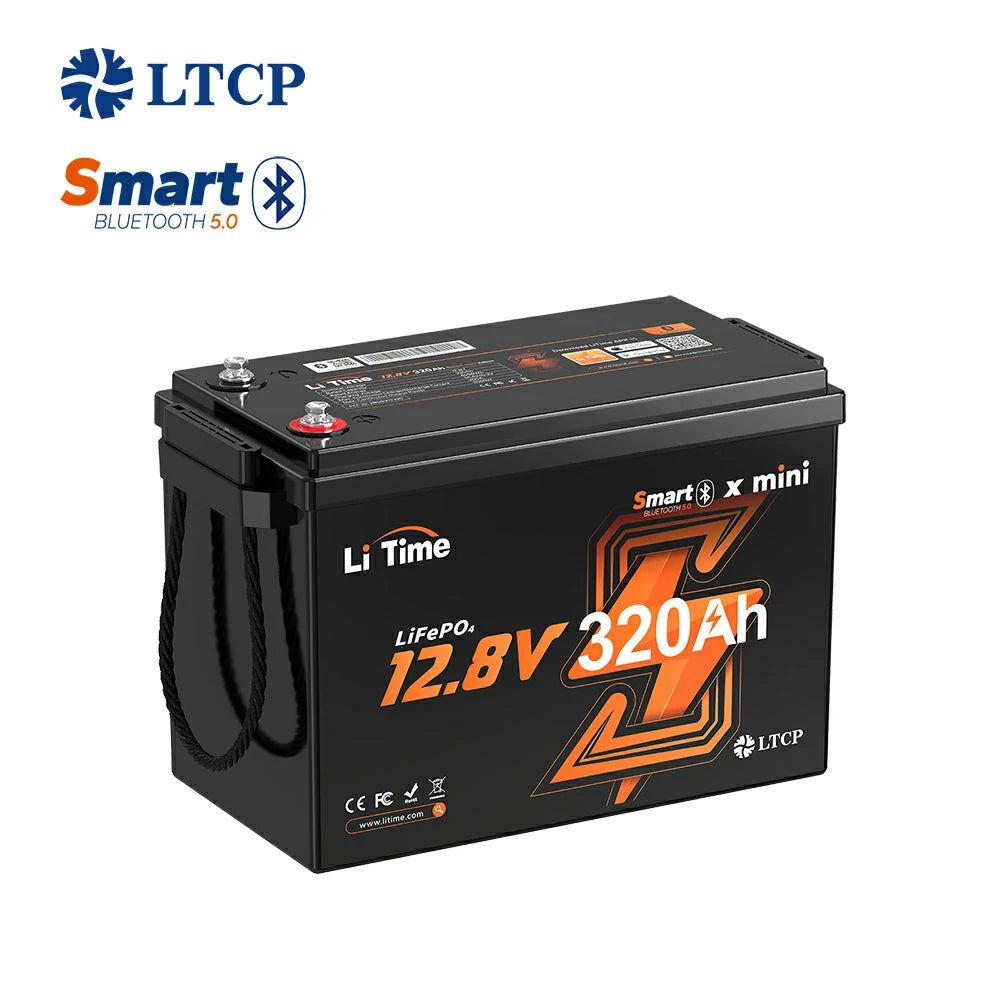
A centralized Cold Weather Batteries collection makes it easier to compare options without losing context.
Start there, then return to this guide to validate your choice against your load list.
Ice Fishing & Snow Camping
Ice fishing means wind, moisture, and long periods of inactivity.
Lighting, heated accessories, and electronics become essential rather than optional.
Because charging often happens in freezing environments, self-heating is strongly recommended.
Dedicated ice fishing battery guides provide a deeper breakdown of size and feature requirements for this scenario.
Winter Road Trips & Travel Camping
Winter travel camping often combines cold nights with mobile charging opportunities.
12V fridges, cameras, drones, and laptops are common loads.
Vehicle DC-to-DC charging becomes the primary charging method, making cold-safe charging behavior essential.
A structured winter power guide helps align trip length, charging opportunities without oversizing the system.
RV, Van, and Basecamp Winter Systems
Larger winter systems behave more like small off-grid power stations.
Inverters, solar input, and battery monitoring all play a role.
Real-world winter off-grid user stories provide valuable insight into how these systems perform under sustained cold conditions.

LiTime 12V 100Ah Self Heating
A self-heating lithium battery designed for frequent cold-weather charging, automatically warming internal cells before charging begins.
View product →
LiTime 12V 280Ah Bluetooth
A high-capacity solution with low-temperature charging protection and Bluetooth monitoring, built for RV, van, and basecamp winter systems.
View product →6. Five Practical Winter Power Tips That Actually Work
- First, keep batteries warmer whenever possible.
Interior vehicle placement, insulated boxes, or temperature-controlled compartments reduce cold stress dramatically.
- Second, prioritize loads.
Lighting, navigation, communication, and medical devices come first.
Comfort appliances come second.
- Third, charge slowly and intentionally in cold conditions.
Let the self-heating system finish warming up or wait until temperatures rise before charging protected batteries.
- Fourth, manage moisture as an environmental risk to the power system.
Condensation increases in winter.
Dry connections and secure terminals matter more than ever.
- Fifth, build a fallback plan.
Winter conditions change fast.
Having enough reserve power for lighting and communication during an unplanned overnight stop is a critical safety margin.
External reference: CDC Hypothermia Guidance
7. LiTime Trust, Support, and the Service Ecosystem Behind Winter Camping
We don’t expect this guide to be something you read once and move on.
Winter camping comes with uncertainty, and reliable service is just as important as reliable equipment.
That’s why LiTime builds its products around a complete support ecosystem—designed to stay useful long after purchase.
Trust starts with transparency. LiTime’s performance and customer experience are reflected in independent feedback collected on All Reviews, including written customer experiences and verified ratings.
For visual, real-world demonstrations, LiTime also curates hands-on testing and field use through YouTube Reviews, where creators showcase cold-weather setups, installations, and long-term use.
Beyond reviews, LiTime publishes real customer experiences through its User Stories.
This section functions as an official, brand-published community space, where winter campers, RV travelers, anglers, and off-grid users share how their systems perform in real conditions.
To support users before and after purchase, LiTime centralizes its most-used service resources so answers are easy to find when conditions are less forgiving.
- FAQs – Quick answers to common questions about charging limits, temperature protection, and system compatibility.
- LiTime App Tutorial – Step-by-step guidance on monitoring battery status, temperature, and performance in cold environments.
- Shipping Policy – Clear expectations on delivery timelines and logistics, especially important for trip planning.
- Payment Methods – Available payment options and checkout information.
For those new to LiTime, additional programs are available to help users get started and stay connected.
- New User Benefits – First-time customer incentives and welcome offers.
- LiTime Membership – Ongoing perks, exclusive offers, and loyalty rewards.
- Referral Program – A way for existing users to share LiTime with friends and earn rewards.
LiTime also works closely with partners, creators, and industry professionals to expand real-world applications.
- Affiliate Program – For content creators and educators sharing LiTime solutions.
- Partnership – Collaboration opportunities for distributors, installers, and brands.
- LiTime Factory – A look into manufacturing standards, quality control, and production capability.
To understand who LiTime is beyond its products, readers can explore About Us and About LiTime, which outline the brand’s mission and long-term vision.
LiTime is committed to responsible data handling and transparency. Full details are available in the Privacy Policy.
Together, these resources form a service ecosystem designed to support outdoor power use across seasons—and across generations.
Final Takeaway: Winter Camping Starts with Safe Charging
Winter camping isn’t about maximizing capacity at all costs.
It’s about maintaining control in harsher conditions.
Wind chill, moisture, and low-temperature charging risks must all be addressed directly.
When routes, loads, charging paths, and battery protection strategies work together, winter camping becomes not just possible—but reliable.
Start with a cold-weather battery designed for your environment, and use this guide as a navigation point whenever conditions change.
FAQ
Can I charge a lithium battery below freezing?
In many cases, charging lithium batteries below 32°F (0°C) can cause lithium plating and permanent damage.
Use a self-heating battery designed for cold conditions.
What’s the difference between self-heating and low-temperature protection batteries?
The low-temperature protection device automatically stops charging when the temperature drops below 0°C. Self-heating batteries warm the cells first, then allow charging.
How do I size a battery for winter camping?
List your devices, estimate watt-hours (Wh = watts × hours), then convert to amp-hours (Ah ≈ Wh ÷ 12.8).
Add safety margin for cold-weather performance.
Where can I find LiTime manuals, warranty registration, and support?
Use LiTime’s user manuals, warranty registration, FAQs, and support hub


