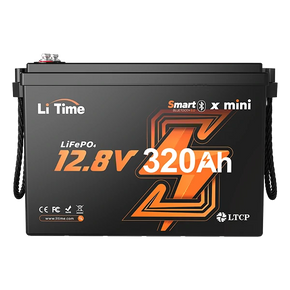


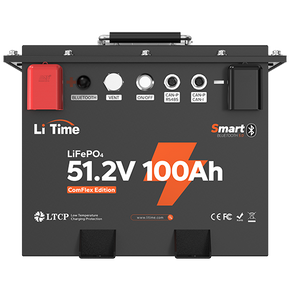

As power sources for RVs, marine vessels, energy storage systems and golf carts become increasingly popular, lithium iron phosphate (LiFePO4) batteries stand out as the best lithium battery options for global users. They feature an ultra-long service life, superior safety performance and low capacity degradation. However, most shoppers only focus on battery capacity and voltage while overlooking critical compatibility factors. This often leads to installation failures, incomplete charging, underpowered loads and permanent battery damage, resulting in unnecessary returns and potential safety hazards.
As a professional overseas lithium battery brand, LiTime combines real-world user experience and industry standards to create this detailed guide. We walk you through key pre-purchase checks covering physical dimensions, device compatibility, application scenarios, built-in features and series/parallel connection rules, helping you pick the best lithium batteries and avoid common pitfalls efficiently.
- 1. Size & Installation Space: Prioritize Physical Compatibility
- 2. Charger & Load Compatibility: Prevent Equipment Damage
- 3.Application Scenarios & Core Features: Select Based on Actual Needs
- 4. Series & Parallel Connection Rules: Meet Load Demands & Support Future Expansion
- 5. Frequently Asked Questions (FAQ)
1. Size & Installation Space: Prioritize Physical Compatibility
LiFePO4 batteries boast higher energy density than traditional lead-acid batteries, delivering a smaller footprint and lighter weight at the same capacity. Even so, discrepancies in overall dimensions and terminal positions across brands are among the top causes of poor fit. Improper sizing will result in failed installation, wiring issues and crushed cables.
When shopping for the best lithium ion battery, you need to verify not only the basic length, width and height of the battery but also the inner dimensions of your equipment’s battery compartment. Most importantly, check the BCI Group Size, a widely adopted standard by the North American battery industry. Different BCI Group numbers (24, 27, 31, 47, GC2 and more) correspond to fixed dimensional limits, perfectly matching standard battery trays and boxes on RVs, boats and golf carts.
Read More: Battery Group Size Dimensions Complete Guide
Before replacement, confirm the BCI Group number of your original battery and cross-reference it with the new unit’s overall size, terminal layout and installation orientation. Always reserve extra space for wiring and heat dissipation. Note that even batteries with the same BCI Group Size may have minor differences in terminal height, shell structure and edge design. Double-check the allowable mounting directions to ensure secure and safe installation.
2. Charger & Load Compatibility: Prevent Equipment Damage
2.1 Compatibility Requirements for Chargers
LiFePO4 batteries operate on different charging protocols compared to lead-acid batteries. Never use lead-acid battery chargers for LiFePO4 products, as this will cause incomplete charging or failure to reactivate drained batteries.
For optimal performance from your best lithium battery, always use a dedicated LiFePO4 charger with matched output voltage. For example, a 12.8V LiFePO4 battery requires a charging voltage ranging from 14.2V to 14.6V. If the battery enters over-discharge protection mode, you will need a charger with battery reactivation function to wake it up. Severe over-discharge may cause permanent battery failure that cannot be repaired.
2.2 Power Matching for Load Devices
A battery’s discharge capability directly affects the operation of connected devices. Insufficient output will trigger overcurrent protection, leading to failed startup or unexpected shutdowns during operation.
Evaluate the rated power and peak startup current of your loads first, then compare these figures with the battery’s continuous discharge current, peak discharge current and rated power. For instance, a 12.8V 100Ah battery offers a continuous output of 1280W, which only works for loads with lower power ratings. Choose batteries with higher continuous discharge current if you run high-power equipment.
3. Application Scenarios & Core Features: Select Based on Actual Needs

Choosing the best lithium batteries goes beyond basic specifications. You need to match products to your application scenarios and required built-in features. We have developed specialized battery models for various use cases to solve unique operational pain points. Notably, most scenario-specific batteries support multi-purpose use and are not limited to a single application. Below is a detailed breakdown for targeted selection.
3.1 Scenario-Specific Batteries: Solve Operational Pain Points
We tailor dedicated batteries for different equipment with optimized BMS settings and cell configurations to fit diverse working conditions:
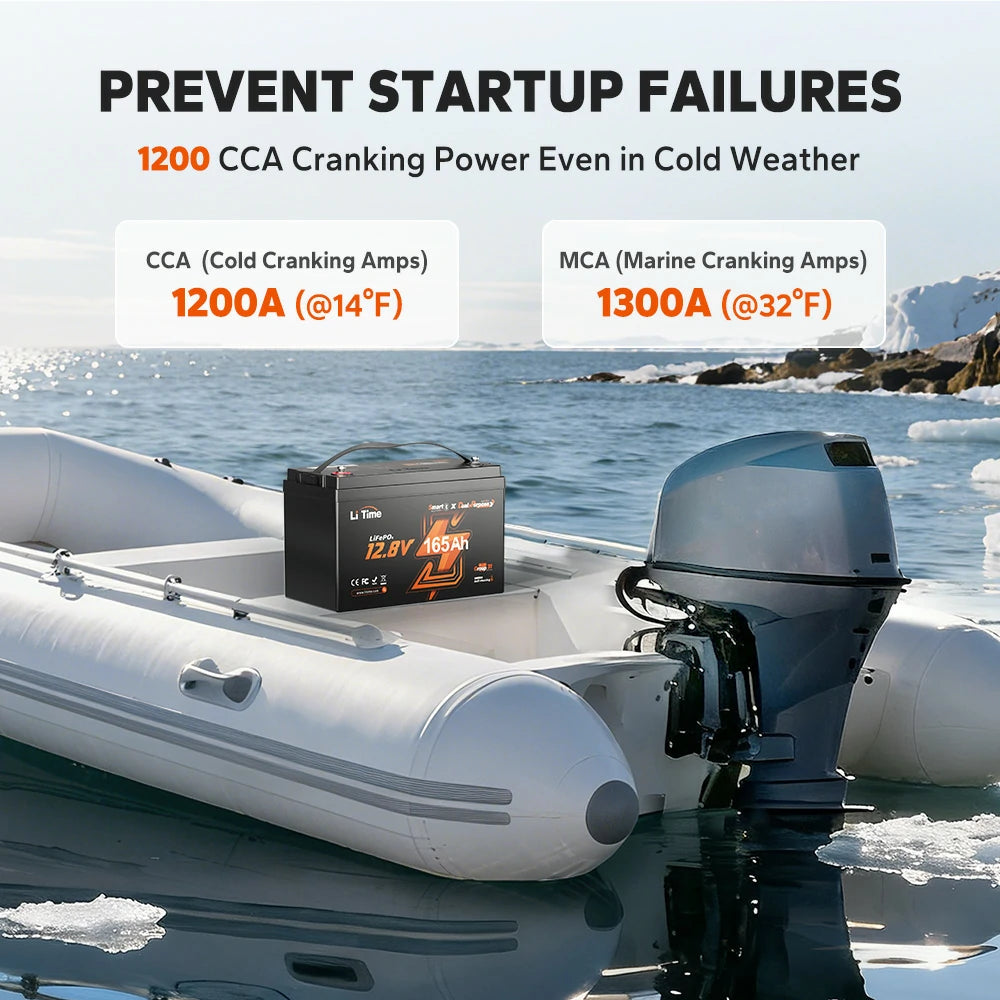
- Engine Starting Applications: Designed for marine outboard motors. These units deliver extreme peak current for instant startup, a key requirement for engines. Our dual-purpose batteries excel at both high-current startup and daily energy storage, suitable for regular low-voltage power supply as well.
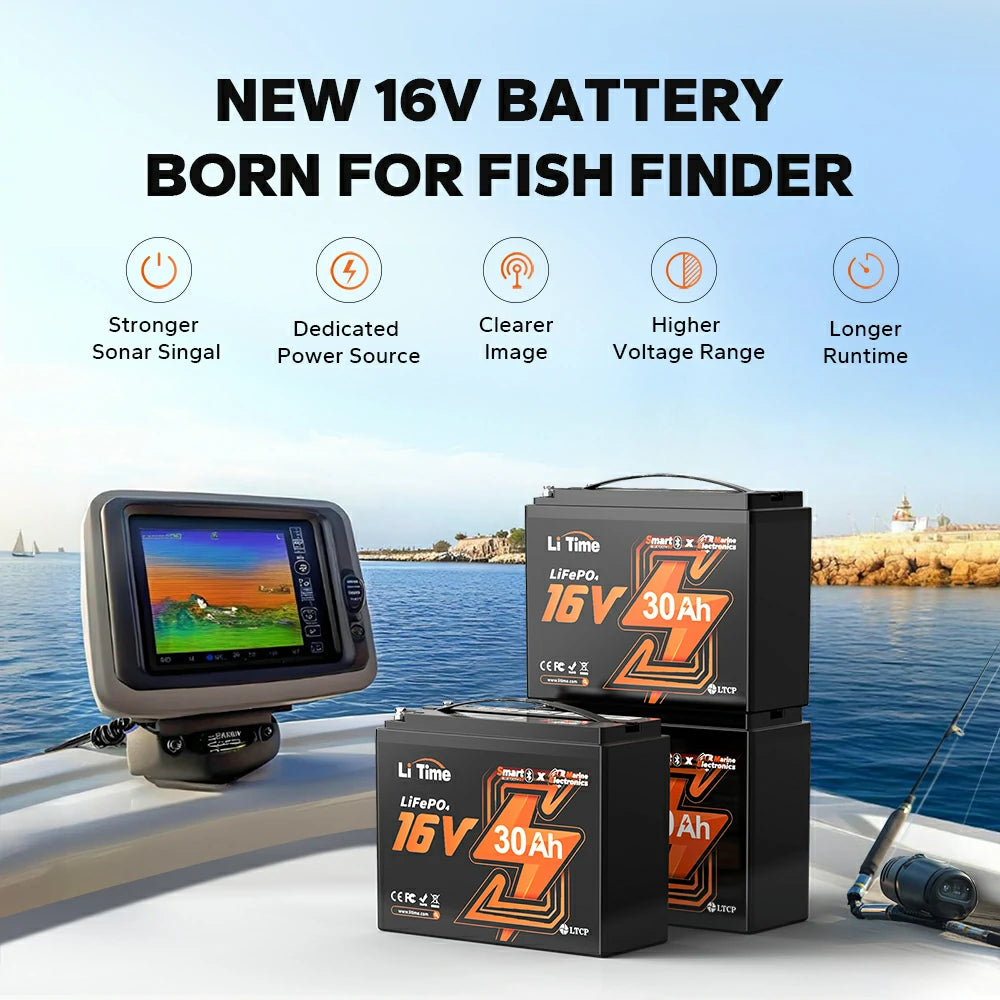
- Fish Finder & Radar Systems: Standard 12V batteries suffer obvious voltage drops when running low, resulting in blurry or unstable display screens. Our exclusive 16V batteries provide steady voltage output to keep marine electronics running smoothly for longer.
- Trolling Motors (TM): Marine trolling motors feature frequent start-stop cycles, fluctuating current and exposure to moisture and salt spray. Our dedicated trolling motor batteries enhance continuous discharge performance and corrosion resistance with an IP65 waterproof rating. They work reliably for long-hour marine operations and can also serve as auxiliary power for RVs and outdoor setups.
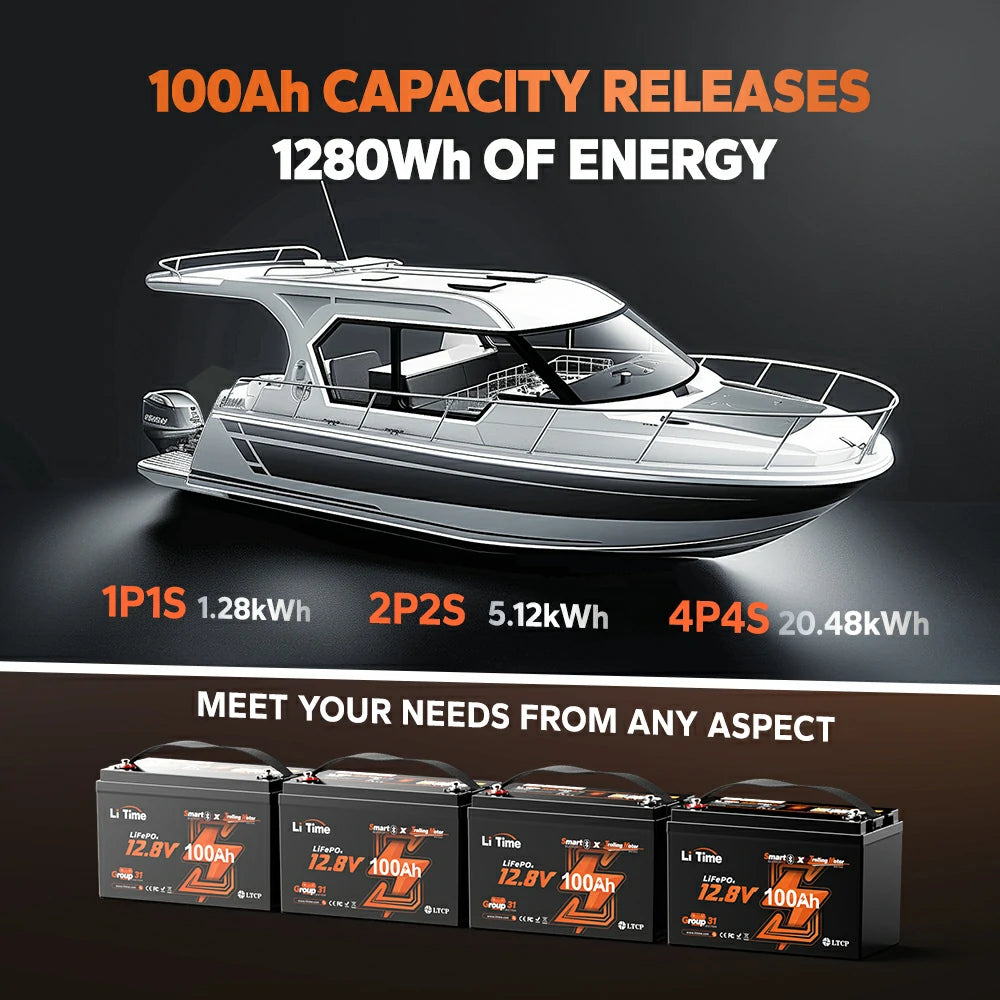
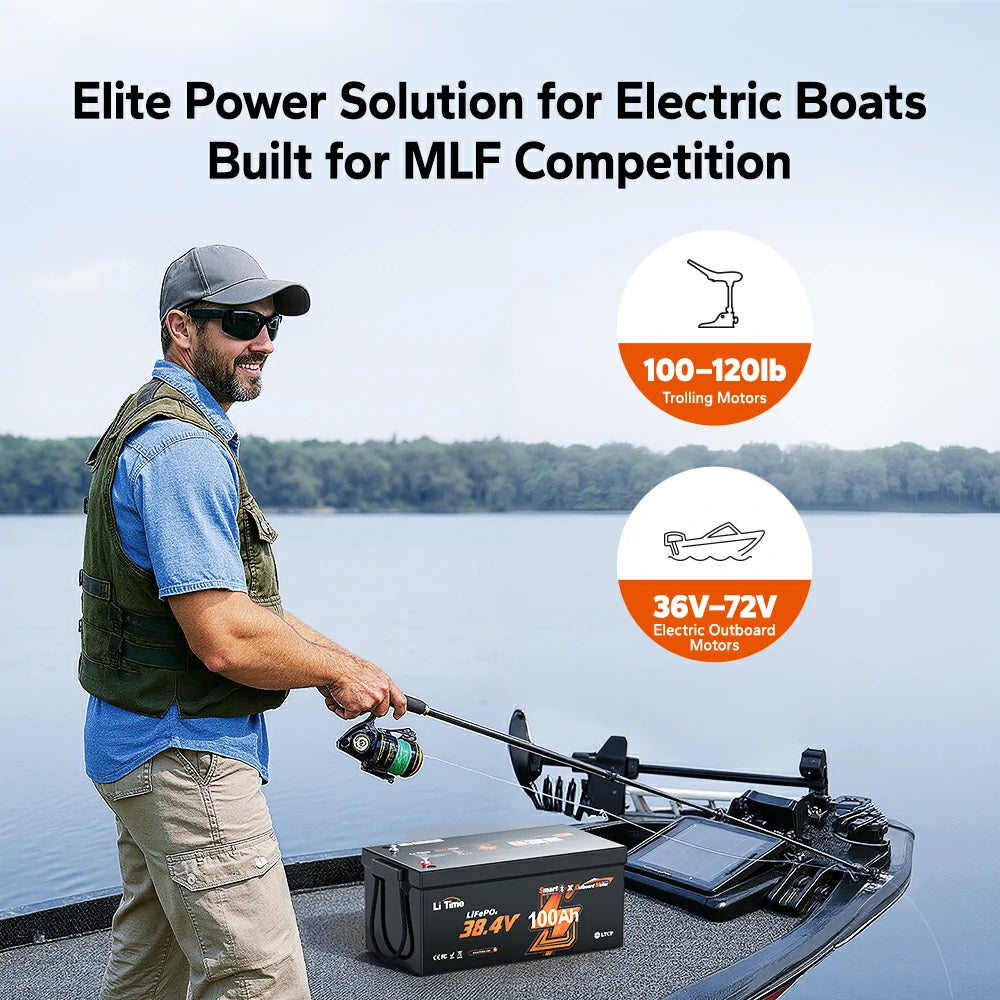
- Outboard Motors (OBM): Marine environments feature high humidity and drastic temperature changes. Our outboard motor batteries improve environmental tolerance and discharge stability, supporting series connection up to 60V or even 72V for high-voltage outboards. They are also fully compatible with golf carts.
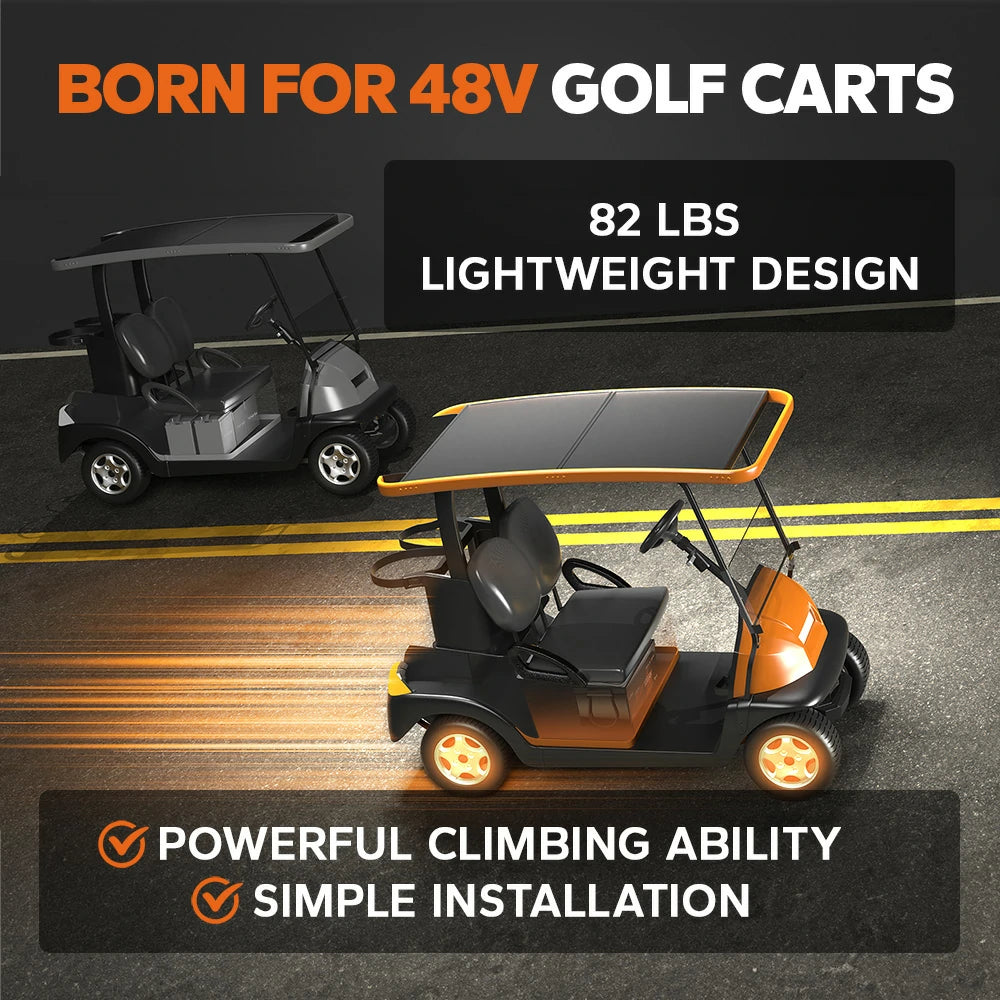
- Golf Carts: Electric golf carts face heavy loads during climbing, large current surges during acceleration, and reverse charging current during deceleration or turning. Our golf cart batteries strengthen continuous discharge capacity and BMS impact resistance to avoid unexpected power cuts. They can also be used for home energy storage and backup power.
Selection Tip: Prioritize scenario-specific batteries based on your primary use. Their customized design resolves industry pain points effectively, while their versatile performance allows flexible use across multiple similar scenarios.
3.2 Custom Core Features: Adapt to Working Environments
On top of scenario-based models, our LiFePO4 batteries come with optional functional features to boost safety, convenience and compatibility:
- Low-Temperature Protection: Ideal for cold outdoor areas and winter marine use. This function automatically cuts off charging below 0°C to prevent lithium plating, capacity loss and irreversible cell damage.
- Self-Heating Function: Built for extreme cold down to -20°C. The battery activates the heating system first when charging in low temperatures, and starts normal charging once the internal temperature rises to a safe range, solving the common issue of unchargeable batteries in frigid conditions.
- Bluetooth Monitoring: Available for RVs, marine vessels and golf carts. The built-in Bluetooth module connects to LiTime APP, displaying real-time data including remaining power, voltage, current, temperature and cycle counts. You can also check BMS and cell status to eliminate guesswork about battery levels during use.
- Multi-Device Communication: Selected models support connection with LiTime RS485 displays, inverters and chargers for automatic data synchronization without manual setup. They are also compatible with Victron Cerbo GX, enabling remote data viewing and device control.
4. Series & Parallel Connection Rules: Meet Load Demands & Support Future Expansion
For RV energy storage, marine power systems and solar setups, a single battery often cannot meet the voltage or capacity requirements of high-power loads. Users commonly connect batteries in series to boost voltage or in parallel to expand capacity, building high-voltage and large-capacity battery packs for longer runtime. Improper connections or mixed models will cause unbalanced voltage, overheating and rapid capacity decline. Follow the rules below for safe expansion.
4.1 Basic Rules for Series & Parallel Connections
To maintain balanced current, consistent voltage and stable operation, all batteries in a pack must meet five standards: same brand, same model, same rated capacity, identical core features and close purchase dates.
Learn More: How to Connect Your LiFePO4 Batteries in Parallel vs Series
Uniform brand, model and capacity ensure consistent cell formulas, BMS protection parameters and discharge curves. Matching built-in features avoid system conflicts caused by mixed units with or without low-temperature protection, heating or Bluetooth functions. Batteries purchased around the same time share similar internal resistance and aging levels, preventing performance imbalance and premature failure of the entire pack.
4.2 Plan for Future Expansion & Choose Connectable Models
Many users start with a single battery but may upgrade to 24V or 48V high-voltage systems later to power heavy loads. Not all best lithium ion battery models support series connection. Some special-voltage or startup-only batteries are designed for standalone use only.
If you have future plans for voltage upgrade or capacity expansion, select batteries clearly marked as series & parallel connectable in advance. This avoids the extra cost and trouble of replacing all batteries when you need to expand your power system.
4.3 Practical Tips to Avoid Connection Issues
Series connection is used to raise the total system voltage for high-voltage inverters, while parallel connection increases total capacity to extend runtime. Never mix old and new batteries, units of different capacities or models with different features in one pack. Even if their specifications look similar, long-term operation will lead to voltage imbalance, local overheating and frequent protection triggers, damaging both batteries and connected loads.
5. Frequently Asked Questions (FAQ)
Q1: Can I replace lead-acid batteries directly with LiFePO4 batteries?
A: Yes, but several checks are required. Verify physical size and BCI Group compatibility first. Replace the original lead-acid charger with a dedicated LiFePO4 charger, and confirm the battery’s output power matches your loads to avoid compatibility issues.
Q2: Can I connect batteries of the same model bought in different years in series or parallel?
A: We do not recommend this. Batteries with different service years have varied internal resistance and actual capacity. Long-term use will cause severe voltage imbalance, accelerating performance degradation and shortening the overall lifespan of the battery pack, which also brings potential safety risks.
Q3: Can regular LiFePO4 batteries be charged in cold winter weather?
A: No. Standard LiFePO4 batteries lack low-temperature protection. Charging below 0°C/32℉ will damage internal cell structures, resulting in permanent capacity loss. For year-round use in cold regions, choose batteries with built-in self-heating or low-temperature protection features for safe operation.
Conclusion
Most shoppers only compare capacity and voltage when searching for the best lithium battery. In fact, BCI Group size matching, charger and load compatibility, scenario & feature selection, and standard series/parallel connections are the four core factors that determine installation fit, user experience, battery lifespan and overall safety.
Always check basic dimensions and BCI specifications before purchase. Select scenario-specific batteries and optional functions according to your working environment to prevent mismatches. Following the above guidelines will help you pick the best LiTime batteries, eliminate installation failures, incompatibility problems and product returns, and keep your power system running stably for years.
If you have any questions about model selection, size matching, feature configuration or battery connections, feel free to contact our professional customer support team for one-on-one guidance.

