


Winter camping down in SoCal, Texas, Arizona, and Florida is all about the weather. Even in December, a lot of spots down here stay in the 50°F and 60°F during the day, and just slip into the 40s once the sun goes down. That means we’re out hiking, fishing, and rolling the rig in T-shirts, then just throw on a light jacket to hang around camp after dark.
And with about 175.8 million of us—roughly 57% of folks six and up—getting outside at least once in 2023, heading south for a winter camping run has pretty much turned into something we just do with family and friends.
Once we load up the LED camp lights, a 12V fridge, the coffee maker, phones, tablets, and all those little gadgets, it hits us real quick: winter camping isn’t just about bringing a tent, it’s about having a power system we can actually count on.

- 1. How much power do we need by trip length?
- 2. LiFePO₄ vs lead-acid in a Southern winter
- 3. RVs, camper vans & DIY solar: the 10-piece puzzle
- 4. Solo, couple, family: quick sizing rules
- 5. Real user story: fishing + van life on LiTime power
- 6. From Southern winter camps to a Yellowstone RV run
- 7. Which LiTime batteries make sense here?
- 8. Sources
1. How much power do we need by trip length?
For winter trips down here, the power we need mostly tracks with how long we’re out and who’s coming along. This main guide stays high level, but still gives real numbers so we can pick a battery in amp-hours, not just “a big one”.
Overnight / 1 night
Typical setup: solo or a couple. A few LED lights, phones, maybe a small 12 V compressor fridge and a laptop. Even that little fridge can use a few hundred watt-hours per day, depending on size and temps.
A modern 12 V camping fridge often uses roughly 240–600 Wh per day in mild weather. LED lights, phones, and a laptop add another 50–150 Wh, so a realistic overnight total for light use is roughly 200–400 Wh.
In battery terms, that translates to:
- Very light loads: about a 12 V 50 Ah LiFePO₄ battery (≈640 Wh).
- Comfortable for most people: a 12 V 100 Ah LiFePO₄ (≈1,280 Wh), especially if a fridge runs all night.
Weekend / 2–3 nights
Now we add tablets, more lighting, and maybe a small 120 V inverter for coffee or laptops. We’re also running that 12 V fridge for multiple days.
For a solo camper or couple, daily use often ends up in the 300–600 Wh range. For a small family, it can easily land around 600–900 Wh. Over a 2–3 night weekend, that puts total energy roughly in the 600–1,800 Wh ballpark, depending on crew and habits.
A good rule of thumb is:
- Solo / light-use couple: a 12 V 100 Ah LiFePO₄ is the practical minimum for a weekend.
- Couple with fridge + gadgets, or small family: a 12 V 150–200 Ah bank (for example, a single 200 Ah pack) is a much more relaxed fit.
3–4 day trips and longer
For 3–4 days, we’re usually talking families, more devices, maybe a TV or projector, and sometimes a CPAP or other medical gear.
Many RV energy studies that include full HVAC show heavily used rigs can get into the tens of kWh per day. In mild Southern winters, we’re well below that because we’re not running electric heat or heavy AC, but it’s still easy for a family to land around 800–1,200 Wh per day.
Over 3–4 days of off-grid camping, a realistic total can be:
- Crew of two: roughly 1,200–2,000 Wh.
- Family rig: roughly 2,000–4,000 Wh.
Which usually means this in battery capacity:
- Crew of two: around a 12 V 200 Ah LiFePO₄ (≈2,560 Wh) if we want headroom without relying on charging.
- Family: a 12 V 230–280 Ah pack, or a pair of 100–200 Ah packs in parallel, especially if we’re not sure about solar or alternator charging every day.
Later deep-dive articles can turn these ranges into full tables. Here, the core takeaway is simple: longer trip + more people = more daily Wh = larger amp-hour bank.
2. LiFePO₄ vs lead-acid in a Southern winter
Down here, the question isn’t “do we need a battery?”—it’s “which chemistry actually keeps up with how we camp in winter?”. A lot of older rigs shipped with lead-acid or AGM, but more and more of us now expect the house bank to be LiFePO₄.
Cycle life & usable capacity
Deep-cycle lead-acid banks are often rated in the low hundreds of cycles under real use. LiFePO₄ packs are commonly rated in the 2,000–4,000+ cycle range when used within spec, which means more seasons out of the same bank.
Lead-acid also likes shallow discharge; most guides suggest using only about 50–60% of their rated capacity. LiFePO₄ banks are routinely used around 80–90% depth of discharge, so a “100 Ah” lithium pack usually gives us far more usable energy than a “100 Ah” lead-acid bank in the same slot.
Weight, space & cold snaps
A U.S. Department of Energy assessment puts lead-acid around 25–100 kWh/m³, while lithium-ion chemistries sit roughly in the 150–500 kWh/m³ range. On the road, that means less tongue weight, easier towing, and more storage space for actual camping gear.
Southern winters are mild, but a cold front can still drop a campground from the 70s into the 30s overnight. LiFePO₄ doesn’t like being charged when it’s too cold, which is why LiTime builds low-temperature protection packs that cut off charging below freezing, and self-heating packs that warm themselves before taking a charge.
Put simply, for the way we really camp—T-shirt afternoons, cool nights, and rigs full of electronics—LiFePO₄ feels less like a fancy upgrade and more like the chemistry that finally matches our Southern winter camping style.
3. RVs, camper vans & DIY solar: the 10-piece puzzle
Once we move from a simple tent overnight to running an RV or camper van for days or weeks, power turns into a small system, not just “a Lithium battery”. Most of our draw comes from the fridge, lights, water pump, fans, and a stack of devices.
In this main guide, we keep the wiring light. For the full breakdown, we send readers to our own RV solar article: 10 Basic Components for DIY RV Camper Solar System
That piece walks through panels, MPPT, LiFePO₄ banks, inverters, fuses, bus bars, and wiring. Here, we only need the main idea: if we already know our daily loads and trip length, that 10-piece puzzle becomes something we can build step by step.
4. Solo, couple, family: quick sizing rules
The detailed math can live in separate sizing articles. In this main guide, simple rules of thumb are enough.
Solo winter camping
One phone, a headlamp, one or two LED lanterns, maybe a small 12 V fridge and a laptop. For overnight and short weekends, a pack in the 50–100 Ah LiFePO₄ range is a practical starting point.
Couple trips
Two phones, extra tablets, string lights, a Bluetooth speaker, maybe a projector and coffee gear. A 100 Ah pack can handle lighter-use weekends, but many couples are happier around 200 Ah once a fridge and inverter join the party.
Family camping
Three to five phones, tablets, indoor and outdoor lights, a 12 V or RV fridge, and maybe a CPAP. Here the battery bank becomes true core camping gear. A realistic starting point is around 200 Ah and up if we want 2–3 nights without hookups.
Each of these bullets can become its own deep-dive article later. This guide just points people in the right direction before they click deeper.
5. Real user story: fishing + van life on LiTime power
Specs matter, but real trips matter more. That is why we like to anchor this guide with one heavy-use story.
In our user feature LiTime Battery Review: Power for Fishing & Camper Van Life, Dominik explains how he runs both a fishing boat and a VW camper off a LiTime setup he has been using for over five years.
On the water he drives a trolling motor and fish finders all day. In the van he keeps a fridge cold, heat running, and his electronics topped off. That mix looks a lot like the “fish and camp” winter trips many of us take around Southern lakes, bays, and the Gulf.
His experience is a good sanity check for us as editors. A properly sized LiFePO₄ bank can carry a fishing + camper + electronics stack for several days off-grid. That is exactly the kind of use case we have in mind when we talk about Southern winter camping power.
6. From Southern winter camps to a Yellowstone RV run
For a lot of us, winter trips down south are practice reps for a bigger RV dream. Once a power system feels dialed in across SoCal, Texas, Arizona, and Florida, the map starts pointing toward Yellowstone and the Mountain West.
Yellowstone alone saw about 4.5 million visits in 2023, according to the National Park Service. Most in-park campgrounds are dry or offer limited hookups. Fishing Bridge RV Park is the only campground inside the park with full hookups, including 50-amp service, and it is limited to hard-sided RVs.
Instead of unpacking every road and campground here, we link to our dedicated RV article: Yellowstone RV Camping Guide | Roads, Campgrounds & Power
The idea is simple. We tune our LiFePO₄ system where the winter weather is kind, then take that same system north when we are ready for bigger, colder trips.
7. Don’t Forget: LiTime Support, Warranty & Perks
RV, van and camper banks
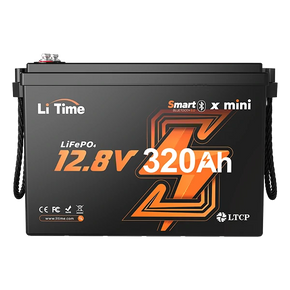
For most Southern winter camping, LiTime’s RV, van, and camper batteries are the core options. Short solo or couple trips often start around 12 V 100 Ah. Families and longer stays usually feel better in the 200 Ah+ range.
You can browse capacities and use cases here: RV, Vans & Camper Batteries
Cold-weather and self-heating lines
Southern winters are not brutal, but cold fronts still happen. That is what our low-temperature protection and self-heating lines are built for.
Low-temp protection packs cut off charging below freezing and resume when cell temperatures are safe again. Self-heating packs warm themselves when you plug in to charge in the cold, then switch to normal charging once they reach a safe internal temperature.
You can compare LiTime cold-weather battery models.
8. Final wrap-up: turning Southern winter camping into a repeatable setup
From here, the playbook is straightforward: pick your lane—overnight, weekend, or 3–4 days; solo, couple, or family—estimate your daily watt-hours, then choose a LiTime lithium battery bank from our RV, camper, and cold-weather lines that fits that number. With that in place, Southern winter camping stops being a one-off adventure and starts becoming a season you can come back to, again and again.

