


Camping, RVing and road trips are getting more and more popular. People are no longer satisfied with instant noodles and sausages; they want to seriously cook at the campsite.
Morning hand-brewed coffee, steak for lunch, hotpot and BBQ for dinner – a mobile kitchen is becoming the new goal.
But as soon as you start using induction cooktops, electric grills, kettles and coffee machines, a few questions pop up:
- What cooking appliances actually make sense for outdoor use?
- How much power do I need so I do not run out halfway through cooking?
- For a brand like LiTime, what is the difference between lithium 12V and 24V batteries, and how do I choose?
This article will walk you through things in a simple, beginner-friendly way: from playstyle to appliances to basic power planning, and then into practical recommendations for LiTime 12V and 24V lithium batteries.

1. Decide how you want to cook, then decide how much power you need
Before you dive into specifications, ask yourself one question:
How well do I want to eat outdoors?
Once you are clear on that, it is much easier to work backwards to appliances and power.
1.1 Lightweight quick hot meal style
Features:
-
You care about traveling light and do not want too much gear.
-
As long as there is a hot drink and hot noodles, you are happy.
Typical gear combo:
-
Butane stove or small gas stove
-
Folding pot or small soup pot
-
A small electric kettle or low-power induction cooktop for boiling water, instant noodles and simple coffee
In this setup, electricity is mainly a nice bonus. Having power is more comfortable, but you will not go hungry without it.
Best for:
-
New campers just getting started
-
Short weekend trips where you do not want to bring too much stuff
1.2 Foodie and photo style
Features:
-
You want restaurant-level meals even at the campsite.
-
You care about ingredients and plating and like to post on social media.
Typical gear combo:
-
About 1500W induction cooktop and a frying pan for steak, fish and dumplings
-
Electric grill or griddle for bacon and vegetable platters
-
Coffee maker or pour-over kit with an electric kettle
-
Small car fridge for meat, drinks, dairy and vegetables
Here you have a clear power demand. During cooking, the induction cooktop and grill will often run at high power for some time, so you need enough battery capacity and a proper inverter.
Best for:
-
Regular campers who enjoy camp life
-
People who love shooting photos and videos
1.3 Family big pot and RV kitchen style
Features:
-
Whole family or group road trips
-
The campsite is a second home and you want meals similar to home
Typical gear combo:
-
Induction cooktop or double induction cooktop
-
Large wok, stock pot and soup pot
-
Rice cooker or pressure cooker
-
Electric grill or small oven
-
Large car fridge
-
Optional extras such as blender, soy milk maker and air fryer
At this point, power needs move from a convenience to essential infrastructure. Without a reliable energy storage system, a mobile kitchen is hard to run.
Best for:
-
RV owners
-
People who stay at campsites for a long time
-
Families with children who want proper home-style meals outdoors
2. Practical outdoor cooking setups you can copy directly

Based on these styles, here are a few concrete setups you can largely copy and then adjust to your budget and habits.
2.1 Setup A: Beginner warm belly kit
Typical gear:
- Butane stove or small gas stove
- Low-power induction cooktop or mini electric kettle
- One light pot and one small frying pan
You can cook:
- Noodles, dumplings and small hotpots
- Simple stir-fries such as fried rice, vegetables and eggs
- Coffee, tea, hot milk and hot chocolate
Power profile:
- Most power is used for boiling water and occasional quick stir-fries.
- Power draw and run time are moderate.
Pairing this setup with an entry-level LiTime lithium 12V battery is already a big comfort upgrade.
2.2 Setup B: Camp bistro western style
Typical gear:
- About 1500W induction cooktop
- Multi-function electric grill or electric hotpot
- Coffee maker or pour-over setup with electric kettle
- Compact car fridge
You can cook:
- Steak, pasta, pan-seared fish and bacon
- Grilled vegetables, chicken wings and hotdogs
- Hand-brew coffee, lattes and hot chocolate
Power profile:
- High-power appliances will run for a while for each meal.
- If you want three proper meals a day, you need a stable, larger-capacity battery.
A LiTime lithium 12V battery system around 2 kWh works very well here and keeps things comfortable.
2.3 Setup C: Family Chinese big pot kit
Typical gear:
- Induction cooktop or double induction cooktop
- Large wok, soup pot and stew pot
- Rice cooker or pressure cooker
- Electric grill or small oven
You can cook:
- Big batches of stir-fries, soups, stews, congee and rice
- Family-style dishes for multiple people
- Grilled skewers, wings and vegetables
Power profile:
- High wattage, multiple appliances and long cooking duration.
- A 24V system with a high-capacity lithium battery, such as a LiTime lithium 24V battery setup, is strongly recommended for better stability, safety and future expansion.
3. Simple power rules you really need to know
If you do not want to get lost in watts and amp hours, you can remember these simple rules:
- Induction cooktops and electric grills are power hungry. If the nameplate says 1000W, 1500W or 1800W, it is a high-power appliance and your battery will drain quickly during cooking.
- If you only want an occasional hot meal, an entry-level litime is enough to significantly improve your outdoor experience.
- If you want electricity for three hot meals a day plus a fridge and lighting, choose at least a medium-size battery capacity, for example a LiTime 12V lithium battery setup around 2 kWh.
- All these appliances should run through a pure sine wave inverter. The inverter rated power must be higher than your most power-hungry appliance, with some margin. A 1500W induction cooktop pairs well with a 2000W or higher inverter.
- If possible, add solar panels. LiTime 12V and 24V batteries can be charged via solar. On sunny days you can cook and recharge at the same time, which greatly reduces battery anxiety, especially for road trips and RV users.
4. LiTime outdoor power solutions for 12V and 24V scenarios
If you have decided to set up a stable power system for your outdoor kitchen, you can use these typical pairings as a reference. They are designed for users searching for litime 12v lithium battery and 24v lithium battery who want concrete scenarios, not only specifications.
4.1 Common advantages of LiTime lithium 12V and 24V batteries
- LiFePO4 cells with up to 4000 or more cycles.
- Built-in smart BMS with multiple protections such as over-charge, over-discharge, over-current and short circuit.
- Lighter than comparable lead-acid batteries, which is very suitable for camping and RV environments.
4.2 Scenario 1: Light camping with occasional induction cooktop and small appliances (12V entry level)

Typical use:
- Gas stove as the main cooker; induction cooktop used occasionally for boiling water or simple meals.
- Plus a mini fridge, string lights and phone or laptop charging.
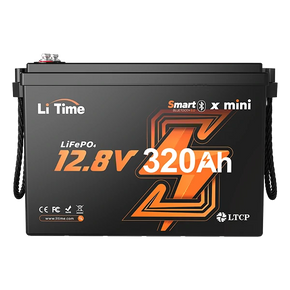
Recommended product: LiTime 12v 100ah lithium battery
- Around 1280 Wh capacity, enough for one to two meals with a small induction cooktop or kettle.
- For weekend trips, it easily covers basic cooking, fridge and lighting needs.
- If you want more comfort, you can connect two in parallel to upgrade to a LiTime 12V 200Ah system.
4.3 Scenario 2: Induction cooktop or grill as the main cooker, three meals a day (12V mid to high level)
Typical use:
- About 1500W induction cooktop plus electric grill or mini oven.
- Frequent cooking of steak, stir-fries, pasta and coffee.
Recommended product: LiTime lithium 12V 200Ah battery
- Around 2560 Wh capacity. With a suitable inverter, it can comfortably support three cooked meals a day.
- In practice it can cover three hot meals plus fridge, lighting and electronic device charging.
- This is a practical mid to high level choice for frequent campers.
4.4 Scenario 3: RV kitchen or long-stay campsite with high power multi-appliance setup (24V advanced)

Typical use:
- Double induction cooktop, grill, oven and coffee machine used in turns.
- Possibly also running air conditioning or a microwave.
- The campsite is basically a second home.
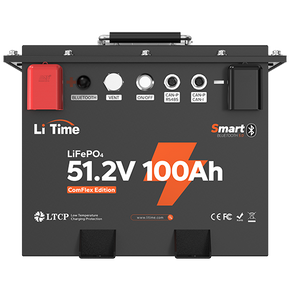
Recommended solution: large LiTime lithium 24V battery system
One typical build:
- use a LiTime 24v lithium battery series to directly build a 24V high-power system.
Advantages of 24V systems:
- For the same power, 24V means lower current, which allows thinner cables, less heat and more safety margin.
- Better suited for 2000 to 3000W inverters, which you need for multiple high-power appliances.
- It is easy to add more batteries in parallel later, scaling up for long-term RV living or deep-camp setups.
5. Outdoor cooking and LiTime power FAQ
Q1: Is it safe to use an induction cooktop or electric grill outdoors?
Yes, if you follow three basic rules:
- Use a reliable battery and a pure sine wave inverter.
- Place the appliances on a stable, dry and well-ventilated surface, away from tent fabric and flammable items.
- Turn everything off when you leave and do not run high-power appliances unattended.
Q2: What if I run out of power halfway through cooking?
Before you leave home, roughly estimate how many meals you will cook and which appliances you will use, and build in some safety margin. Also bring:
- Some food that does not rely heavily on electricity, such as bread, salad, snacks and ready-to-eat meals.
- A butane or gas stove as backup.
That way, even if your LiTime battery runs low, it will not ruin your dinner.
Q3: Do rain and cold weather affect LiTime 12V and 24V batteries?
Yes, to a degree:
- Keep the battery and inverter dry and protected, ideally in a box, inside the vehicle or in a sheltered spot.
- In very cold weather, available runtime will be somewhat shorter, so plan for extra capacity. This is normal for all batteries.
Q4: Can I cook while charging the LiTime battery from solar at the same time?
Usually yes, as long as:
- Your system is designed to support charging and discharging at the same time.
- The total load does not drastically exceed the charging power.
For RV and long-distance users searching for litime lithium 12v, 24v battery, a combination of LiTime batteries and solar panels is a very smart upgrade.
Q5: How long can LiTime lithium 12V and 24V batteries last, and do they need special maintenance?
LiTime uses LiFePO4 chemistry with up to 4000 or more cycles, so at typical camping frequency they can last many years.
Daily care is simple:
- Do not always drain them completely before charging.
- When not in use for a long time, store them in a cool, dry place and top up occasionally.
- Avoid prolonged high temperature and direct sun exposure.
If you already know your preferred outdoor cooking style, you can match it to one of the scenarios above. Then choosing the right LiTime lithium 12V or 24V battery becomes much easier than reading a specification sheet.
The best system is the one that lets you cook the food you want, keeps your trip relaxed and fits your budget and storage space.

