


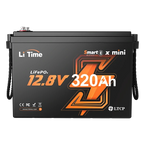


In modern life, reliable power supply is crucial for various applications, whether it's RV travel, marine navigation, off-grid solar systems, or backup power. This is where deep cycle batteries become a core component. But what exactly is a deep cycle battery? How does it differ from common car starter batteries? This article will delve into the mysteries of deep cycle batteries, helping you understand their working principles, advantages, and providing professional advice for choosing the right energy storage solution in the US market.
- Part 1: What is a Deep Cycle Battery? Definition & Types
- Part 2: What are Deep Cycle Batteries Used For?
- Part 3: Deep Cycle Batteries vs. Regular Batteries: What's the Difference?
- Part 4: Lithium Deep Cycle Batteries vs. Lead-Acid Deep Cycle Batteries
- Part 5: Why RV Users Should Choose LiFePO4 Deep Cycle Batteries?
- Part 6: How to Choose the Best Deep Cycle Battery for Your Needs
- Part 7: FAQs About Deep Cycle Batteries
Part 1: What is a Deep Cycle Battery? Definition & Types
1.1 Deep Cycle Battery Definition
A deep cycle battery is a type of rechargeable battery specifically designed to provide a steady amount of electrical current over a long period, discharging a significant portion of its stored energy. Unlike car starter batteries, which deliver a large burst of current for a few seconds, deep cycle batteries are built for sustained power delivery. For instance, LiFePO4 (Lithium Iron Phosphate) batteries can safely discharge 80%–100% of their capacity, while deep cycle lead-acid batteries are typically recommended not to discharge beyond 50% to avoid significantly shortening their lifespan. This ability for "deep discharge-recharge" makes them central to energy storage systems.
1.2 Deep Cycle Battery Working Principle
The working principle of a deep cycle battery is based on electrochemical reactions, similar to all batteries, converting chemical energy into electrical energy. However, deep cycle lead-acid batteries have an optimized internal structure to accommodate deep discharge requirements. LiFePO4 batteries, on the other hand, derive their deep cycling capability primarily from the chemical stability of their materials, requiring no special structural optimization for deep discharge.
1.3 Deep Cycle Battery Types
In the US market, common deep cycle battery types include:
- Flooded Lead-Acid (FLA): The most economical option, requiring regular distilled water top-ups. Ideal for stationary, well-ventilated solar systems.
- AGM (Absorbed Glass Mat): Maintenance-free, spill-proof, and vibration-resistant, but sensitive to overcharging.
- Gel Batteries: Electrolyte is in a gel-like state, offering good high-temperature performance but sensitive to charging voltage.
- Lithium Iron Phosphate (LiFePO₄): Weighs only half as much as lead-acid, boasts a cycle life of 4000+ cycles, can be deeply discharged to over 80% or even 100%, and includes a built-in BMS for protection. Offers the best long-term value.
1.4 Advantages of Deep Cycle Batteries
Deep cycle batteries are the preferred choice for many energy storage applications due to their unique advantages:
- Can withstand frequent deep discharges.
- Longer cycle life, especially lithium batteries which can last over 10 years.
- Stable voltage output, ensuring normal operation of equipment.
- Various types to suit different budgets and scenarios.
Part 2: What are Deep Cycle Batteries Used For?
The primary role of deep cycle batteries is energy storage, commonly found in the following US lifestyle scenarios:
- RV/Travel Trailers: Powering 12V lights, refrigerators, water pumps, and electronics.
- Off-Grid Solar Systems: Storing energy during the day and releasing it at night, most efficiently when paired with an MPPT controller.
- Golf Carts/Low-Speed Electric Vehicles: Requiring continuous discharge for 2–4 hours; both lithium and AGM batteries are suitable.
- Fishing Trolling Motors: Demanding deep cycling and vibration resistance; marine deep cycle batteries such as AGM or LiFePO4 are optimal.
- Electric Wheelchairs/Robotic Vacuums/Cleaning Machines: Daily charging and discharging; lithium batteries significantly extend range.
- Home Backup Power: Paired with energy storage systems to handle power outages or time-of-use electricity pricing.
Part 3: Deep Cycle Batteries vs. Regular Batteries: What's the Difference?
| Feature | Starter Battery | Lead-Acid Deep Cycle | LiFePO₄ Deep Cycle |
|---|---|---|---|
| Main Purpose | Starting engines, high instant current | Long-term stable power, energy storage | Long-term stable power, energy storage |
| Discharge Depth | Shallow discharge (max 20%) | 50% | 100% |
| Cycle Life | Rapidly shortens with deep discharge | 200-500 cycles | 4000+ cycles |
| Typical Applications | Car, truck engine starting | Entry-level RVs, solar | RVs, marine, solar systems, golf carts |
Remember: Deep cycle batteries are suitable for energy storage; do not confuse them with starter batteries. They are designed for continuous power delivery, not for instantaneous bursts of power.
Part 4: Lithium Deep Cycle vs. Lead-Acid Deep Cycle (Taking 12V 100Ah Batteries as an Example)
| Comparison Item | LiFePO₄ (Lithium Iron Phosphate) | Lead-Acid (AGM/Flooded) |
|---|---|---|
| Weight | 60% lighter | Heavy |
| Usable Capacity | 100% (can be fully discharged) | 50% (recommended to keep half) |
| Cycle Life | 4000+ cycles | 200–500 cycles |
| Charging Efficiency | Over 90% | 70%–85% |
| Maintenance | Maintenance-free | Requires terminal cleaning, water top-ups (flooded type) |
| Low-Temperature Performance | Excellent discharge capability, charging requires low-temp protection | Significant capacity drop |
| Initial Cost | Higher | Lower |
| 10-Year Total Cost | Lower | Higher (requires 3–4 replacements) |
Professional Advice: If your budget allows, it is recommended to choose lithium deep cycle batteries. Although the initial investment is higher, their long lifespan, larger usable capacity, and maintenance-free nature make them more cost-effective in the long run.
Part 5: Why RV Users Should Choose LiFePO4 Deep Cycle Batteries
For RV users, choosing the right battery is crucial. Among the many deep cycle battery types, LiFePO4 (Lithium Iron Phosphate) batteries are rapidly becoming mainstream, offering advantages far beyond traditional lead-acid batteries.
- 60% Lighter Weight: Saves weight for fresh water and gear in RVs.
- 100% Depth of Discharge: One 100Ah lithium battery provides the same usable energy as two 200Ah lead-acid batteries (as lead-acid can only use half).
- Fast Charging Speed: Accepts high charging currents, significantly reducing charging time when paired with shore power, solar, or generators.
- Cycle Life of 4000+ Cycles: With daily full discharge, can last over 10 years, far exceeding the typical RV usage cycle.
- Built-in BMS (Battery Management System): Provides overcharge, over-discharge, short-circuit, high-temperature, overcurrent, and low-temperature protection, ensuring safety and peace of mind.
- Parallel Expandability: Easily increase capacity by connecting in parallel.
Choosing Quality LiFePO4 Batteries
When you decide to invest in LiFePO4 batteries, choosing a trustworthy brand is paramount. An excellent brand not only provides high-performance, high-safety products but also offers comprehensive after-sales service and technical support. In the market, many brands are dedicated to providing quality LiFePO4 battery solutions for RVs and various energy storage applications.
For example, LiTime is a highly-regarded brand that focuses on delivering high-performance, high-safety LiFePO4 battery products and has earned widespread market recognition for its excellent customer service. When choosing, it is recommended to consider product technical specifications, user reviews, and brand professionalism based on your specific needs.
Part 6: How to Choose the Best Deep Cycle Battery for Your Needs
When selecting a deep cycle battery, consider the following key factors:
- Voltage (V): Ensure it matches your system voltage (e.g., 12V, 24V, 36V, 48V).
- Capacity Requirement (Ah): For daily energy storage battery selection, you can quickly calculate the required battery capacity based on power consumption. Formula: Battery Capacity (Ah) = Power Consumption (Wh) ÷ Battery Voltage (V).
Practical Example: If equipment consumes 500Wh daily and uses a 12V battery, the theoretical required battery capacity is approximately 41.67Ah. Considering actual usage loss, after reserving a 20% margin, a 12V 50Ah battery can reliably meet power supply needs.
- Battery Chemistry Type: Lead-acid (AGM, Gel) has lower costs but limited performance; LiFePO4 offers superior performance but higher initial cost.
- Size and Weight: Especially important for RVs or boats with limited space and weight capacity.
- Brand and Warranty: Choose a reputable brand and pay attention to the warranty service they provide.
Part 7: FAQs About Deep Cycle Batteries
Q1: Can a deep cycle battery be used to start an engine?
A1: No. Deep cycle batteries are designed for long-term stable discharge, not for providing a sudden burst of high current. While a deep cycle lead-acid battery might barely start an engine, it would severely damage its lifespan. A deep cycle lithium battery's BMS (Battery Management System) would likely trigger overcurrent protection, preventing it from starting. Even if some BMS can tolerate short-term high currents, frequent attempts will accelerate battery aging. Use a dedicated starter battery for engine starting.
Q2: LiFePO4 batteries are more expensive than lead-acid batteries. Are they worth the investment?
A2: Absolutely. Although the initial purchase cost of LiFePO4 batteries is higher than lead-acid batteries, their ultra-long cycle life (typically 5-10 times that of lead-acid), higher usable capacity, faster charging speed, lighter weight, and lower maintenance requirements result in a significantly lower Total Cost of Ownership (TCO) over their lifespan compared to lead-acid batteries. For users seeking high performance and long-term reliability, LiFePO4 is a smarter investment.
Q3: Do deep cycle batteries require maintenance?
A3: It depends on the battery type. Traditional flooded lead-acid deep cycle batteries require regular checking of electrolyte levels and topping up with distilled water. Sealed lead-acid batteries (AGM and Gel) and LiFePO4 batteries are essentially maintenance-free and do not require water top-ups. LiFePO4 batteries typically have a built-in Battery Management System (BMS) that automatically balances cells and provides overcharge/over-discharge protection, further simplifying maintenance.
Q4: Do I need a special charger for deep cycle batteries?
A4: Yes, it depends on the battery type. For lead-acid deep cycle batteries (FLA/AGM/Gel), ordinary lead-acid chargers can be used, but multi-stage charging functions (constant current, constant voltage, float charge) are recommended. For LiFePO4 batteries, a dedicated lithium battery charger or a charger with a "LiFePO₄" mode must be used. Using an ordinary lead-acid charger with too high a charging voltage may damage the lithium battery or trigger BMS protection. If you use a smart lithium battery like LiTime, you can pair it with their official charger, which automatically provides constant current and constant voltage for safe and efficient charging. https://www.litime.com/collections/lifepo4-battery-charger
Q5: What is the lifespan of a deep cycle battery?
A5: Lifespan is measured in cycle counts, not just years. For example:
- Quality AGM deep cycle batteries: Approximately 200–500 cycles at 50% Depth of Discharge.
- LiFePO₄ deep cycle batteries: Approximately 4000+ cycles at 100% Depth of Discharge (depending on brand and usage conditions).
Based on one full discharge per day, AGM batteries can last 2–3 years, while lithium batteries can last 5-10 years. Actual influencing factors include shallower discharge depth, suitable charging temperature, and avoiding over-discharge, all of which extend lifespan.
Q6: Will a deep cycle battery be damaged if not used?
A6: Yes, if stored improperly.
- Lead-acid deep cycle batteries: Even when not in use, they self-discharge (10%–20% per month). If fully discharged and left for an extended period, sulfation will occur, causing permanent damage. Before storage, they should be fully charged and recharged every 2–3 months, stored in a dry, cool place.
- LiFePO₄ (Lithium Iron Phosphate): Has a very low self-discharge rate (≤2% per month). Before storage, it is recommended to charge to 50% capacity, disconnect all loads, and strongly advise storing in a 50°F–95°F environment. Even after 6–12 months of storage, it can still be used normally. Note: Lithium batteries should not be stored in a completely discharged state for long periods. Prolonged complete discharge can lead to irreversible damage to the cells, making it impossible to restore capacity even with subsequent charging, and potentially posing safety hazards.
Conclusion
Deep cycle batteries are an indispensable part of modern mobile living and off-grid energy solutions. They provide stable, reliable power for your RV, boat, or solar system. By understanding the differences between deep cycle and starter batteries, and recognizing the superior performance and long-term value of LiFePO4 batteries, you can make more informed energy storage choices.
Especially for RV users, investing in a high-quality LiFePO4 deep cycle battery, such as those offered by LiTime, will bring unparalleled convenience, efficiency, and peace of mind, making your journeys more free and exciting. Choosing deep cycle batteries means choosing a more efficient and sustainable energy future.


