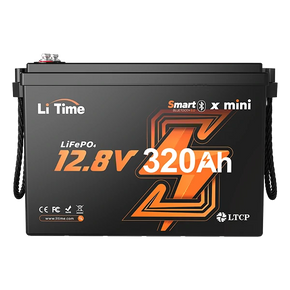


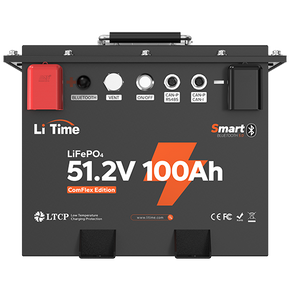

This article provides an in-depth introduction to three main functional types (Starting, Deep Cycle, Dual-Purpose) and four chemical types (flooded lead-acid, AGM, gel, lithium battery LiFePO4).
A marine battery is a battery specially designed for boats and other marine applications. Unlike a standard car battery, a marine battery must withstand vibration, moisture, repeated charging and discharging, and the electrical demands of boat engines, trolling motors, navigation systems, lights, fish finders, and onboard appliances.
Marine batteries can be classified in two main ways:
1. By function: starting battery, deep cycle battery, or dual-purpose battery
2. By chemistry: flooded lead-acid, AGM, gel, or lithium LiFePO4 battery
In simple terms, a marine battery is not just one single battery type. It is a category of batteries built for marine environments, with different designs depending on whether the battery is used to start an engine, power onboard electronics, or do both.
Table of Contents
Why Marine Batteries Are Different from Car Batteries
A car battery is mainly designed to deliver a short burst of power to start a vehicle engine. After that, the alternator quickly recharges it.
A marine battery, however, often has to do much more. On a boat, the battery may need to:
● Start the engine
● Power a trolling motor
● Run navigation lights
● Support GPS, VHF radio, fish finder, and stereo systems
● Supply energy for refrigeration, autopilot, water pumps, or other onboard loads
● Handle vibration, humidity, saltwater exposure, and deep discharge cycles
Because of these demands, marine batteries are usually more robust than standard automotive batteries.

Related Guide
Can You Use a Marine Battery in a Car?
Learn whether a marine battery can be used in a car, what compatibility factors to consider, and how marine batteries differ from standard car batteries.
3 Main Functional Types of Marine Batteries
Starting Marine Batteries
A starting marine battery, also called a cranking battery, is designed to deliver a powerful burst of current for a short period of time. Its main job is to start the boat engine.
Starting batteries typically provide high amperage for only a few seconds. Once the engine is running, the alternator recharges the battery.
Best for:
● Starting boat engines
● Outboard motors
● Inboard or inboard/outboard engines
● Boats with a separate house battery bank
Advantages:
● Delivers high cranking power
● Recharges quickly after engine startup
● Ideal for engine-starting applications
Limitations:
● Not designed for deep discharge
● Can be damaged if used to power electronics for long periods
● Less suitable for trolling motors or house loads
A starting battery is the right choice when your primary need is engine ignition, not long-term energy storage.

LiTime 12V 20Ah 800 CCA Marine Starting Lithium Battery
Compact lithium marine starting battery with 800 CCA, IP67 protection, and lightweight design for fuel-powered outboard motors.
- 800 CCA / 810 MCA for reliable marine starting power
- IP67 waterproof and dustproof protection
- 50% smaller and 74% lighter than comparable lead-acid batteries
Deep Cycle Marine Batteries
A deep cycle marine battery is designed to provide steady power over a longer period. Unlike a starting battery, it can be discharged and recharged repeatedly without being damaged as quickly.
Deep cycle batteries are commonly used as house batteries on boats. They power electrical equipment when there is no active charging source, such as shore power, solar panels, wind generators, or an engine alternator.
Best for:
● Fish finders
● GPS systems
● Navigation lights
● Boat refrigerators
● Marine electronics
● House battery banks
● Solar-powered boat systems
Advantages:
● Provides stable power over time
● Handles repeated discharge and recharge cycles
● Better for long-duration electrical loads
● More suitable for onboard accessories than starting batteries
Limitations:
● Usually not optimized for high engine-starting current
● May require larger capacity planning for long trips
● Lead-acid versions should not be deeply discharged too often
For boats with trolling motors or multiple onboard electronics, a deep cycle marine battery is often essential.

LiTime 12V 100Ah Group 24 Bluetooth LiFePO4 Lithium Deep Cycle Battery with Self-Heating
A smart self-heating Group 24 LiFePO4 deep cycle battery built for cold-weather marine, RV, trolling motor, and off-grid power needs, with Bluetooth monitoring and flexible charging options.
- Built-in 100W self-heating pads help support safer low-temperature charging
- Bluetooth monitoring makes it easy to check battery status through the LiTime app
- Group 24 compact size fits many marine, RV, and off-grid power setups
Dual-Purpose Marine Batteries
A dual-purpose marine battery is designed to perform both starting and deep cycle functions. It can provide enough power to start an engine while also supporting moderate onboard electrical loads.
Dual-purpose batteries are a compromise between starting batteries and deep cycle batteries.
Best for:
● Small boats with limited battery space
● Boats using one battery for both starting and accessories
● Sailboats with two interchangeable batteries
● Light to moderate marine electrical loads
Advantages:
● Combines cranking and cycling ability
● Saves space compared with using two separate batteries
● Convenient for small boats
Limitations:
● May not start larger engines as well as a dedicated starting battery
● May not cycle as deeply as a dedicated deep cycle battery
● Not always ideal for heavy electrical loads
A dual-purpose battery can be a good option for smaller boats, but for larger vessels or heavy power demands, separate starting and deep cycle batteries are usually better.

LiTime 12V 165Ah 1200 CCA Dual Purpose Marine Lithium Battery
A smart dual-purpose marine lithium battery designed for both outboard engine starting and onboard electronics, with strong cranking power, long runtime, Bluetooth monitoring, and marine-grade protection.
- 1200 CCA / 1300 MCA for reliable fuel-powered outboard motor starting
- 2-in-1 design supports both engine cranking and onboard electronics
- Smart Power Reserve Mode helps reserve 15% power for safer restart
Starting vs Deep Cycle vs Dual-Purpose Marine Battery
| Battery Function | Main Purpose | Power Output | Best Application |
|---|---|---|---|
| Starting Battery | Starts the engine | High burst power for a short time | Engine cranking |
| Deep Cycle Battery | Powers electronics and accessories | Steady power over a long time | Trolling motors, lights, GPS, house loads |
| Dual-Purpose Battery | Starts engine and powers moderate loads | Balanced cranking and cycling | Small boats, limited battery space |
Marine Battery Types by Chemistry
Besides function, marine batteries are also classified by chemistry. The most common types are flooded lead-acid, AGM, gel, and lithium LiFePO4 batteries.
Flooded Lead-Acid Marine Batteries
Flooded lead-acid batteries, also called wet cell batteries, are one of the oldest and most traditional types of marine batteries. They use lead plates submerged in an electrolyte solution of sulfuric acid and distilled water.
Advantages:
● Lower upfront cost
● Widely available
● Proven technology
● Suitable for budget-conscious boat owners
Limitations:
● Requires regular maintenance
● May need distilled water refilling
● Can leak if damaged or tilted
● Heavier than lithium batteries
● Shorter cycle life than AGM or lithium
● Slower charging
Flooded lead-acid batteries are often chosen for their affordable price, but they require more maintenance and usually have a shorter lifespan than newer battery technologies.
AGM Marine Batteries
AGM stands for Absorbed Glass Mat. An AGM battery is a sealed lead-acid battery where the electrolyte is absorbed into fiberglass mats.
AGM marine batteries are popular because they are maintenance-free, spill-proof, vibration-resistant, and suitable for many marine applications.
Advantages:
● Maintenance-free
● Sealed and spill-proof
● Better vibration resistance than flooded batteries
● Faster charging than flooded lead-acid batteries
● Lower self-discharge rate
● Good for dual-purpose use
Limitations:
● More expensive than flooded lead-acid batteries
● Heavier than lithium batteries
● Lower cycle life than lithium LiFePO4 batteries
● Sensitive to incorrect charging voltage
AGM batteries are a strong choice for boaters who want a reliable, low-maintenance marine battery without switching to lithium.
Gel Marine Batteries
Gel batteries are another type of sealed lead-acid battery. Instead of liquid electrolyte, they use a gel-like electrolyte.
Gel batteries are often used in deep cycle applications and installations where spill resistance and stable performance are important.
Advantages:
● Maintenance-free
● Spill-proof
● Good deep cycle performance
● Lower self-discharge than flooded batteries
● Suitable for sensitive installations
Limitations:
● Requires proper charging settings
● Can be damaged by overcharging
● Usually more expensive than flooded lead-acid batteries
● Less common than AGM batteries in many marine markets
Gel batteries can work well for deep cycle marine use, but they require compatible chargers and careful voltage control.
Lithium LiFePO4 Marine Batteries
Lithium iron phosphate batteries, often called LiFePO4 batteries, are one of the most advanced options for marine use.
Compared with traditional lead-acid batteries, lithium marine batteries are lighter, longer-lasting, faster-charging, and capable of deeper discharge.
Advantages:
● Much lighter than lead-acid batteries
● Longer cycle life
● Faster charging
● Higher usable capacity
● Low self-discharge
● Maintenance-free
● Stable voltage output
● Excellent for trolling motors and house battery banks
Limitations:
● Higher upfront cost
● Requires a compatible charger
● Not all lithium batteries are designed for engine starting
● A quality BMS is important for safety and protection
Lithium LiFePO4 batteries are especially suitable for boats where weight, long runtime, fast charging, and long service life are important.

Shop LiTime Marine Batteries
Explore LiTime marine lithium batteries for starting power, deep cycle use, trolling motors, house banks, solar storage, and onboard electronics.
- Find starting, deep cycle, and dual-purpose marine battery options
- Choose LiFePO4 batteries for lighter weight and longer service life
- Power trolling motors, boat electronics, house loads, and marine solar systems
Marine Battery Comparison Table
| Marine Battery Type | Cost | Maintenance | Cycle Life | Weight | Best For |
|---|---|---|---|---|---|
| Flooded Lead-Acid | Low | Required | Low to medium | Heavy | Budget starting or house banks |
| AGM | Medium | None | Medium | Heavy | Dual-purpose use, fast recharge, low maintenance |
| Gel | Medium to high | None | Medium | Heavy | Deep cycle use, sensitive installations |
| Lithium LiFePO4 | High | None | High | Lightweight | House banks, trolling motors, solar, weight-sensitive boats |
If your boat has both an engine and multiple onboard electronics, the best setup is often one starting battery plus one or more deep cycle batteries.
Important Marine Battery Ratings to Know
CCA: Cold Cranking Amps
CCA measures how many amps a battery can deliver for 30 seconds at 0°F while maintaining enough voltage. It is important for engine starting, especially in cold conditions. A higher CCA rating usually means stronger starting power.
MCA: Marine Cranking Amps
MCA is similar to CCA but measured at 32°F. Because batteries perform better at warmer temperatures, MCA ratings are usually higher than CCA ratings.
When choosing a starting marine battery, always check the engine manufacturer's recommended CCA or MCA requirement.
Ah: Amp-Hours
Amp-hours measure battery capacity. For example, a 100Ah battery can theoretically provide 5 amps for 20 hours or 10 amps for 10 hours, depending on discharge conditions. Ah is especially important for deep cycle and house battery applications.
Reserve Capacity
Reserve capacity shows how long a battery can support a specific load before the voltage drops to a defined level. It is useful for understanding how long a battery can power onboard equipment.
Cycle Life
Cycle life refers to how many discharge and recharge cycles a battery can complete before its capacity significantly declines. Lithium LiFePO4 batteries usually offer a much higher cycle life than flooded lead-acid, AGM, or gel batteries.
How to Choose the Right Marine Battery?
Choosing the right marine battery depends on how you use your boat.
Choose a starting battery if:
● You mainly need to start the engine
● Your boat has a separate battery for electronics
● You need high cranking power
Choose a deep cycle battery if:
● You use a trolling motor
● You run GPS, lights, fish finder, or refrigerator
● You need long-lasting power for household loads
● You use solar panels or off-grid charging
Choose a dual-purpose battery if:
● You have a small boat
● You want one battery for both starting and light accessory use
● You have limited space
● Your electrical loads are moderate
Choose lithium LiFePO4 if:
● You want longer battery life
● You need lighter weight
● You want more usable capacity
● You use your boat frequently
● You need reliable power for trolling motors, electronics, or solar storage
Can You Use a Marine Battery for Starting and Deep Cycle Use?
Yes, but only if the battery is designed for dual-purpose use.
A standard starting battery should not be used as a deep cycle battery because repeated deep discharge can damage it. Similarly, not every deep cycle battery is suitable for engine starting because it may not provide enough peak current.
If you need one battery to do both jobs, choose a true dual-purpose marine battery and confirm that it meets your engine's cranking requirements.
Are Lithium Batteries Good for Marine Use?
Yes, lithium LiFePO4 batteries are excellent for many marine applications, especially deep cycle use. They are lighter, charge faster, last longer, and provide more usable capacity than traditional lead-acid batteries.
However, not every lithium battery is suitable for engine starting. If you want a lithium battery for starting, make sure it is specifically rated for cranking use and has a battery management system designed for high current output.
For trolling motors, house battery banks, solar systems, and onboard electronics, LiFePO4 marine batteries are often one of the best choices.
Common Marine Battery Applications
| Application | Best Battery Type |
|---|---|
| Boat Engine Starting | Starting battery or dual-purpose battery |
| Trolling Motor | Deep cycle battery or lithium LiFePO4 battery |
| Fish Finder and GPS | Deep cycle battery |
| Marine Lights and Electronics | Deep cycle battery or house battery bank |
| Solar Boat Power System | Lithium LiFePO4 or deep cycle AGM battery |
| Small Boat with Limited Space | Dual-purpose battery |
Conclusion: What Type of Battery Is a Marine Battery?
A marine battery is a boat battery designed to withstand harsh marine conditions and support different onboard power needs. Functionally, marine batteries fall into three main types: starting, deep cycle, and dual-purpose. Chemically, they are commonly available as flooded lead-acid, AGM, gel, or lithium LiFePO4 batteries.
For engine starting, choose a starting marine battery with the correct CCA or MCA rating. For trolling motors, electronics, and house loads, choose a deep cycle marine battery. For small boats with limited space, a dual-purpose battery may be practical. For boaters who want lighter weight, longer life, and better deep cycle performance, lithium LiFePO4 is often the most advanced option.
The right marine battery depends on your boat size, engine requirements, onboard electronics, runtime needs, charging system, and budget.
FAQ About Marine Battery Types
What type of battery is a marine battery?
A marine battery is a battery designed for boats and marine environments. It can be a starting battery, deep cycle battery, or dual-purpose battery. By chemistry, it may be flooded lead-acid, AGM, gel, or lithium LiFePO4.
What is the difference between a marine battery and a car battery?
A car battery is mainly designed to start a vehicle engine. A marine battery is built to handle vibration, moisture, and marine electrical loads. Some marine batteries are also designed for repeated deep discharge, which standard car batteries are not built for.
What is the best type of marine battery?
The best type depends on the application. Starting batteries are best for engine cranking, deep cycle batteries are best for trolling motors and electronics, and dual-purpose batteries are best for small boats that need one battery for both functions. Lithium LiFePO4 batteries are often the best choice for long life, low weight, and deep cycle performance.
Can I use a deep cycle battery to start a boat?
Some deep cycle batteries may start small engines, but not all are designed for high cranking current. Always check the battery's CCA or MCA rating and compare it with the engine manufacturer's requirements. Cranking Battery vs. Deep Cycle Marine Battery
Can I use a starting battery for a trolling motor?
It is not recommended. Starting batteries are not designed for long, deep discharge. Using a starting battery for a trolling motor can shorten its lifespan quickly.
How long do marine batteries last?
Battery lifespan depends on chemistry, maintenance, charging habits, and depth of discharge. Flooded lead-acid batteries typically have the shortest lifespan; AGM and gel batteries last longer, and lithium LiFePO4 batteries usually provide the longest cycle life.
Is AGM or lithium better for marine use?
AGM batteries are reliable, maintenance-free, and more affordable upfront. Lithium LiFePO4 batteries are lighter, longer-lasting, faster-charging, and provide more usable capacity, but they cost more initially. For frequent boating and deep cycle use, lithium is often the better long-term option.
Can I mix AGM and flooded batteries in the same battery bank?
No. Different battery chemistries require different charging voltages. Mixing AGM and flooded batteries can lead to overcharging or undercharging, reducing the lifespan of both batteries.Marine Battery Types Compared: Starting, Deep Cycle, AGM & Lithium | West Marine
How deep can I discharge a marine battery?
Flooded and AGM lead-acid batteries should generally not be discharged below 50% capacity on a regular basis. Lithium LiFePO4 batteries can usually support much deeper discharge, depending on the battery design and BMS protection.


