




— A Lightweight Outdoor Power Solution (with LiTime Recommendations)
Table of Contents
- Introduction
- 1. Why a 300W + 40W Combo, and Who Is It For?
- 2. System Architecture: What You Need
- 3. Components & Reference Pricing
- 4. Recommended DIY Build Options
- 5. Cost Comparison: DIY vs. Prebuilt
- 6. DIY Wiring & Safety Tips
- 7. Wrap-Up & Call for Feedback
For camping, outdoor photography, fishing, or road trips, having a power source you can take anywhere is a big deal.
If you want more flexibility, more customisation, and better upgrade potential than an all-in-one power station, a DIY setup built around a 300W portable power station + 40W folding solar panel is a very practical starter combo.
This guide walks you through how to DIY such a system from scratch and suggests a component list based on LiTime products where possible.
1. Why a 300W + 40W Combo, and Who Is It For?
This configuration is designed to give outdoor users:
- Enough power for common small appliances (camera, laptop, small fan, car fridge, etc.).
- A compact footprint — easy to throw in a trunk or storage box.
- Solar recharge capability — slowly topping up during the day to reduce power anxiety.
It’s especially suitable for:
- Suburban camping, bank fishing, and outdoor photography
- Power top-ups on road trips / RV drives
- Small emergency backup at home
- First-time DIY power station builders
It’s not a multi-kilowatt off-grid system, and that’s the point. It’s lightweight, flexible, and reliable — a perfect starting point for your first off-grid power build.
2. System Architecture: What You Need
A DIY 300W portable power station + 40W solar setup is built from five core components:
-
Battery (energy storage core)
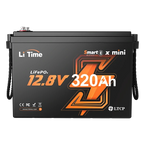
Recommended: LiTime 12 volt 50ah lithium ion battery -
Inverter (DC → AC output)
Converts 12V DC from the battery into 110V/220V AC for laptops and small appliances.
In this article we assume a 300W car-type inverter as the main AC output; you can always upgrade to higher wattage later. -
Solar Panel (recharge source)
A 40W folding solar panel that’s compact and easy to carry, used to slowly recharge the battery during daylight. -
Solar Charge Controller (MPPT / PWM)
Sits between the solar panel and the battery and manages charging and protection.
On a tight budget you can use PWM; for better efficiency, MPPT is recommended. -
AC Battery Charger (for charging at home)
Plugs into a wall outlet to fully charge the battery before you head out.
Recommended: a 12V 10A charger designed specifically for LiFePO4 batteries.
Before we talk about specific DIY builds, let’s look at the typical price range for each component so you have a rough budget in mind.
3. Components & Reference Pricing
All prices below are rough references only, for budgeting purposes. Please refer to the actual product page for up-to-date pricing and promotions.
| Component | Recommended Model / Notes | Reference Price / Notes |
|---|---|---|
| Battery | LiTime 12V 50Ah LiFePO4 Battery | Approx. US$142.49 (Black Friday 43% OFF promo price; may vary) |
| Inverter | 300W Car Power Inverter (LiTime or other certified brand) | Typical US$30–50 for a DC→AC 300W car inverter (brand & channel dependent) |
| Solar Panel | 40W folding panel (e.g. Jackery SolarSaga 40W Mini or similar compatible panel) | Third-party pricing around US$80–90 (for reference) |
| Charge Controller | Basic PWM if on a budget; for higher efficiency use a 30A MPPT (e.g. LiTime MPPT) | Basic PWM < US$20; LiTime MPPT ~ US$97.99–104.49 |
| AC Charger | 12V 10A LiFePO4-compatible charger (certified) | Commonly around US$60 |
With a LiTime 50Ah LiFePO4 battery as the core, plus an inverter, solar panel, controller, and AC charger, you essentially have a compact, modular outdoor power system.

4. Recommended DIY Build Options
To make it easier to choose and shop, we group the system into three “play styles”:
Option A: Lightweight Starter Build (Closest to 300W + 40W Concept)
Goal: Keep the budget as low as reasonably possible while still covering basic outdoor power needs.
| Part | Recommended Model |
|---|---|
| Battery | LiTime 12V 50Ah LiFePO4 |
| Inverter | 300W car inverter (LiTime or other certified brand) |
| Solar Panel | 40W folding panel (Jackery SolarSaga 40W Mini, KEUTEK 40W, etc.) |
| Controller | Simple PWM controller (budget-friendly) |
| AC Charger | LiTime / other certified 12V 10A LiFePO4 charger |
Good for:
- Beginners and first-time DIY builders
- Light camping / photography / fishing usage
- Small home emergency backup
Option B: Standard Upgradable Build (Highly Recommended)
Goal: Balance stability, efficiency, and future upgrade potential — a solid “foundation” build.
| Part | Recommended Model |
|---|---|
| Battery | LiTime 12V 50Ah LiFePO4 |
| Inverter | 300W car inverter (upgradeable later to 600W / 1000W pure sine inverter) |
| Solar Panel | Start with 40W; upgrade to 80–100W later if needed |
| Controller | LiTime 30A MPPT (Bluetooth monitoring recommended) |
| AC Charger | LiTime / other certified 12V 10A LiFePO4 charger |
Key Features:
- Modular design with strong expansion potential
- Can be scaled up toward a 500W–1000W class system in the future
- Better overall safety, efficiency, and lifespan
This is the best all-round choice for most users.
Option C: Zero-DIY Option (Prebuilt Power Station)
If you don’t want to deal with wiring at all, consider a prebuilt portable power station:
- A 300W-class portable power station (~300–400Wh capacity)
- Plus a 60–100W folding solar panel
For example, a LiTime D320 portable power station might look like this:
- Built-in ~320Wh LiFePO4 battery
- Approx. 400W pure sine wave output
- Compatible with a LiTime 100W portable panel for fast solar charging
Best for:
- Users who don’t want to tinker or wire anything
- Anyone who wants a neat “black box” they can just plug into and use
5. Cost Comparison: DIY vs. Prebuilt
These estimates do not include wiring, breakers, fuse holders, or enclosure costs. They’re intended only to give you a general idea of budget.
| Option / Purpose | What’s Included | Estimated Total Cost (USD) |
|---|---|---|
| Option A – Lightweight DIY | 50Ah battery + 300W inverter + 40W folding panel + PWM controller + 12V 10A charger | ~ US$320–360 |
| Option B – Upgradable DIY | 50Ah battery + 300W inverter + 40W (upgradeable to 80–100W) panel + LiTime 30A MPPT + 12V 10A charger | ~ US$410–450 |
| Option C – Prebuilt + Panel | One 300W-class prebuilt portable power station + one 60–100W folding solar panel | Typically around US$200–350, depending on brand & configuration. In some cases, prebuilt solutions can be similar in price to Option A, or even cheaper. |
Important reality check:
From a pure price perspective, DIY is not always cheaper than a prebuilt power station of similar specs and quality. It may even cost a bit more.
However, DIY has clear advantages:
- You can upgrade or replace each component individually.
- Battery capacity, solar wattage, and inverter size can all evolve over time.
- For people who enjoy building things, the fun and satisfaction of DIY is much higher than owning a sealed, non-modifiable box.
6. DIY Wiring & Safety Tips (Short Version)
To ensure safety and reliability, pay attention to the following:
Battery side:
- Add a 30–50A breaker or fuse in series on the battery positive lead.
Inverter side:
- Use appropriately thick cables (e.g. around 8 AWG, depending on current and length).
- Keep the cable run between battery and inverter as short as practical.
Solar side:
- Always connect the solar panel to a charge controller (PWM/MPPT) before the battery.
- Do not connect the panel directly to the battery.
- Ensure secure, weather-resistant connections and proper strain relief.
Overall construction:
- Consider using a tool box or power box enclosure to house components neatly.
- Add internal bracing and basic mechanical protection for transport.
If you’re not familiar with electrical work:
- It’s strongly recommended to consult a professional electrician or an experienced DIY builder to help design and wire the system.
7. Wrap-Up & Call for Feedback
A DIY 300W portable power station + 40W solar panel may not look extreme on paper, but it comfortably covers most everyday outdoor needs:
- Stable power for weekends of camping, fishing, and content creation
- No more dead phones, cameras, or laptops on road trips
- A small yet meaningful backup during home power outages
So now the question is:
- 🔋 Option A – Starter Build: Budget-friendly and “good enough” for first-time DIY?
- ⚙️ Option B – Upgradable Build: A solid foundation you can grow into over time?
- 🧳 Option C – Zero-DIY: Skip the tools and grab a prebuilt station + folding panel?
Let us know in the comments:
- 👉 What are you currently using for outdoor power?
- 👉 If you were to build your own system, which components are must-haves for you?
- 👉 What other LiTime battery / inverter / solar combos would you like us to break down next time?


