



Lithium batteries are at the heart of modern energy solutions—from RV power systems and solar storage setups to marine applications and backup power stations. They are efficient, lightweight, and long-lasting—but only if used and maintained correctly. Master proper lithium solar battery maintenance to unlock their full service life.
Here's the reality:
👉 Most lithium batteries fail earlier than expected due to poor maintenance—not manufacturing defects.
The good news: With proper lithium battery maintenance, you can easily learn how to increase lithium ion battery life, extending battery lifespan from a typical 5–8 years to 10 years or even longer.
- Lithium Battery Maintenance Tip 1: Battery Storage
- Lithium Battery Maintenance Tip 2: Battery Activation After Long-Term Storage
- Lithium Battery Maintenance Tip 3: Daily Maintenance
- Lithium Battery Maintenance Tip 4: Advanced Tips to Increase Lithium-Ion Battery Life
- FAQs About Lithium Battery Maintenance & Care
- Conclusion
Lithium Battery Maintenance Tip 1: Battery Storage
Proper battery storage is the most important factor when your lithium battery is not in use for extended periods. Studies show that improper storage (e.g., stored at high temperatures or fully charged) can cause an extra 5–10% capacity loss per year.
✅ Best Practices for Lithium Battery Storage
To minimize degradation, follow these guidelines:
- Keep the battery at around 50% state of charge (SOC) — this level balances self-discharge and chemical stability, reducing capacity loss significantly compared to storing at 100% charge.
- Disconnect all cables and external devices
- Cover terminals with insulating tape or caps to prevent accidental short circuits
- Store in a cool, dry environment (50°F–95°F / 10°C–35°C), every 10°C increase doubles the aging rate.
- Recharge to 50% every 3 months during storage

❌ Common Storage Mistakes to Avoid
- Storing at 100% charge for long periods (accelerates cathode material degradation)
- Leaving the battery fully discharged for months (may cause undervoltage protection lockout and more seriously, the battery cells themselves may be damaged, leading to permanent failure.)
- Exposure to high temperatures or direct sunlight
- Skipping periodic maintenance charging
👉 Why Storage Conditions Matter
Lithium batteries degrade even when not in use. Improper storage speeds up:
- Capacity loss
- Internal resistance increase (reduces discharge efficiency and causes more heat)
- Permanent performance decline
👉 Double your battery's usable life: correctly store lithium battery
Lithium Battery Maintenance Tip 2: Battery Activation After Long-Term Storage
After long-term storage(e.g., 3 months), it is recommended to check the battery voltage first. Regardless of whether the battery requires reactivation, use a charger equipped with lithium battery activation function to fully charge it normally. This will ensure the battery is in optimal working condition.
✅ Step-by-Step Reactivation Checklist
Before reusing your battery, make sure to:
- Visually inspect for:
- Swelling
- Cracks
- Leakage or unusual odor
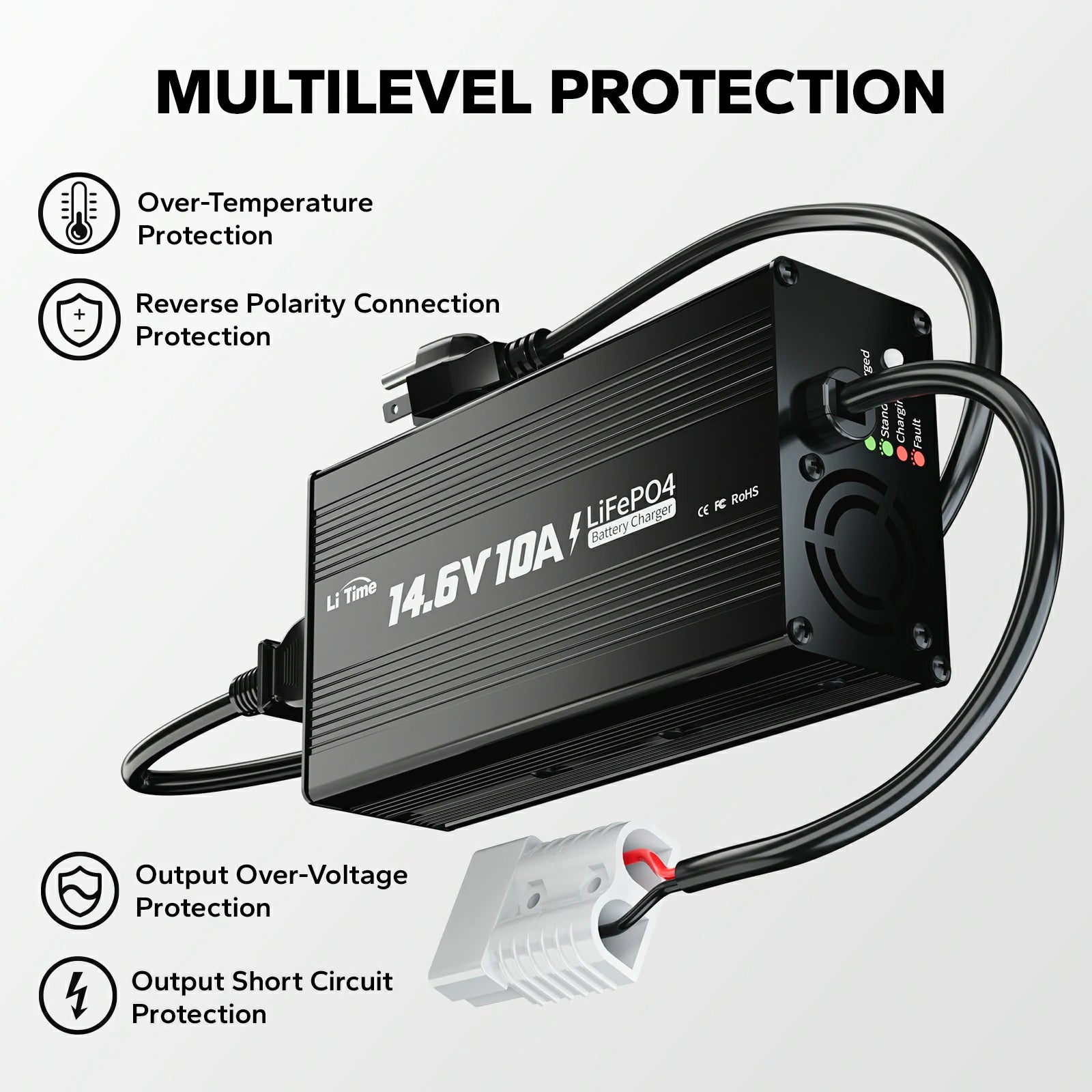
- Use a charger with lithium activation mode to activate the battery (BMS needs a wake-up after undervoltage), like LiTime chargers:
LiFePO4 Battery Chargers Support better battery maintenance with fast, safe charging designed for LiFePO4 batteries. ▶ Buy Now
- Test basic functionality:
- Does it charge normally?
- Does it discharge steadily?
🔋 Multi-Battery Systems: A Critical Step Most Users Skip
For multi-battery setups such as RVs, solar battery maintenance systems and off-grid applications, balancing every 6 months becomes essential. Imbalance in series or series-parallel battery systems will create a "weakest link" effect, where the total pack capacity is determined by the poorest-performing battery.
✔ Recommended Method
- Charge each battery individually to 100%
- Connect them in parallel
- Let them rest for 12–24 hours for natural balancing
✔ Alternative Method
- Use a dedicated battery balancer. For instance, 12V battery systems can be equipped with a 12V-specific battery balancer.
⚠️ Risks of Skipping Battery Balancing
Battery imbalance can lead to:
- Reduced system efficiency
- Uneven current distribution and overloading of some cells
- Faster degradation of weaker cells
- Potential cell damage in severe cases
👉 Why Battery Balancing Is Important
Over time, batteries develop slight voltage differences. Without proper balancing:
- System efficiency decreases
- Some batteries age faster than others
- Overall lifespan is shortened
👉 Balanced battery systems last longer and perform better.
Lithium Battery Maintenance Tip 3: Daily Maintenance
Daily usage habits play a bigger role than most people think—especially when it comes to deep cycle battery maintenance. Most lithium battery failures are not due to age—but due to improper daily use.
❌ Common Mistakes to Avoid
- Using batteries in humid conditions (risk of terminal corrosion and leakage risk)
- Ignoring loose or corroded terminals
- Allowing contact with metal objects (short circuit risk)
- Operating in enclosed, high-temperature environments
✅ Best Daily Maintenance Habits
To maximize battery life:
- Regularly check and tighten all connections
- Keep terminals clean and corrosion-free
- Ensure proper ventilation during use
- Avoid deep discharges whenever possible (see 20%-80% golden rule below)
- Store properly when not in use

🔄 Charging Best Practices (Often Overlooked)
Charging habits also impact longevity:
- Avoid keeping the battery at 0% or 100% charge for extended periods
- Use manufacturer-recommended chargers
- Do not overcharge or use incompatible charging systems
👉 Consistent, moderate charging keeps a longer battery lifespan.
Lithium Battery Maintenance Tip 4: Advanced Tips to Increase Lithium-Ion Battery Life
If you want to go beyond basic maintenance, these pro tips can help you get the most out of your battery over the long term:
🔹 Avoid Deep Discharge Cycles
Frequent deep discharges (draining below 20% remaining capacity) put significant stress on lithium battery cells and accelerate wear.
👉 For optimal longevity, try to keep your battery usage within the 20%–80% charge range
This reduces strain on internal chemistry and helps preserve capacity over time.
🔹 Avoid Extreme Temperatures During Use & Charging
Temperature is one of the biggest hidden factors affecting battery lifespan. High temperatures accelerate chemical aging, while low temperatures reduce efficiency—especially during low-temperature charging, which can directly damage battery cells.
👉 Best practice:
- For non self-heating batteries: Charge your battery in 32°F–122°F (0°C–50°C), avoid charging in freezing conditions
- For self-heating batteries: Charge your battery in -4°F–122°F (-20°C–50°C)
- Keep batteries away from direct sunlight or enclosed hot spaces
FAQs About Lithium Battery Maintenance & Care
1. How should I properly store my lithium battery when not in use for extended periods?
Store your lithium battery at around 50% State of Charge (SOC) in a cool, dry environment (10°C-35°C/50°F–95°F). Disconnect all cables, cover terminals, and recharge to 50% every 3 months.
2. What steps should I follow to safely reactivate a lithium battery after long-term storage?
Before reuse, visually inspect for damage, test basic functionality, and use a charger with lithium activation function if needed.
3. Why is battery balancing important for multi-battery systems, and how should it be done?
Balancing prevents the "weakest link" effect, ensuring optimal system performance and longevity. Charge each battery individually to 100%, connect in parallel, and let them rest for 12-24 hours for natural balancing every 6 months.
4. What are the best daily habits to maintain my lithium battery and extend its lifespan?
Regularly check and tighten connections, keep terminals clean, ensure proper ventilation, and avoid deep discharges (try to keep charge between 20%-80%).
5. How does temperature affect lithium battery lifespan, and how should it be managed?
Extreme temperatures accelerate battery aging and damage. Avoid extreme temperatures during use and charging, and keep batteries away from direct sunlight or enclosed hot spaces. For non-self-heating batteries, charge between 0°C-50°C, for self-heating batteries, charge between -20℃–50℃.
Conclusion: 3 Golden Rules to Extend Battery Lifespan
If you remember nothing else, focus on these three rules:
- ✔ Store at ~50% SOC in a cool environment
- ✔ Always check the appearance and voltage before reuse
- ✔ Maintain good daily usage and charging habits
These simple yet effective steps can help your battery last far longer than expected, delivering worry-free daily use and longer runtime.
👉 A well-maintained lithium battery isn’t just a component—it’s a long-term investment. Choosing a reliable brand greatly amplifies this value. Built with stable performance, premium cells and comprehensive after-sales support, LiTime batteries are the cost-effective choice for daily energy storage and device power supply.

