


1. Why are lithium battery fires in the news so often?
A few years ago, “battery” for most people just meant a small block hidden inside a phone. Today, lithium-ion batteries are in e-bikes, e-scooters, power tools, home energy storage, power banks, phones, laptops and more. The number of batteries in our homes and cities has exploded – and so has the number of fire incidents.
Fire and government agencies around the world are sounding the alarm:
- United States (FDNY, USFA) – New York City has seen a sharp rise in lithium-ion fires involving e-bikes and e-scooters in recent years. The Fire Department of New York provides specific consumer guidance on the dangers and safe use of lithium-ion batteries on NYC.gov – Dangers of Lithium-Ion Batteries (FDNY PDF) and its public education site FDNY Smart – Lithium-ion Battery Fire Safety .
- US Fire Administration (USFA) – The U.S. Fire Administration aggregates national data and offers guidance and outreach materials about lithium-ion battery risks and response strategies for fire departments and communities: USFA – Lithium-Ion Batteries .
- United Kingdom (NFCC & UK Government) – The UK’s National Fire Chiefs Council (NFCC) and fire services report rising incidents involving e-bike and e-scooter batteries. They provide dedicated public guidance: NFCC – E-bikes and E-scooters Fire Safety Guidance . The UK government has also issued statutory guidance on product safety for e-bike lithium-ion batteries: GOV.UK – Statutory Guidelines on Lithium-ion Battery Safety for E-bikes .
- University & campus data – Universities report more incidents as e-bikes and scooters proliferate on campus. For example, Columbia University – Lithium-Ion Battery Safety and the MIT EHS Lithium-Ion Battery Safety Program both highlight that lithium battery fires and accidents are “on the rise” and require better understanding and control.
In short, lithium-ion battery fires have moved from “rare technical issues” to a very real home and community safety concern. To manage that risk intelligently, we have to understand what actually causes the worst damage.
2. How poor-quality batteries amplify damage
Across many case studies, investigation reports, and insurer analyses, one pattern shows up again and again: low-quality batteries + unsafe charging and storage.
The damage they cause tends to fall into three major categories.
2.1 Personal safety: high heat, flash fire and toxic smoke
When a lithium-ion battery goes into thermal runaway, it behaves very differently from a normal open flame:
- Extremely rapid temperature rise and jet-like flames can ignite nearby combustibles in seconds.
- Large volumes of dense, often white or grey smoke contain toxic gases, including fluorinated compounds.
- Cells can rupture violently, ejecting hot fragments and burning material.
Fire-safety agencies and universities warn that many of the worst injuries in these incidents come from hot, toxic smoke and rapid flame spread in small rooms or corridors rather than direct flame contact. This is reflected in guidance from NFPA ( NFPA – Lithium-Ion Batteries ) and multiple university EHS offices such as the University of Washington – Lithium Battery Safety Summary (PDF) .
Poor-quality batteries are more likely to fail because they may:
- Use low-grade cells with poor thermal stability and poor quality control.
- Lack effective Battery Management Systems (BMS) for over-charge, over-current, short-circuit and temperature protection.
- Miss reputable third-party certifications, such as RoHS.
2.2 Economic losses: one fire can cost hundreds of thousands
Behind each lithium-ion battery fire incident, there can be a long list of financial consequences:
- Homes, apartments, shops and warehouses destroyed or heavily damaged.
- Business downtime, product recalls, brand and reputational damage.
- Higher insurance premiums and, in some cases, refusal of coverage for high-risk uses.
The U.S. Fire Administration notes in its Battery Fire Safety Tips that lithium-ion battery fires can produce severe property damage in a short time and emphasizes the importance of prevention.
2.3 Human and resource cost: lithium fires are harder fires
Fire departments report that lithium-ion fires often:
- Require more water and more time to fully control and cool.
- Produce contaminated firewater and smoke that require special handling and cleanup.
- Expose firefighters to additional toxic hazards if not managed carefully.
It’s not that “all lithium batteries are dangerous.” It’s that cheap, poorly designed or damaged batteries used and charged unsafely can turn a common technology into a high-impact hazard.
3. How to extinguish a lithium battery fire (step-by-step)
The following steps are based on widely accepted guidance from fire services such as FDNY ( FDNY Lithium-Ion Safety PDF ), NFCC ( NFCC E-bike & E-scooter Fire Safety Guidance ), NFPA and USFA. They are written for ordinary users, not firefighters.
3.1 Early warning stage: overheating or smoke, no visible flames
Typical warning signs that should be treated seriously:
- Battery or device is unusually hot – too hot to hold comfortably.
- Swelling, deformation or leakage from the battery pack.
- Sharp chemical or burning plastic smell near the battery.
- Small amounts of white or grey smoke, “hissing” or crackling sounds.
Goal: Isolate the risk before full thermal runaway.
-
Cut the power immediately.
Turn off the charger and unplug from the wall. Avoid gripping the hottest area directly; use gloves if available. -
If still safe, move the device to a non-combustible, open space.
Ideal: an outdoor concrete surface, tiled balcony floor or metal tray, well away from curtains, beds, cardboard, fuel or other combustibles. If smoke is heavy or sounds are violent, do not move it – treat it as an active fire. -
Keep distance and plan your escape.
Stay at least 3–5 meters (10–15 feet) away and make sure you have a clear, direct exit path. - If flames appear or smoke rapidly increases, evacuate and call emergency services.
3.2 Indoor fire: what an ordinary person should do
Treat the situation as a real fire if you see:
- Visible flames;
- Thick or rapidly growing smoke;
- Explosions, popping sounds, or forceful venting from the battery.
Recommended response:
-
Warn others first.
Shout “Fire!” so everyone hears you. Do not silently try to “deal with it” alone. -
If safe, close the door to the burning room.
This slows the spread of smoke and heat into hallways and stairwells. Do not lock it; firefighters will need access. -
Evacuate immediately via a safe route – never use elevators.
Stay low to avoid the hottest, most toxic smoke layer. Take your phone if you can do so without delay. -
Once outside and safe, call the fire department.
Clearly mention that this is a lithium-ion battery fire and give the exact location (floor, room, whether it was charging). -
Only consider using an extinguisher in very specific, safe conditions.
You should only attempt this if:- The fire is small and localized to the device or battery pack;
- You have a clear escape path behind you at all times;
- You have a suitable extinguisher (e.g., an ABC dry chemical extinguisher) and know how to use it;
- There are no gas cylinders, fuel cans, or other explosion hazards nearby.
If you do use an extinguisher:
- Stand at a safe distance and position yourself upwind of the smoke if possible.
- Use the PASS method with an ABC extinguisher: Pull, Aim, Squeeze, Sweep at the base of the flames.
- Once visible flames are knocked down, sustained cooling (often with water) is typically required to prevent re-ignition.
- If smoke increases or your escape route is threatened, stop and evacuate immediately.
Fire protection guidance from OSHA ( OSHA 4480 – Lithium-Ion Battery Safety (PDF) ) and USFA stresses that emergency procedures should prioritize safe evacuation and that any attempt to handle small battery fires must follow manufacturer instructions and national fire codes.
3.3 Small outdoor fire: limited intervention in a very safe setting
If a lithium-ion battery fire starts outdoors in a clear, open, non-combustible area (for example, on bare concrete), and it is still small, your risk is somewhat lower. In this narrow scenario:
- Ensure everyone is at a safe distance; confirm your escape paths and wind direction.
- Use a dry chemical extinguisher or plenty of water to suppress flames.
- After flames are out, keep cooling the battery with water for several minutes to reduce re-ignition risk.
- Do not move the battery indoors afterward. Once fully cooled, treat it as hazardous waste and dispose of it via proper recycling channels.
Do not:
- Splash a small amount of water on a large battery system (like an EV pack or home energy storage cabinet) and then walk up close to inspect it.
- Bring a recently burned, very hot battery indoors “to cool it in a bucket.” This introduces smoke and re-ignition risk into a confined space.
3.4 After the incident: important follow-up actions
- Retire the battery permanently. Any battery that overheated, smoked, or caught fire should never be used again.
- Audit your charging and storage practices. Remove non-certified chargers, avoid overloading power strips, and stop charging in escape routes such as hallways and stairwells.
- Dispose of damaged batteries responsibly. Follow local hazardous waste or recycling guidance rather than placing them in normal trash. USFA and many city fire departments provide consumer recycling guidance.

4. Reducing risk at the source (LiFePO₄ & LiTime)
While it’s vital to know what to do during an emergency, everyone would prefer never to use those emergency steps at all. That’s where safer chemistries, better system design and responsible brands make a real difference.
4.1 Why many users choose LiFePO₄ for energy storage
Compared with some higher-energy chemistries such as NMC or NCA, LiFePO₄ (Lithium Iron Phosphate) is widely recognized as having better thermal stability and longer cycle life. It is popular for:
- RVs and camper vans;
- Boats and marine applications;
- Off-grid solar and home backup power systems.
University and EHS guidance documents, such as those from MIT EHS – Lithium-Ion Battery Safety and Western Michigan University – Lithium-Ion Battery Safety Guidance , highlight that LiFePO₄ can reduce the probability and severity of thermal runaway under many conditions. However, no chemistry is completely risk-free.
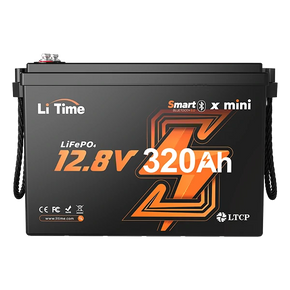
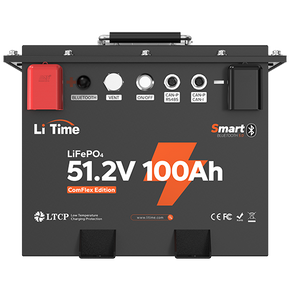
4.2 LiTime as an example: chemistry + system-level safety
LiTime focuses on LiFePO₄ energy storage batteries. What sets this approach apart is that safety is treated as a full system, not just a chemistry change:
- Carefully selected LiFePO₄ cells with controlled quality and consistency.
- Integrated BMS providing multiple layers of protection (over-charge, over-discharge, over-current, short-circuit, temperature).
- Application-oriented designs for RV, marine, off-grid and home backup use, emphasizing safety, durability and straightforward installation.
For homeowners, RV enthusiasts or small businesses building battery systems, choosing a reputable LiFePO₄ solution like LiTime means:
- A lower likelihood of serious incidents compared to unknown, low-quality packs.
- Clear documentation and after-sales support if something goes wrong.
- A realistic balance between safety, lifespan, capacity and cost.
Key message: Good chemistry and good engineering push the baseline risk much lower. But you still need good habits – following manufacturer instructions and official fire-safety guidance – to close the safety loop.
5. Conclusion & reader interaction
You can compress this article into three core messages:
-
Lithium-ion battery fires are more common than many people realize.
National fire agencies, city fire departments and universities all report a rising trend in incidents. -
The worst outcomes come from low-quality batteries and unsafe use.
Cheap packs, non-certified chargers and indoor charging in cramped spaces amplify the risk dramatically. -
For ordinary people, the priority in a fire is always life safety.
Early detection, early evacuation and early contact with the fire department matter much more than attempting to be a hero with a small extinguisher.
Now is a good moment to ask yourself:
- How many lithium batteries are in your home or workplace right now, and where are they charged and stored?
- Do you charge e-bikes, scooters or large battery packs overnight indoors – especially in bedrooms or escape routes?
- If you smelled burning plastic near a charging device tonight, would you know exactly what to do next?
If you publish this piece on a blog or social platform, consider inviting readers to share:
Have you ever experienced a “near miss” with a lithium battery?
What safety steps have you taken at home or at work?
Some real-world experiences can literally save someone else’s life.
6. FAQ: short answers to common questions
Q1. Can you use water on a lithium-ion battery fire?
It depends on the situation and battery type:
- For most consumer lithium-ion batteries (including LiFePO₄), fire and safety organizations such as NFPA and USFA note that large amounts of water can be effective at cooling and controlling thermal runaway.
- For some lithium metal (primary) batteries, special Class D extinguishing agents may be required. Always check manufacturer and local fire-service guidance.
In practice, if a fire is already significant and smoke is heavy, the safest action for non-professionals is to evacuate and call the fire department, not to debate which extinguishing agent to use.
Q2. Is a household dry chemical extinguisher useful?
Yes, an ABC dry chemical extinguisher can:
- Knock down visible flames quickly;
- Help prevent fire spread to nearby combustibles.
However, it does not remove residual heat inside the battery, so re-ignition is possible. If conditions allow, extinguishing visible flames and then cooling the pack (often with water) is more effective than either action alone.
Q3. What are the most important everyday charging rules?
Based on guidance from FDNY, NFPA, USFA and multiple university EHS offices, key rules include:
- Use only original or properly certified chargers for your devices and e-bikes.
- Avoid overnight or unattended charging, especially for large battery packs.
- Never charge in escape routes such as hallways and stairwells.
- Do not charge in extreme heat or cold.
- If a battery has been dropped, punctured, water-damaged, swollen or shows any warning signs (odor, smoke, strange noises), stop using it and follow manufacturer or EHS guidance.
Q4. Are LiFePO₄ batteries “completely safe”?
No battery chemistry is 100% safe. LiFePO₄ is generally more thermally stable and tolerant of abuse than many high-energy chemistries, which is why it is popular for stationary storage and off-grid systems. But:
- Severe over-charging;
- Short-circuits;
- Physical damage or high-temperature exposure
can still cause failures or fires. You still need proper BMS protection and safe usage practices.
Q5. What should households prepare for lithium battery risk?
Reasonable, basic preparations include:
- One or more ABC dry chemical extinguishers, checked regularly.
- Smoke alarms in hallways, bedrooms and living areas.
- Proper power strips and wiring, avoiding overloads.
- A clear, practiced evacuation plan for your family.
For homes or businesses with multiple large battery systems (e.g. energy storage, fleets of e-bikes), local fire departments and official resources like NFPA and USFA are valuable partners for more detailed risk assessments.

