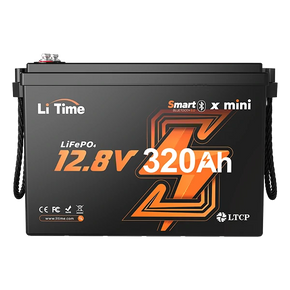


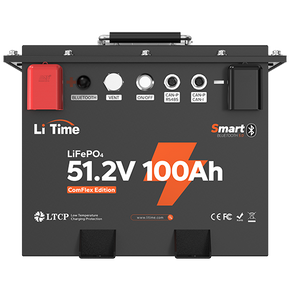

All over the world, boaters are looking at their simple fishing boats and thinking:“Could this jon boat or fishing skiff become a quiet, clean small electric boat?”At LiTime, we believe the answer is absolutely yes— and we want to see how far you can take that idea.
To support that vision, we launched the LiTime Go Electric Contest, a global challenge focused on non-powered and fuel-powered boat conversion. Instead of buying new electric boats for sale, we encourage creators to transform the boats they already know and love:
- jon boat and fishing skiff projects on ponds and small lakes
- bass boat and walleye boats on larger inland waters
- deep V aluminum fishing boats, sport fishing boats and family sport boats used for weekend adventures
Using LiTime’s dedicated marine lithium battery solutions, these boats can become capable electric mini boat builds, powered by modern trolling motors, boat electric motors, or full electric outboard boat motors.
👉 Learn more and enter here: Go Electric Contest
Table of Contents
- From a Local Challenge to a Global Movement
- Why LiTime Created the Go Electric Contest
- The Power Behind the Contest: LiTime Marine Solutions
- 1. 12V 100Ah Group 24 – A Compact Core for Small Electric Boats
- 2. 24V Marine Power Solution – Turn-Key Power for Mid-Size Fishing Boats
- 3. 36V Marine Power Solution – Stronger Systems for Demanding Builds
- 4. High-Power Marine Solution (48V–72V) – Flagship Power for Big Electric Projects
- Matching Each System to the Right Boat
- How to Join the LiTime Go Electric Contest
- A Final Word from LiTime
From a Local Challenge to a Global Movement
The first edition of Go Electric began in September 2025 as a U.S. initiative. Our initial goal was straightforward: invite American boaters, anglers and DIY enthusiasts to share how they converted non-powered or fuel-powered boats into electric.
The response was far stronger than we expected:
- More than 260 entries arrived from across the United States.
- We saw everything from minimalist small electric boat builds to fully equipped bass boats running all day on lithium power.
- Participants used jon boats, aluminum fishing skiffs, tournament-ready bass boats and even compact sport boats—each project demonstrating that electrification is not limited to one specific hull type.
This energy quickly spread beyond U.S. borders. As we opened the contest to more regions, Go Electric evolved into a truly global stage. Today we have already received over 425 submissions worldwide, each one highlighting a different landscape, culture and way of using electric power on the water.
To give more people a fair chance to plan, build and document their conversions, we have extended the contest deadline to November 26. The total prize pool remains US$20,000, with 58 winners to be selected. For many participants, it is not only about the prize — it is about having their build recognized as part of a worldwide shift toward cleaner boating.
Why LiTime Created the Go Electric Contest
LiTime is an energy technology brand with a clear mission: to make clean, reliable power accessible for real people in real-world applications.
On the water, that mission becomes very tangible. Electrifying smaller boats is one of the fastest ways to:
- Reduce local emissions in lakes, rivers and reservoirs
- Cut noise and fuel smell in popular fishing and family recreation areas
- Lower day-to-day running cost compared to fuel-powered engines
- Prove that sustainability and enjoyable boating can go hand in hand
We launched the Go Electric Contest for three main reasons:
1. Lower the barrier to entry
Many boat owners still believe that going electric means buying a brand-new, expensive electric boat. LiTime wants to show a different path:
You can keep your existing jon boat, bass boat, walleye boat, deep V aluminum fishing boat, or sport fishing boat, and simply change what drives it — switching from fuel to a boat electric outboard, a trolling motor or another boat electric motor powered by lithium batteries.
By sharing successful conversions, we hope more people will realize that a small electric boat is not a distant dream; it is a realistic weekend project.
2. Highlight practical, do-able builds
Go Electric is not about futuristic concepts or computer renderings. It is about honest, working boats that launch from real ramps and docks.
Entries range from simple electric mini boat setups on tiny jon boats to more advanced conversions of sport boats with multi-battery systems. Each project demonstrates that electrification can be both technically sound and surprisingly approachable, especially when supported by the right marine power solutions.
3. Build a living ecosystem around LiTime marine products
LiTime has developed a complete range of marine lithium Lifepo4 battery solutions for trolling motors, electric outboards and onboard electronics. Through the contest, we want to connect:
- our product technology,
- the creativity of the global boating community, and
- inspiring visual stories from real users.
The result is a growing ecosystem where innovation is not driven only by the brand, but co-created by thousands of passionate boaters.
The Power Behind the Contest: LiTime Marine Solutions
To make non-powered boat conversion truly practical, LiTime has designed a family of marine power solutions that cover a wide range of hull types and power levels:
- Compact batteries for a single trolling motor on a jon boat or fishing skiff
- Turn-key 24 V and 36 V kits for mid-size bass boats and walleye boats
- High-voltage configurations for larger sport boats with electric outboard boat motors
All of these are built on LiFePO₄ chemistry and are organized in the dedicated Marine Motor Batteries.
Below, we introduce the four recommended products in more detail.
1. 12V 100Ah Group 24 – A Compact Core for Small Electric Boats
This battery is often the first step into electrification for many Go Electric participants, especially those working with:
- Lightweight jon boats and aluminum fishing skiffs
- Kayaks and small inflatables turned into electric mini boats
- Modest trolling motors on ponds, canals and sheltered lakes
Group 24 form factor – easy drop-in replacement
The 12V 100Ah Group 24 model follows the widely used BCI Group 24 size standard. For owners currently using 12 V 100 Ah AGM or other lead-acid batteries, this means:
- The LiTime battery fits directly in the existing tray or battery compartment in most cases.
- No custom brackets or complicated modifications are required.
- Wiring can often be reused, simplifying the conversion process.
At the same time, LiFePO₄ technology significantly reduces weight compared with traditional lead-acid batteries. This is a major benefit for jon boats and other small electric boats, where every kilogram affects draft, trim and efficiency.
Capacity and runtime – more usable energy on the water
Despite its compact footprint, this battery stores around 1.28 kWh of energy (12.8 V × 100 Ah). Because LiFePO₄ chemistry allows deep discharge without severe damage, a much larger proportion of this capacity is actually usable compared with lead-acid.
For the user, this translates into:
- Longer fishing sessions with a 30–70 lb trolling motor
- More consistent thrust throughout the day, instead of a sharp performance drop when voltage sags
- Fewer worries about damaging the battery if you stay out a bit longer than planned
For many small electric boat and electric mini boat builds, a single 12V 100Ah Group 24 battery is enough to cover a full day of relaxed use.

LiTime 12V 100Ah Group 24 Lithium Battery
2. 24V Marine Power Solution – Turn-Key Power for Mid-Size Fishing Boats
As projects grow from simple jon boat conversions to more serious bass boat and walleye boat setups, power demands increase. Many anglers want:
- a stronger trolling motor for better boat control in wind and current, or
- a compact electric outboard boat motor to replace a small gas engine.
For these use cases, LiTime has created the 24V Marine Power Solution, a complete package that removes much of the complexity from system design.
All-in-one kit – designed for real boating conditions
Instead of choosing separate components one by one, boat owners receive a matched system that typically includes:
- 24 V LiFePO₄ marine batteries with suitable capacity for their application
- A compatible shore charger configured for LiFePO₄ charging profiles
- A 150 A marine-grade circuit breaker for safety and quick disconnection
- Pre-terminated cables sized for the expected current and environment
This approach reduces the risk of undersized wiring, mismatched chargers or overlooked protection components. For many users, installation is as simple as mounting the batteries securely, connecting the labeled cables, and then linking the system to their trolling motor or boat electric outboard.
Power range and compatibility
The 24V Marine Power Solution is aimed at applications in the 0–3200 W range. This covers a large share of mid-size electric systems, including:
- 24 V trolling motors on bass boats, walleye boats and deep V aluminum fishing boats
- Compact electric outboard boat motors used for inland cruising
- Mixed setups where a trolling motor is used for precise positioning and a separate motor drives the main propulsion at low speed
By staying within this well-defined power window, LiTime can optimize for efficiency, safety and value — ensuring the kit feels balanced rather than over- or under-built.
Why 24 V is a sweet spot for many conversions
For many first-time conversions, 24 V sits in a comfortable middle ground:
- Higher voltage than 12 V, which reduces current and cable losses
- Wide availability of compatible trolling motors and small electric outboard options
- Lower system complexity and cost than jumping straight to 36 V or 48 V
For that reason, the 24V Marine Power Solution is often our recommendation for mid-size small electric boat builds — especially where the owner wants noticeable performance gains without making the system too complex.

LiTime 24V Marine Power Solution
3. 36V Marine Power Solution – Stronger Systems for Demanding Builds
As projects grow more ambitious, many boaters find that 24 V is no longer enough. Heavier deep V aluminum fishing boats, larger sport fishing boats, and fully loaded bass boat or walleye boats often need more thrust, more speed and more runtime. That is exactly where the 36V Marine Power Solution comes in.
Designed for 0–3800 W motors
The 36 V platform is tailored for electric systems in roughly the 0–3800 W power band. That range comfortably covers:
- higher-thrust 36 V trolling motors on deep-V hulls
- mid-size electric outboard boat motors driving sport boats on lakes and rivers
- mixed setups where the same battery bank supports both propulsion and key onboard electronics
For many Go Electric participants working on more capable small electric boats — especially those carrying several passengers or heavy fishing gear — 36 V represents a natural step up from 24 V.
A coordinated kit, not just loose components
The 36V Marine Power Solution is built as a complete package rather than a random combination of parts. In a typical configuration, boaters receive:
- a 36 V LiFePO₄ marine battery or matched battery bank (for example, 36 V 50 Ah or 36 V 100 Ah options),
- a shore charger sized for the specific 36 V battery,
- a 150 A marine circuit breaker,
- appropriately sized battery cables for high-current marine use.
Instead of trying to match voltage, current and connectors themselves, users can rely on a system that has already been selected and tested as a unit. This reduces the risk of underperforming motors, overheated cabling or tripped breakers in demanding conditions.
Flexible capacity options for different use patterns
Because not all electric boats are used in the same way, the 36 V family offers different capacities:
- 36 V 50 Ah class solutions are well suited to lighter boats and shorter outings, such as a half-day tournament on a bass boat or walleye boat.
- 36 V 100 Ah class solutions are aimed at longer journeys, heavier hulls and anglers who want to run higher speeds for extended periods.
Builders can select the option that best matches their hull size, motor power and typical day on the water, rather than overpaying for unused capacity or underestimating their real needs.
Compatibility with leading brands
The 36 V system is compatible with major trolling motor and electric outboard brands, including Minn Kota, MotorGuide, Newport, Garmin and Lowrance, among others. This gives boaters confidence that their boat electric motor or electric outboard boat motor will integrate smoothly with the battery system — an important consideration when planning an electric conversion on a higher-value fishing rig or sport fishing boat.
In the context of Go Electric, this system often appears in entries where participants are upgrading from a basic jon boat project to a more serious, performance-oriented build.

LiTime 36V Marine Power Solution
4. High-Power Marine Solution (48V–72V) – Flagship Power for Big Electric Projects
Some builders in the Go Electric community are not just converting small fishing boats — they are rethinking what a high-performance electric boat can be. For these larger projects, LiTime developed the High Power Marine Solution, a flexible system spanning 48 V to 72 V for serious power levels.
Built for 5001–10,000 W electric outboards
Where 24 V and 36 V kits focus on trolling motors and smaller propulsion systems, the High Power Marine Solution is made for high-output electric outboard boat motors in roughly the 5,001–10,000 W range.
Typical applications include:
- heavier fiberglass sport boats and sport fishing boats operating on large lakes or coastal waters,
- longer-range cruising projects where speed and distance both matter,
- experimental or demonstration builds that aim to show what a flagship electric outboard system can do.
These are the kinds of projects that begin to compete with the performance of some traditional fuel-powered setups, while delivering the benefits of instant electric torque and quiet running.
Multiple voltage options for different layouts
The High Power Marine Solution supports several different system architectures:
- 48 V kits – typically centered around a 48 V 100 Ah Bluetooth battery, an appropriately matched fast charger, a 150 A breaker and marine cables.
- 60 V packs – often using five 12 V batteries connected in series, forming a high-voltage bank suited to specific motor requirements.
- 72 V packs – often built from two 36 V batteries in series, supporting the upper end of the power range.
This flexibility allows builders to match their battery configuration to the operating voltage required by their chosen electric outboard boat motor, while still staying within a well-defined LiTime ecosystem.
Ready for a wide range of electric outboard brands
The High Power Marine Solution is designed to work with many of the leading electric outboard manufacturers, including brands such as ePropulsion, Torqeedo, Elco, Haswing, Newport and others. For users, this means:
- less time worrying about whether their battery bank can keep up with a powerful outboard,
- more time tuning performance and enjoying long-range electric boating.
Smart design for extended journeys
Just like the lower-voltage systems, the High Power Marine Solution emphasizes:
- LiFePO₄ chemistry for long cycle life and consistent output,
- integrated BMS and optional Bluetooth monitoring,
- charging hardware and protection components sized for real-world marine conditions.

LiTime High Power Marine Solution (48V–72V)
How to Join the LiTime Go Electric Contest
With the technical foundation in place, the Go Electric Contest focuses on one more crucial element: your story.
Who can participate?
- Owners of non-powered boats (paddle, rowing or sailing craft used without engines)
- Owners of fuel-powered small boats — such as jon boats, fishing skiffs, bass boats, walleye boats, deep V aluminum fishing boats, sport fishing boats and family sport boats — who are ready to convert to electric
- DIY enthusiasts and creators who love building and documenting innovative solutions
It does not matter whether your project is simple or advanced; what matters is that it is safe, functional and clearly shows how you went from paddles or petrol to electric power.
What should you show?
A strong Go Electric entry usually includes:
-
Your boat and its starting point
Briefly describe the original setup: non-powered, gas outboard, or mixed system.
Mention the type of boat (jon boat, bass boat, deep V aluminum fishing boat, etc.). -
Your electric conversion
What kind of boat electric motor or electric outboard boat motor did you choose?
Which LiTime system are you using — 12 V, 24 V, 36 V, or High Power Marine Solution?
How did you integrate the marine lithium battery into the boat? -
Real-world performance
Show or describe your typical speed and runtime.
Share how the boat feels on the water: noise, handling, response.
If possible, include screenshots from the LiTime Bluetooth app so we can see your battery in action. -
Your story and your waters
Tell us why you decided to electrify your boat.
Introduce the lake, river or coastline where your small electric boat or electric mini boat now runs.
Show how your project reflects the character of your region or community.
Where to submit and get inspired
Full contest details and submission instructions:
👉 Go Electric Contest official page
Video inspiration from real-world LiTime projects:
- YouTube: Go Electric video
- Facebook: Go Electric clip
- Instagram: Go Electric reel
Remember: the deadline has been extended to November 26, and the total prize pool is US$20,000 with 58 winners across different categories.
A Final Word from LiTime
As LiTime, we are proud to see how many boaters have already proven that small electric boats and practical conversions are possible today — not in some distant future. From simple jon boats powered by a single 12V 100Ah Group 24 lithium battery to large sport boats driven by our High Power Marine Solution , each project moves the entire community forward.
If you have been waiting for the “right moment” to electrify your boat, or to share the project you have already completed, this is it.
Choose the LiTime system that matches your boat — from 12 V to 24 V , 36 V and 48–72 V — and bring your idea to life on the water.
The water is ready. The deadline is near.
Join the LiTime Go Electric Contest and show the world how your boat goes from paddles and petrol to pure electric power.

