


Quick Answer
Here’s a quick look at the average lifespan of popular battery types:
- LiFePO4: 10+ years | 4000–1,500 charge cycles
- Lead-acid: 3–5 years | 200–300 cycles
- Nickel-Metal Hydride (NiMH): 2–5 years | 500–800 cycles
- Alkaline: 5–10 years (non-rechargeable)
💡 Pro Tip: When properly used and maintained, lithium batteries can last 2–3 times longer than other rechargeable battery types.
Lithium batteries are at the heart of modern life, powering everything from smartphones and laptops to electric vehicles and solar energy systems. But how long do they really last—and what can you do to extend their lifespan?
In this guide, we’ll break down the key factors that affect battery longevity, explore how lithium batteries compare to other types, and share actionable tips to help you get the most out of your battery investment.
Let’s get started.
Part 1: Understanding Battery's Life Cycle
All batteries go through a life cycle, which refers to the number of complete charge and discharge cycles a battery can undergo before its capacity significantly declines. For rechargeable batteries, this is typically defined by the point at which the battery can only hold 80% of its original capacity.
What Is a Battery Cycle?
A cycle is counted every time a battery goes through a full discharge and recharge. For example, using 50% of the battery one day and recharging it, then using another 50% the next day and charging again, would count as one full cycle.
Cycle Life vs. Calendar Life
It’s important to distinguish between cycle life and calendar life:
- Cycle life is determined by how many times the battery can be charged and discharged before performance degrades.
- Calendar life refers to how long a battery lasts from the date of manufacture, regardless of how often it’s used. This is affected by environmental conditions, storage, and battery chemistry.
Typical Lifespan Benchmarks
Here’s how some popular batteries perform under average usage:
- LiFePO4: Up to 6,000+ cycles with proper care; 10–15 years of service life.
- Lithium-ion: 300–1,000 cycles; 2–10 years depending on usage patterns.
- Lead-acid: 200–300 cycles; 3–5 years under ideal conditions.
- NiMH: 500–800 cycles; 2–5 years with moderate usage.
Cycle life ratings on a spec sheet are measured under ideal lab conditions. In real systems, loads, temperatures, and usage patterns constantly change, so the “up to X cycles” number is best viewed as a guideline, not a guarantee. The closer you stay to cool temperatures, moderate currents, and reasonable depth of discharge, the more of that potential cycle life you’ll actually see.
In deep-cycle applications, this typically means a quality LiFePO₄ battery can deliver around 10–15 years of service in off-grid solar and home energy storage, 8–15 years in RV and camper setups, about 5–10+ years in demanding marine use, and even longer when it serves mainly as backup power with only occasional discharges.
LiTime deep-cycle LiFePO₄ batteries are built for these real-world conditions. Under recommended use, they provide 4,000+ full charge–discharge cycles before capacity drops to about 80% of the original. Even at one full cycle per day, that’s well over ten years of everyday use—far beyond the few hundred practical cycles most lead-acid batteries can offer in the same applications.
Now that you understand how battery cycles work, let's explore the factors that can either shorten or extend a battery's lifespan.
Part 2: Key Factors That Affect Battery Lifespan
Whether you're using a battery for everyday electronics or off-grid solar systems, understanding what affects its longevity can help you maximize performance and avoid premature replacements. Here are the most important factors:
1. Depth of Discharge (DoD)
Depth of Discharge refers to how much of the battery’s capacity is used before recharging. For example, using 80% of a battery’s charge before recharging it equals an 80% DoD.
- Shallow discharges (e.g., 20–30%) are much easier on the battery and extend cycle life.
- Deep discharges (e.g., 80–100%) can stress the battery and shorten its lifespan, especially for lead-acid batteries.
2. Charging Habits
How you charge your battery matters just as much as how you use it. Overcharging or charging too quickly can generate excess heat and degrade internal components.
- Use high-quality chargers with built-in voltage regulation and temperature protection.
- Avoid full charges unless necessary; charging lithium batteries to around 80–90% can extend their life.
3. Charge and Discharge Rate (C-Rate)
C-rate describes how hard a battery is being pushed: a 100Ah battery discharged at 100A is at 1C, at 50A it’s at 0.5C. Higher C-rates create more heat and stress inside the cells and will gradually reduce cycle life, even if voltage and temperature are kept within safe limits. For long life, it’s better to size your system so everyday charging and discharging stays at moderate rates (roughly 0.2C–0.5C) rather than constantly running near the maximum.
LiTime LiFePO₄ batteries are designed to handle high surge currents when needed, but they last longest when their continuous charge and discharge currents follow LiTime’s recommended specifications for each model.
4. Temperature
Both extremely hot and cold environments can negatively affect battery performance and lifespan.
- High heat accelerates chemical aging inside the battery.
- Freezing temperatures can slow chemical reactions and, in lithium batteries, may cause permanent damage if charging occurs below 0°C (32°F).
For best results, use and store batteries in a controlled temperature range (typically 10–30°C or 50–86°F).
LiTime LiFePO₄ batteries are designed with a wide operating temperature range to handle real-world conditions:
- Charging temperature: –20°C to 50°C (–4°F to 122°F)
- Discharging temperature: –20°C to 60°C (–4°F to 140°F)
Within these limits, the battery can safely charge on cold mornings and power your loads on very hot days. For the best lifespan, though, it’s still wise to keep the battery as close as possible to a moderate range and to avoid prolonged operation at the upper extremes, especially under heavy load.
5. Storage Conditions
If you're not using a battery for an extended period, how you store it plays a critical role in preserving its capacity.
- Store at 50% charge—not fully charged or completely drained.
- Keep it in a cool, dry place away from direct sunlight or moisture.
For long-term storage, temperature and state of charge matter just as much as where you keep the battery. LiTime recommends:
- Storage temperature: –10°C to 50°C (14°F to 122°F)
- Storage state of charge: around 40–60%
In a cool, dry, and well-ventilated place, LiTime LiFePO₄ batteries self-discharge very slowly, so they only need to be checked and topped up every few months. Avoid leaving the battery fully charged or completely empty for long periods, especially in high heat, as this accelerates aging and can reduce total lifespan.
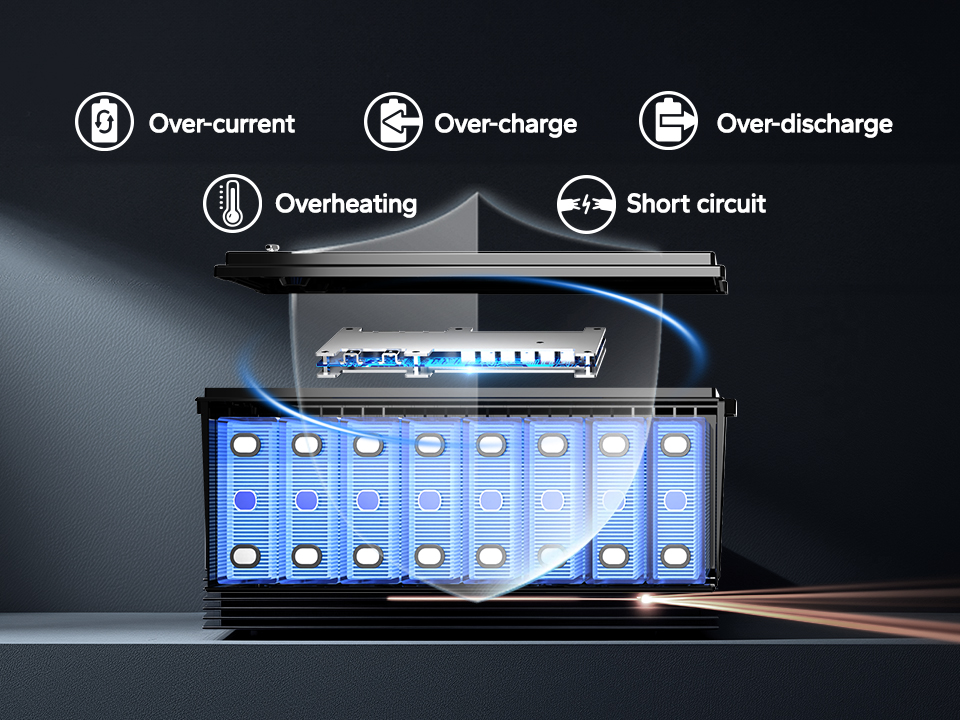
6. Battery Management System (BMS)
A high-quality Battery Management System (BMS) plays a critical role in extending battery life by monitoring and controlling the charging and discharging processes. It safeguards the battery from common risks such as overcharging, deep discharging, and overheating—ensuring safe operation and long-term performance.
7. Battery Chemistry
Different battery chemistries have inherently different lifespans. For instance, LiFePO4 batteries are known for their thermal stability and longer cycle life, while lead-acid batteries degrade faster under deep discharges or high usage.
Part 3: How to Extend the Lifespan of Your Lithium Batteries
Maximizing the life of your lithium battery isn’t complicated—it’s about making smart, consistent choices. With proper care, lithium batteries can outlast other rechargeable types by years. Here are six proven strategies to help you get the most out of your investment:
1. Keep Temperatures in Check
- Avoid high heat: It accelerates internal degradation.
- Protect against freezing: Charging below 0°C (32°F) can cause permanent damage. Utilizing battery with low-temperature charging off protection is necessary if you live in the area where winter is long.
- Best practice: Store and operate batteries between 10°C and 30°C (50°F–86°F).
2. Use Partial Discharges
Instead of waiting for your battery to hit 0%, aim to recharge at around 20–30% capacity.
- Why? Deep discharges put more strain on battery cells.
- Tip: Shallow discharges (and frequent top-ups) help preserve long-term health.
3. Charge Gently and Correctly
- Use chargers made for lithium batteries.
- Avoid overcharging or fast-charging unless absolutely necessary.
- Stick to the manufacturer’s voltage and current guidelines for best results.
4. Store at the Right Charge Level
- Ideal storage level: Around 40–60% charge.
- Conditions: Cool, dry, and away from direct sunlight or moisture.
5. Rotate Battery Usage
If you own multiple batteries, rotate their use to ensure none sit idle for too long.
- Why it matters: Infrequent use can lead to unnoticed degradation or imbalance.
6. Avoid Overloads and Physical Damage
- Stick to rated specs and avoid pushing the battery beyond its intended capacity.
- Handle batteries carefully to prevent damage from impact, puncture, or moisture.
FAQs About Lithium Battery Lifespan
What Happens If You Don’t Charge a Lithium Battery?
When a lithium-ion battery is left uncharged for too long, it enters a deep discharge state. This can cause:
- Loss of active lithium ions, reducing capacity and charging ability.
- Thickening of the Solid Electrolyte Interphase (SEI) layer, which increases internal resistance.
- Electrolyte crystallization, restricting ion flow and rendering the battery unusable.
Bottom line: If left uncharged for months, a lithium battery may not recover—even with a recharge.
Do Lithium Batteries Expire If Not Used?
Lithium batteries don’t “expire” like food, but they self-discharge slowly over time, even when idle.
- They typically lose 2–3% of charge per month under ideal storage conditions.
- Left unused for extended periods—especially at full or zero charge—they may become permanently damaged.
Which Type of Lithium Battery Lasts the Longest?
LiFePO₄ (Lithium Iron Phosphate) batteries offer the longest lifespan among lithium types:
- Cycle life: 6,000+ cycles before dropping to 80% capacity.
- Lifespan: 10–15 years under regular use.
- Best for: Solar energy storage, RVs, marine systems, and off-grid setups.
Can a lithium battery last 20 years?
Yes—under optimal conditions, certain lithium batteries (especially LiFePO₄) can last up to 20 years. While the average range is 3–10 years, light usage and proper care can significantly extend this.
How long can a lithium battery sit unused?
When stored properly (cool, dry, and partially charged), a lithium battery can sit unused for 2–6 months without major issues. Beyond that, periodic maintenance charges are recommended.
How do lithium batteries compare to regular batteries?
Lithium batteries typically last up to 6x longer than alkaline or nickel-based batteries. Some can endure thousands of cycles, while traditional batteries are usually limited to a few hundred.
Should I leave a lithium battery plugged in all the time?
No. Continuously charging a lithium battery—especially to 100%—can shorten its lifespan.
- Best practice: Unplug after reaching 80–90%, especially for devices used daily.
- Exception: Some smart devices and battery management systems prevent overcharging automatically.


