




| Differences | AC (Alternating Current) | DC (Direct Current) |
|---|---|---|
| Direction of current | Changes periodically (back and forth) | Fixed (one direction) |
| Voltage behavior | Changes in a wave pattern | Basically stable (for device output) |
| Where it is commonly used | Power transmission, homes, commercial use | Electronic devices, battery/power storage systems |
| Conversion | AC→DC: Charger / AC adapter | DC→AC: Inverter |
| Typical examples | Wall outlet | USB, battery |
Electricity we utilize every day falls into two primary categories: Alternating Current (AC) and Direct Current (DC). The difference between AC and DC power, along with their respective voltage characteristics, is fundamental to understanding how modern electrical devices operate.
In this article, we will explain the distinction between AC VS DC voltage in simple, while also covering the features and common uses of both AC and DC, as well as how AC and DC conversion works in familiar devices such as chargers, AC adapters, and inverters.
- Part1: The 5 Main Differences Between AC VS DC Currents
- Part2: What Is AC Power? | Pros, Cons, and Common Uses
- Part3: What Is DC Power? | Pros, Cons, and Common Uses
- Part4: How Are AC Power and DC Power Converted?
- Part5: Is the Electricity Stored in a Battery AC or DC?
- Part6: FAQs About AC and DC Power Supply
- Conclusion
Part1: The 5 Main Differences Between AC VS DC Currents
To fully tell apart AC power and DC voltage, we need to dive into their inherent characteristics and practical performance. We have sorted out five major distinctions to help you understand them clearly and easily.
1) The Direction of Current Is Different
When people talk about AC and DC, the first key difference is how the current flows.
- AC (alternating current) is electricity in which the direction of the current changes at regular intervals—essentially moving back and forth.
- DC (direct current) refers to electricity that continues to flow in only one direction.
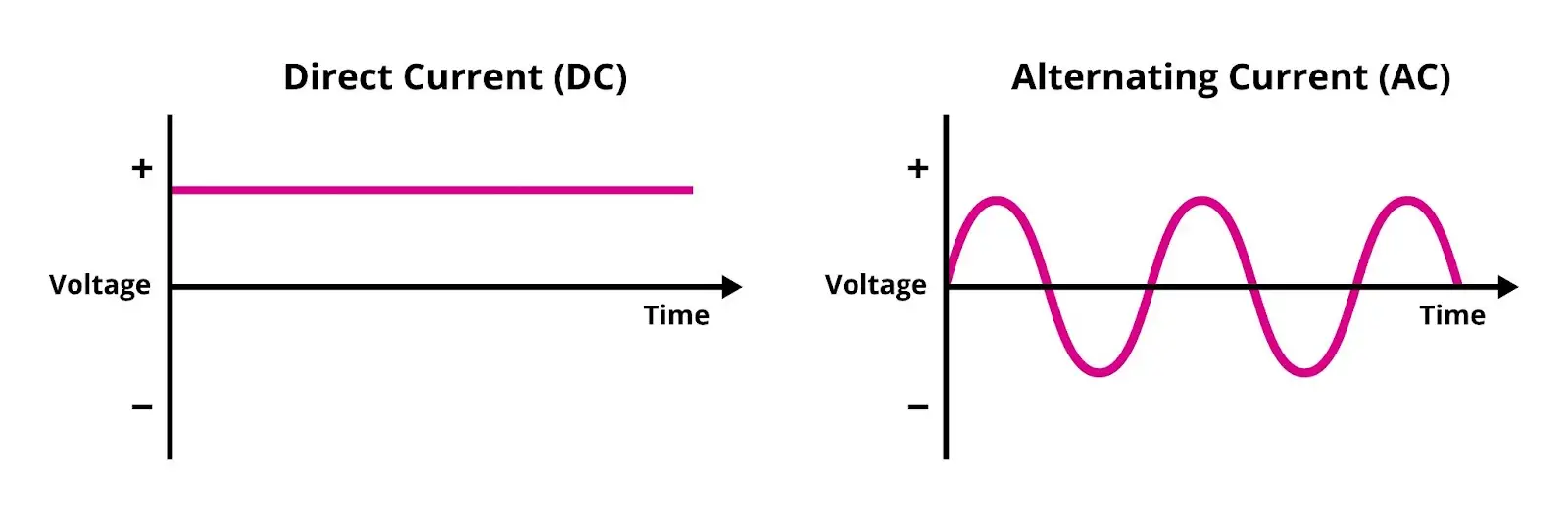
Rather than focusing on complex theory, it is enough at this stage to remember: AC changes direction, while DC does not.
2) AC Has a Property Called “Frequency”
AC has a property called frequency, which indicates how many times per second the current changes direction. In major English-speaking regions such as the United States and Canada, standard AC power is 60Hz, while in Australia it is 50Hz.
Most household appliances are designed to work with either frequency, but in some cases frequency can affect device operation or sound.
DC, on the other hand, does not have the concept of “frequency,” which makes it easier to handle as a steady voltage.
3) AC Is Better Suited for Power Transmission and Distribution
The reason homes receive AC power is that it works well with systems designed to deliver electricity over long distances.
The key point is that AC voltage is easy to adjust. In power transmission, voltage can be changed as needed to deliver electricity efficiently.
4) Electronic Devices Often Run on “DC Internally”
Devices such as smartphones, laptops, and routers are designed with internal circuits that rely on DC, so they cannot use AC from a wall outlet directly.
That is why chargers (AC adapters) convert AC into DC and then regulate it into a form that devices can use easily—for example, USB power as “5V DC.”
In other words, AC and DC are already coexisting around us through constant conversion.
5) AC⇄DC Conversion Always Involves Cost and Loss (and Directly Affects Safety)
AC→DC conversion is handled by chargers and AC adapters, while DC→AC conversion is handled by inverters.
However, conversion requires circuitry, which leads to heat generation (conversion loss) as well as increased device size and cost.
With inverters in particular, exceeding the rated output (W) or the temporary surge load (startup power) can cause shutdowns or failures, so it is important to choose a capacity that matches the intended use.
From a safety standpoint, the basics are the same for both AC and DC: always follow the specified voltage, current, and rated limits. Improper handling can cause overheating, failure, and in some cases accidents.
Part2: What Is AC Power? | Pros, Cons, and Common Uses
Having learned the core differences between AC and DC, let’s first explore AC power in detail. Here we will cover its key traits, pros and cons, as well as its most common real-world applications.
Characteristics of AC Power
AC power (alternating current) is a type of power in which the direction of current changes periodically, and it is widely used as the “standard” for household and commercial electricity. In major English-speaking regions such as the United States and Canada, household outlets are typically 120V at 60Hz, while in Australia they are generally 230V at 50Hz. Most devices used in everyday life are designed to work with this AC power standard.
Advantages
- Well suited for power transmission: It is widely used as the system for delivering electricity over large areas and forms the foundation of modern power infrastructure.
- Easy to adjust voltage: AC voltage can be changed relatively easily depending on the application, making it well suited for household, commercial, and industrial use.
- Household appliances can be used directly: Most home appliances are designed to run on outlet power (AC), so they can be used simply by plugging them in.
Disadvantages
- Electronic devices often require conversion: Since smartphones, PCs, and similar devices run on DC, they cannot use AC directly and must convert AC to DC through a charger. This conversion involves heat loss and added component cost.
- Not suitable for energy storage: Batteries store DC electricity, so AC cannot be stored as-is and must go through rectification or similar processes during charging.
- May be affected by frequency differences or noise: In certain specialized devices or environments, frequency differences or AC-related electrical noise can affect operation or sound.
Typical Uses
- Household use: Wall outlets, lighting, refrigerators, washing machines, air conditioners, microwave ovens, etc.
- Commercial and industrial use: Business equipment, factory machinery, and other fields that handle large amounts of power
Part3: What Is DC Power? | Pros, Cons, and Common Uses
Characteristics of DC Power (Beginner Version)
DC power (direct current) is power in which current continues to flow in one direction. Because the voltage is relatively constant and easy to manage, it is widely used inside many devices as the “stable electricity” required by electronic circuits.
Another major characteristic of DC is that it can be stored and carried in batteries, which is why devices such as smartphones, laptops, and power banks are fundamentally built around DC power.
Advantages
- Works well with electronic devices: Circuits in smartphones, PCs, and similar devices often run on DC, and it is easy to provide the required voltages (such as 5V or 12V).
- Easy to store (the basis of batteries): DC can be stored directly in batteries, making it ideal for portable devices and backup power.
- Easy to control: Voltage and current can be stabilized more easily, which makes detailed device-side control—such as operation and charge management—simpler.
Disadvantages
- Conversion is required to run household appliances: Since household outlets and many appliances are designed for AC, using battery power (DC) with home appliances requires DC→AC conversion through an inverter. This conversion involves power loss (heat) and additional cost.
- Care is needed when handling high power: DC can easily produce a very large current if short-circuited, which may cause overheating or component damage. This is especially important in high-output battery systems and wiring, where rated values, protection circuits, and cable selection are critical.
- Circuitry is required to raise or lower voltage: Adjusting voltage for different applications requires devices such as DC-DC converters, which increases system complexity, loss, and cost.
Common Uses
DC power is commonly used in devices that “run on batteries” and in the internal circuits of electronic devices, such as the following.
- Batteries and storage systems: Dry cell batteries, power banks, energy storage batteries, car batteries (12V systems)
- Electronic and communication devices: Smartphones, laptops (internal circuits), LED lighting (many devices use DC internally)
- Energy-related systems: Solar panels (the generated power is basically DC), EV-related systems (many are DC-based)
Part4: How Are AC Power and DC Power Converted?
In short, AC→DC conversion is used when powering electronic devices from a household outlet (AC), while DC→AC conversion is used when powering household appliances from batteries or energy storage systems (DC).
This conversion is taking place almost invisibly inside devices we use every day, such as chargers and portable power stations.
AC→DC (Rectification: The Role of Chargers and AC Adapters)
Electricity from a household outlet is AC, but electronic devices such as smartphones, laptops and lithium battery basically run on DC. That is where chargers (AC adapters) come in.
A charger converts AC into DC internally and then regulates it to a voltage the device can use. For example, a USB charger converts AC into 5V DC and supplies it to a smartphone, a AC to DC charger converts AC into DC for lithium battery charging.
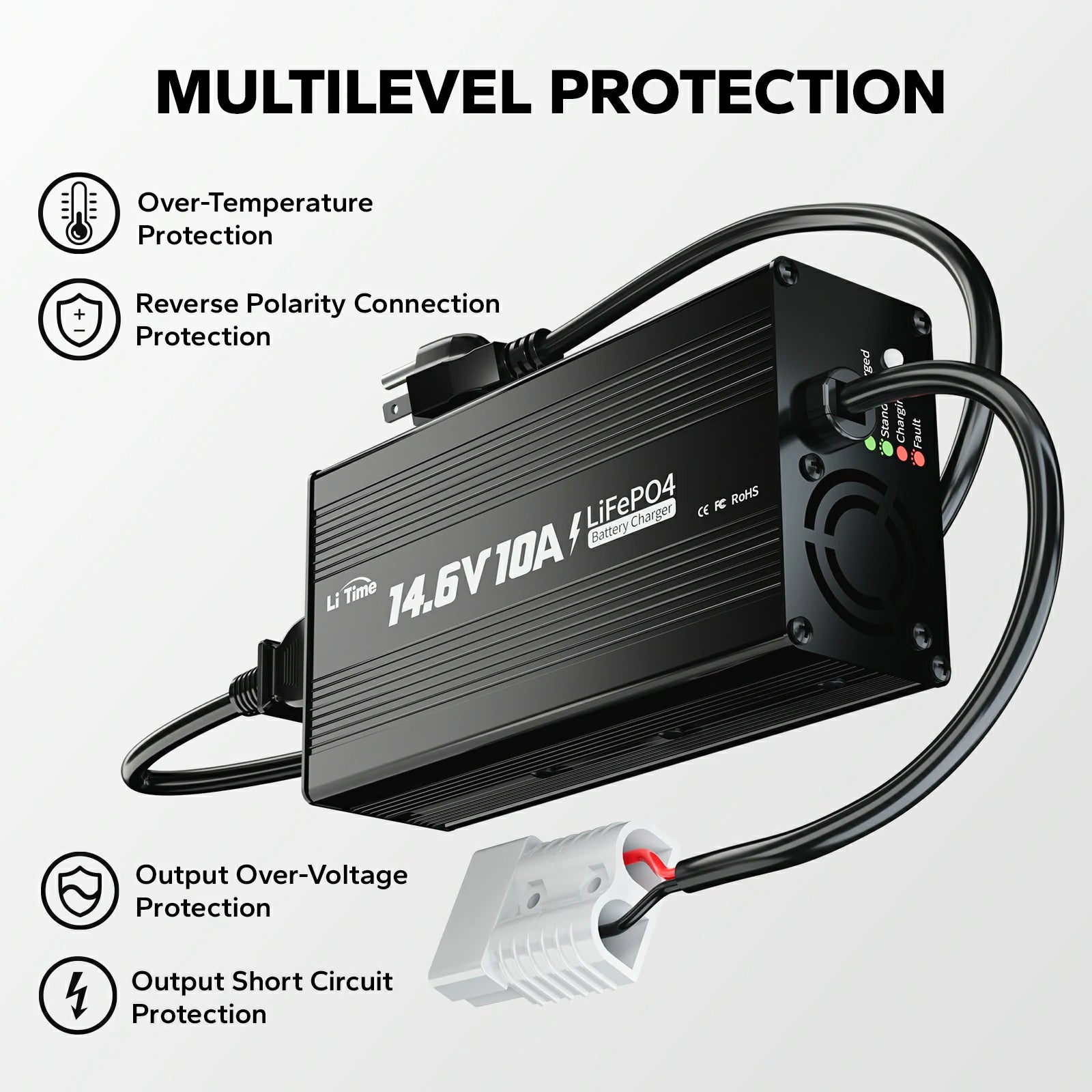
The key point is that a charger does more than simply change the form of electricity—it also stabilizes voltage and current and controls issues such as overcurrent.
DC→AC (Inverters: Conversion Needed to Run Appliances from Batteries)
On the other hand, electricity stored in dry cells, batteries, and energy storage systems is DC. However, many household appliances are designed to work with outlet power (AC), which means they cannot run directly on battery DC.
That is where an inverter is used, converting DC into AC that household devices can use. This is why portable power stations have AC outlets—they contain an internal inverter. Car inverters work the same way, creating AC power from a car battery (DC).
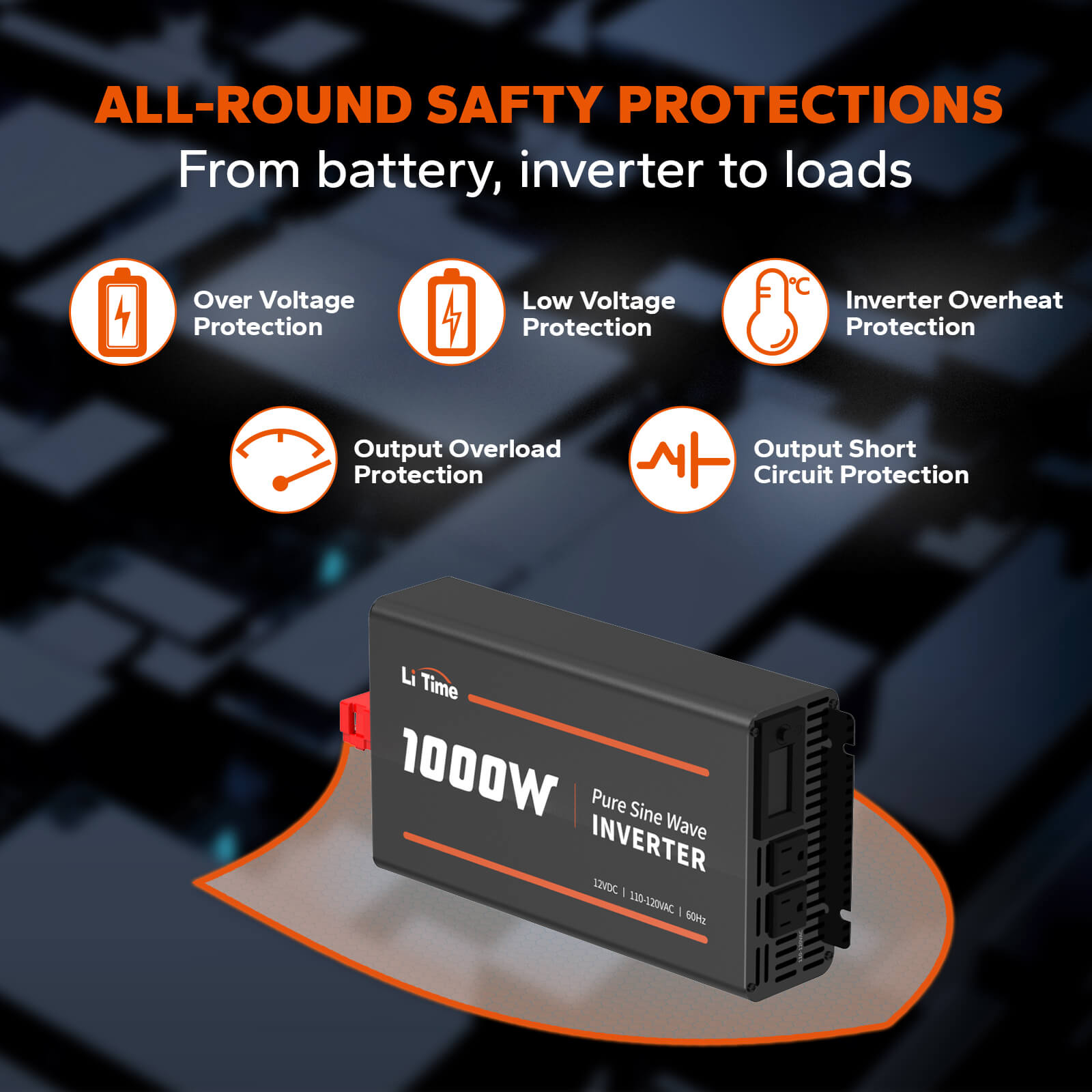
Important Points During Conversion (Device Selection Affects Safety and Stability)
In everyday life, AC↔DC conversion is generally handled by dedicated devices such as chargers (AC adapters) and inverters (portable power stations, car inverters, etc.). In other words, most of the “conversion” we encounter in daily life depends on specialized devices doing the job safely.
For that reason, the first thing to keep in mind is to choose products from reliable manufacturers that comply with relevant standards.
Because conversion devices handle voltage and current internally while also dealing with heat and changing loads, safety and stability can vary significantly depending on the quality of the design and protection circuitry. The cheaper the product, the more carefully you should check specification labeling, protection features, and certification or standards compliance.
Once that is understood, keeping the following points in mind can greatly reduce the risk of choosing the wrong product.
- Check the rated output (W): Inverters and portable power stations have a limit such as “continuous output ○W.” If the appliance you want to use exceeds this, it may trigger protection, shut down, or fail.
- Pay attention to startup power (inrush current): Motor-driven devices such as refrigerators, air conditioners, power tools, and pumps may require a large surge of power when starting. In addition to continuous output, it is wise to make sure there is enough peak output (surge capacity).
- Assume heat generation and conversion loss are unavoidable: Conversion always produces some loss in the form of heat. The higher the load and the longer the usage time, the more likely heat will build up, so it is important to consider ventilation and installation conditions as well.
Part5: Is the Electricity Stored in a Battery AC or DC?
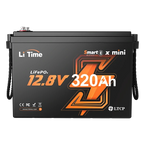
The electricity stored in a battery or energy storage system is basically DC (direct current).
Batteries generate electricity through chemical reactions, so the electricity they deliver flows in one direction and is therefore DC. Power banks, car batteries, and home energy storage systems may vary in form, but they all share the same principle: stored electricity is DC.
Why Are Batteries DC?
A battery is essentially a “container” for storing electricity, but it is not well suited to storing electricity that changes direction periodically, like AC. In actual systems, even when charging from a household outlet, the AC is first converted to DC internally before it is stored in the battery. Understanding this makes it easier to see why rectification is necessary inside chargers and energy storage systems.
Read More: Can I Run An AC On Lithium Battery Power?
Why Does It Become AC When Running Home Appliances? (The Role of the Inverter)
Many household appliances are designed to run on outlet power (AC). For that reason, rather than supplying battery DC directly to appliances, it is generally converted from DC to AC through an inverter before use.
For example, portable power stations have AC outlets because they contain an internal inverter that converts battery DC into household-style AC output. Home energy storage systems work in much the same way: the battery stores DC, and conversion equipment changes it into the form needed for use.
Common Use Cases
- Power outage backup: It is often more efficient to start by using DC-based outputs such as USB for charging smartphones or powering lights
- Outdoor use and car camping: USB devices can be used directly as DC, while AC appliances require inverter output
- Solar + battery systems: Solar panels basically generate DC, which is later converted to AC when used in the home
Important Points People Often Overlook When Choosing
When selecting a battery or portable power station, it is important to look not only at capacity (Ah), but also at what kind of electricity it can deliver and how much of it. In particular, the following two points are worth checking carefully.
- Continuous output (W): Can it handle the power consumption of the appliances you want to use?
- Peak output (surge output): Can it handle appliances with high startup power, such as motor-driven devices?
In this way, while the battery itself stores DC, AC output may still be necessary depending on how you want to use it at home.
In a Solar + Battery Storage System, How Do AC and DC Change?
In a system that combines solar power and battery storage, electricity flows through the stages of “collecting (generation) → storing (charging) → using (supplying power),” with AC and DC being converted as needed at each stage.
Basic Flow
- Solar panels: Generate DC power (collection)
- Power conditioner: Converts DC→AC (into a form that can be used in the home)
- Home distribution panel / appliances: Use AC
- Battery storage: Stores DC (during charging, conversion such as AC→DC takes place inside the system)
- Inverter: Converts DC→AC
- Appliances: Use AC
Solar power is generated as DC, batteries store it as DC, and home appliances use AC—the role of the power conditioner and inverter is to bridge these forms of electricity.
Part6: FAQs About AC and DC Power Supply
Is the electricity used at home AC or DC?
The electricity supplied to homes (from the outlet side) is basically AC.
The electricity coming from the home distribution panel and wall outlets is AC, and many appliances such as lights and refrigerators are designed to run on that power. On the other hand, smartphones and laptops use DC internally, so chargers (AC adapters) or power supply units convert AC into DC before supplying it to the device.
Should I use an AC adapter or a DC adapter?
Basically, the correct choice is to select a power supply that matches the output specified by the device (DC voltage and current).
To clarify, the term “AC adapter” usually refers to the fact that the input is household outlet power (AC), while the actual output is generally DC. For that reason, the term “DC adapter,” which may appear in searches, is often simply being used to mean “an adapter that outputs DC,” rather than a standard product category name commonly used in the market (most commercially available products are labeled as AC adapters).
When selecting a product, prioritize matching the following specifications rather than focusing on the name.
- Output voltage (V): Must match exactly (a mismatch carries a high risk of damage)
- Output current (A) / power (W): Must meet or exceed the device requirement (too little may cause unstable operation or prevent startup)
- Output type: Whether it is DC (check the “DC” marking on the label)
- Plug shape and size: Match the outer diameter, inner diameter, and terminal shape
- Polarity: Match center-positive or center-negative
- Safety and quality: Check for protection circuits (overcurrent / overvoltage / short circuit / temperature) and certifications or standards compliance
Also, if the power source is already DC, such as a car cigarette lighter socket or battery, then what you need is not an “AC adapter,” but a DC-DC converter (DC input → required DC output). If you are unsure, the safest choice is always the original manufacturer product or a power supply officially confirmed as compatible by the manufacturer.
Is the 100V from a household outlet AC or DC?
The 100V from a household outlet is AC (alternating current).
Japanese household outlets typically supply AC 100V (50/60Hz depending on the region), and home appliances are designed on that basis. When DC is needed, such as for smartphone charging, the charger or AC adapter rectifies the AC internally to create DC and outputs it in a usable form such as 5V over USB.
Is a car battery AC or DC?
A car battery is DC (direct current), generally in a 12V system.
Because a battery is a device that stores electricity, it is basically DC, and many vehicle electrical systems also run on DC. If you want to use AC appliances in a vehicle, you need to convert DC to AC with a car inverter or similar device. When doing so, it is wise to pay attention to the inverter’s rated output (W) as well as the startup power requirements of motor-driven devices.
Read More: Is a Car Battery AC or DC?
Conclusion
AC has periodically reversing current and serves as the standard for power grids and home outlets, while DC flows in one fixed direction and powers electronics, batteries and energy storage systems. When using battery storage, check capacity, continuous and peak output for safe and proper equipment selection.
For dependable power conversion and energy storage solutions, LiTime is a recommended brand, offering reliable lithium batteries, chargers, and pure sine wave inverters for home backup, RV, off-grid, and everyday power needs.


