


This guide compares 2026 deep cycle marine battery costs by chemistry, capacity, cost per cycle, and 5‑year ownership cost, so you are not just looking at sticker price. LiFePO4 lithium batteries do cost more upfront, but for boaters who are on the water often, their higher usable capacity and much longer cycle life can deliver better long‑term value.
Many common 12‑volt flooded lead‑acid deep‑cycle batteries sell for roughly $100 to $200. AGM marine batteries usually fall in the $180 to $350 range. Lithium‑ion (LiFePO4) batteries often start around $500 and can reach $1,500 or more, depending on capacity and brand. Price alone is not a good filter: the best battery is the one that matches your usage pattern, power needs, and how many years you plan to keep the boat.
This guide walks through real 2026 pricing for AGM, flooded lead‑acid, and lithium (LiFePO4) deep cycle marine batteries, then converts those numbers into cost per cycle and 5‑year total cost of ownership so you can compare each option on truly equal terms.
- Why Price Alone Is Misleading?
- Deep Cycle Marine Battery Price Ranges
- Deep Cycle Marine Battery Prices by Capacity
- What Is the Cost per Use of Different Types of Batteries?
- Long‑Term Cost over Five Years
- What Affects Marine Battery Price?
- Which Battery Makes Sense for Your Boating Style?
- Conclusion
- FAQ
Why Price Alone Is Misleading?
Price is one factor when choosing deep‑cycle marine batteries, but it should not be the only one. The smarter approach is to focus on how much usable energy you need and how often you will cycle the battery.
Most buyers initially compare shelf prices: an AGM battery might look “cheaper” than a lithium battery at first glance. The problem is that those prices do not reflect differences in usable capacity and cycle life. A lower‑priced battery may need to be replaced sooner, may waste more energy during charging, and may deliver much less usable power before voltage sag becomes an issue.
A typical 100Ah flooded or AGM battery should not be discharged much deeper than about 50% depth of discharge if you want to avoid shortening its lifespan, which means you are effectively working with about 50Ah of usable power. In contrast, a 100Ah LiFePO4 battery can safely be discharged to 80–100% depth of discharge, which yields about 80–100Ah of usable power from the same rated capacity. In practice, one 100Ah lithium battery can replace a 200Ah lead‑acid bank in many setups.
A “cycle” means one full discharge‑and‑recharge. AGM and flooded lead‑acid batteries are typically rated for about 300–600 cycles at 50% depth of discharge before capacity drops off noticeably. Lithium batteries are commonly rated for 2,000–4,000+ cycles, and many boaters report thousands of cycles at high depth of discharge with only modest degradation. That is roughly five to ten times the working life of a comparable lead‑acid battery.
So, instead of only asking “How much does it cost today?”, savvy buyers also ask:
-
How long will it last?
-
How much usable power will it deliver over that life?
-
What is the real cost per cycle?
Once you look at those questions, the comparison between flooded, AGM, and lithium becomes much clearer.

Deep Cycle Marine Battery Price Ranges
In the U.S. market, most boat owners are choosing among three main deep cycle options: flooded lead‑acid, AGM, and lithium (LiFePO4). Each chemistry has a different upfront cost, lifespan, maintenance profile, and long‑term cost.
Deep Cycle Marine Battery Prices by Chemistry
Typical 100Ah deep cycle marine batteries generally fall into these ranges:
- Flooded lead‑acid: about $100 to $200 for many common 12V deep cycle models
- AGM: about $180 to $350 for standard marine AGM batteries
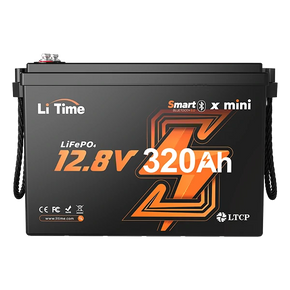
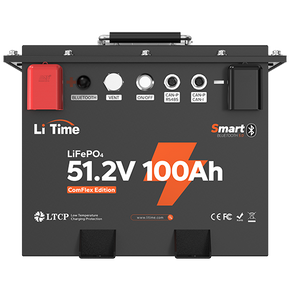
- Lithium (LiFePO4): about $500 to $1,500 or more, depending on capacity and brand
| Battery Type | Typical Price (100Ah) | Price Range | Weight (100Ah) | Rated Cycle Life |
|---|---|---|---|---|
| Flooded Lead-Acid | $90–$150 | $50–$200 | 55–65 lbs | 200–500 cycles (50% DoD) |
| AGM | $200–$400 | $150–$500 | 55–68 lbs | 300–600 cycles (50% DoD) |
| Lithium (LiFePO4) | $500–$800 | $400–$1,000 | 22–31 lbs | 2,000–4,000+ cycles (80–100% DoD) |
Flooded lead‑acid remains the lowest‑cost option at purchase and is still widely used as a budget starting or occasional‑use accessory battery. AGM sits in the middle: it costs more than flooded but offers sealed, maintenance‑free, spill‑proof construction that is better suited to many marine installations. Lithium is the most expensive per battery, but it delivers far more usable energy and a dramatically longer service life at the same rated capacity.

Shop LiTime Marine Deep Cycle Batteries
Explore LiTime deep cycle marine batteries for trolling motors, electronics, solar charging, and long runtime on the water.
- LiFePO4 options for longer cycle life and more usable capacity
- Lightweight alternatives to traditional lead-acid and AGM batteries
- Designed for marine power, trolling motors, and onboard electronics
Deep Cycle Marine Battery Prices by Capacity
Battery price generally increases with amp‑hour rating, but not perfectly in a straight line. Larger batteries often cost less per amp‑hour than smaller ones, which is why serious boaters sometimes step up in size.
| Capacity | Flooded Lead-Acid | AGM | Lithium (LiFePO4) |
|---|---|---|---|
| 35Ah | $50–$80 | $90–$150 | $250–$350 |
| 50Ah | $70–$110 | $120–$220 | $300–$450 |
| 75Ah | $80–$130 | $160–$300 | $400–$600 |
| 100Ah | $90–$150 | $200–$400 | $500–$800 |
| 150Ah+ | $150–$250 | $350–$600 | $800–$1,400 |
Group size also affects price. A Group 24 deep cycle marine battery is usually cheaper than a Group 27 or Group 31 simply because it holds less capacity in a smaller case. When comparing shelf prices, always look at both the amp‑hour rating and the group size side by side. A battery that looks “cheap” may simply be undersized, and that can drive up your real‑world costs if you have to recharge or replace it more often.

Shop LiTime Marine Dual Purpose Batteries
Browse dual-purpose marine lithium batteries designed for both starting power and onboard electrical loads.
- Suitable for boats with limited battery space
- Supports engine cranking and moderate accessory use
- Useful for users comparing starting, deep cycle, and dual-purpose setups
What Is the Cost per Use of Different Types of Batteries?
Here is a simple way to compare cost per cycle:
Cost per cycle = battery price / rated cycles
| Battery type | Example price | Example cycle life | Cost per cycle |
|---|---|---|---|
| Flooded lead-acid | $150 | 300 cycles | $0.50 |
| AGM | $250 | 600 cycles | $0.42 |
| Lithium | $700 | 4,000 cycles | $0.18 |
Even though lithium costs roughly 2–6 times more upfront, its cost per cycle usually ends up several times lower than flooded or AGM. For boaters who run trolling motors daily, fish multiple times per week, or power livewells and electronics for hours at a time, that math can flip the “expensive” battery into the cheaper one within just a few seasons.

Shop LiTime Marine Batteries
Compare LiTime marine battery options for deep cycle use, trolling motors, electronics, house loads, and lithium upgrades.
- Marine LiFePO4 batteries for long-term value and high usable capacity
- Options for deep cycle, starting, and dual-purpose marine applications
- Useful for boaters comparing upfront price and long-term cost per cycle
Long‑Term Cost over Five Years
To visualize long‑term cost, imagine three boaters who all need deep cycle power for trolling and electronics.
- Boater 1 chooses a flooded lead‑acid battery for $150. It lasts about three years. Over nine years, that boater may buy three batteries, spending around $450 in total.
- Boater 2 chooses an AGM battery for $250. It lasts about five years. Over ten years, that boater may buy two batteries, spending around $500 in total.
- Boater 3 chooses a lithium battery for $700. It can last around ten years or more. Over that same period, that boater may still be using the original battery, so the higher upfront cost may be lower than it first appears when spread across years of use.
| Battery Type | Initial Cost | Replacements Over 5 Years | Total 5-Year Cost |
|---|---|---|---|
| Flooded Lead-Acid | $150 | 3 (at ~$150 each) | ~$450 |
| AGM | $250 | 2 (at ~$250 each) | ~$500 |
| Lithium (LiFePO4) | $700 | 0 | ~$700 |
For heavy users — anglers running forward-facing sonar all day, charter operators, or anyone cycling their battery deeply on a regular basis — lithium frequently breaks even or comes out ahead of AGM within 5 years, and well ahead of AGM or flooded lead-acid over a 10-year horizon. For occasional weekend boaters who rarely deep-cycle their battery, flooded lead-acid or AGM can remain the lower lifetime-cost option simply because the battery never gets stressed enough to need lithium's extra durability.

What Affects Marine Battery Price?
Several factors influence what you will pay for a marine battery. In general, price reflects capacity, voltage, chemistry, brand, warranty, and whether the product is engineered for real marine conditions.
Key factors include:
- Capacity (Ah): Higher amp‑hour capacity means more stored energy and usually a higher price. A 200Ah battery will almost always cost more than a 100Ah battery of the same chemistry and brand.
- Voltage: Marine systems commonly use 12V, 24V, or 36V setups. Higher‑voltage systems may require either larger batteries or multiple batteries wired in series, increasing total system cost.
- Battery chemistry: Flooded lead‑acid is usually the cheapest upfront, AGM occupies the middle ground, and LiFePO4 lithium typically costs most at purchase but can offer better long‑term value for frequent use.
- Brand reputation and warranty: A 100Ah lithium marine battery from a trusted brand with an 8–11‑year warranty will typically cost more than one with a 2–3‑year warranty. Longer warranties often reflect better cell quality, stronger BMS engineering, and more reliable support.
- Build quality and marine‑specific design: Marine batteries are often ruggedized to handle vibration, moisture, corrosion, and rough water. A battery specifically designed for trolling motors, fish finders, or marine house loads is usually more valuable than a generic deep cycle unit.
- Built‑in BMS (for lithium): Quality LiFePO4 marine batteries include a battery management system to protect against overcharge, over‑discharge, over‑temperature, and short circuits.
- Smart features: Bluetooth monitoring, app support, low‑temperature protection, and self‑heating features can raise the price but also make the battery easier and safer to use, especially in demanding conditions.
- Intended use (starting vs. deep cycle vs. dual‑purpose): True deep cycle batteries are built for repeated discharge and recharge. Dual‑purpose batteries can cover both starting and cycling but may not match the cycle life of a dedicated deep cycle battery under heavy use.
- Retail channel and promotions: Pricing can vary between local marine dealers, big‑box stores, online marketplaces, and direct‑from‑manufacturer websites. Seasonal sales, bundles, and end‑of‑season promotions can reduce final cost.
In simple terms, larger capacity and higher build quality almost always cost more. Established brands may charge a premium, but that extra cost can pay off in better safety features, stronger warranty coverage, reliable technical support, and a longer service life.
For occasional boaters, a lower‑cost flooded or AGM battery may be sufficient. For frequent boaters, anglers, trolling motor users, and anyone chasing long runtime with less weight, a LiFePO4 marine battery is often the better long‑term investment.
Which Battery Makes Sense for Your Boating Style?
Occasional or weekend boaters: If you boat a few times a month and don't run heavy electronics or a trolling motor for hours at a stretch, a flooded lead-acid or AGM deep cycle marine battery is usually the more economical choice. You won't put enough cycles on it to recoup lithium's higher upfront cost.
Anglers and frequent boaters: If you fish often, run a trolling motor, livewell aerators, and electronics for extended periods, lithium's higher usable capacity and lighter weight (roughly half to a third the weight of AGM) translate into longer days on the water and fewer battery replacements.
Charter operators and commercial use: For boats that cycle batteries daily, lithium's cost-per-cycle advantage compounds quickly, and the reduced weight can also improve fuel efficiency over a season.
Cold-weather boaters: AGM and flooded lead-acid generally tolerate cold starts and low temperatures better than lithium, which can require low-temperature charge cutoffs. If you boat in cold climates, factor this into your decision alongside price. However, many lithium batteries now incorporate low-temperature protection and heating technologies.
Mixed setups: Many boaters split the difference — keeping an AGM or flooded battery for engine starting and adding a lithium battery for the "house bank" that runs electronics and trolling motors. This balances upfront cost against the runtime and longevity where it matters most.
Conclusion
There is no single “cheapest” deep cycle marine battery in absolute terms—only the most cost‑effective battery for your specific pattern of use. Flooded lead‑acid wins on upfront price for light, occasional use. AGM offers a maintenance‑free middle option that handles moderate cycling well. Lithium costs more on day one but often ends up costing less per year for boaters who cycle their batteries hard and often. Run the numbers against your own boating habits before deciding.
FAQ
What is the average price of a deep cycle marine battery?
A typical 100Ah deep cycle marine battery costs about $90–$150 for flooded lead‑acid, $200–$400 for AGM, and $500–$800 for lithium (LiFePO4), depending on brand and retailer.
Is lithium worth the extra cost for a marine battery?
For boaters who deep‑cycle batteries regularly—frequent anglers, charter operators, or anyone running trolling motors and electronics for hours—lithium’s lower cost per cycle and 5–10× longer lifespan usually make the extra upfront cost worthwhile. Occasional boaters often will not use the battery enough to see the full payoff.
How long do AGM marine batteries last compared to lithium?
AGM marine batteries typically last about 3–6 years or roughly 300–600 cycles at 50% depth of discharge. Lithium marine batteries commonly last 8–10+ years or around 2,000–4,000+ cycles, even when discharged more deeply.
Can I replace a lead‑acid marine battery with lithium?
Yes, but lithium batteries need a compatible charging profile, and ABYC E‑13 guidelines recommend specific installation practices for lithium systems. Always check your onboard charger’s settings and ensure they match the new battery chemistry before making the swap.
Why are lithium marine batteries more expensive upfront?
The price reflects both the LiFePO4 cells and the integrated battery management system that protects against overcharging, over‑discharging, short circuits, and other failures. That engineering enables the high usable capacity and long cycle life that lower the true cost per cycle over time.


