




For your boat's outboard motor, the starting battery isn't just an accessory—it's the lifeline of your time on the water. A faulty or poorly matched battery can turn a perfect day on the water into a nightmare, leaving you stranded at the dock or stuck in the middle of the lake.
Today, the two main types of best marine starting batteries are lead-acid and lithium-ion. Which one is truly the best fit for your outboard? In this guide, we'll cut through the jargon and break down the key differences in cranking power, weight, performance, lifespan, cost, and safety to help you make a smart choice.
Part1: What is the Best Marine Starting Battery for Outboards? Lithium vs Lead-Acid
1. Cranking Power: Extreme Burst vs Safe & Limited Output
The #1 job of an outboard starting battery is delivering reliable cranking current—especially in cold weather or for older, high-horsepower engines where that instant burst is critical.
- Lead-acid batteries: No BMS (Battery Management System) to limit discharge current, so they can produce extremely high instantaneous cranking amps. For older, high-demand engines that need massive starting power, lead-acid is still a top pick.
- Lithium batteries: Built-in BMS sets a maximum discharge limit for safety and stability. While this slightly caps peak current compared to lead-acid, lithium batteries provide more than enough power for most modern outboards.
2. Weight: Lighter Weight = Better Performance
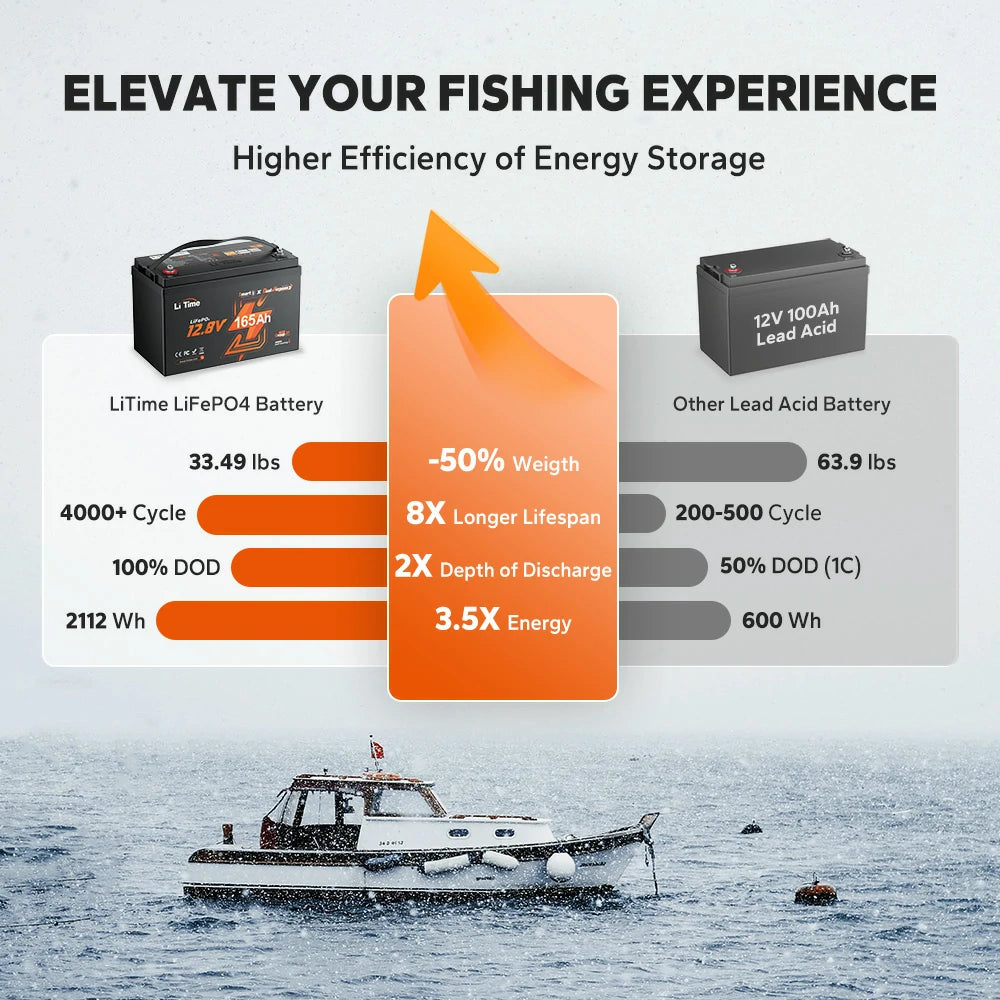
Weight directly impacts your boat's speed, fuel efficiency, and handling—especially on smaller boats, where every pound counts. This is where lithium batteries pull ahead.
- Lithium batteries: About 1/3 the weight of lead-acid in the same capacity. A 12V 100Ah lithium starting battery weighs just 20–25 lbs, while a lead-acid equivalent hits 60–70 lbs. Lighter weight means faster acceleration, better fuel economy, and more room for gear.
- Lead-acid batteries: Heavy and bulky due to lead plates and electrolyte. They weigh down small boats, hurt performance, and limit storage flexibility.
3. Performance: Voltage Drop vs Steady Output
How a battery performs as it discharges makes all the difference for reliable starts.
- Lead-acid batteries: Voltage drops steadily as power is used. Cranking power weakens over time, and low charge often leads to hard starts or failure. Deeply discharged lead-acid batteries also suffer permanent damage.
- Lithium batteries: Hold a strong, stable voltage until only 10%–15% charge remains. You get consistent, dependable starts every time—no more weak, unreliable cranking when you need it most.
4. Lifespan & Value: Low Upfront Cost vs Long-Term Investment
Don't judge value by sticker price alone—look at total lifetime cost.
- Lead-acid batteries: Low upfront cost, great for tight budgets. Short lifespan: typically 2–3 years, with only 200–500 charge cycles. You'll replace them multiple times over a decade.
- Lithium batteries: Higher initial cost, but long-lasting payback. Premium lithium batteries last 10+ years, with 4,000–15,000 cycles—8x longer than lead-acid. It's nearly a one-time investment with no frequent replacement hassle or cost.
5. Safety & Maintenance: High Upkeep vs Near-Zero Maintenance
Marine environments are harsh: salt spray, moisture, and vibration take a toll on batteries.
- Lead-acid batteries: Require regular maintenance. Flooded lead-acid needs electrolyte checks, terminal cleaning, and proper ventilation to avoid gas buildup. There's also a risk of acid leaks, and deep discharge shortens life drastically.
- Lithium batteries: Nearly maintenance-free. No electrolyte, no leak risks, corrosion-resistant, and no routine checks. Just install and enjoy hassle-free boating.
Part2: How to Choose the Right Outboard Starting Battery
There's no universal "best battery"—your choice depends on your engine, usage, and priorities.
Choose lead-acid if:
- You have an older, high-horsepower outboard that needs extreme cranking power.
- Your budget is tight, and you don't mind replacing the battery every few years.
- Boat weight and space aren't a concern.
Choose lithium if:
- You want lightweight, high performance to boost speed and fuel efficiency—especially on smaller boats.
- You want a long-lasting, set-it-and-forget-it battery.
- You prefer maintenance-free, safer power and don't mind a slightly higher upfront cost.
Part3: Best Rated Marine Starting Battery for Outboard
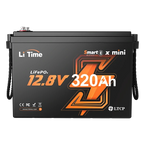
For the best mix of power, lifespan, lightweight design, and long-term value, we recommend the LiTime Marine Starting Lithium Battery, built specifically for outboard cranking.
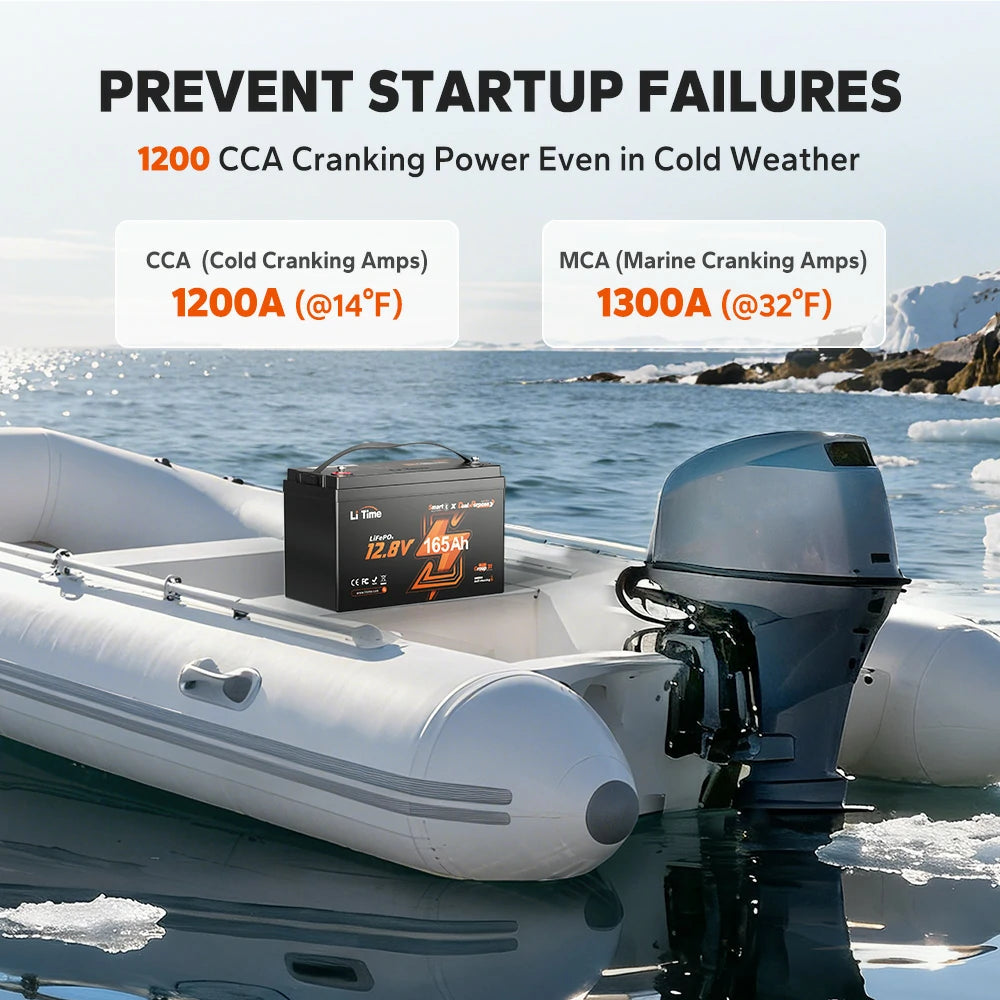
LiTime Marine Starting Battery | Up to 1200 CCA Dual Purpose
- Delivers high-current cranking for nearly all outboard models
- 1/3 the weight of traditional lead-acid for better handling and fuel economy
- Stable voltage output for reliable starts every time
- 10+ year lifespan, maintenance-free and safer
- Built-in BMS protection; water, dust, and salt-spray resistant for tough marine use
Part4: FAQs about Marine Outboard Starting Batteries
1. Which has more cranking power: lead-acid or lithium?
Lead-acid has no BMS current limit, so instantaneous peak cranking current may be higher—ideal for older high-horsepower outboards. Lithium has BMS current limits but still meets the needs of most modern outboards with safer, more stable output.
2. Does battery weight really affect boat performance?
Absolutely. Lithium is about 1/3 the weight of lead-acid at the same capacity, improving acceleration, handling, and fuel efficiency. Lead-acid's heavy lead and electrolyte design weigh down boats and take up valuable space.
3. Why do lithium batteries start more reliably?
Lead-acid voltage drops as it discharges, so cranking power fades. Lithium holds steady voltage until nearly 10%-15% charge remains, so starting power stays strong and consistent.
4. Which is more cost-effective long-term?
Lithium wins. Lead-acid is cheap but only lasts 2–3 years and needs frequent replacement. Lithium lasts 10+ years, so total lifetime cost is lower and far less hassle.
5. Which battery is safer and easier to maintain in marine conditions?
Lithium is maintenance-free, leak-proof, and corrosion-resistant. Lead-acid needs frequent upkeep (electrolyte checks, terminal cleaning) and carries acid leak and gas buildup risks.
Conclusion
Your starting marine battery is an investment in your boating experience. Choose right, and you'll enjoy reliable, trouble-free days on the water. Choose wrong, and you'll deal with constant small headaches.
Lead-acid stands out for raw cranking power and low upfront cost. Lithium battery wins for lightweight stability and long-term value. Whichever you pick, always match it to your engine's specs. Here's to smooth sailing and full power every time you hit the water!


