


Every month, when you open your electricity bill, do you find yourself asking, "Why is my electric bill so high?" Even without adding any new appliances, the bill amount might be 30% or even more than the same period last year. The truth is, a soaring electricity bill is rarely due to a single reason; instead, it's often a cumulative effect of several "invisible power hogs" quietly consuming energy.
This article will provide a professional breakdown to help you identify these culprits and offer truly effective cost-saving solutions – including how to leverage home lithium battery energy storage systems to combat rising time-of-use electricity rates.

Part 1: What Electricity Leading to High Bills?
The primary reason for high electricity bills in US households is the frequent use of high-power appliances. According to data from the U.S. Energy Information Administration (EIA), a typical American household consumes approximately 886 kilowatt-hours (kWh) of electricity per month, totaling about 10,500 kWh annually. Below are some common "power hogs," their approximate power consumption, and their average share of household electricity usage in the US:
| Appliance Type | Typical Operating Power (W) | Daily Usage (Hours) | Daily Consumption (kWh) | Approximate Share of US Household Electricity Usage |
|---|---|---|---|---|
| HVAC (Heating, Ventilation, and Air Conditioning) | 2000-5000 | 6-8 | 12–40 | Approximately 40-50% |
| Water Heater | 3000-5000 | 1-2 | 3–10 | Approximately 15-20% |
| Refrigerator | 100-200 | 24 (intermittent) | 1-2 | Approximately 5-10% |
| Electric Dryer | 2000-5000 | 0.5-1.5 | 1-7.5 | Approximately 5%–8% |
| Washing Machine | 400-1200 | 0.3-0.8 | 0.15–1.0 | Approximately 1%-3% |
| Lighting | 50–300 | 4-8 | 0.2–2.4 | Approximately 5-10% |
| TV & Entertainment Systems | 80–300 | 4-8 | 0.3–2.4 | Approximately 3-5% |
| Computers & Office Equipment | 100-300 | 6-10 | 0.6-3 | Approximately 1-3% |
- HVAC Systems: In the United States, Heating, Ventilation, and Air Conditioning (HVAC) systems are the absolute largest consumers of household electricity, especially during summer cooling and winter heating seasons. Prolonged operation, unreasonable temperature settings (too low or too high), improper system maintenance, or low energy efficiency can lead to a surge in electricity consumption, accounting for 40% to 50% of total household electricity costs.
- Electric Water Heaters: As the second-largest energy-consuming appliance, electric water heaters repeatedly heating and maintaining temperature, along with improper capacity selection, can make them significant power hogs. According to the U.S. Department of Energy (DOE), regular maintenance and choosing energy-efficient models are crucial.
- Old Appliances: Older appliances such as refrigerators, washing machines, and dryers may have lower energy efficiency ratings, or their internal components may degrade with age, leading to decreased efficiency and consuming more electricity to achieve the same results. This is a common reason for a high electricity bill.
Part 2: Why Did My Electric Bill Suddenly Increase?
Before initiating any energy-saving actions, take out your last two electricity bills and compare these three key figures:
- Electricity Consumption (kWh): The actual amount of electricity consumed. If your consumption hasn't changed but your bill has increased, it indicates a rise in electricity prices (e.g., utility company rate adjustments or entering summer peak pricing tiers).
- Billing Days: Did your billing cycle change from 30 to 35 days?
- Comparison with the Same Period Last Year: It's normal for electricity bills to be higher during summer (due to air conditioning) and winter (due to heating), but if the year-over-year increase exceeds 20%, there's definitely an abnormal factor contributing to your high electricity bill.
According to EIA data, the average US household consumes about 877 kWh per month, with an average monthly electricity bill of approximately $140–$160 (bills may vary slightly due to state electricity rates, house size, high-power appliances, etc.). If your bill significantly exceeds this, continue troubleshooting below.
Part 3: 6 Hidden Reasons Your Electric Bill is So High
1. Aging or Malfunctioning HVAC System
Heating and cooling equipment accounts for 40%–50% of household electricity. If refrigerant leaks, filters are clogged, or compressor efficiency decreases, the system will run overtime without reaching the set temperature, leading to a high electricity bill.
Self-Check: Feel the air coming from the vents – after 5 minutes of AC operation, the air should be 14–20°F cooler than the room temperature. If it's not cool, get it serviced; replace or clean return air filters monthly.
2. Electric Water Heater "Secretly Heating"
Even if you're not using hot water, an aging water tank can frequently activate its heating element due to poor insulation. Water tanks older than 8 years often have severe scale buildup, reducing efficiency by over 30%. This can significantly contribute to a high electricity bill.
Self-Check: Touch the exterior of the water tank – if it feels warm (not hot), the insulation layer is failing; lower the water temperature from 140°F to 120°F and wrap the tank with an insulation blanket.
3. "Vampire Appliances" – Standby Power Consumption
Research by Lawrence Berkeley National Laboratory found that an average home has 20–30 devices that still consume power even when not in use: set-top boxes, computer chargers, microwave displays, game consoles, etc. This standby power can account for 5%–10% of your total monthly electricity bill. This is a common reason why your electric bill is so high.
Solution: Use power strips with switches to completely cut power when not in use; old wired set-top boxes can consume 15–30 watts in standby mode, wasting 130–260 kWh annually.
4. Aging Refrigerator/Freezer Door Seals
Leaky door seals allow cold air to escape, causing the compressor to run almost continuously. This constant operation can make your electric bill so high.
Self-Check: Place a dollar bill between the door seal and the appliance body; if it pulls out easily, the seal is faulty; also clean the condenser coils behind the unit (dust buildup can increase power consumption by 15%).
5. Still Using Incandescent Light Bulbs
A 60W incandescent bulb operating 4 hours a day consumes 87.6 kWh annually; a 12W LED bulb of equivalent brightness consumes only 17.5 kWh. One bulb can save $8–$10 per year. Switching to LEDs is a simple way to reduce a high electricity bill.
Action: Replace all remaining incandescent bulbs in your home with ENERGY STAR certified LEDs.
6. Insufficient Roof Insulation or Leaky Doors/Windows
This isn't an appliance issue, but it causes your AC/heating to work overtime. Sealing gaps around doors and windows and adding attic insulation (R-30 or higher) can save 15% on heating and cooling electricity costs. Poor insulation is a major factor when your electric bill is so high.
Part 4: Advanced Solution: Home Energy Storage Batteries
If you've eliminated all the above waste, and your local utility company implements Time-of-Use (TOU) electricity rates – for example, electricity prices are 2–3 times higher from 4 PM to 9 PM than at night – then traditional "using fewer appliances" is no longer enough. The truly effective advanced solution is to use a home energy storage battery system to charge during off-peak hours (when electricity prices are low) and discharge to power your home during peak hours (when prices are high). This essentially creates a small "electricity arbitrage system" in your home, helping you avoid a high electricity bill.
How to Implement This?
You will need:
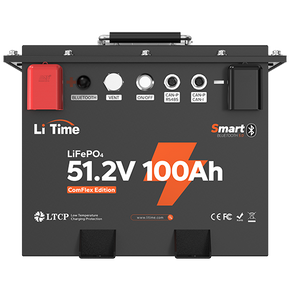
- One or more 48V (51.2V) deep cycle LiFePO₄ (Lithium Iron Phosphate) batteries: A capacity of 100Ah or more is recommended (each battery provides approximately 5.12kWh of usable energy). These are excellent for home energy storage and reducing a high electricity bill.
- A smart charger compatible with your battery/battery system: Capable of charging the battery at any time.
- An inverter with the same voltage platform: Easily powers various AC appliances.
- (Optional) Solar panels: Further reduce charging costs and achieve green energy self-sufficiency.
Why LiFePO₄ (Lithium Iron Phosphate) Batteries Are Recommend?
- 100% Depth of Discharge (DOD) without damage: Lead-acid batteries can only be discharged to 50%, while LiFePO₄ batteries offer double the usable capacity. This efficiency helps manage a high electricity bill.
- Cycle life of 4000+ times: Can last for over 10 years, with a lower annual cost compared to lead-acid. This long lifespan makes them a cost-effective solution for home energy storage.
- Built-in BMS (Battery Management System) protection: Automatically cuts off power for overcharge, over-discharge, short circuit, overcurrent, and high/low temperature, ensuring safety and peace of mind. This safety feature is crucial for any home energy storage system.
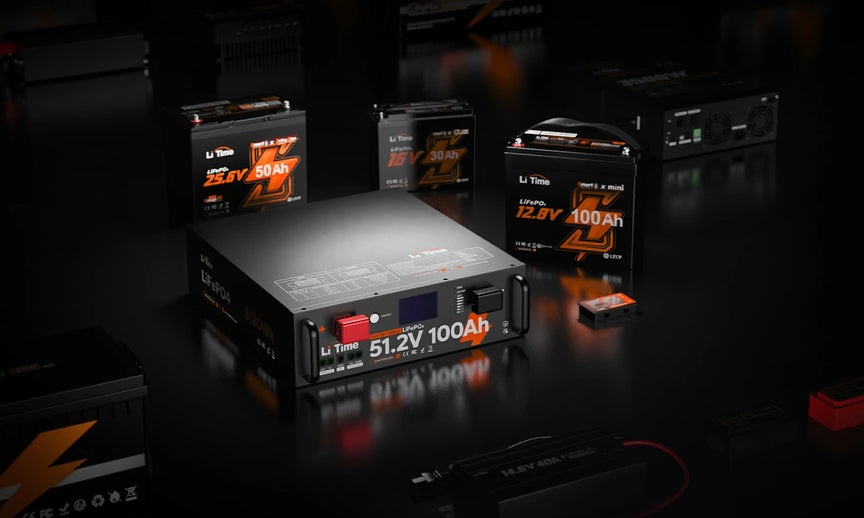
If you already have rooftop solar panels, the same battery can store excess electricity during the day for self-consumption at night – avoiding selling it back to the grid at a low price (e.g., $0.05/kWh) only to buy it back at a high price (e.g., $0.30/kWh). Every kWh you self-consume saves you an additional $0.25, directly impacting your high electricity bill.
Part 5: FAQs About High Electric Bills
FAQ 1: My area doesn't have Time-of-Use (TOU) pricing. Is an energy storage battery still worthwhile?
Yes, it is, but the payback period will be longer. In areas without TOU pricing, energy storage batteries primarily serve as backup power (for outages) and for optimizing solar self-consumption. If you own an electric vehicle and your area has TOU pricing, you can also charge your EV during off-peak hours and use that stored energy for home appliances during the day. It's advisable to first call your utility company to inquire if you can switch to a TOU plan – many states allow voluntary selection. This can be a key strategy if your electric bill is so high.
FAQ 2: Can a single 100Ah battery really help reduce my electric bill? How much can I save?
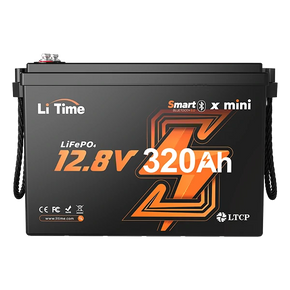
Yes, it can, but you need to manage your load effectively. A single 12V 100Ah LiFePO₄ battery provides approximately 1.28 kWh of usable energy (12.8V × 100Ah). This is sufficient to support during peak hours:
- An 800W small American coffee maker for 1.6 hours, or
- A 100W TV for 12.8 hours, or
- 10 x 10W LED lights for 12.8 hours.
If you shift 1.2 kWh of peak electricity usage daily (with a peak-to-off-peak price difference of $0.20/kWh), you can save $87.6 annually. With solar power or a larger battery (e.g., 320Ah), annual savings can reach $200–$300. Considering the battery's lifespan of over 10 years, the total savings far exceed the initial investment, making it a smart move if your electric bill is so high.
FAQ 3: Can I charge a deep cycle lithium battery with a regular car charger?
It is not recommended. Car chargers are designed for lead-acid starter batteries, and their charging curves are completely different. Using the wrong charger can damage the lithium battery or even cause a fire. It is recommended to use a dedicated LiFePO₄ battery charger, such as LiTime chargers, which are smart, safe charging devices specifically designed for LiFePO4 batteries, combining fast charging with advanced protection features.
FAQ 4: Why is my electric bill so high in summer or winter?
Because air conditioners, heaters, and water heaters are the most power-hungry appliances in a home. During hot summers, central air conditioning can account for 40%–50% of total household electricity consumption; in winter, if electric heaters or heat pumps are used, power consumption will also significantly increase.
Furthermore, extreme weather can lead to increased grid demand, causing electricity prices to rise in some areas. Pairing with a home LiFePO₄ energy storage system allows you to store electricity during off-peak hours and prioritize discharge during peak hours, significantly offsetting high seasonal electricity costs and mitigating the risk of power outages during extreme summer and winter weather. This is a common reason why your electric bill is so high.
FAQ 5: Can a bad circuit breaker cause a high electric bill?
Typically, it won't directly cause a surge in your electric bill, but it might indirectly increase power consumption or pose safety hazards. The primary function of a circuit breaker is to protect circuits; it doesn't actively "steal" electricity. However, if a circuit breaker is old, has poor contact, or trips frequently, it could lead to:
- Decreased appliance operating efficiency
- Energy waste due to wire heating
- Frequent restarting of appliances like AC and refrigerators
- Undetected circuit abnormalities by the user
What truly needs attention is that a faulty circuit breaker can cause arcing, overheating, or even fire, and a frequently tripping breaker indicates an overload or short circuit in that particular circuit. The correct approach: If you suspect a circuit breaker malfunction, have an electrician inspect it; do not continue using it long-term yourself. While not a direct cause, these issues can indirectly contribute to a high electricity bill.
FAQ 6: Why is my electric bill so high in New Jersey?
New Jersey's average electricity prices have consistently been higher than the national average in the US, primarily due to:
- High population density, leading to higher grid maintenance and transmission costs
- Significant demand for air conditioning in summer and heating in winter
- Reliance on natural gas for power generation in some areas, leading to volatile energy prices
- State government's push for clean energy projects, resulting in additional fees
- Higher Time-of-Use (TOU) electricity rates during peak hours
Therefore, many New Jersey households are adopting the following methods to reduce their electricity bills:
- Installing solar panel systems
- Using LiFePO₄ energy storage batteries for peak-shaving and valley-filling arbitrage
- Charging electric vehicles at night
- Replacing appliances with energy-efficient models
- Using smart home systems to manage electricity consumption
For states with high electricity prices, the payback period for energy storage systems is typically faster than in regions with lower electricity rates. This is a key consideration for homeowners asking why their electric bill is so high.
Conclusion
The reasons for a high electric bill can mostly be categorized into two types: aging equipment and improper energy consumption habits, as well as unreasonable electricity usage during high-price periods. You can start by reducing your electricity bill by 10%–15% with zero-cost methods (cleaning AC filters, unplugging standby devices, replacing incandescent bulbs with LEDs). If your local area implements Time-of-Use electricity rates, then consider investing in a home lithium battery energy storage system to boost your savings to 30%–50%.
When choosing a home energy storage battery, it is highly recommended to prioritize LiTime LiFePO₄ batteries. The reasons are simple: they support 100% depth of discharge, typically have a cycle life of over 4000 cycles (lasting around 10 years), and come with a built-in BMS that automatically provides overcharge, over-discharge, and high/low temperature protection, making them more worry-free and safer to use than traditional lead-acid batteries.

