


Extreme winter weather has become a rising threat in the United States. Severe winter storms (known as Winter Storms), blizzards, freezing rain, and historic cold waves are causing widespread power outages, transportation shutdowns, and major disruptions to daily life.

In this article, we explore:
1. The Most Significant Blizzards and Winter Storms in U.S. History (Based on Fatalities and Power Outage Impact)
A true blizzard brings more than heavy snow—it unleashes bitter cold, fierce winds, and blinding whiteouts that erase roads, homes, and cars from view. What follows is a look back at ten of the most punishing blizzards in U.S. history—events still remembered for their sheer power.
1.1 10 Deadliest Blizzards in U.S. History
| Rank | Winter Storm Name | Year | Estimated Deaths | Major Impact |
|---|---|---|---|---|
| 1 | Great Appalachian Storm | 1950 | 353 | Massive winter storm with heavy rain, winds, and blizzard conditions across the Southeast and Ohio Valley. |
| 2 | Storm of the Century | 1993 | 310 | Continent-spanning cyclone–blizzard from Cuba to Canada; 310 deaths and $6.6 billion in damage. |
| 3 | Great Blizzard of 1888 | 1888 | 400+ | Worst winter storm death toll in U.S. history; 40–50 inches of snow in the Northeast, 200 ships sunk. |
| 4 | White Hurricane (Great Lakes) | 1913 | 250+ | Deadliest natural disaster in Great Lakes region; hurricane-force winds and 35-ft waves sank many ships. |
| 5 | Children’s Blizzard | 1888 | 235 | Sudden temperature plunge in Dakota Territory and Nebraska; many schoolchildren died trying to get home. |
| 6 | Great Blizzard of 1899 | 1899 | 100+ (est.) | Record-low temperatures and heavy snow from Florida to Maine; major shutdown along the Eastern Seaboard. |
| 7 | Super Bowl Blizzard | 1975 | 70+ (58 in snow, 12 in tornadoes) | Rare storm combining tornado outbreak in the Southeast with blizzard in the Midwest; huge livestock losses. |
| 8 | Armistice Day Blizzard | 1940 | 145 | Sudden Midwest blizzard with 20-ft drifts; about 145 deaths, including ~25 unprepared duck hunters. |
| 9 | Knickerbocker Storm | 1922 | 98 | Heavy, wet snow collapsed the roof of Washington D.C.’s Knickerbocker Theater, killing 98, injuring 133. |
| 10 | “Snowmageddon” Blizzards | 2010 | Dozens | Three major February blizzards buried the Mid-Atlantic; record snow in D.C. and widespread power outages. |
Sources: LiveScience — “ 10 Worst Blizzards in History
” (accessed Nov 2024)Most of the deadliest U.S. blizzards hit in the late 19th and early 20th centuries, when weather forecasts and communication were still very limited. Events like the Great Blizzard of 1888, the Children’s Blizzard, and the Armistice Day Blizzard of 1940 struck with little warning and revealed how exposed cities, ships, and rural communities were. In their wake, the U.S. strengthened its weather services and infrastructure to reduce the chances of another mass-casualty blizzard on that scale.
1.2 Top 5 U.S. Winter Storms Causing the Largest Power Outages
Winter storms don’t just bring snow—they can trigger massive power failures that plunge entire regions into darkness. Below is the ranked list of the U.S. winter storms responsible for the most extensive outages.
| Rank | Time | Storm Name | Peak Customers Without Power | Main Cause (Short) |
|---|---|---|---|---|
| 1 | February 2021 | Winter Storm Uri (Texas Freeze) | ~4.5 million | Grid failure; frozen gas supply |
| 2 | January 1998 | North American Ice Storm (1998) | ~4 million | Heavy ice load collapsing lines/towers |
| 3 | December 2022 | Winter Storm Elliott | ~1.5 million | Extreme cold; overloaded grid; generation issues |
| 4 | December 2023 | December 2023 Nor’easter | ~600,000+ | Strong winds; rain; major line damage |
| 5 | April 2024 | April 2024 New England Nor’easter | ~700,000 | Wet, heavy snow + 60 mph winds |
Sources: Data compiled from NOAA, EIA, ERCOT, PowerOutage.us, AP News, and U.S. utility reports (CMP, Eversource, National Grid).
These five storms highlight two main blackout triggers in winter: brutal Arctic cold that strains fuel supply and generation (as in Uri and Elliott), and heavy ice or wind that physically tears down lines and poles (as in the 1998 Ice Storm and recent Nor’easters). Together they show that real winter resilience means strengthening both the energy supply and the local distribution grid that keeps homes powered.
2. The World’s Deadliest Blizzards
Around the world, a handful of blizzards stand out for their extreme death tolls. From the 1972 Iran Blizzard to historic events in North America and Asia, these storms show how quickly snow, wind, and bitter cold can turn deadly when people are exposed, unprepared, or cut off from help.
| Rank | Fatalities | Event Name | Country / Region | Year |
|---|---|---|---|---|
| 1 | 4,000 | 1972 Iran Blizzard | Iran | 1972 |
| 2 | 3,000 | Carolean Death March | Sweden / Norway | 1719 |
| 3 | 926 | 2008 Afghanistan Blizzard | Afghanistan | 2008 |
| 4 | 400 | Great Blizzard of 1888 | United States | 1888 |
| 5 | 318 | 1993 North American Storm Complex | United States | 1993 |
| 6 | 235 | Schoolhouse Blizzard | United States | 1888 |
| 7 | 199 | Hakko-da Mountains Incident | Japan | 1902 |
| 8 | 154 | North American Blizzard of 1996 | United States | 1996 |
| 9 | 144 | Armistice Day Blizzard | United States | 1940 |
| 10 | 133 | 2008 Chinese Winter Storms | China | 2008 |
Source: The Ten Deadliest Blizzards in History — WorldAtlas
These blizzards span very different places and centuries, but they have a few things in common: people were exposed, caught off guard, or cut off from help in brutal cold. Mountain villages in Iran and Afghanistan, soldiers on the Carolean Death March, and children in the Schoolhouse Blizzard all faced deadly conditions with limited shelter and almost no warning.
Today’s forecasting and communication are far better, but these events are a reminder that when infrastructure is weak and evacuation is slow, a snowstorm can still turn into a historic disaster.
3. What We Can Learn From Past Winter Storms

1. Prepare Your Home and Heating
Seal doors and windows, add insulation where needed, and check your heating system before winter begins. Keep extra blankets, warm clothing, and sleeping bags for everyone at home. Use an indoor thermometer to monitor the temperature and plan to check in on older adults, infants, and vulnerable neighbors.
If you must go outside, wear layers, a hat, scarf, mittens, and waterproof boots. Keep your face, ears, fingers, and toes covered to reduce the risk of frostbite.
2. Build Your Winter Emergency Kit
Stock up before the storm on:
-
At least 1 gallon of water per person per day
-
A 2-week supply of non-perishable food
-
A 1-month supply of medications and a list of dosages
-
Flashlights or lanterns, extra batteries, first-aid kit
-
A portable power station or power bank for phones and essential devices
-
Snow shovel, ice melt, and basic tools
Prepare a small Go-Kit (3 days of essentials) in case you need to leave home, and keep a blanket, warm clothes, and basic supplies in your car.
3. Plan for Power Outages and Safety
Expect that you may lose electricity, gas, or water. Install and test smoke alarms and carbon monoxide detectors with battery backup. Learn how to keep pipes from freezing and know how to recognize frostbite and hypothermia.
Stay informed with local weather alerts, keep your phone charged, and have a battery-powered radio as a backup. Whenever possible, stay indoors and avoid travel until conditions improve.
Source: American Red Cross — Winter Storm Safety.
4. A Reliable Backup Power Source for Winter Power Outages

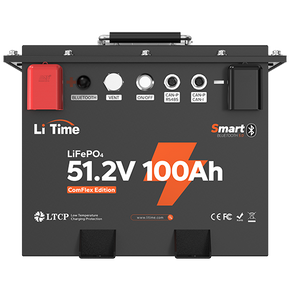
To stay prepared for severe winter weather, it’s always wise to keep a reliable backup power source on hand. Click the image to browse LiTime’s cold weather lithium battery . Built for harsh conditions, trusted when it matters.
Black Friday is live—get up to 63% OFF while the deal lasts. It’s the strongest deal of the year. Simple, direct, and real savings. Tap the picture below and get what actually works.

5. FAQ: Winter Storms, Power Outages & Extreme Cold (Practical Guide)
Q1: How do I know if my home is actually ready for a winter storm?
Ask yourself a few quick questions:
-
Doors and windows sealed? Any obvious drafts?
-
Furnace or main heating checked this season? Filters clean?
-
Smoke alarms and carbon monoxide detectors tested, with fresh batteries?
-
Basic supplies on hand: water, non-perishable food, flashlights, batteries, first-aid, and a backup power source?
If you answered “no” to more than one of these, you’ve got gaps to fix before the next storm.
Q2: What should I do right away when the power goes out during a storm?
-
Check your home’s breaker to rule out a local issue.
-
Report the outage to your utility (app, website, or phone).
-
Keep the fridge and freezer closed to preserve cold as long as possible.
-
Layer up with warm clothing and blankets instead of cranking risky alternative heat sources.
-
Use safe lighting—flashlights or LED lanterns, not open-flame candles.
-
Switch essential devices (phones, medical equipment, small heaters, routers) to your portable power station if you have one.
Q3: At what temperature do pipes really start to be a problem, and how do I protect them?
-
Pipes can start freezing when it’s below 32°F (0°C), but the real trouble usually begins when temperatures stay below ~20°F (-6°C) for several hours.
To protect them: -
Insulate exposed pipes in basements, crawl spaces, and garages.
-
Open cabinet doors under sinks to let warm air circulate.
-
During extreme cold, let faucets drip slowly—moving water is less likely to freeze.
-
Know where your main shutoff valve is in case a pipe bursts.
Q4: How long is food safe in the fridge or freezer with no power?
-
Refrigerator: About 4 hours if you keep the door shut.
-
Full freezer: Up to 48 hours if unopened.
-
Half-full freezer: Around 24 hours.
If in doubt, throw it out—especially meat, dairy, and leftovers that warmed above 40°F (4°C).
Q5: Is a gas generator enough, or should I also have a portable power station?
-
Gas generator:
-
✔ Good for high loads (furnace blower, well pump, multiple appliances)
-
✘ Must be outside, far from doors and windows (carbon monoxide risk)
-
✘ Noisy, needs fuel, more maintenance
-
-
Portable power station / battery system:
-
✔ Safe to use indoors (no fumes)
-
✔ Great for essentials: phones, Wi-Fi, lights, small space heater, CPAP, fridge for a while
-
✔ Can recharge from grid, solar, or vehicle when weather allows
-
6. Conclusion
Winter storms are becoming more frequent and more dangerous. While we can’t stop the weather, we can be prepared. A reliable cold-weather lithium battery—such as the LiTime cold weather lithium battery—helps keep your home warm, bright, and safe during outages.
