


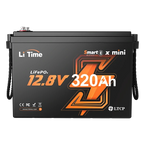


When it comes to purchasing a golf cart, one of the most crucial decisions you'll need to make is choosing between a 36-volt and a 48-volt model. Understanding the differences between these two electrical systems can make a significant impact on your cart's performance, power, and overall usability. In this article, we'll dive into the disparities between 36V and 48V golf carts to help you make an informed decision.
Understand 36V / 48V lithium systems
When people first see numbers like 36V, 48V, 100Ah, 200A, it can feel confusing. A simple way to think about your golf cart’s electrical system is to imagine a water pipe:
-
Voltage (V) ≈ Water pressure
Higher pressure pushes water harder. Likewise, higher voltage gives the motor more “push” to do work. A 48V system is like a pipe with higher pressure – it has more “force” available at the same time. -
Current (A) ≈ Flow rate
How many liters/gallons flow per minute. In a circuit, it’s how many electrons pass per second. More current means a stronger flow, but also more stress and heat on cables and components. -
Resistance (Ω) ≈ Friction in the pipe
A long, narrow or twisted pipe is harder for water to pass through. In the same way, electrical resistance turns part of the energy into heat instead of useful work. -
Power (W) ≈ The actual job to be done
For example, lifting a bucket of water from the first floor to the fifth floor is like getting the cart moving, climbing a hill, and carrying passengers.
All of these are tied together by a simple formula:
Power = Voltage × Current (P = U × I)
For the same golf cart doing the same job (same hill, same speed), the power it needs is roughly fixed. In that case, the higher the voltage, the lower the current required.
That’s why, in the same usage scenario, a 48V lithium system usually feels more relaxed than a 36V system: it delivers the same power with less current, which means less heat, lower losses, and less stress on wiring, motor, and the battery pack itself.
Once you have this picture in mind, the later sections on “Power and Performance” and “Battery Life and Range” become much easier to understand: 48V isn’t just a bigger number – it’s a more efficient way to deliver the same or higher power with fewer losses.
Power and Performance
The voltage of a golf cart directly correlates to its power and performance capabilities. A 48V system generally offers more power and torque compared to a 36V system.
This means that a 48V golf cart will be able to carry more weight, climb steeper inclines, and generally provide a more robust driving experience, especially on hilly terrains or demanding courses.
On the other hand, a 36V golf cart may struggle with these demanding tasks, particularly when carrying multiple passengers or heavy equipment.
When considering lithium battery options, 36V systems are particularly convenient for casual use, offering lightweight modules that simplify handling and reduce overall cart weight.
For more demanding conditions—such as longer distances, multiple passengers, or hilly terrains—a 48V lithium-ion battery system is often the more suitable choice.
Battery Life and Range
Another key aspect to consider is the battery life and range of both types of golf carts. Generally, a 48V golf cart will have a longer battery life and range compared to a 36V model. This means that with a 48V cart, you are likely to get more mileage out of each charge, allowing for longer periods of use before needing to recharge the batteries.
Regardless of whether it's a 36V or 48V system, upgrading the battery to a lithium-ion one can significantly extend its lifespan compared to traditional lead-acid batteries.
LiTime’s lithium golf cart batteries, crafted with high-quality A+ level cells for continuous 2C discharge, boast a lifespan of over 4,000 charge cycles at 100% DOD, equivalent to around 10 years of daily use—3 to 4 times longer than traditional lead-acid batteries, which typically last around 2 to 3 years.

LiTime 36V 100Ah Lithium Golf Cart Battery
Charging Time
In addition to range, it's essential to consider the charging time of the golf cart batteries. Typically, a 48V system will require a longer charging time compared to a 36V system, especially when the capacities are similar. This means that if you opt for a 48V golf cart, you may need to plan for slightly longer charging periods between uses.
To charge the batteries safely and efficiently, chargers with the compatible voltage are crucial. Here's a reference:

| Feature | 36V 100Ah Lithium Battery | 48V 100Ah Lithium Battery |
|---|---|---|
| Energy Capacity | 3,600Wh | 4,800Wh |
| Driving Range | 20–25 miles (≈32–40 km) | 30–35 miles (≈48–56 km) |
| Peak Discharge | 200–250A (typical) | Up to 350A |
| Ideal Use | Light loads, flat terrain | Longer distances, hills, higher loads |
Why a 48V lithium system runs cooler, more efficiently, and more reliably than 36V
In the earlier table, we saw that with the same 100Ah capacity, a 48V lithium system offers higher total energy and longer range than a 36V system. Building on the relationship P = U × I mentioned above, higher voltage means less current is needed for the same power output.
For example, imagine your golf cart needs around 10,000W of power during acceleration or on a hill (just an example to illustrate the idea):
-
With a 36V lithium system:
The required current is roughly 10,000 ÷ 36 ≈ 278A. -
With a 48V lithium system:
The required current is roughly 10,000 ÷ 48 ≈ 208A.
Under the same driving conditions, the 48V system can deliver the same power with significantly less current. That brings three very practical benefits:
-
Less stress and heat on cables and connectors
Higher current means more stress and more heat in wires, lugs, contactors, and other components. With a 48V system, the current is lower for the same power output, so the wiring runs cooler and ages more slowly, improving long-term stability. -
Lower losses, more usable energy at the wheels
Electrical losses can be roughly understood as:Power loss ≈ Current² × Resistance
When current drops from about 278A to about 208A, those losses don’t just fall a little – they drop with the square of the current. For the user, this means that with the same stored energy, a 48V lithium system wastes less power as heat and converts more into actual wheel torque, resulting in better range and stronger hill-climbing performance.
-
Gentler operating conditions for the battery, helping it reach its full lifespan
LiFePO₄ cells can handle high discharge rates, but constantly running at extremely high current means higher temperatures and more “stress” on the pack. A 48V platform spreads the load by reducing the current needed for the same power, keeping the battery pack, controller, and motor in a more comfortable operating zone. That’s good for helping the system reach its designed cycle life.
In short, for lithium systems on both platforms, 48V isn’t just “a bigger number”. It uses higher voltage to achieve lower current, which leads to:
- Higher overall system efficiency
- Less heat and lower energy losses
- Better long-term reliability and durability
Cost Considerations
Of course, cost is a significant factor in any purchasing decision. Typically, a 48V golf cart will be more expensive than a 36V model due to the enhanced power and performance it offers. It's important to weigh the upfront cost against the long-term benefits and suitability for your specific needs.
Maintenance and Service
The maintenance requirements for 48V and 36V golf carts can differ, especially when they still use lead-acid batteries. Higher-power systems may put more strain on mechanical and electrical components and require closer inspection over time.
However, once you upgrade to lithium, both 36V and 48V systems become virtually maintenance-free on the battery side: no watering, no acid spills, and far fewer routine checks compared to traditional lead-acid packs.

LiTime 48V 100Ah Lithium Golf Cart Battery
Choosing 36V vs 48V lithium by use case
On paper, 48V usually looks “stronger”, but in real life the key question isn’t which number is bigger, it’s which system actually matches how you use your cart.
Before deciding, ask yourself a few simple things: How far do you drive per day? What does the terrain look like? How many people or how much cargo do you usually carry?
1. When a 36V lithium system is the better fit
A 36V lithium setup is a great choice if your situation looks like this:
- You mainly drive inside a neighborhood, campground, resort, or relatively flat golf course;
- The terrain is mostly level, with few long or steep hills;
- Most of the time you carry 1–2 people, with only occasional extra passengers;
- Your daily mileage is modest, and you care more about comfort, simplicity, and a friendly budget.
In this case, switching to a 36V lithium pack already gives you a huge step up from lead-acid:
- Lighter overall weight and noticeably snappier acceleration;
- Much better practical range at the same nominal capacity;
- Virtually no day-to-day battery maintenance compared to watering and cleaning lead-acid batteries.
For light-duty, everyday use, 36V lithium delivers an excellent balance of cost and performance.
2. When a 48V lithium system makes more sense
A 48V system shines if your usage looks more like this:
- The cart often runs with a full load of passengers or tows luggage, tools, or equipment;
- Your routes include noticeable hills, uneven terrain, grass, gravel, or mixed surfaces;
- You run multiple trips per day and want as much range per charge as you can reasonably get;
- You care about stronger take-off and more confident performance under demanding conditions.
Here, a 48V lithium system is usually the smarter platform:
- Stronger low-end torque and more confident hill performance;
- Less current needed for the same power, so the entire system runs more relaxed;
- More usable energy and range headroom, ideal for resorts, shuttle fleets, hilly golf courses, and light commercial use.
In other words:
36V lithium is like the “comfort commuter package”,
while 48V lithium is closer to the “high-performance, long-range package”.
3. A practical path for existing 36V owners
If you already own a 36V cart and don’t plan to overhaul the motor and controller right away, but still want a clear upgrade in range and reliability, a very practical path is:
- Keep the cart’s voltage platform the same;
- Replace the old 36V lead-acid pack with a 36V lithium battery pack.
This gives you:
- A big drop in vehicle weight;
- A major boost in runtime and cycle life;
- A maintenance-free ownership experience on the battery side, without having to re-engineer the whole powertrain.
Later, if you find you truly need more power for hills or heavy loads, you can then evaluate a full move to 48V with matching controller and motor.
In short, before picking 36V or 48V, get crystal clear on how you actually use the cart:
- For light, flat, recreational driving, 36V lithium is more than enough.
- For frequent hills, heavy loads, and longer routes, a 48V lithium platform is usually the better long-term choice.
Upgrading from lead-acid to lithium: should you move from 36V to 48V at the same time?
Many owners only start thinking seriously about lithium when their lead-acid pack is tired and range has dropped a lot. At that moment, one of the most common questions is:
“Since I’m already changing the batteries, should I go ahead and convert from 36V to 48V too?”
There’s no one-size-fits-all answer, but you can look at it through three lenses: how you use the cart, the limits of your drivetrain, and your budget/upgrade plan.
1. Start with your use case: was power the problem, or just worn-out batteries?
Ask yourself two quick questions:
- Back when the cart was on fresh lead-acid, did you feel it was:
- A. Underpowered and struggling on hills, or
- B. Basically powerful enough, but now the range has become too short?
If your situation is closer to A:
- The cart has been “working hard” in your terrain from day one;
- In that case, upgrading to lithium plus a 48V platform can make a noticeable difference in real torque and hill-climbing.
If it’s closer to B:
- The main bottleneck is the old lead-acid pack’s aging and voltage sag;
- Swapping to a 36V lithium pack on the same platform already gives you a huge boost in range and consistency;
- Moving to 48V becomes a performance upgrade, not a basic requirement.
2. Check the drivetrain: how much headroom do the motor and controller have?
Even among 36V carts, the hardware can be very different:
- Some models have a basic motor and controller tuned for light-duty, low-speed use;
- Others were designed with more performance headroom from the factory.
When you consider jumping from 36V to 48V, you’re really asking the whole system to change, not just the battery:
- The controller must be compatible with 48V and higher output current;
- The motor must be able to handle higher voltage and the resulting load long-term;
- Wiring, connectors, contactors, and other components need to tolerate the higher operating envelope.
If your cart is a very simple, light-duty platform, moving to 48V might not unlock dramatic gains. If the hardware has room to grow, a 48V lithium system can finally let the motor and controller show their full potential.
3. Consider budget and timing: all at once, or in two steps?
When moving from lead-acid to lithium, there are two typical paths:
-
Path 1: All-in, all at once
- Do everything in a single project: lead-acid → lithium, 36V → 48V, plus controller/motor upgrades;
- Pros: one conversion, one install, fully “future-proofed”;
- Cons: higher upfront cost, more planning and technical work.
-
Path 2: Staged upgrades
- First step: replace the lead-acid pack with a lithium pack at the existing voltage (e.g., 36V lithium), immediately fixing range and maintenance issues;
- Second step: after some real-world use, decide whether you truly need a full move to 48V with motor and controller changes.
The staged approach has some advantages:
- You get most of the lithium benefits right away (cycle life, range, low maintenance);
- You avoid a huge one-time expense while you’re still figuring out your long-term needs;
- If you do choose to go 48V later, you make that decision with real usage data, not just on paper.
Either way, one thing doesn’t change:
Moving from lead-acid to a quality LiFePO₄ lithium pack is a generational upgrade by itself.
The question of 36V vs 48V then becomes a matter of optimization, not survival.
Can I Convert a 36V Golf Cart to 48V?
Absolutely! To successfully convert a 36V golf cart to a 48V system, consider these essential components that will need to be replaced or installed:
- Upgraded batteries
- Upgraded solenoid
- Upgraded solenoid diode and resistor
- Upgraded controller
- Upgraded motor
Once you have identified the components that need to be upgraded, the conversion process generally follows these steps:
- Remove the existing 36V battery pack carefully, ensuring all connections are disconnected and the cart is powered off.
- Install the new 48V battery pack, making sure the series connections provide a total of 48 volts.
- Replace the solenoid, diode, and resistor with parts rated for 48V operation to handle the higher voltage safely.
- Upgrade the controller to a 48V-compatible unit, which will properly regulate the increased voltage and protect the motor.
- Upgrade or verify the motor to ensure it can handle the higher voltage without overheating or damage.
- Reconnect all wiring and double-check polarity and secure connections before powering on.
- Test the system under no-load conditions first, then gradually increase load to ensure smooth operation and proper response.
Following these steps ensures a safe and reliable conversion from 36V to 48V, maximizing the performance and lifespan of your golf cart.
Is a 48V Golf Cart Faster Than a 36V Golf Cart?
Both standard 36V and 48V golf carts have the maximum speed of around 21MPH. Nevertheless, there are methods to increase the speed of your golf cart:
- Larger Tires - Buying larger tires can enhance the speed of your golf cart. The greater the wheel diameter, the faster the cart can go. Without requiring a lift kit or block lift, standard carts can accommodate tires up to 20" in diameter. Given that standard golf cart tires are 18", an upgrade to 20" tires can increase the speed by about 2 MPH.
- Torque/Controller Upgrade Kit - You can boost the torque of your golf cart by using a torque upgrade kit or a controller upgrade kit.
It's important to note that when enhancing the speed of your golf cart, caution is crucial. Golf carts have preset speeds for safety reasons. If you decide to upgrade the factory stock speed for that extra push, always prioritize safety!
Is a 48V Lithium Golf Cart Battery Better Than 36V?
While 36V setups have long been a staple in golf carts and perform adequately for many users, opting for a 48V system offers several key advantages, especially when you are already planning a lithium upgrade:
- Stronger performance headroom: A 48V platform gives more room for future upgrades such as higher-power controllers or motors.
- Improved efficiency: As explained earlier, 48V systems require fewer amps to deliver the same power, which can translate into longer usable runtime from the same capacity.
- Better support for demanding use: For fleets, hilly environments, or long daily routes, 48V lithium packs typically stay cooler and more consistent throughout the day.
- Smoother driving experience: The combination of higher voltage and lithium’s flat discharge curve helps maintain more consistent performance as the state of charge drops.
This doesn’t mean 36V is obsolete—many users with light-duty, flat-terrain needs will be perfectly happy with a 36V lithium setup. But if you’re looking for extra margin and long-term flexibility, 48V is usually the better foundation.
A simple way to estimate how much lithium capacity you really need
Once people decide to upgrade to lithium, the next big question is:
“So how many amp-hours do I actually need?
For 36V or 48V, what capacity is ‘enough’?”
You don’t need a lab to get a good answer. Here’s a practical 3-step method that gives you a realistic range, which you can then refine based on budget and future plans.
Step 1: Estimate your maximum daily distance
Think in terms of your heaviest usage day, not your average:
- Neighborhood cruising only? Maybe 5–10 km (3–6 miles) per day.
- Golf course or campground shuttling? Maybe 15–25 km (9–15 miles).
- Resort, farm, or light commercial use? 30 km (18+ miles) or more isn’t unusual.
Write down a “worst case” daily distance – you’ll use it in the next step.
Step 2: Pick a realistic energy-per-kilometer range
Terrain, load, and driving style all affect how much energy you use per kilometer. You can use these rough ranges as a starting point (not lab values, just practical guidelines):
-
Light load + mostly flat terrain:
- 36V lithium system: about 15–20 Wh/km
- 48V lithium system: about 12–18 Wh/km
-
Noticeable hills, frequent full load, rougher surfaces:
- Use the upper end of those ranges, or even a bit more, to keep a safety margin.
For example:
If you often run a full cart on a hilly course with grass and slopes, using 18–20 Wh/km for a 48V system is a reasonable conservative estimate.
Step 3: Convert daily energy into battery capacity (Ah)
- First calculate how many Wh you need per day
Use:
Daily energy needed (Wh) ≈
Daily distance (km) × Estimated Wh per km
Example:
- Max daily distance: 25 km
- Estimated consumption: 18 Wh/km
- Then: 25 × 18 ≈ 450 Wh as a minimum daily demand
- Then convert Wh into Ah for different voltage systems
We use the basic relation:
Battery energy (Wh) = Voltage (V) × Capacity (Ah)
So, rearranged:
- For a 36V system:
Required Ah ≈ Wh needed ÷ 36
- For a 48V system:
Required Ah ≈ Wh needed ÷ 48
Using the 450 Wh example (just to show the math; real packs will be much larger):
- 36V system:
450 ÷ 36 ≈ 12.5Ah
- 48V system:
450 ÷ 48 ≈ 9.4Ah
In reality, of course, you won’t buy a 10Ah pack for a golf cart. Instead you will:
- Multiply your daily Wh by a factor (e.g., 2–3×) based on how often you want to charge;
- Add extra margin if you plan to increase tire size, carry more passengers, or extend your routes later.
A practical rule-of-thumb
- Use your calculated daily Wh as the baseline;
- Multiply it by 2–3× as the minimum battery energy you want to have onboard;
- Then convert that into Ah at your chosen system voltage.
Example:
- You estimate about 1,500 Wh per day;
- You’d like “one charge to comfortably last two days”, so you size for ~3,000–3,500 Wh;
- On a 48V system, that’s about 3,500 ÷ 48 ≈ 73Ah;
- In practice, you’d probably pick a standard size like a 48V 80Ah or 100Ah lithium pack.
And one last point:
With lithium, having some extra capacity is usually a good thing. It means less stress per cycle, fewer deep discharges, and a better chance of reaching the full rated cycle life.
So if your budget allows it, it’s often wiser to go slightly larger than “just enough”, especially if your usage may grow over the next few years.
Bonus Tip: Benefits of Upgrading Golf Cart Batteries to Lithium
Extended Lifespan: Lithium batteries typically last significantly longer than traditional lead-acid batteries, often reaching thousands of cycles when used and charged properly.
Lightweight and Compact: Lithium batteries are lighter and more compact, reducing the overall weight of the golf cart and potentially improving its performance and efficiency.
Faster Charging: Lithium batteries generally have faster charging times compared to lead-acid batteries, allowing for quicker turnaround between uses.
Consistent Performance: Lithium batteries provide more consistent power delivery, ensuring a more reliable and predictable experience over the battery's lifespan.
Maintenance-Free: Compared to lead-acid batteries, lithium batteries require minimal routine maintenance, reducing overall operational costs and hassle.
Environmental Benefits: Lithium batteries are more environmentally friendly as they do not contain hazardous materials such as lead or acid.
Conclusion
In conclusion, both 36V and 48V golf carts have their own advantages and drawbacks. Understanding these differences is essential in making an informed decision that will lead to a satisfying ownership experience. Whether it's for personal use, commercial applications, or golf course management, choosing the right voltage system for your golf cart is pivotal in optimizing its performance, efficiency, and longevity.
Upgrading the golf cart batteries to lithium is a worthy investment. Visit LiTime to know more details about lithium LiFePO4 batteries.


