


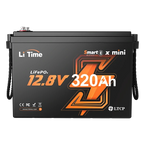


To win an intense fight with a giant fish on the open sea, a reliable electric reel is indispensable. And the component that serves as the heart of that electric reel is the battery.
Have you ever lost a great trophy opportunity because your battery for electric reel ran out?
- “The capacity is not enough”
- “It is heavier than I expected”
- “I do not know which brand to choose”
This article is here to solve those problems.
In this guide, we thoroughly explain the basics of electric reel batteries, including their role and types, and walk through five key points for choosing the right one without regret. We also introduce how to choose a charger, so you can head into your next fishing trip fully prepared.
- Part1: What Is an Electric Reel Battery?Role and Importance
- Part2: Main Types of Electric Reel Batteries and Their Features
- Part3: Five Key Points for Choosing an Electric Reel Battery
- Part4: Recommended Electric Reel Battery: Choose by Use Case
- Part5: FAQ About Electric Fishing Reel Batteries
- Conclusion
Part1: What Is an Electric Reel Battery?
An electric reel battery is a dedicated power source designed to operate an electric fishing reel. Unlike ordinary dry-cell batteries or car batteries, its greatest feature is the ability to provide sustained high output (high current) strong enough to handle the powerful pull of large fish.
Its role goes far beyond simply “spinning the reel.” The following three points are key factors that can determine the success or failure of your fishing trip.
1.Supplying stable winding power
When a large fish tries to dive into structure, a “power fight” that reels it in quickly requires a massive burst of electricity. An electric reel battery supplies steady power to the motor without a major voltage drop at that critical moment, helping you turn that chance into a catch.
2.Runtime that supports long fishing sessions
Offshore boat fishing often means using the reel for many hours during a single outing. Battery capacity (Ah) essentially determines your “range.” By choosing a large-capacity battery, you can enjoy stable fishing all day without worrying about running out of power.
3.Safety that protects both the electric reel and the angler
A purpose-built electric reel battery includes protection circuits against overcharging, over-discharging, and short circuits. This is extremely important not only for protecting an expensive electric reel from damage, but also for preventing accidents such as fire and ensuring the angler’s safety.
In other words, an excellent electric reel battery is not just another “piece of gear,” but a trusted partner that supports your fight with big fish and helps maximize your results.
Choosing the wrong battery may mean you are not getting the full performance out of your high-end electric reel.
Part2: Main Types of Electric Reel Batteries and Their Features
Today, there are mainly three types of electric reel batteries on the market. Understanding the features, pros, and cons of each is the first step toward choosing the best battery for your needs.
1.Lead-acid battery (sealed type)
- Feature: The most traditional and common type. Relatively affordable, with many large-capacity models available.
- Pros: Excellent cost performance. Suitable for those who want to keep upfront costs down.
- Cons: Very heavy. It has a memory effect and often needs to be discharged before recharging. Charging also takes a long time.
2.Lithium-ion battery (Li-ion)
- Feature: The current mainstream choice. High energy density makes it compact and lightweight.
- Pros: Lightweight and easy to carry. Little to no memory effect. Fast charging speed.
- Cons: More expensive than lead-acid batteries. Sensitive to overcharging and over-discharging, so it requires a dedicated protection circuit and charger.
3.Lithium iron phosphate battery (LiFePO4)
Feature: A next-generation lithium battery technology that offers higher safety and longer life.
Pros:
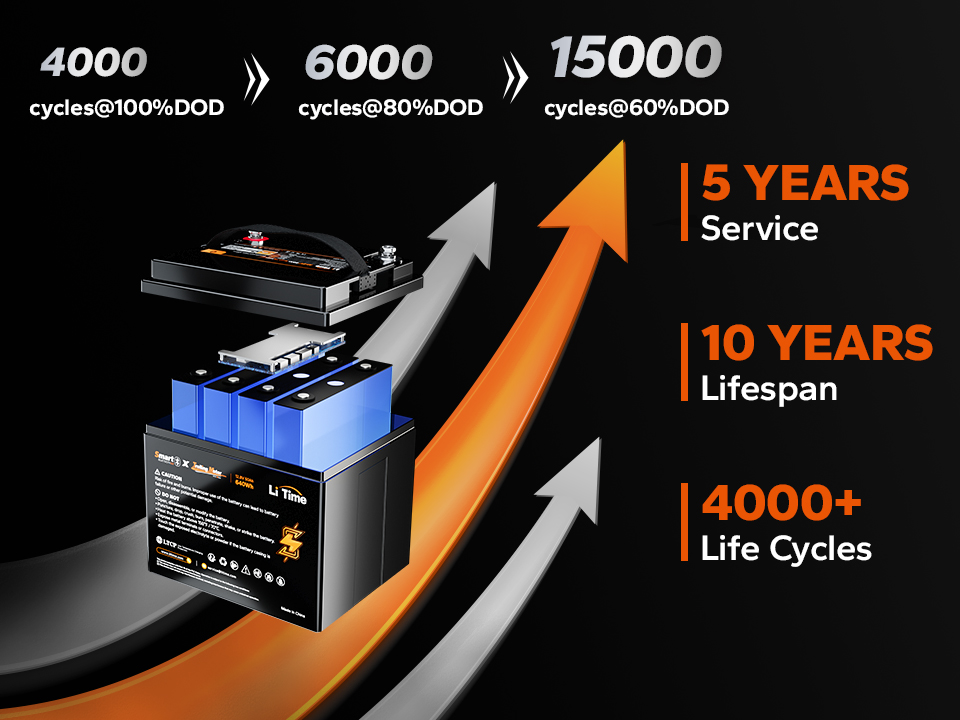
- Exceptional cycle life: More than 4,000 charge-discharge cycles can be expected, far exceeding the lifespan of ordinary lithium-ion batteries (about 500 to 1,500 cycles). With proper use, more than 10 years of service is possible.
- High safety: It remains chemically stable even in high-temperature environments, greatly reducing the risk of fire or smoke compared with standard lithium-ion batteries and making it a reassuring choice for marine use.
- Stable high output: Because the voltage remains stable during discharge, power does not fall off easily near the end, allowing it to perform especially well in fights with large fish.
Cons:
- The initial purchase cost is higher than that of other battery types. However, considering its remarkable lifespan and maintenance-free nature, it is often the more economical choice over the long term.
Part3: Five Key Points for Choosing an Electric Reel Battery
Now that we have covered the basics, let us move on to practical selection tips. To choose an electric reel battery without regret, it is important to understand the following five points:
- Capacity (Ah) – the key factor that determines runtime based on your fishing style
- Voltage (V) – the basic specification that determines compatibility and output
- Battery type – the core factor behind weight, lifespan, and safety
- Compatible charger – the essential partner that supports convenient and safe use
- Brand and warranty – the support that ensures long-term peace of mind
Next, we will look at each point in detail.
Point 1: Choose by Capacity (Ah)
Battery capacity is the most important indicator because it determines runtime. It is expressed in “Ah (ampere-hours),” and the larger the number, the longer the battery can be used.
The right capacity depends on your fishing style:
- Boat fishing (long hours / targeting large fish): 20Ah or more is reassuring. It significantly reduces the risk of running out of power during long sessions or hard fights with big fish.
- Breakwater fishing / stream fishing: About 10Ah to 15Ah is a good guideline. It suits relatively short use and is easier to carry because it is lighter.
When choosing an electric reel battery, think about your own fishing style. If you feel safer with longer runtime, the best no-regret approach is to choose a larger capacity within your budget.
Point 2: Choose by Voltage (V)
Voltage (V) is the basic specification that determines compatibility between the electric reel and the battery. Most electric reels currently on the market are designed for 12V.
If you choose a 12V electric reel battery, you can usually avoid compatibility problems from the start.
However, in rare cases, older models may require a different voltage. Always check your reel’s instruction manual for the recommended voltage. If the voltage does not match, it can damage the reel or the battery in the worst case.
Point 3: Choose by Battery Type
The battery “type” fundamentally affects weight, lifespan, and safety. Compare the characteristics of the three battery types discussed earlier—lead-acid, lithium-ion, and lithium iron phosphate—against your own priorities.
If you want light weight and easy handling → Lithium-ion battery
- It is lightweight, charges quickly, and requires little maintenance.
If you want to keep the initial cost down → Lead-acid battery
- It offers excellent cost performance and large-capacity models at a low price, though the weight is a disadvantage.
If you want long-term peace of mind and strong cost performance → Lithium iron phosphate battery
- With a lifespan measured in years and high safety, it delivers value far beyond the initial purchase price. From a long-term running-cost perspective, it can be the most economical option.
Point 4: Confirm the Compatible Charger
To make your battery last longer and use it safely, a compatible charger is essential. This is especially true for lithium-based batteries (Li-ion and LiFePO4), which require dedicated charging algorithms.
Charging a lithium battery with a charger intended for lead-acid batteries can cause undercharging or overcharging and, in the worst case, even create a fire hazard.
Therefore, when buying a battery, always choose a charger specifically designed for that battery type or a compatible model designated by the manufacturer.
Doing so helps you get the best performance from the battery and extend its service life.
Point 5: Brand and Warranty
Finally, brand reliability and warranty coverage are also important factors. Well-known brands tend to offer products that meet defined quality standards and safety testing requirements, and they usually provide better after-sales support.
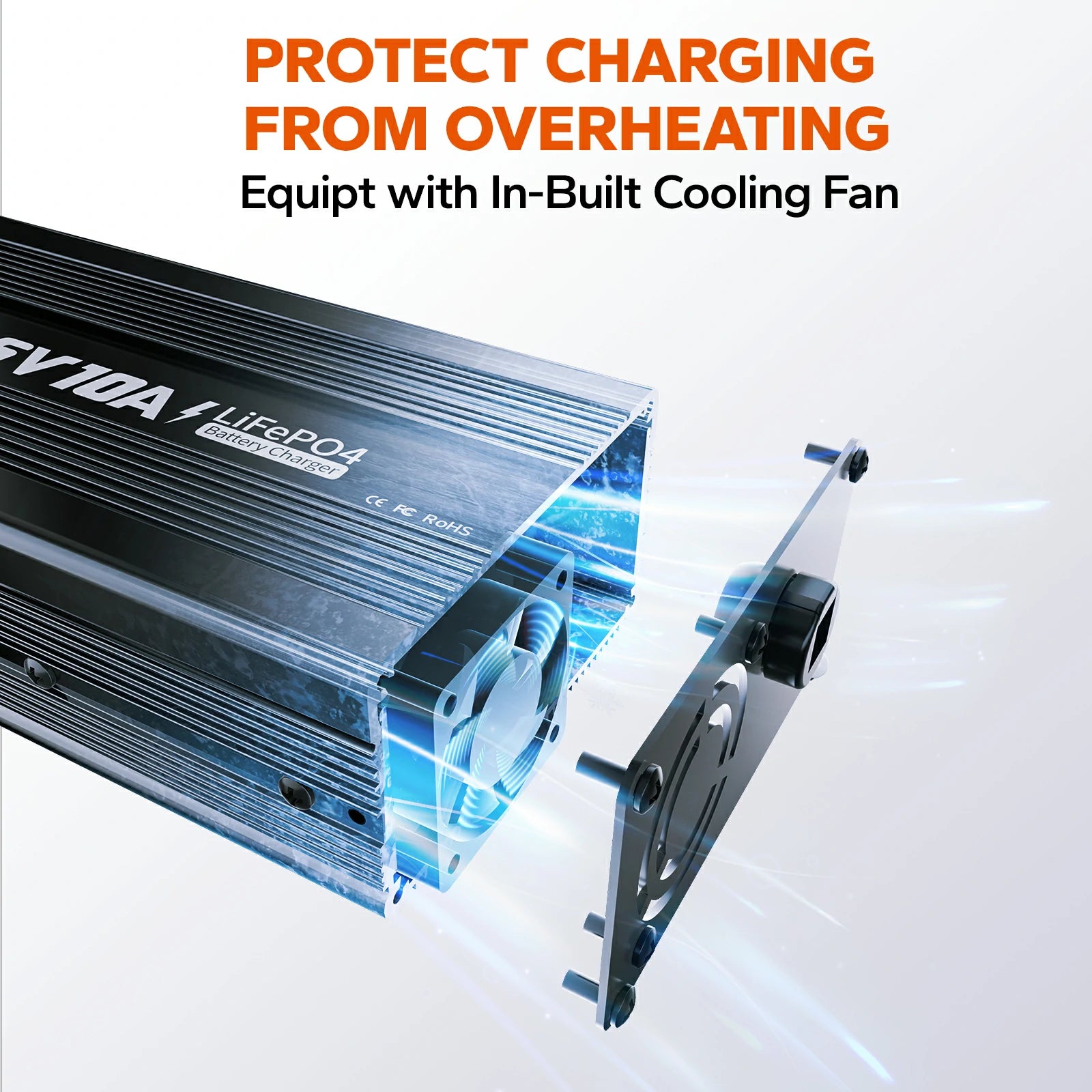
For example, LiTime provides a long 5-year product warranty, showing confidence in its products and strong user support. The brand’s battery chargers also come with a 2-year warranty and use a smart three-stage charging mode, reflecting attention not only to the battery itself but also to the quality of related accessories.
In this way, considering long warranties and high-quality accessories is a key factor that separates long-term satisfaction from short-term compromise.

Part4: Recommended Electric Reel Battery: Choose by Use Case
First, compare the recommended models from popular manufacturers by their main specifications. Use the table below to get a quick overview, then read the detailed review of each model.
| Brand / Model | Type | Capacity | Weight | Life (cycles) | Warranty | Main Features & Recommended Use |
|---|---|---|---|---|---|---|
| LiTime 12V 20Ah | LiFePO4 | 20Ah (256Wh) | 4.39kg | 4000~5000+ | 5 years | Outstanding overall value. Suitable for standard boat fishing to long breakwater sessions. |
| Makita BL1815N | Lithium-ion | 18Ah | Approx. 2.1kg | Approx. 1500 | 2 years | Lightweight and highly reliable. Ideal for mobile fishing and Makita tool users. |
| LiTime 12V 50Ah | LiFePO4 | 50Ah (640Wh) | 5.29kg | 4000+ | 5 years | A serious large-capacity choice for long runtime. Also suitable for big-game boat fishing and outboard starting. |
| Yuasa Sealed Battery | Lead-acid battery | 24Ah | Approx. 7.0kg | Approx. 500 | 1 year | Low price and large capacity. Best for fixed onboard use when initial cost matters most. |
1. LiTime 12V 20Ah: The Best Overall Value for Money
- Overwhelming lifespan and warranty: Thanks to LiFePO4 technology, it delivers more than 4,000 charge-discharge cycles, backed by a long 5-year warranty.
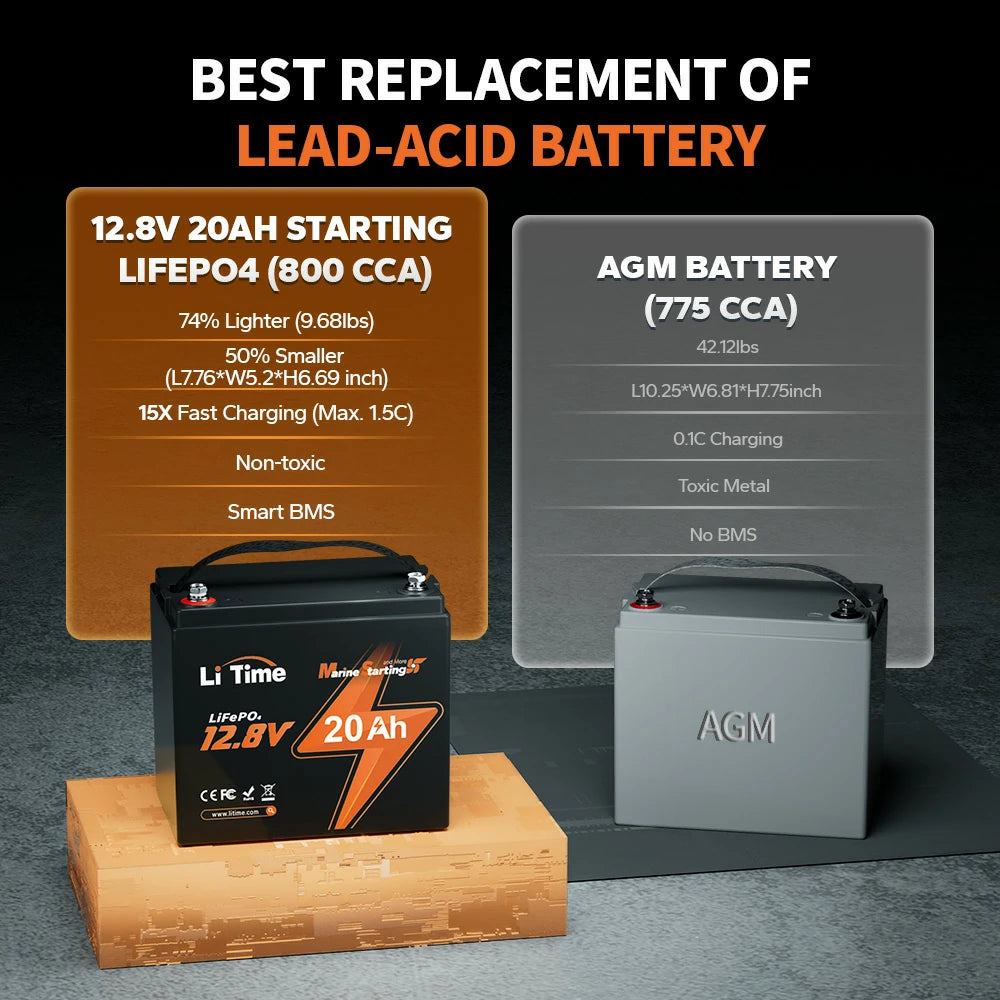
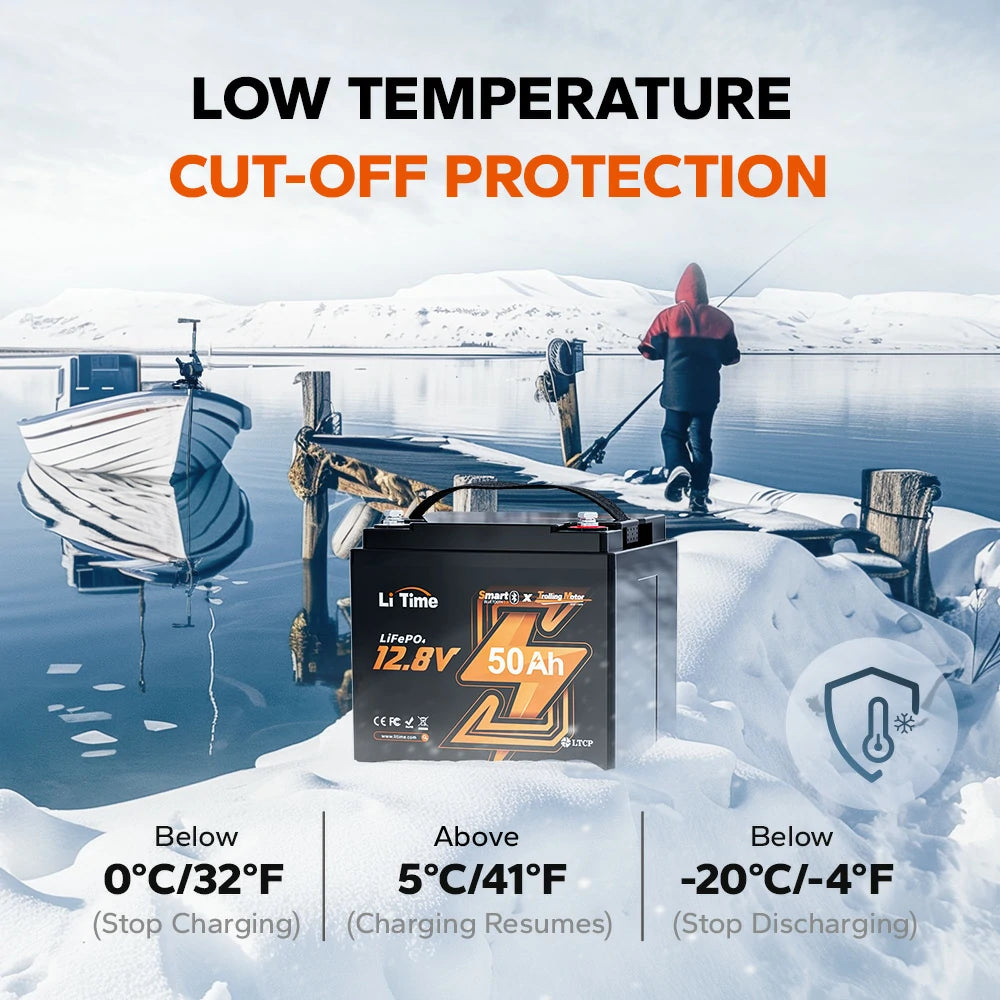
- High performance you can trust in harsh conditions: Low-temperature charging protection helps ensure safe use in cold environments. With up to 800 CCA of powerful instant output, it can handle the intense pull of large fish with confidence.
- Excellent versatility: In addition to 14.8V electric reels, it can also be used to start outboard motors up to 135HP, making it useful across many marine scenarios.
Recommended for:
Any angler who wants long-term, worry-free use—especially those looking for both strong cost performance and dependable reliability.
LiTime 12V 20Ah Electric Reel Battery uses EV-grade lithium iron phosphate cells and achieves more than 5,000 full charge-discharge cycles (100% DOD).
2. Makita BL1815N: A Classic Lightweight and Highly Reliable Model
- Reliable tool-brand quality: Compatible with Makita’s 18V platform, making it especially convenient for those who already use related Makita tools.
- Excellent light weight: At about 2.1kg, it is very light and ideal for mobile fishing situations such as breakwater or stream fishing.

Recommended for:
Anglers who already use Makita tools and anyone who wants to prioritize the lightest possible setup.
3. LiTime 12V 50Ah: The Definitive Choice for Big Fish and Long Boat Trips
- Amazing large capacity: With 50Ah (640Wh), it provides enough energy for extended boat fishing and long continuous use without worrying about the battery running out.
- Lightweight yet powerful: Even at only 5.29kg, it offers a rated output of 640W, allowing it to drive large electric reels with ease.
- Reassurance unique to LiTime: Just like the 20Ah model, it comes with more than 4,000 cycles of long life and a 5-year warranty, protecting your investment over time.
Recommended for:
Anglers who mainly target large fish from boats and want to keep using their reel for as long as possible during a single outing.
LiTime 12V 50Ah Electric Reel Battery is a lithium iron phosphate battery that requires no maintenance compared with lead-acid batteries, offers up to 10 years of service life, and supports up to 4,000 deep cycles.
4. Yuasa Sealed Battery: A Large-Capacity Solution with a Lower Initial Cost
- Outstanding cost performance: Compared with lithium batteries, it delivers a much lower purchase price while still offering large capacity.
- Best for onboard fixed use: At about 7kg, it is heavy and inconvenient to move around on a boat, but it is a strong option when used as a fixed power source for an electric reel installed on the vessel.

Recommended for:
Those who want to minimize upfront cost above all else and do not mind the weight because the battery will usually stay fixed on the boat.
Part5: FAQ About Electric Fishing Reel Batteries
How long does a battery generally last?
A. It varies greatly depending on battery type. Lead-acid batteries are said to last about 500 cycles, while ordinary lithium-ion batteries last about 1,500 cycles. In contrast, lithium iron phosphate (LiFePO4) batteries are known for their very long life of 4,000 cycles or more. Using the right charger and proper care can extend service life even further.
Can I take an electric reel battery on an airplane?
A. Lithium batteries are classified as “dangerous goods” under aviation regulations. In general, batteries over 100Wh at 12V are not allowed in the aircraft cabin. If you are traveling, check with the airline in advance or consider sea freight or purchasing a battery locally.
What amp-hour (Ah) rating is best for an electric reel battery?
A. The ideal capacity depends on your fishing style. Use the following guidelines as a reference.
① 10Ah ~ 15Ah:
- Recommended fishing: Breakwater fishing, stream fishing, and small-fish fishing
- Feature: Suitable for relatively short use and easy to carry because of the lighter weight
② 20Ah ~ 30Ah:
- Recommended fishing: Standard boat fishing and long breakwater fishing
- Feature: A balanced capacity that can be used with confidence in most boat fishing situations and is generally recommended because there is less worry about running out of power
③ 50Ah or more:
- Recommended fishing: Long big-game boat fishing and continuous use of large electric reels
- Feature: A large-capacity model for those who want as much power reserve as possible and intend to keep using full power all day long
As a general conclusion, many anglers follow the idea that “choosing a slightly larger capacity gives more peace of mind.” The LiTime 12V 20Ah best battery for electric fishing reel recommended in this article is an especially good choice for standard boat fishing because it offers a balanced combination of runtime and portability.
Conclusion
In this article, we covered the basics of electric reel batteries, the five key points for choosing the right one without mistakes, and a comparison of popular models from major manufacturers.
The most important part of choosing an electric reel battery is to clearly understand your own fishing style and priorities.
- If you want high capacity for boat fishing, choose LiTime 12V 50Ah.
- If you want light weight and overall cost performance, choose LiTime 12V 20Ah.
Each option has very distinct strengths. Among them, lithium iron phosphate batteries will undoubtedly become even more mainstream thanks to their ultra-long life, high safety, and long-term economic value.
Use the recommended models and selection tips introduced here to find the ideal battery partner for your needs and enjoy a more fulfilling fishing life.


