Get 6% OFF Discount & 300 LiPoints for first registration.
No worries! We’ll send you an email to help you reset your password.
LiTime accounts have been upgraded. For the security of your account, please update your password.
Enter the verification code sent to {{ email }}. If you didn’t receive it, please check the spam or junk folder.
A password reset link has been sent to {{ email }}. Please check your email and follow the instructions to reset your password.
This invitation link has expired,
Please contact customer support for a new one.
Total: $0.00
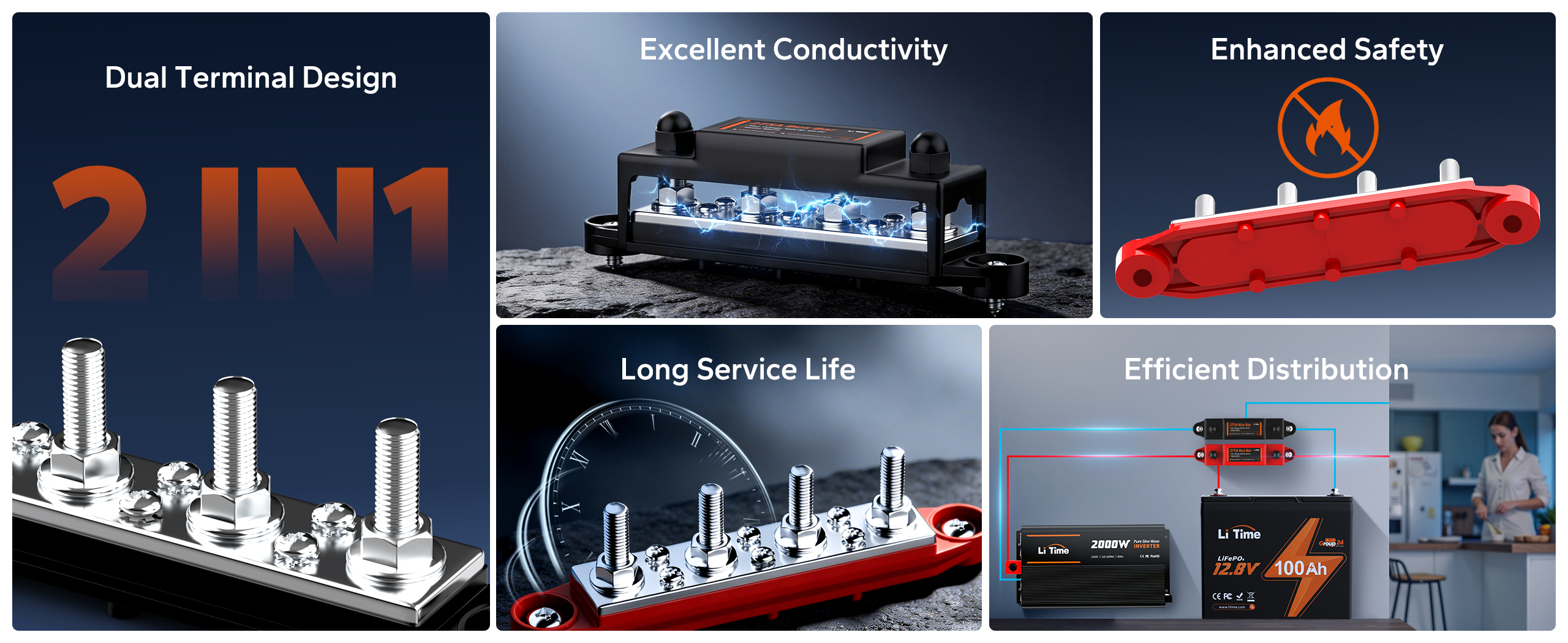
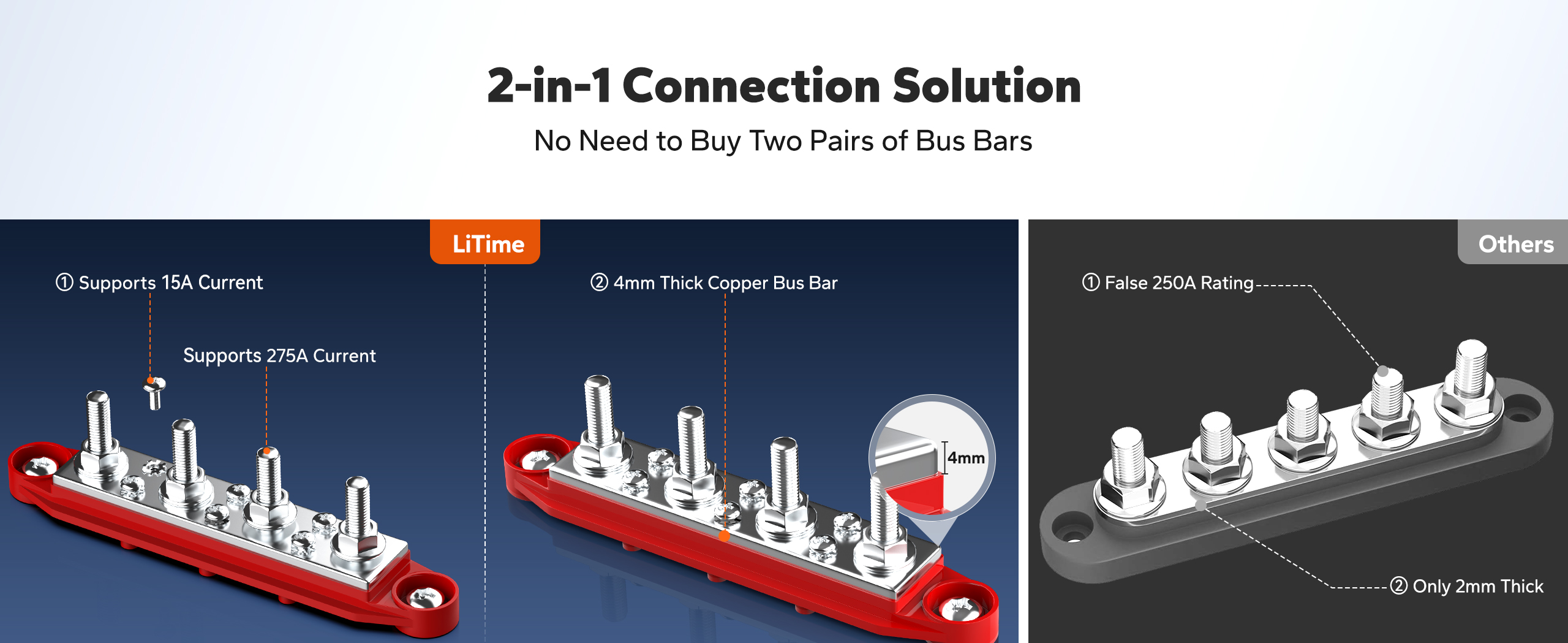
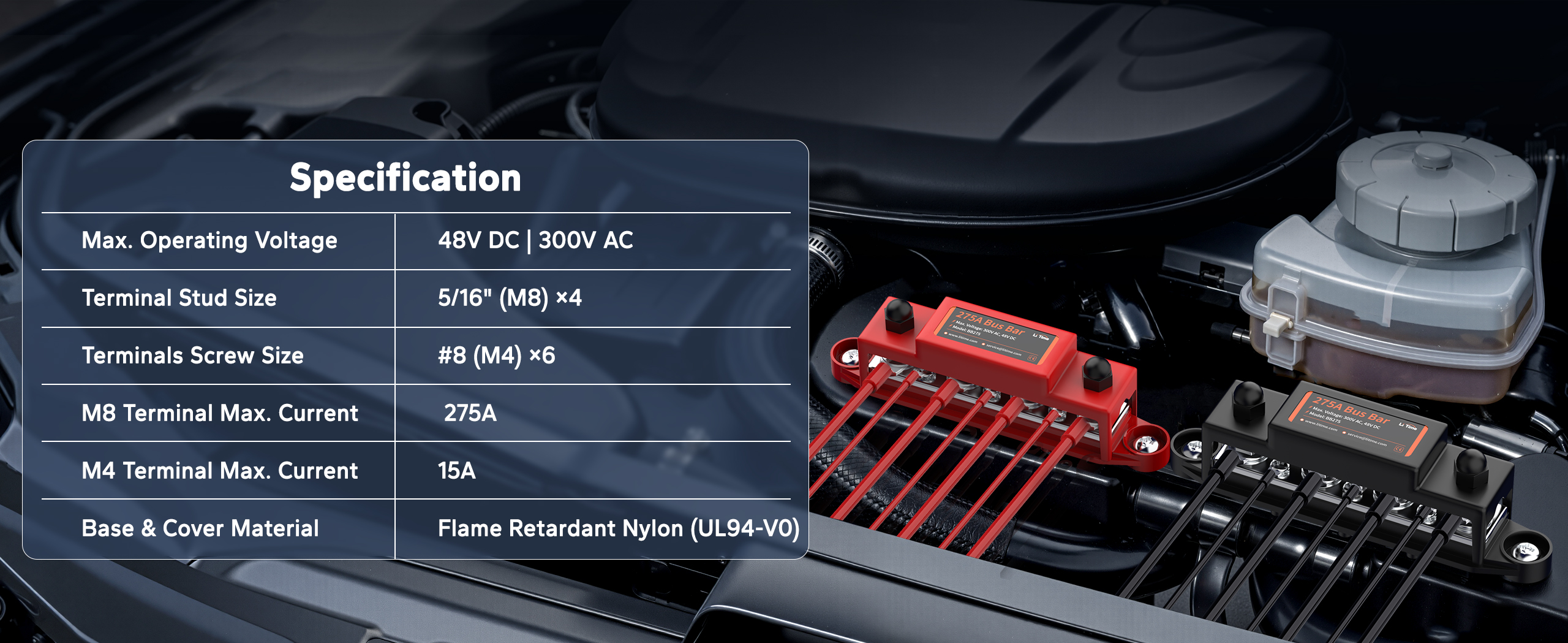
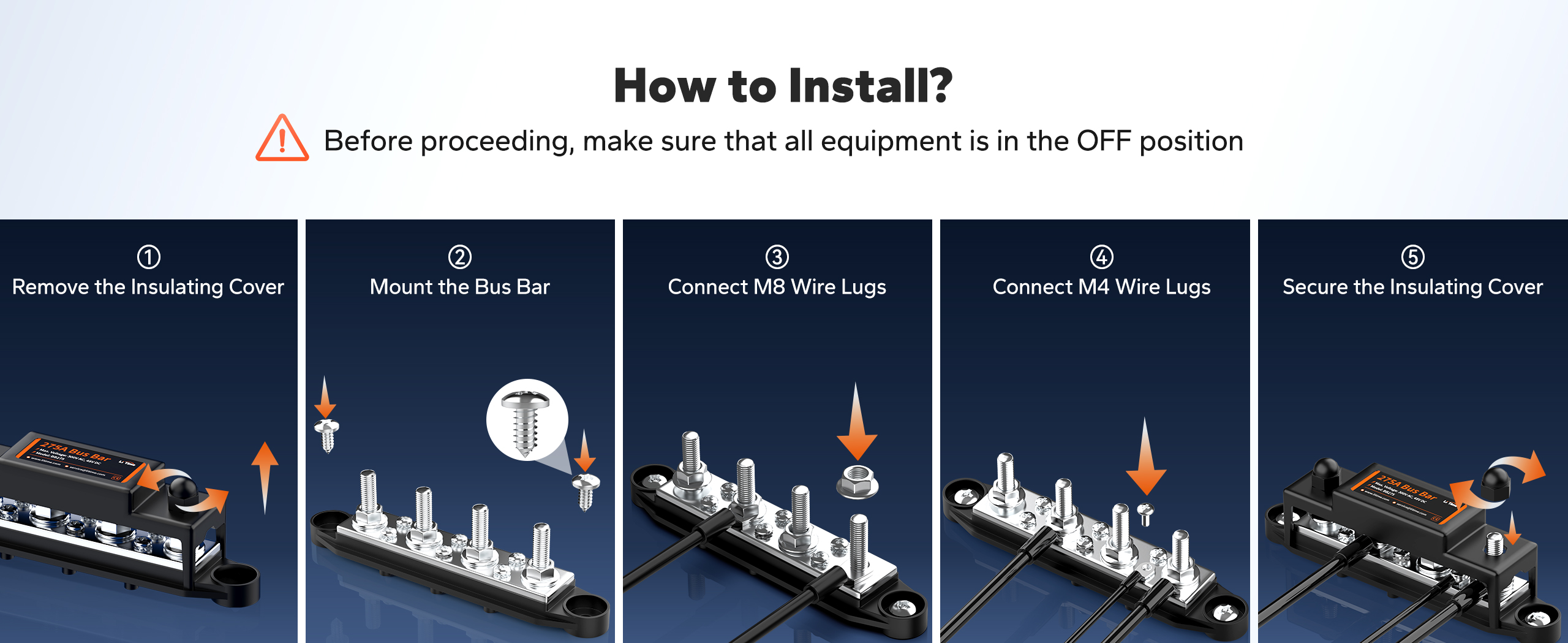
M8 + M4 Dual Terminal Design: LiTime 275A bus bar features an M8/M4 mixed terminal design, meeting high-current main circuit needs and signal/auxiliary connections in one compact unit. It includes 4×M8 terminals and 6×M4 terminals, 4×M8 terminals support up to 275A, while 6×M4 terminals support up to 15A.
High Conductivity, Low Heat: Nickel-plated copper bus bar provides strong conductivity and corrosion resistance, helping reduce heat buildup, power loss, and oxidation. Suitable for RV, marine and solar power system.
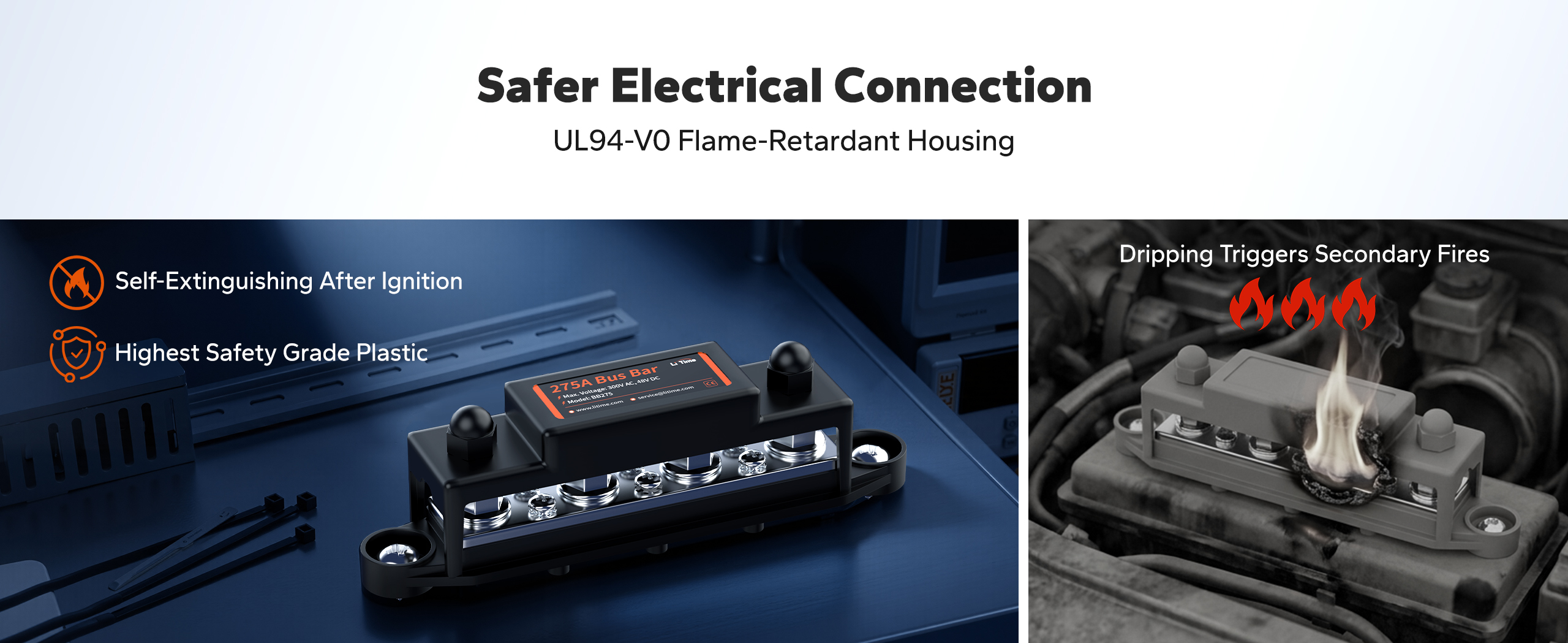
Safe Flame-Retardant Base: UL94-V0 flame-retardant base helps effectively reduce the risk of plastic combustion under overheating or short-circuit conditions.
Built for High-Power Systems: Rated for 275A continuous current and supports 48V DC / 300V AC, suitable for lithium battery banks, inverters, and DC power distribution systems.
Clean & Organized Wiring: Centralized power distribution reduces cable clutter, improves wiring layout, and makes maintenance easier.
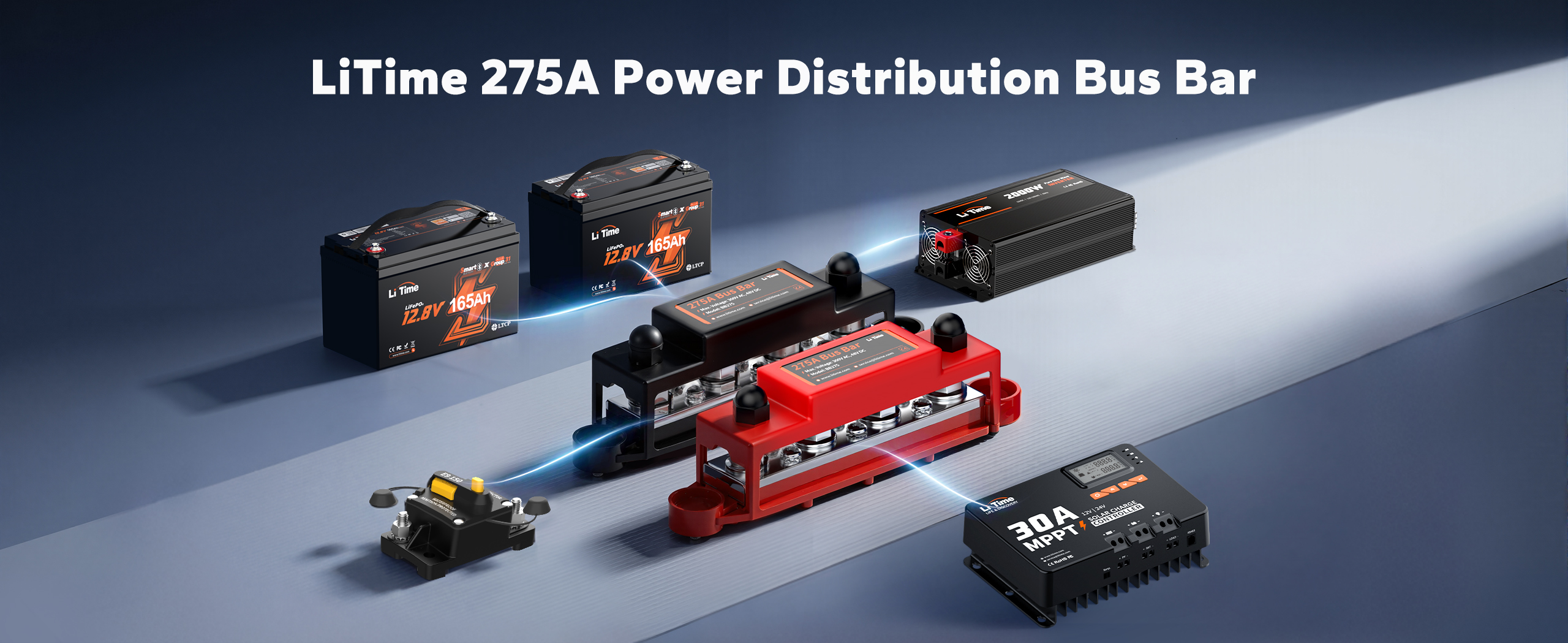
LiTime 275A Power Distribution Bus Bar
The LiTime 275A Power Distribution Bus Bar delivers stable and efficient power for multi-device energy systems. With excellent conductivity, enhanced safety protection, and durable construction, it ensures reliable current distribution across batteries/ battery banks, inverters, MPPT controllers, and other high-power components—making your entire system safer and more efficient.
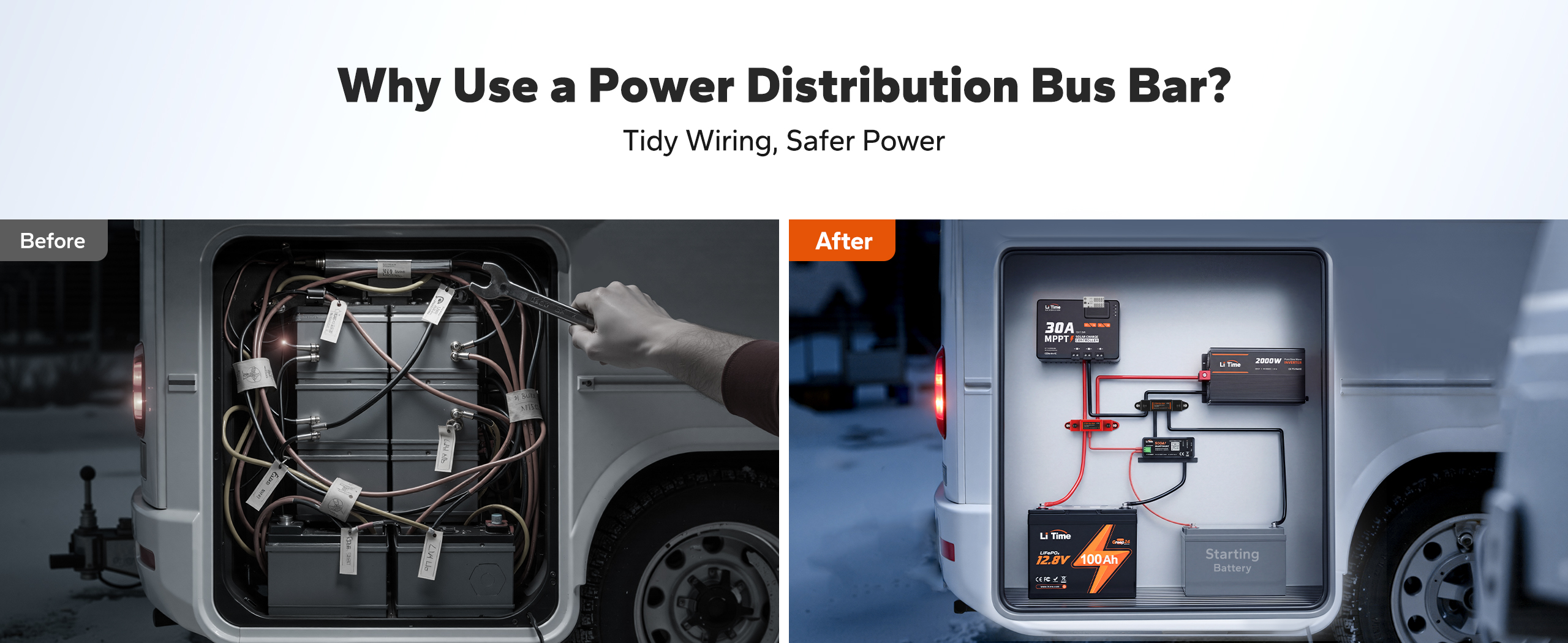
Tidy Wiring, Safer Power
Replace tangled wiring with a structured power distribution setup. The bus bar helps streamline connections, reduce installation complexity, and improve safety and efficiency across your entire energy system.
Real Performance Beyond the Rating
Unlike low-quality alternatives with inflated ratings, the LiTime 275A Bus Bar is built with a 4mm thick pure copper structure to ensure stable, high-current performance. It delivers real conductivity and safe power distribution for demanding RV, marine, and off-grid systems. Without compromise.
Safer Power Starts with Safer Materials
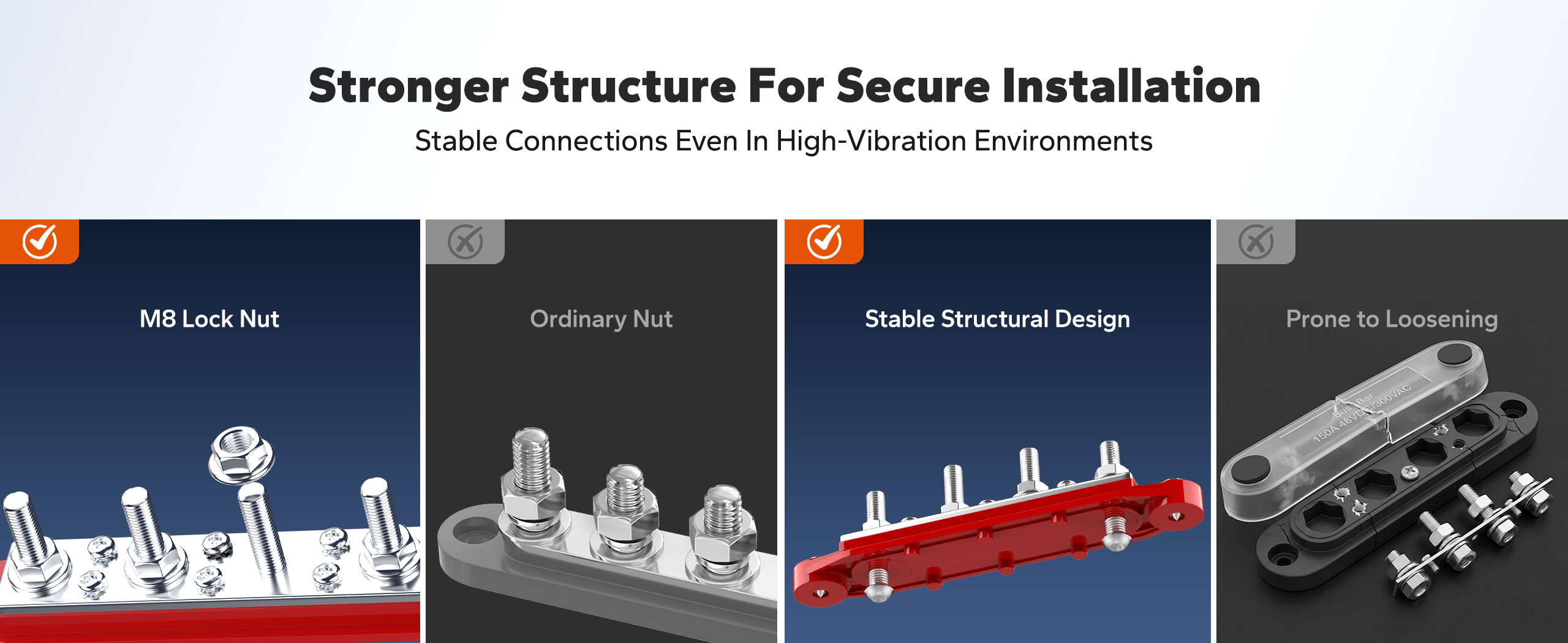
With UL94-V0 flame-retardant material and a stable base design, he LiTime bus bar maintains reliable connections even in vibration conditions for long-lasting performance.
Durability You Can Rely On in Any Environment
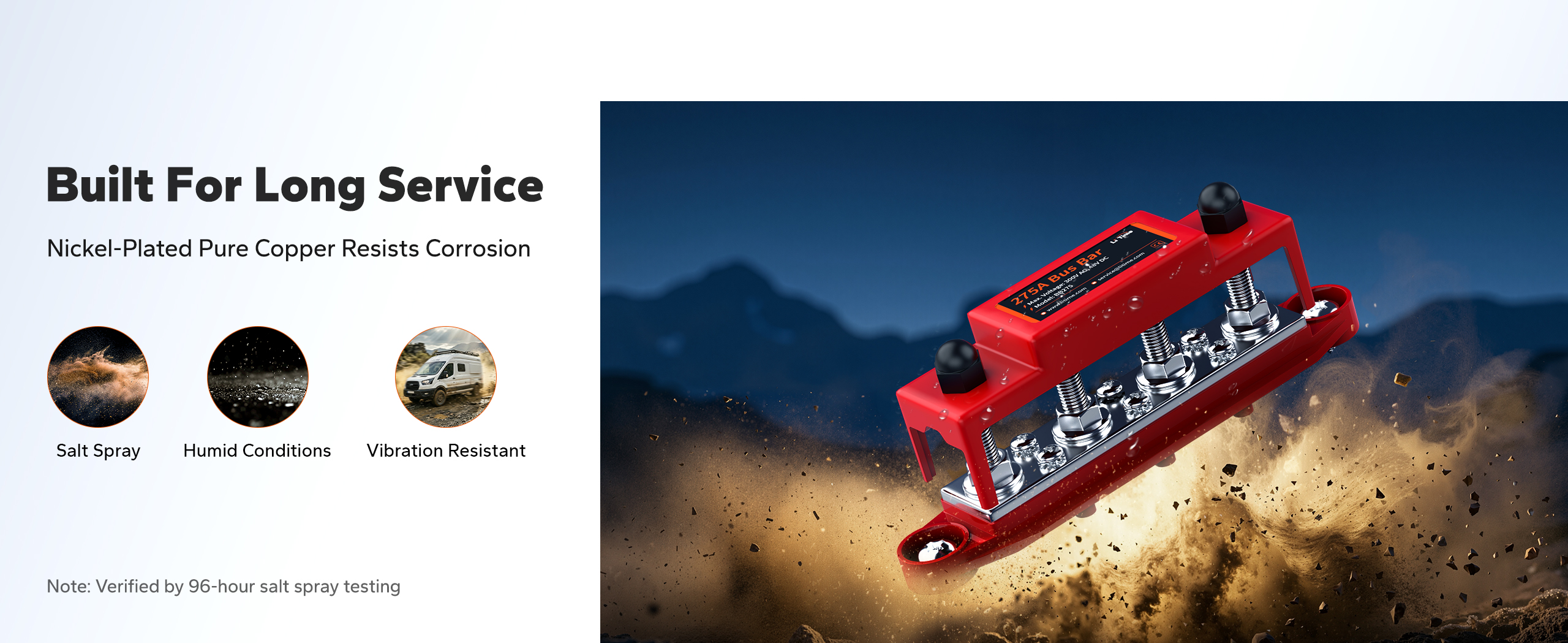
Featuring nickel-plated pure copper construction, the bus bar effectively resists oxidation and corrosion. Verified through 96-hour salt spray testing, it ensures stable conductivity and durability even in harsh environments.
Built for Multiple Power Systems
Product Specification
Installation Guide
A bus bar(also written as busbar) is a metallic strip or bar used to conduct electricity within an electrical distribution system. The battery bus bar serves as a central point for connecting batteries and devices in a power system.
A battery bus bar(LiTime 275A bus bar) is used to connect multiple batteries in a bank (for RVs, solar, marine) into a single, clean output, replacing a messy web of individual cables and ensuring reliable, high-current connections.
When selecting bus bars, factors such as the required current-carrying capacity, voltage rating, environmental conditions, and space constraints should be taken into account.
LiTime Bus Bar is constructed with high-quality copper for stable, long-lasting performance with excellent conductivity and durability.
If the LiFePO4 battery bus bar gets unusually hot, looks burnt or corroded, has loose connections, or causes voltage drop and intermittent power, it may be damaged and should be checked or replaced.
Yes, but only for simple systems with very few connection points. However, in systems with multiple batteries connected in parallel, a bus bar helps ensure more balanced current across each battery, provides more reliable connections, and creates a cleaner layout, so a bus bar is usually the better choice.
The battery positive terminal goes to the positive bus bar, and the negative terminal goes to the negative bus bar. Then run properly sized cables from the bus bar to connect the inverter, charger, fuse, circuit breaker, and other devices.