


Boondocking means camping off-grid, without hookups for electricity, water, or sewer, allowing you to explore remote campgrounds, desert terrains, and mountain retreats far from crowded tourist spots. However, this off-grid freedom entirely relies on a reliable RV power system.
Choosing the best RV battery for boondocking is the single most critical decision for successful long-term dry camping. In this comprehensive guide, we will break down everything you need to know about boondocking RV batteries, including top brands, buying tips, type comparisons, setup strategies, and answers to all frequently asked questions.
About RV Battery & RV Power System for Boondocking
An RV normally uses two types of batteries: a starter battery, which delivers high current to start the engine, and a deep-cycle battery, also known as a house battery or auxiliary battery, which provides steady power for the living area.
A complete RV power system may include a house battery bank, inverter, converter/charger, solar panels and charge controller, alternator or DC-DC charger, shore-power connection, fuse panel, and battery monitor. Most RVs use a 12V system, while larger or higher-power setups may use 24V or 48V systems to reduce current and improve efficiency.
During boondocking, the house battery powers equipment such as lights, water pumps, refrigerators, fans, heaters, USB outlets, and 12V appliances. With an inverter, it can also run 120V devices such as a coffee maker, microwave, television, laptop, or air conditioner, depending on the battery capacity and inverter output.
Why Do You Need the Best RV Battery for Boondocking?

Many new RV campers make the mistake of using stock factory batteries for boondocking, only to face power shortages within 24 hours of dry camping. Boondocking power demands are vastly different from regular hookup camping, making premium deep-cycle batteries non-negotiable. Here are the key reasons why investing in the best boondocking RV battery is essential.
- Maintain dependable off-grid power for lighting, refrigerators, water pumps, fans, heaters, and electronic devices.
- Extend your camping time by providing more usable energy between charges.
- Support high-power appliances through an inverter, including microwaves, coffee makers, and televisions.
- Recharge efficiently from solar panels, alternators, generators, or shore power.
- Handle repeated deep discharges without rapid capacity loss or shortened service life.
- Reduce weight and save space, especially when replacing bulky lead-acid batteries with LiFePO₄ batteries.
- Improve safety and reliability through built-in BMS protection against overcharging, over-discharging, overheating, and short circuits.
- Perform in changing conditions, including cold-weather travel when equipped with low-temperature charging protection or self-heating.
What is the Best RV Battery Brand for Boondocking?
The quality of your RV battery brand directly dictates off-grid power stability, battery lifespan, and overall boondocking experience. Selecting a reputable, boondocking-specific battery brand ensures reliable long-term operation, minimizes maintenance troubles, and maximizes the value of your power system.
LiTime
A popular consumer-grade lithium battery brand tailored for off-grid RV use. LiTime LiFePO4 batteries feature built-in self-heating technology, Bluetooth smart monitoring, and advanced multi-layer BMS protection, supporting fast charging and 4000+ deep cycle lifespans. Compact, lightweight, and cost-effective, they are ideal for casual campers, weekend boondocking, and cold-weather RV travel.
Battle Born Batteries
The gold standard for premium RV off-grid power. Specializing in high-end LiFePO4 batteries, Battle Born units boast 5000+ cycle life, 100% safe depth of discharge, zero maintenance, and extreme temperature resistance. With reliable heavy-load performance and long-term durability, it remains the top choice for full-time boondockers and long-distance RV overlanding.
Renogy
A well-established all-around brand for off-grid solar and RV power systems. Offering both AGM battery and mid-range lithium batteries, Renogy products feature excellent compatibility with solar panels, inverters, and multi-source charging setups. Balancing affordability, stability, and low maintenance, it perfectly suits entry-level and mid-tier dry camping enthusiasts.
Trojan
A legendary industry leader in deep-cycle lead-acid and AGM batteries. Renowned for rugged build quality and exceptional vibration resistance, Trojan batteries deliver steady, reliable power for heavy-duty off-grid applications. They excel in harsh outdoor environments and are a trusted classic option for campers who prefer durable, cost-effective traditional battery setups.
Interstate Batteries
A widely recognized mainstream battery brand with proven reliability for RV dual-purpose use. Its deep-cycle house batteries offer consistent voltage output, reliable temperature adaptability, and long service life. Backed by nationwide warranty support, Interstate Batteries are a safe, convenient, and dependable pick for everyday boondocking and general RV power needs.
How to Choose the Best RV Battery for Boondocking?

Choosing a suitable boondocking battery follows a scientific, step-by-step selection process that matches your actual power needs, camping habits, RV configuration, and local climate. Below is a complete 10-step guide to help you accurately calculate, screen, and confirm the ideal RV battery for off-grid dry camping.
Step 1: Calculate Your Daily Power Consumption
Before selecting a compatible RV battery, accurately calculate your total daily off-grid energy consumption, which acts as the core foundation for precise battery capacity matching. You can work out your power draw using the standard boondocking energy calculation formula:
Daily Energy Consumption (Wh) = Device Wattage × Daily Operating Hours
| RV Appliance / Application | Typical Power | Example Daily Use | Estimated Daily Energy Use |
|---|---|---|---|
| LED interior lighting | 20–40W | 4 hours | 80–160Wh |
| 12V compressor refrigerator | 40–60W | 8–12 equivalent running hours | 320–720Wh |
| RV roof vent fan | 10–40W | 8 hours | 80–320Wh |
| Freshwater pump | 60–90W | 15–20 minutes total | 15–30Wh |
| Propane or diesel heater fan | 20–60W | 8 hours | 160–480Wh |
| Phones and small devices | 20–40W | 2 hours | 40–80Wh |
| Laptop | 45–90W | 3 hours | 135–270Wh |
| Television | 40–100W | 3 hours | 120–300Wh |
| Coffee maker | 800–1,200W | About 10 minutes | 130–200Wh |
| Microwave | 1,000–1,500W | About 15 minutes | 250–375Wh |
| Hair dryer | 1,200–1,800W | About 10 minutes | 200–300Wh |
| RV air conditioner | 1,000–1,800W | 4 hours | 4,000–7,200Wh |
Step 2: Decide Your Off-Grid Camping Duration
Multiply your daily power consumption by the number of off-grid camping days you plan to stay. To avoid power shortages caused by uncontrollable factors, reserve an extra 20%–30% energy buffer for cloudy weather, solar charging losses, device power surges, and unexpected power usage.
Step 3: Select the Right Battery Chemistry
Pick a battery type that fits your budget and usage intensity. LiFePO₄ lithium batteries feature lightweight design, ultra-long cycle life, fast charging speed, and 100% usable capacity, ideal for frequent and long-term boondocking. AGM batteries are maintenance-free, spill-proof, and cost-effective for casual camping, though they are heavier with limited depth of discharge. Flooded lead-acid batteries have the lowest upfront cost but require regular maintenance and dedicated ventilation space.
Read More: AGM vs. Lithium Batteries: Which is Better for RV and Marine
Step 4: Confirm Your RV System Voltage
Most standard RV off-grid setups adopt a 12V system, while large-capacity power configurations for full-time camping usually use 24V or 48V systems. Ensure your selected battery voltage strictly matches your inverter, charger, solar charge controller, and other core system components to avoid compatibility failures and equipment damage.
Step 5: Determine the Required Battery Capacity
Convert your total daily energy demand into battery amp-hour (Ah) capacity to select a matched battery bank. For reference, a standard 12V 200Ah LiFePO₄ battery delivers around 2,560Wh of usable energy. Always prioritize usable capacity rather than rated capacity, as lead-acid and AGM batteries cannot fully discharge their labeled power.
Step 6: Verify Battery Output Power
Check the battery’s built-in BMS continuous and surge discharge current to ensure it can support your high-power appliances. Devices such as microwaves, coffee makers, portable air conditioners, and induction cooktops require high instantaneous current, and underrated battery output will lead to low voltage, shutdowns, or system overload.
Step 7: Inspect Compatible Charging Sources
Confirm that your existing charging equipment fully supports your chosen battery type. Common boondocking charging solutions include solar panels with MPPT controllers, RV alternators with DC-DC chargers, shore-power chargers, and portable generators. All charging devices must adapt to the battery’s chemistry and voltage to ensure efficient and safe recharging.
Read More: 5 Ways about Charging a Camper Battery, Time Chart & Troubleshooting
Step 8: Measure Actual Installation Space
Before purchasing, carefully measure your RV’s battery compartment size. Compare the battery’s external dimensions, weight, terminal position, cable wiring clearance, and ventilation requirements to avoid installation failures caused by size mismatch or insufficient heat dissipation space.
Step 9: Adapt to Local Camping Climate
Weather conditions greatly affect battery performance and lifespan. For cold-region boondocking, select lithium batteries with low-temperature charging protection or self-heating functions to prevent capacity loss and charging failure in freezing environments. For hot and high-temperature areas, place the battery in shaded, well-ventilated positions to avoid overheating aging.
Read More: Winter Camping Guide: Cold Weather Camping Battery & Power Solutions
Step 10: Evaluate Expandability, Warranty and After-Sales Support
For users who plan to upgrade their off-grid power system in the future, choose batteries that support series and parallel expansion. Meanwhile, prioritize brands with long warranty periods, complete technical documentation, and reliable after-sales service to guarantee long-term stable off-grid camping use.
Best RV Batteries for Boondocking & Dry Camping
Selecting the right RV battery is key to matching your unique boondocking trip length and daily power consumption, ensuring consistent off-grid power without unnecessary overcapacity or power shortages. LiTime offers a full lineup of 12V LiFePO₄ batteries tailored for different dry camping scenarios, perfectly catering to casual short trips, weekend getaways, and long-term extended boondocking.
For short one-to-two-night boondocking trips with basic power demands—including RV lighting, water pumps, cooling fans, and daily device charging—the LiTime 12V 100Ah LiFePO₄ Battery is the ideal compact solution. Delivering 1,280Wh of stable usable power, its lightweight and space-saving design fits most standard RV battery compartments, fully meeting the minimal power needs of quick off-grid camping sessions.

For standard two-to-three-day weekend dry camping, the LiTime 12V 165Ah Smart Battery strikes a perfect balance between capacity and installation practicality. Packing 2,112Wh of power within a versatile Group 31 footprint, it easily handles moderate daily power loads while avoiding bulky installation, making it the most cost-effective and space-efficient option for regular weekend boondockers.

If you prefer three-to-five-day off-grid camping with heavier power usage, such as continuous 12V refrigerator operation, multiple electronic devices, and regular inverter-powered appliance use, the LiTime 12V 230Ah Battery is your best pick. With a total energy output of 2,944Wh, it provides ample power reserve to sustain long-duration dry camping and eliminate frequent recharging troubles.

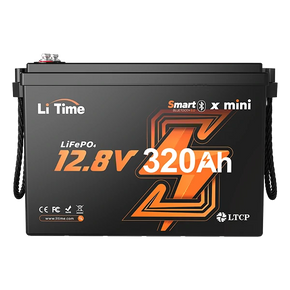
For full-time extended boondocking or high-demand RV power systems that support high-wattage appliances, the LiTime 12V 320Ah Mini Smart Battery delivers ultimate performance. Equipped with a 200A built-in BMS and precise Bluetooth real-time monitoring, it offers 4,096Wh of robust power, reliably supporting prolonged off-grid stays and heavy-load electrical equipment.
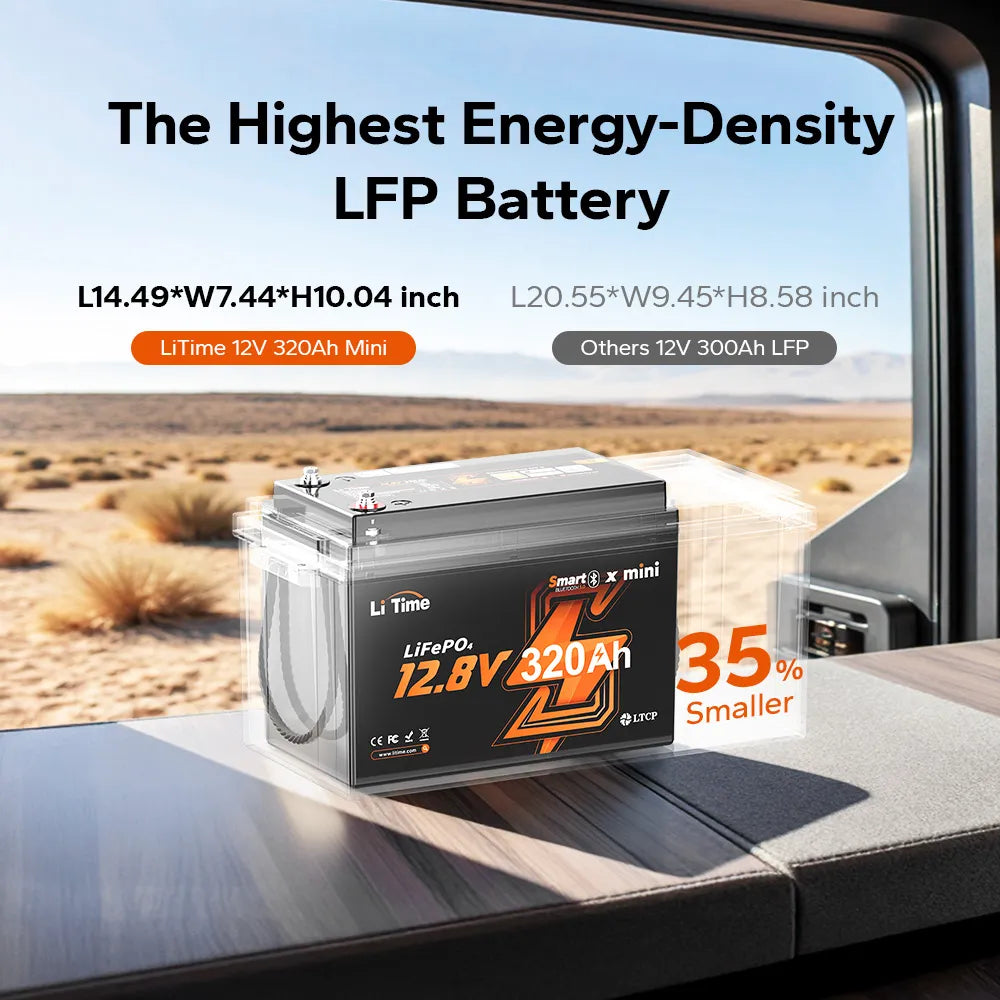
Regardless of your camping schedule, matching your trip duration and power habits to the right LiTime battery capacity maximizes off-grid freedom, reduces charging frequency, and lets you explore remote camping spots with complete confidence.
FAQs
Two 6v batteries in series VS two 12v in parallel for Boondocking?
For boondocking use, two 12V batteries in parallel are better and more reliable than two 6V batteries in series. Parallel 12V setups maintain a 12V system voltage, which matches all standard RV appliances, solar chargers, and inverters, ensuring full compatibility. If one battery fails in a parallel setup, the other still provides partial power, avoiding a complete system shutdown.
In contrast, two 6V batteries in series create a 12V output but have higher failure risks. Series connection means one faulty battery will disable the entire bank. 6V battery setups also offer fewer product options and lower compatibility with modern RV power systems. The only advantage of 6V series setups is lower upfront cost for large-capacity AGM banks, but the reliability gap makes 12V parallel the superior choice for boondocking.
Read More: 6V VS 12V Batterie, Which is Better for RV Camping
How to charge RV batteries for boondocking?
The most efficient and sustainable way to charge RV batteries while boondocking is solar panel charging. Install matched solar panels to harvest daytime sunlight and trickle-charge your battery bank for continuous off-grid power. You can also use an RV alternator charger while driving to top up batteries before reaching remote campsites. For cloudy days or low-sunlight areas, a portable generator serves as a backup charging method. Always use a smart charge controller to avoid overcharging and extend battery life.
Read More: [Full Guide] How To Charge RV Batteries Safely
How long will a RV battery last while boondocking?
Battery runtime depends on battery type, capacity, and daily power usage. A single 100Ah lithium battery lasts 1–2 days for basic boondocking (fridge + lights + small electronics). A 200Ah lithium bank supports 3–5 days of standard family camping without solar charging. With consistent solar recharging, a quality lithium battery bank can provide unlimited continuous boondocking power. AGM batteries offer 20–30% shorter runtime due to lower usable capacity.
Read More: How Long Will an RV Battery Last Boondocking?
What drains a RV battery the fastest?
The biggest RV battery drains are 12V refrigerators, portable AC units, electric heaters, and water pumps. Phantom loads including standby TVs, chargers, and alarm systems also drain power slowly but continuously. Leaving these devices connected overnight can deplete a full battery within 24 hours. Cold weather also accelerates battery drainage and reduces overall capacity significantly.
How do I keep my RV battery charged while camping?
First, install a properly sized solar charging system to maintain daily battery replenishment. Second, minimize phantom loads by disconnecting unused devices when not in use. Third, avoid deep discharging batteries below 20% for AGM and 10% for lithium units. Fourth, drive your RV regularly to use the alternator for supplementary charging. Finally, use a smart battery monitor to track real-time voltage and capacity, preventing accidental over-discharge.
Do RV batteries drain when not in use?
Yes, all RV batteries have self-discharge rates when idle. Lead-acid batteries lose 3–5% of charge monthly, while lithium batteries only lose 1–2% monthly. Long-term storage without maintenance will drain batteries completely and cause permanent capacity loss. Always disconnect battery loads and perform top-up charging monthly when your RV is not in use.
How long will a 12V fridge run on a 100Ah lithium battery?
A standard 12V RV fridge consumes 30–50Ah of power daily with normal cycling. A fully charged 100Ah lithium battery (100% usable capacity) can run a 12V fridge continuously for 24–36 hours without additional charging. With partial solar charging during the day, the fridge can run indefinitely.
Read More: How Long Will a 100Ah Lithium Battery Run a 12V RV Fridge?
Which RV battery lasts the longest?
LiFePO4 lithium RV batteries have the longest lifespan by a wide margin. They offer 4000–6000 full charge-discharge cycles and a 7–10 year service life. In comparison, AGM batteries last 3–5 years, and flooded lead-acid batteries only last 1–2 years. For long-term boondocking and full-time RV living, lithium batteries deliver the best long-term value and durability.
Final Thoughts
Boondocking freedom starts with a reliable RV battery system. Whether you are a weekend dry camper or a full-time off-grid nomad, choosing thebest RV battery for boondocking directly determines your camping experience. Lithium LiFePO4 batteries remain the top choice for performance and longevity, while high-quality AGM batteries offer budget-friendly reliability for casual use. By following our brand recommendations and buying guide, you can build a stable, long-lasting off-grid power system to enjoy unlimited remote camping adventures.

