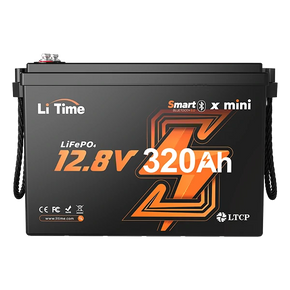


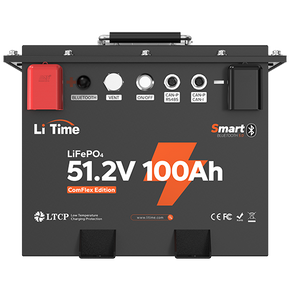

For many anglers in 2026, a LiFePO4 deep-cycle battery offers a practical balance of usable capacity, weight and service life. A 12V 100Ah modelworks well with many 30–55 lb thrust motors, while a lighter 50Ah option may be sufficient for kayaks and shorter trips.
However, the best trolling motor battery depends on more than thrust. Boat weight, fishing duration, motor speed, available space and whether the trolling motor is your only way back to shore all affect the required capacity.
- 1. Why Your Trolling Motor Needs a Dedicated Deep-Cycle Battery?
- 2. Lithium vs. AGM vs. Lead-Acid: Which Technology Wins in 2026?
- 3. 5 Best Trolling Motor Batteries for 2026
- 4. How to Choose the Right Battery: Battery Sizing Guide
- 5. Crucial Features to Look for in a Marine Battery
- 6. Conclusion
- 7. FAQs
Why Your Trolling Motor Needs a Dedicated Deep-Cycle Battery?
A trolling motor needs a deep-cycle battery because it draws power continuously for long periods. Deep-cycle batteries are designed to handle repeated discharge and recharge cycles.
Starting batteries are designed to deliver a short burst of current to crank an engine. Repeatedly draining one with a trolling motor can shorten its service life.
Dual-purpose batteries can support both engine starting and limited deep cycling. However, a dedicated deep-cycle battery remains the better battery for a trolling motor when runtime and cycle life are the main priorities.
→Explore Litime guide on starting batteries vs deep-cycle battery vs dual-purpose battery.
Lithium vs. AGM vs. Lead-Acid: Which Technology Wins in 2026?
LiFePO4 offers the strongest combination of low weight, usable capacity and cycle life. AGM remains practical for occasional users, while flooded lead-acid mainly appeals to buyers seeking the lowest initial price.
AGM is technically a sealed lead-acid battery. It is separated below because it requires less maintenance than a conventional flooded battery.
| Technology | Main Advantages | Main Limitations | Best For |
|---|---|---|---|
| LiFePO4 | Lightweight, stable output, high usable capacity | Higher initial cost | Frequent use |
| AGM | Sealed and maintenance-free | Heavy, lower usable capacity | Occasional fishing |
| Flooded Lead-Acid | Lowest upfront price | Heavy, requires maintenance | Limited budgets |
Read full comparison guide to AGM vs lithium battery for the best choice.
A 100Ah lead-acid battery is generally not equivalent to a 100Ah LiFePO4 battery in usable energy. Repeatedly discharging lead-acid below roughly 50% can accelerate degradation, while LiFePO4 batteries can normally use a much larger share of their rated capacity.
For small-boat owners, weight is often the most noticeable difference. Carrying a compact lithium battery between the vehicle, dock and boat is much easier than moving a large lead-acid battery on every trip.
5 Best Trolling Motor Batteries for 2026
These best trolling motor batteries are organized by practical fishing scenario. Always confirm voltage, maximum motor current and available installation space before purchasing.
Quick Verdict: 5 Top Picks for 2026
| Category | Recommended Battery | Energy | Best For |
|---|---|---|---|
| Best Overall | LiTime 12V 100Ah TM | 1,280Wh | Most 12V, 30–55 lb motors |
| Best for Kayaks | LiTime 12V 50Ah TM | 640Wh | Kayaks and small boats |
| Best for Tournament Fishing | LiTime 36V 100Ah TM | 3,840Wh | High-thrust 36V systems |
| Best for Cold Weather | LiTime 12V 100Ah Self-Heating | 1,280Wh | Early- and late-season fishing |
| Best for All-Day Fishing | LiTime 24V 100Ah Group 31 | 2,560Wh | 70–100 lb motors |
Choose voltage first, then capacity. A higher Ah rating extends runtime, but the battery voltage must always match the trolling motor.
Best Overall – LiTime 12V 100Ah TM Smart
The LiTime 12V 100Ah TM Smart is a balanced choice for many 12V, 30–55 lb trolling motors. Its 1,280Wh capacity suits weekend fishing without the weight of a comparable lead-acid battery.
In real use, 100Ah provides a useful reserve for windy returns, heavier loads and occasional full-speed operation. That reserve matters when the trolling motor is the boat's primary propulsion rather than a secondary positioning motor.
Specs: 12.8V, 100Ah, 1,280Wh, Bluetooth and built-in BMS.
Pros:
- Suitable for many 30–55 lb motors
- Bluetooth monitoring of SOC, voltage and current
- High usable capacity for longer trips
- Easier to carry than comparable lead-acid batteries
Cons:
- Higher initial cost than basic AGM batteries
- Not suitable for 24V or 36V motors
Best for: Recreational anglers, jon boats and 12V systems needing dependable half-day or all-day power.

Want more different 12V 100Ah modles? Explore Litime 12V 100Ah lithium battery collections to find your ideal one.
Best for Kayaks and Small Boats – LiTime 12V 50Ah TM Smart
The LiTime 12V 50Ah TM Smart prioritizes portability. It is easier to carry, position and balance in a kayak than a larger 100Ah battery.
A 50Ah LiFePO4 battery can be enough for a 30–40 lb motor used at moderate speeds. Kayaks with 55 lb motors, Spot-Lock or long return distances should consider 100Ah for a safer reserve.
Specs: 12.8V, 50Ah, 640Wh and Bluetooth monitoring.
Pros:
- Lightweight and easy to transport
- Requires less storage space
- Suitable for short and moderate trips
Cons:
- Less reserve for wind and strong current
- Full-speed use can reduce runtime quickly
Best for: Kayaks, canoes and small boats where weight matters more than maximum runtime.

Need more runtime without giving up limited space? Consider the LiTime 12V 100Ah Xtra-Mini Smart or LiTime 12V 100Ah Group 24 Smart. Both provide twice the nominal capacity of a 50Ah battery in a compact format, making them better suited to 55 lb motors, Spot-Lock use and longer trips.
Best for Tournament Fishing – LiTime 36V 100Ah TM Smart
The LiTime 36V 100Ah TM Smart provides 3,840Wh for high-thrust systems. It suits frequent repositioning, heavier bass boats and long competition days.
Using one 36V battery also removes the weight and wiring of three separate 12V batteries. It creates a simpler system with one battery status to monitor before and during a tournament.
Specs: 36V, 100Ah, 3,840Wh, 100A BMS, Bluetooth and IP65-rated protection.
Pros:
- High capacity for all-day use
- Replaces three matched 12V batteries
- Simplifies wiring and monitoring
- Suitable for sustained high-demand operation
Cons:
- Higher initial investment
- Only suitable for compatible 36V motors
Best for: Tournament anglers and high-thrust 36V trolling motor systems.
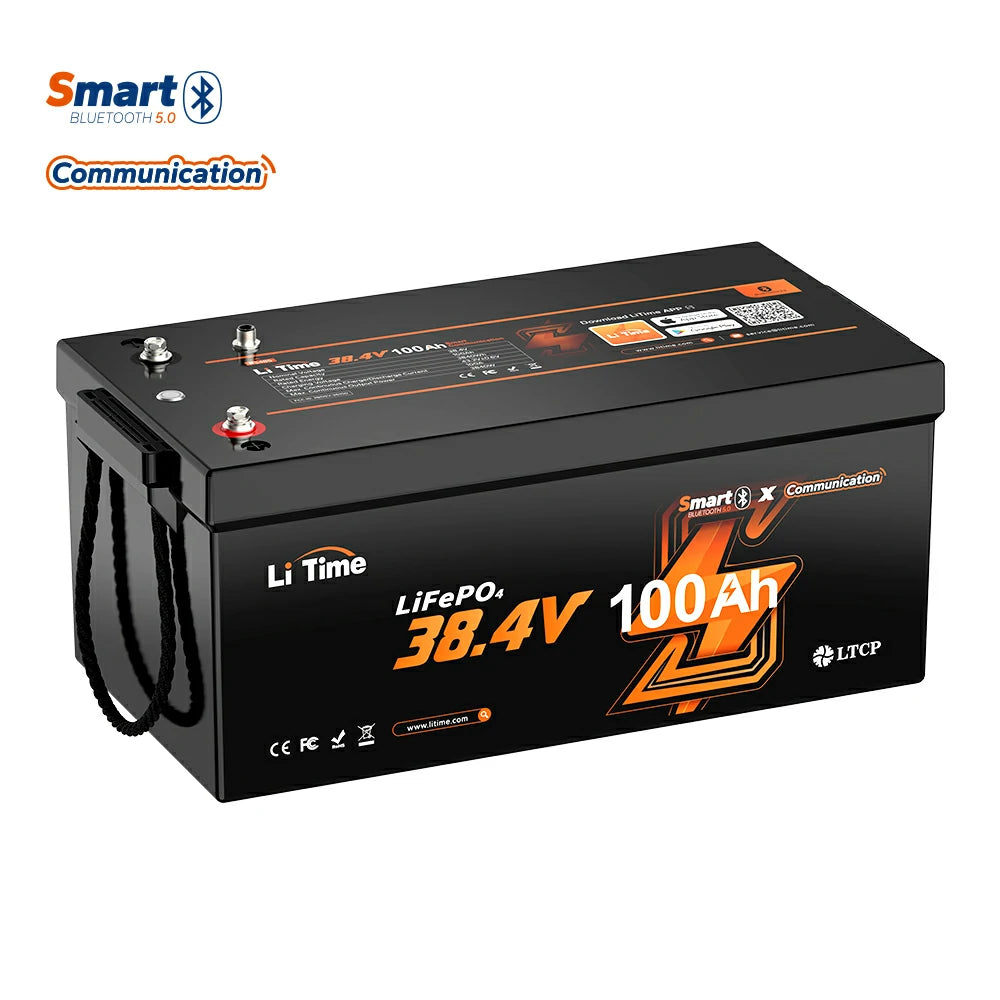
Best for Cold-Weather Fishing – LiTime 12V 100Ah TM Self-Heating
The LiTime 12V 100Ah Self-Heating Battery is suited to anglers fishing during early spring and late fall. Its low-temperature protection helps prevent charging when the cells are too cold.
Cold-weather protection does not eliminate the need for correct storage. Keep the battery secured, follow the specified charging temperature and disconnect loads that may continue drawing power while the boat is parked.
Specs: 12.8V, 100Ah, 1,280Wh, Bluetooth and low-temperature protection.
Pros:
- Helps protect against unsafe cold charging
- Provides 100Ah capacity for common 12V motors
- Bluetooth supports temperature and SOC checks
Cons:
- Low-temperature cutoff is not self-heating
- Requires correct winter charging and storage
Best for: Early- and late-season fishing in colder regions.
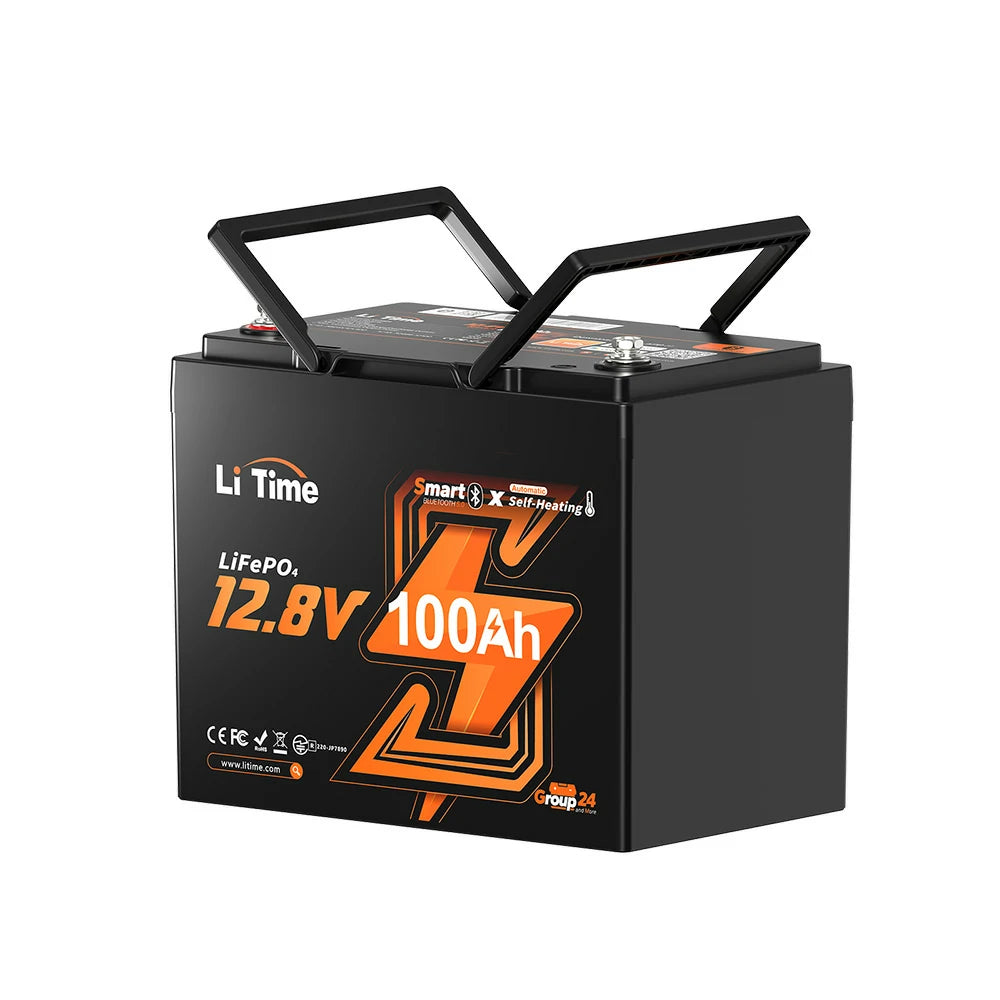
Best for All-Day Fishing – LiTime 24V 100Ah Group 31 TM Smart
The LiTime 24V 100Ah Group 31 TM Smart provides 2,560Wh in a Group 31 case. LiTime specifies it for 70–100 lb trolling motors.
It is especially useful when a 24V 50Ah battery leaves too little reserve for a full day. One 24V battery also avoids the charging and balancing concerns of two separate 12V batteries.
Specs: 25.6V, 100Ah, 2,560Wh, Bluetooth and IP65-rated protection.
Pros:
- Long runtime for 24V motors
- Replaces two 12V batteries in series
- Compact size relative to stored energy
Cons:
- Heavier and more expensive than 24V 50Ah
- Requires a compatible 24V charger
Best for: Long fishing days, heavier boats and 70–100 lb trolling motors.

How to Choose the Right Battery: Battery Sizing Guide
Choose the right battery by matching voltage, capacity and BMS output to the motor. Fishing speed, boat weight and weather then determine how much reserve capacity is needed.
Match the Battery Voltage to the Motor
| Motor System | Correct Battery Setup |
|---|---|
| 12V | One 12V battery |
| 24V | One 24V battery or two matched 12V batteries in series |
| 36V | One 36V battery or three matched 12V batteries in series |
When using multiple batteries, choose the same model, capacity, age and state of charge. A single 24V or 36V battery can simplify installation, while separate 12V batteries may be easier to replace individually.
Choose Capacity Based on Thrust and Use
| Typical Thrust | Common Voltage | Suggested LiFePO4 Capacity |
|---|---|---|
| 30–40 lb | 12V | 50–100Ah |
| 45–55 lb | 12V | 100–200Ah |
| 60–80 lb | 24V | 50–100Ah |
| 80–112 lb | 36V | 50–100Ah |
A smaller battery may be sufficient when the trolling motor is only used for positioning. If it is the only propulsion system, choose additional capacity for the return trip rather than sizing around ideal conditions.
Estimate Trolling Motor Battery Runtime
Use the following formula:
Runtime (hours) = Usable capacity (Ah) ÷ Average current draw (A)
For an instance, A 100Ah battery supplying a 55lb trolling motor with an average 20A load has a theoretical runtime of 5 hours. However, continuous full-throttle operation consumes energy much faster than moderate-speed trolling. It can last about 2 hours at full speed, while 4-5 hours at moderate speed trolling.
We have found that reducing speed slightly can extend practical runtime considerably. The exact improvement depends on the motor design, boat resistance, wind and water conditions, so maximum-throttle figures should not be used to predict a normal fishing day.
Crucial Features to Look for in a Marine Battery
Your best battery for a trolling motor needs more than a suitable Ah rating. Its BMS, monitoring system, charger, and installation all affect reliability.
Continuous BMS output: It must meet the motor's maximum current draw. An undersized BMS may shut the battery down during sustained high-speed operation.
Bluetooth monitoring: LiFePO4 voltage stays relatively stable and then drops quickly near empty. A Bluetooth app or shunt provides a more useful SOC estimate than voltage alone.

Low-temperature protection: Charging LiFePO4 below its permitted temperature can cause damage. Confirm whether the battery offers cutoff protection or active self-heating.
Compatible charger: Many older onboard chargers do not have a LiFePO4 profile. Include a suitable charger in the upgrade budget.
Secure installation: Strap the battery down and protect the terminals from movement, moisture and accidental short circuits.
Winter storage: Disconnect parasitic loads and follow the manufacturer's storage SOC and temperature guidance. A lithium battery generally does not need to remain on a continuous trickle charger.
Conclusion
The LiTime 12V 100Ah TM Smart is the best trolling motor battery for many recreational anglers because it balances runtime, portability and monitoring. The 12V 50Ah model better suits lightweight kayaks, while LiTime's 24V and 36V batteries support longer days and higher-thrust systems.
The most dependable setup is not simply the largest battery available. It is a properly sized battery with enough reserve, a compatible charger, secure installation and a BMS that can support the motor at full load. LiTime provides purpose-built LiFePO4 options for these different fishing styles, helping anglers spend less time managing power and more time confidently exploring the water.
FAQs
What is the best battery for a trolling motor?
A LiFePO4 deep-cycle battery is the best overall option for most frequent users. Match its voltage to the motor and choose capacity according to current draw, fishing duration and required safety reserve.
Is a 50Ah lithium battery enough for a trolling motor?
A 50Ah LiFePO4 battery can be enough for a 30–40 lb motor on a kayak or small boat. Choose 100Ah when using a 55 lb motor, Spot-Lock, higher speeds or the trolling motor as the boat's only propulsion.
How long will a 100Ah battery run a 55 lb trolling motor?
At close to maximum current draw, a 100Ah battery may provide roughly two hours of theoretical runtime. Moderate-speed use can last much longer because trolling motors consume substantially more power at high settings.
Is lithium worth the cost for occasional fishing?
Not always. AGM can still be a reasonable choice if the battery is used infrequently and weight is unimportant, while LiFePO4 offers greater value for frequent cycling, portable setups and long-term ownership.
Can I use my old charger with a lithium trolling motor battery?
Only if it supports the correct voltage and LiFePO4 charging profile. Older lead-acid chargers may not fully charge the battery or may use charging stages unsuitable for lithium.
Why does a lithium battery shut off without slowing down?
LiFePO4 maintains relatively stable voltage through most of its discharge. Near empty, the voltage can fall rapidly or the BMS may disconnect the output, which is why Bluetooth SOC monitoring is valuable.

