


Are you planning a boondocking adventure and wondering how long your RV battery will last Boondocking, also known as dry camping, offers the thrill of off-grid living but requires careful consideration of your power supply. Your RV battery is your lifeline when you're off the grid, providing energy for lights, appliances, and electronics.
Understanding how long your RV battery will last while boondocking is essential for a successful and enjoyable trip.
What's the Dry Camping and Boondocking?
Camping has long been a cherished American tradition, offering an escape to the great outdoors. Imagine a leisurely weekend getaway, especially when you have the luxury of a spacious travel trailer or RV. As camping has evolved over the years, new trends such as boondocking and dry camping have emerged, adding a new dimension to the camping experience.
Dry camping simply means camping without hookups, often at an RV park with amenities like shower houses and pools. On the other hand, boondocking takes this concept a step further, involving off-grid camping without the comforts of a traditional campground. Whether it's a truck stop, a Walmart parking lot, or a serene spot in a national forest, boondocking means no electrical hookups and no readily available amenities. In this scenario, the key to a comfortable and enjoyable stay lies in a dependable and efficient RV battery setup.
What Does Your RV Battery Power While Boondocking?
For families or couples seeking to bond in the tranquility of nature, proper planning and execution are essential. This is why boondockers and dry campers equip their travel trailers or RVs with reliable batteries. To understood how long will an rv battery last boondocking, it's important to start with a basic understanding of your systems.
120-Volt AC Power System
Under normal conditions, an RV can use shore power or a generator to supply AC electricity to onboard appliances while also charging the house battery through a compatible charger. However, when camping or boondocking without access to shore power, alternative energy sources such as solar panels or a generator can be used to recharge the RV battery.
When 120V AC appliances are needed, an inverter converts the DC power stored in the house battery into AC power to run devices such as TVs, microwaves, coffee makers, and other household-style appliances.
12/24-Volt DC Power System
This system powered by deep cycle battery. Often known as the "house battery", "leisure battery" or "service battery", this is responsible for powering essentials such as lighting, the water system, and overhead fans. In the context of boondocking and dry camping, this battery can serve as your sole power source.
How Long Will an RV Battery Last Boondocking?
How long an RV battery lasts while boondocking depends on the battery capacity, battery chemistry, usable depth of discharge, and how much electricity your RV consumes each day. A small battery bank may support basic lighting and a refrigerator for less than a day, while a larger lithium battery bank can keep an RV running for several days without shore power.
How to Calculate RV Battery Runtime
The first step is to calculate how much energy your RV uses each day.
Daily Energy Consumption (Wh) = Appliance Power (W) × Hours Used per Day
Add the consumption of all appliances together to determine your total daily energy use.
Next, calculate the usable energy stored in the battery:
Usable Battery Energy (Wh) = Battery Voltage × Battery Capacity (Ah) × Usable Depth of Discharge
Then estimate how long the battery can support your RV:
RV Battery Runtime (Days) = Usable Battery Energy (Wh) ÷ Daily Energy Consumption (Wh)
For example, a 12.8V 200Ah LiFePO4 battery stores approximately:
12.8V × 200Ah = 2,560Wh
If about 90% of that capacity is considered usable:
2,560Wh × 90% = 2,304Wh usable energy
If your RV consumes approximately 1,400Wh per day:
2,304Wh ÷ 1,400Wh/day ≈ 1.65 days
This means a 200Ah LiFePO4 battery could support this example RV setup for around 1.6 days without additional charging.
If AC appliances are powered through an inverter, remember that the inverter also consumes energy. Actual runtime may therefore be somewhat shorter depending on inverter efficiency and standby consumption.
How Much Power Does an RV Use While Boondocking?
Daily consumption varies significantly depending on your appliances and camping habits. The following example represents a moderate off-grid RV setup without continuously running high-power appliances such as an air conditioner, electric heater, or electric water heater.
| RV Appliance | Typical Power | Daily Use | Estimated Daily Consumption |
|---|---|---|---|
| LED Lights | 20W | 5 hours | 100Wh |
| Water Pump | 60W | 0.5 hour | 30Wh |
| 12V Refrigerator | 50W | 8 hours equivalent runtime | 400Wh |
| Roof Vent Fan | 20W | 8 hours | 160Wh |
| Phones & Tablets | 25W | 3 hours | 75Wh |
| Laptop | 60W | 3 hours | 180Wh |
| TV | 50W | 3 hours | 150Wh |
| Furnace Blower | 80W | 2 hours | 160Wh |
| Controls & Standby Loads | 6W | 24 hours | 144Wh |
| Estimated Total | — | — | ≈1,400Wh/day |
Based on this example, the RV requires approximately 1.4kWh of battery energy per day.
Actual consumption may be significantly lower or higher. Running an air conditioner, microwave, induction cooktop, electric heater, or other high-wattage appliance can dramatically increase daily energy use.
Solar panels, alternator charging through a DC-DC charger, or a generator can also replenish energy during the day and extend the time you can remain off-grid.
How Long Will 100Ah, 165Ah, 200Ah, and 320Ah RV Batteries Last?
Using the example consumption of approximately 1,400Wh per day, we can estimate the runtime of several common RV battery capacities.
For this comparison:
-
LiFePO4 batteries are calculated using a nominal voltage of 12.8V and approximately 90% usable capacity.
-
Lead-acid batteries are calculated using 12V and approximately 50% usable capacity to avoid frequent deep discharge.
| Battery Capacity | LiFePO4 Usable Energy | LiFePO4 Runtime | Lead-Acid Usable Energy | Lead-Acid Runtime |
|---|---|---|---|---|
| 100Ah | 1,152Wh | ≈ 0.82 day / 20 hours | 600Wh | ≈ 0.43 day / 10 hours |
| 165Ah | 1,901Wh | ≈ 1.36 days / 33 hours | 990Wh | ≈ 0.71 day / 17 hours |
| 200Ah | 2,304Wh | ≈ 1.65 days / 40 hours | 1,200Wh | ≈ 0.86 day / 21 hours |
| 320Ah | 3,686Wh | ≈ 2.63 days / 63 hours | 1,920Wh | ≈ 1.37 days / 33 hours |
The biggest difference between lead-acid and lithium batteries is usable capacity. Lead-acid batteries are generally not recommended for repeated deep discharge, so RV users commonly limit them to around 50% depth of discharge to help preserve battery life. LiFePO4 batteries can generally provide a much larger percentage of their rated capacity, although the exact discharge limit should always follow the battery manufacturer's specifications.
Lithium batteries also maintain their voltage more consistently during discharge and are less affected by high-current loads than traditional lead-acid batteries. As a result, a lithium battery with the same Ah rating can usually provide substantially more usable energy for boondocking.
For example, under the 1,400Wh-per-day scenario above, a 200Ah lead-acid battery bank provides less than one full day of recommended usable energy, while a 200Ah LiFePO4 battery provides around 1.6 days.
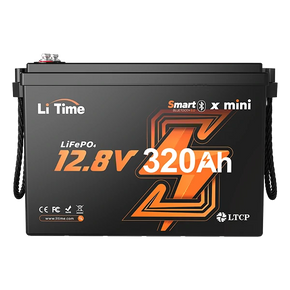
A 320Ah LiFePO4 battery increases that estimate to approximately 2.6 days without any charging input. If solar panels replenish part of the daily consumption, the same battery could support a much longer boondocking stay.
How to Improve RV Battery Life During Boondocking?
Energy-Efficient Appliances
Choose energy-efficient appliances and devices whenever possible. Lower power consumption means your RV battery can support essential loads for a longer period.
LED Lighting
Replace traditional bulbs with LED lights. LEDs use significantly less electricity and are especially useful during long evenings at camp.
Limit High-Power Appliances
Appliances such as microwaves, electric kettles, hair dryers, air conditioners, and electric heaters can drain an RV battery quickly. Use them sparingly when camping off-grid, or run them when shore power or a generator is available.
Turn Off Unnecessary Loads
Switch off lights, fans, entertainment systems, USB chargers, and other devices when they are not in use. Even small standby loads can add up over several hours or days.
Use Propane When Practical
If your RV supports propane appliances, using propane for cooking, water heating, or refrigeration can reduce the electrical load on the house battery.
Manage Inverter Use
Turn off the inverter when AC appliances are not needed. Inverters consume some power even when no major appliance is running, so avoiding unnecessary standby operation can help preserve battery capacity.
Battery Monitoring System
Use a battery monitor to track state of charge, power consumption, and remaining capacity. Monitoring energy use makes it easier to identify which appliances are consuming the most power and adjust your habits accordingly.
Use Power-Hungry Devices During the Day
If you have solar panels, try to operate higher-power devices during periods of strong sunlight. This allows solar energy to support part of the load directly instead of drawing entirely from the battery.
Solar Power
Solar panels can recharge the RV battery during the day and help replace energy used overnight. Keeping panels clean and reducing shading can improve daily solar production.
Pre-Cool Before Going Off-Grid
Before leaving shore power, cool the refrigerator and RV interior in advance when possible. This can reduce the amount of battery power needed immediately after arriving at your campsite.
Charge Electronics While Driving
Phones, tablets, cameras, and other small electronics can often be charged while the RV is driving, especially if the vehicle is already charging the house battery through a DC-DC charger.
Maintain a Reasonable Temperature
Extreme temperatures can affect battery performance. Keep batteries within their recommended operating temperature range whenever possible and avoid exposing them to excessive heat.
Battery Maintenance
Keep battery terminals and connections clean and secure, inspect cables regularly, and follow the manufacturer's maintenance and storage recommendations. For battery types that require ventilation, make sure the battery compartment remains properly ventilated.
Plan Your Daily Energy Budget
Estimate how much power essential devices will use each day and prioritize important loads such as lighting, refrigeration, water pumps, and communication devices. A simple daily energy plan can prevent unnecessary battery depletion during longer camping trips.
Hope this article can help you! Can also learn more about how to store lithium batteries and how to charge lithium batteries.
FAQs about RV Battery
How Do You Charge RV Batteries?
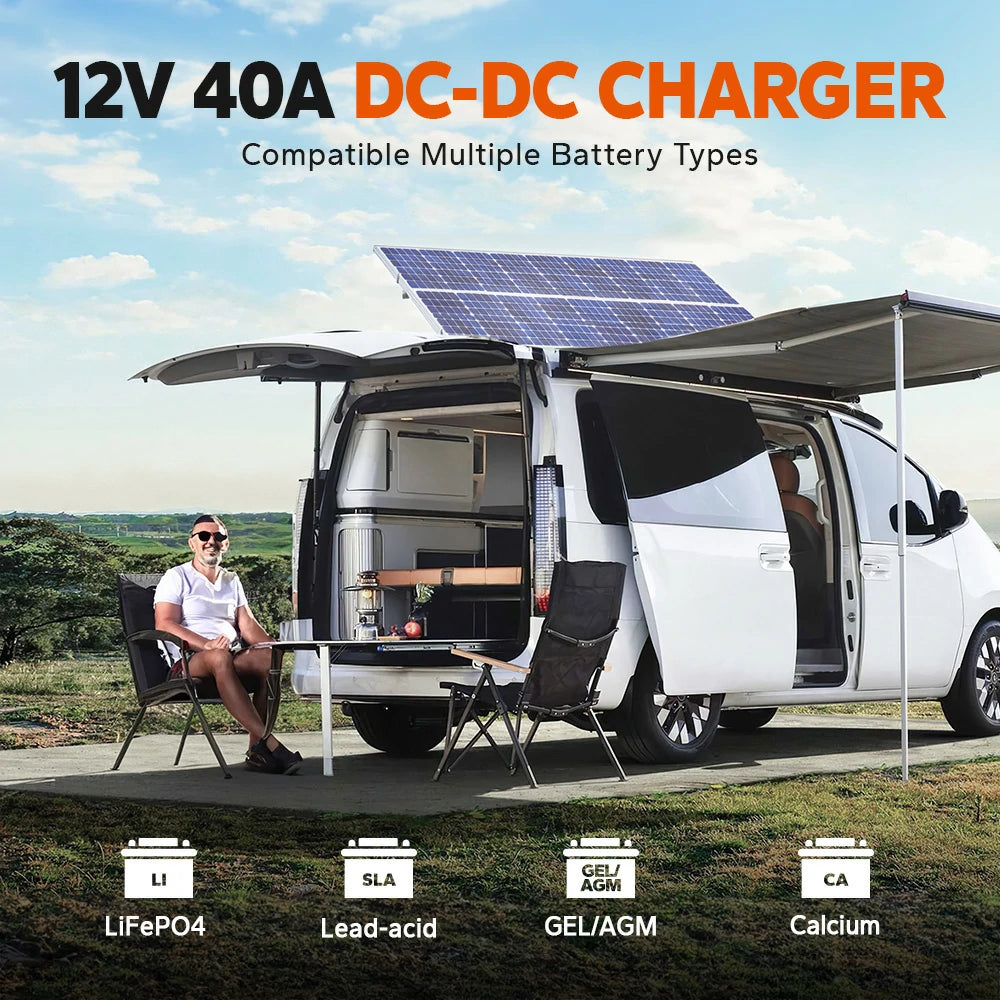
There are two methods to charge your RV batteries while boondocking. First, you can use a DC to DC charger. It should be of high quality and deliver at least a 40-amp charge rate. When you run your generator for an hour, the DC-DC charger will deliver 40 amps of power to your RV battery.
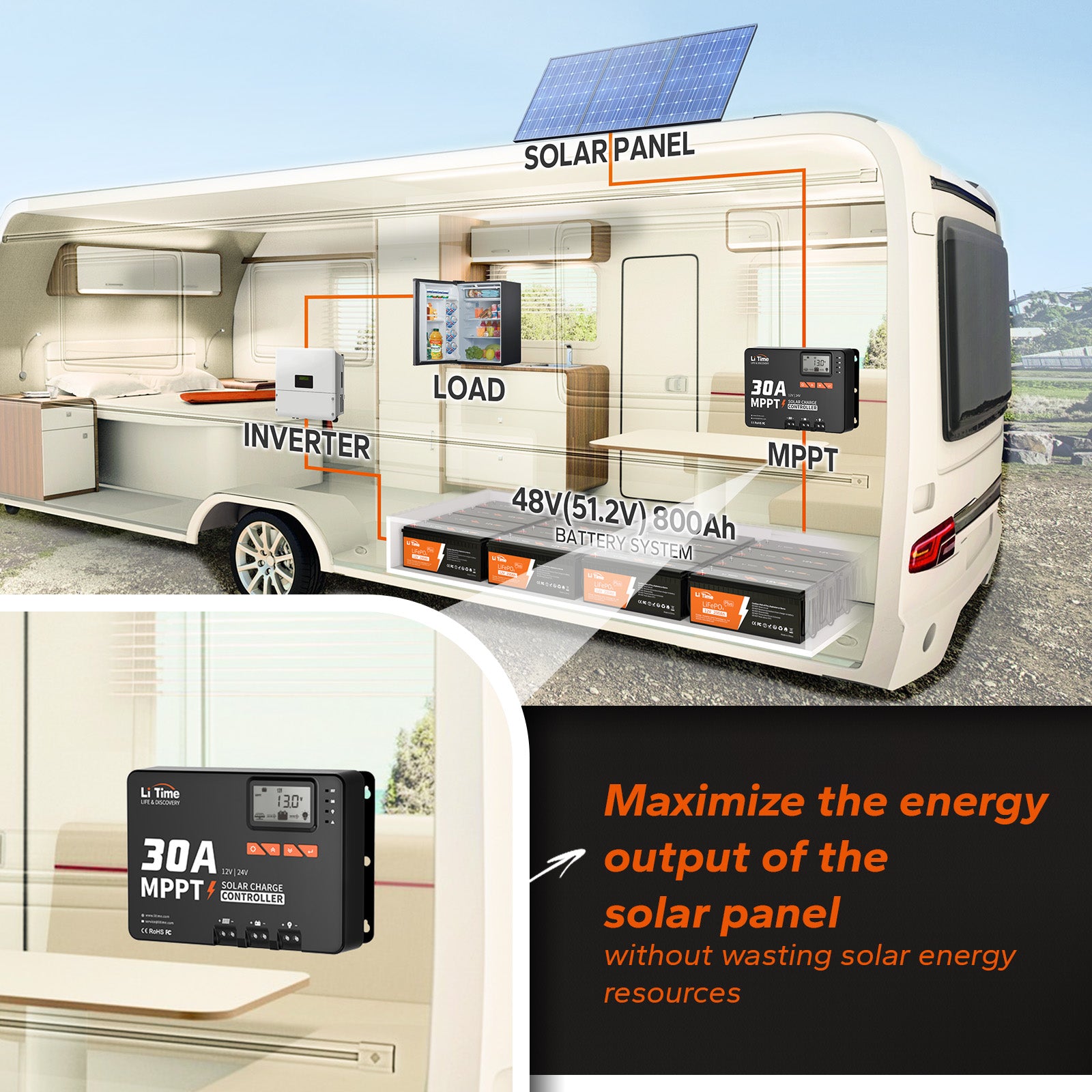
The second method involves permanently installing an MPPT (Maximum Power Point Tracking) solar charge controller for solar panels. This type of charger will provide better performance, maximizing the power output from your solar panels.
Related reading: Solar Charge Controller Sizing And How To Choose
Do RV Batteries Charge While Driving?
While RV batteries can charge while you drive, the charging process can be relatively slow. Typically, the vehicle's alternator is responsible for charging the batteries while the engine is running. However, the charging rate is limited by the output of the alternator, which is primarily designed to power the vehicle's electrical systems and charge the starting battery.
The charging rate while driving is influenced by several factors, including the alternator's capacity, the state of charge of the batteries, and the electrical load on the vehicle. As a result, the alternator usually provides a trickle charge to the RV house batteries, leading to a slower charging process.
For faster and more consistent charging, especially when the batteries are deeply discharged or when additional power needs arise, using a dedicated battery charger or installing solar panels with a solar charge controller can provide a more efficient charging solution for RV house batteries.
Conclusion
How long an RV battery will last while boondocking ultimately depends on your daily energy consumption, battery capacity, battery chemistry, and available charging sources. LiFePO4 batteries generally provide more usable capacity than lead-acid batteries of the same Ah rating, making them especially suitable for longer boondocking trips. With the right battery capacity, charging setup, and power-management habits, you can build a more reliable RV electrical system and enjoy longer, more comfortable off-grid adventures.

