


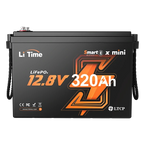


Choosing a high-efficiency, reliable battery for your trolling motor is critical to enhancing your boat’s performance. This guide covers tool preparation, wiring steps, troubleshooting, and clear diagrams to help you complete the installation quickly and extend battery life.
Table of Contents
- What Do You Need Before Wiring? (Checklist)
- Step By Step Guide on How to Wire the Trolling Motor Batteries
- Troubleshooting Common Motor Issues
What Do You Need Before Wiring? (Checklist)
1. Essential Tools & Accessories
- LiTime Battery: e.g., 12V 100Ah TM Battery (weighs only 23.4 lbs, compatible with 12V/24V/36V systems).
- LiTime Charger: 12V-specific charger.
- Insulated Wrench.
2. Optional Tools & Accessories
- Corrosion-Resistant Tinned Cables: 3-4 AWG copper core wires.
- Reinforced Ring Terminals: M8 copper lugs (ensure tight crimping).
- Basic Toolkit: Circuit breaker, crimping tool, digital multimeter (±0.01V accuracy).
- Safety Gear: Anti-slip gloves, safety goggles.
3. Battery Pre-Check
- Initial Charge: Fully charge before first use (resting voltage ≥13.33V with LiTime charger).
- Inspect Terminals: Clean, oxidation-free terminals; check cables for damage.
Step By Step Guide on How to Wire the Trolling Motor Batteries
The next section will introduce how to wire 12V, 24, 36V lithium trolling motor batteries on the boat.
1. 12V Trolling Motor Wiring Diagram
Steps:
- Connect LiTime 12V battery positive terminal (red) to the motor’s red wire.
- Connect battery negative terminal (black) to the motor’s black wire.

2. 24V Trolling Motor Wiring Diagram
First, configurate 2 * 12V TM batteries in series.
Key Notes:
- Must use identical batteries (same capacity, voltage, type, and BMS).
- Total voltage after series connection ≥26.66V (each battery ≥13.33V when fully charged).
Steps:
- Connect Battery 1’s negative → Battery 2’s positive.
- Connect Battery 1’s positive → motor’s red wire.
- Connect Battery 2’s negative → motor’s black wire.

Or, choose one 24V trolling motor battery for less wiring.
3. 36V Trolling Motor Wiring Diagram
Configuration: 3 LiTime 12V TM batteries in series.
Steps:
1. Series connection: Battery 1[-] → Battery 2[+], Battery 2[-] → Battery 3[+].
2. Connect Battery 1[+] → motor’s red wire; Battery 3[-] → motor’s black wire.
3. Post-charge check: Total voltage ≥39.99V (each battery ≥13.33V).

Troubleshooting Common Motor Issues
When operating your motor, you might encounter a few common problems. Here's how to troubleshoot effectively:
- Motor Starts and Suddenly Cuts Off: This issue is often caused by a drained battery or the activation of the battery management system (BMS) protection. To resolve this, recharge the battery to restore functionality.
- Motor Cuts Off While Running: If your motor stops unexpectedly during operation, check for a drained battery, loose wiring connections, or overheating cables. Tighten all wiring connections and ensure that the wire gauge is appropriate (ideally ≤AWG 4) to prevent overheating.
- Motor Overheats or Stops During Operation: This can occur if the propeller is tangled with weeds or debris. Regularly inspect and clear the propeller to ensure smooth operation.
By addressing these common issues promptly, you can maintain the performance and longevity of your motor system. For further assistance, don't hesitate to consult with a professional.


