

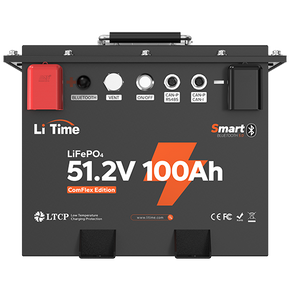

Upgrading to a RV lithium battery gives you more usable power, less weight, faster charging, and a much longer service life than a lead-acid battery. It is especially worthwhile for boondocking, running high-demand appliances, storing solar energy, or traveling in cold weather.
This guide explains whether an RV lithium battery upgrade is right for you and how to choose and install the ideal setup for your power needs.
What Is a RV Lithium Battery?
A lithium deep cycle battery for RV is a lithium-ion deep cycle energy storage unit engineered exclusively for onboard RV house power and stationary camping energy storage. It serves a completely different purpose than vehicle starter batteries or small lithium packs for electronics.
Its primary function is to deliver steady, sustained power over long stretches to run RV refrigerators, rooftop air conditioners, and all kinds of small appliances all day long, acting as a next-generation replacement for outdated lead-acid storage batteries.
RV Lithium Battery Categories
By internal cell chemistry, compliant lithium RV batteries on the market fall into two main categories, both categorized as lithium deep cycle battery for RV, yet with stark gaps in safety and service lifespan:
Ternary lithium RV batteries
High energy density but poor thermal stability. They carry high risks of thermal runaway and fire inside the bumpy, enclosed RV cabin, paired with a short cycle life, so they are rarely adopted by reputable RV energy storage brands.
Lithium iron phosphate (LiFePO4) RV batteries
Optimized for outdoor vehicle use, featuring outstanding thermal stability, superior performance in high heat, and an extended cycle lifespan. They stand as the dominant choice within the North American RV modification market, and LiTime uses this exact cell chemistry across its full lineup of lithium batteries for RV products.

Specialized Vehicle-Grade Design Standards for RV LiFePO4 Battery
Standard stationary lithium storage batteries are built for indoor static environments and cannot be directly installed on RVs. Any qualified lithium deep cycle battery for RV must meet two non-negotiable vehicle-grade requirements.
Vibration-resistant reinforced structure
RVs endure constant jolting during travel. These batteries come with internal shock-absorbing fixtures and thickened sealed outer casings to prevent loose internal wiring or solder joints from vibration damage.
Wide operating temperature range
Designed to withstand sweltering summer cabin heat and frigid winter outdoor temperatures in northern regions, operating steadily between -20°C/-4℉ and 60°C/140℉. The built-in BMS automatically manages low-temperature charging and discharge protection.
Every LiTime Lithium Battery for RV fully complies with these vehicle-grade design standards, utilizing automotive-grade LiFePO4 cells paired with proprietary multi-protection smart BMS. It delivers comprehensive safeguards against overcharging, over-discharging, short circuits, overheating, and overloads, and holds international safety certifications including FCC, CE, and UN38.3. It operates reliably through bumpy road trips and in hot enclosed RV cabins, making it a top pick among RV enthusiasts worldwide and widely recognized as one of the best lithium battery for RV owners.
RV Lead-Acid vs. Lithium Battery: Key Changes After Upgrading
Four Major Experience Improvements of RV Lithium Battery Upgrade
1. Dramatically expanded usable power
For identical 12V ratings, lead-acid batteries only deliver 50% of their total capacity safely, while a LiTime LiFePO4 battery can discharge to 100%. A single 200Ah lithium RV battery matches the power output of a 400Ah lead-acid battery bank.
2. Multiplied service life
Standard AGM lead-acid batteries only handle 200–500 full cycles and require replacement every 2–3 years. LiTime’s Lithium Battery for RV supports over 4,000 complete cycles, delivering a functional 10-year service life and slashing long-term replacement expenses.
3. Significant weight reduction
A lithium deep cycle battery for RV weighs just one-third of an equivalent lead-acid unit. The LiTime 12V 100Ah lithium RV battery weighs merely 22.71 lbs, light enough for one person to carry, reducing strain on the RV chassis and cutting fuel consumption while driving.
4. Safer low-temperature charging
For campers traveling through northern North America in fall and winter, lead-acid batteries suffer drastically reduced charging efficiency below 0°C; repeated cold charging causes irreversible capacity loss and drastically shortens battery life. LiTime offers dedicated low-temperature and self-heating lithium RV battery models that protect cells during cold-weather charging.
Quick RV Battery Comparison Table

For an in-depth breakdown of the two battery types, read: AGM vs. Lithium Batteries: Which is Better for RV and Marine
When Should You Upgrade to a Lithium RV Battery? When Shouldn't?
Owners Who Benefit Most From RV Lithium Battery Upgrade
● You regularly boondock off-grid, relying entirely on onboard energy storage with no campground grid power access
● You run high-wattage appliances such as rooftop air conditioners, induction cooktops, and electric kettles
● You live in cold northern U.S. regions and take frequent RV trips through fall and winter
● You’re tired of replacing lead-acid batteries every 2–3 years and want to cut long-term maintenance costs
● You already have solar panels mounted on your RV roof and need a battery that efficiently stores excess solar power
LiTime sells standalone lithium RV battery units and complete DIY solar-lithium kits tailored to fit all of these user profiles.

Owners Who Can Delay a Lithium Battery for RV Upgrade
● You only camp at full-hookup sites during holidays and never rely on off-grid power
● Your onboard power needs are limited solely to interior lighting and phone charging, with no high-draw appliances
● You use your RV fewer than five times per year, with far more time spent in storage than in use
If you’re unsure whether the retrofit delivers positive ROI, check out: Is the RV Lithium Battery Worth it?
How to Pick the Right RV LiFePO4 Battery for Your Rig?( 3 Key Criteria)
1. Premium Integrated BMS
The BMS acts as the battery’s control center, preventing hazards including overcharging, over-discharging, short circuits, overloads, and overheating. Always select units with fully featured BMS protection. LiTime’s proprietary high-current smart BMS reliably powers heavy-duty RV appliances.
2. Capacity Matched to Your Power Consumption
Weekend short camping trips (lighting, fridge, device charging): 12V 100Ah LiTime entry model, the most cost-effective choice
● Mid-to-long term travel (small kitchen appliances, short AC use): 12V 200Ah–400Ah lithium RV battery
● Full-time year-round off-grid living, multi-person families: Multiple LiTime lithium deep cycle battery for RV units wired in parallel/series to expand storage capacity
3. Practical Add-On Features
Bluetooth power monitoring, low-temperature protection, self-heating tech, ultra-slim profiles to fit under beds or in tight storage compartments, communication connectivity, and more—select based on your individual needs.
To accurately calculate your required battery capacity, reference: RV Battery Size Chart Guide
Full Cost Breakdown of RV Lithium Battery Upgrade
Total upgrade costs fall into two primary categories: the lithium deep cycle battery for RV itself and charging hardware. Purchasing a bundled LiTime battery + AC-DC charger package delivers a 10%–15% discount compared to sourcing all components separately:
1. LiFePO₄ battery core cost (~70% of total budget)
- 12V 100Ah: $250–$600
- 12V 200Ah: $400–$1,000
- 12V 300Ah: $600–$1,500
2. Dedicated AC-DC lithium battery charger (key supporting hardware)
- Entry-level 20A models: $60–$180
- High-power fast-charge 30A/40A variants: $100–$350
3. Basic Battery Accessories
Basic accessories for the battery, such as cables, fuses, terminal lugs, also occupy part of upgrade cost($100–$300). LiTime’s RV battery kits include a full set of RV-specific accessories at no extra cost.
4. Professional installation labor
The labor cost varies from $500 to $1,500. LiTime hosts step-by-step wiring tutorials paired with one-on-one customer support; handy DIY owners can complete installation independently to eliminate labor fees entirely.

Critical Conversion Rules for RV Lithium Batteries Upgrades
1. Battery Wiring
Never wire lead-acid and lithium RV batteries in parallel. Their distinct charge/discharge characteristics will leave lead-acid cells perpetually undercharged and trigger constant BMS protection on the lithium pack, rendering both battery banks non-functional.
2. Charger Replacement
Replace factory lead-acid-specific chargers with lithium-compatible chargers. Lead-acid chargers include a float charging stage that LiFePO4 battery for RV does not require. Long-term float charging degrades lithium cell performance and shortens overall cycle life.
3. Fuse Wiring
Match high-current wiring and fuses to the correct gauge rating, complying with local RV electrical safety standards.
4. Installation Confirmation
After finishing installation, test full charge and discharge cycles to confirm stable system operation before hitting the road.
For complete step-by-step upgrade instructions, visit: How to Convert RV to Lithium Battery
Optimal Lithium RV Battery Configurations for Different RV Owners
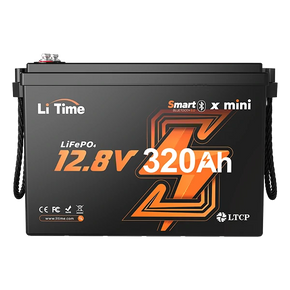
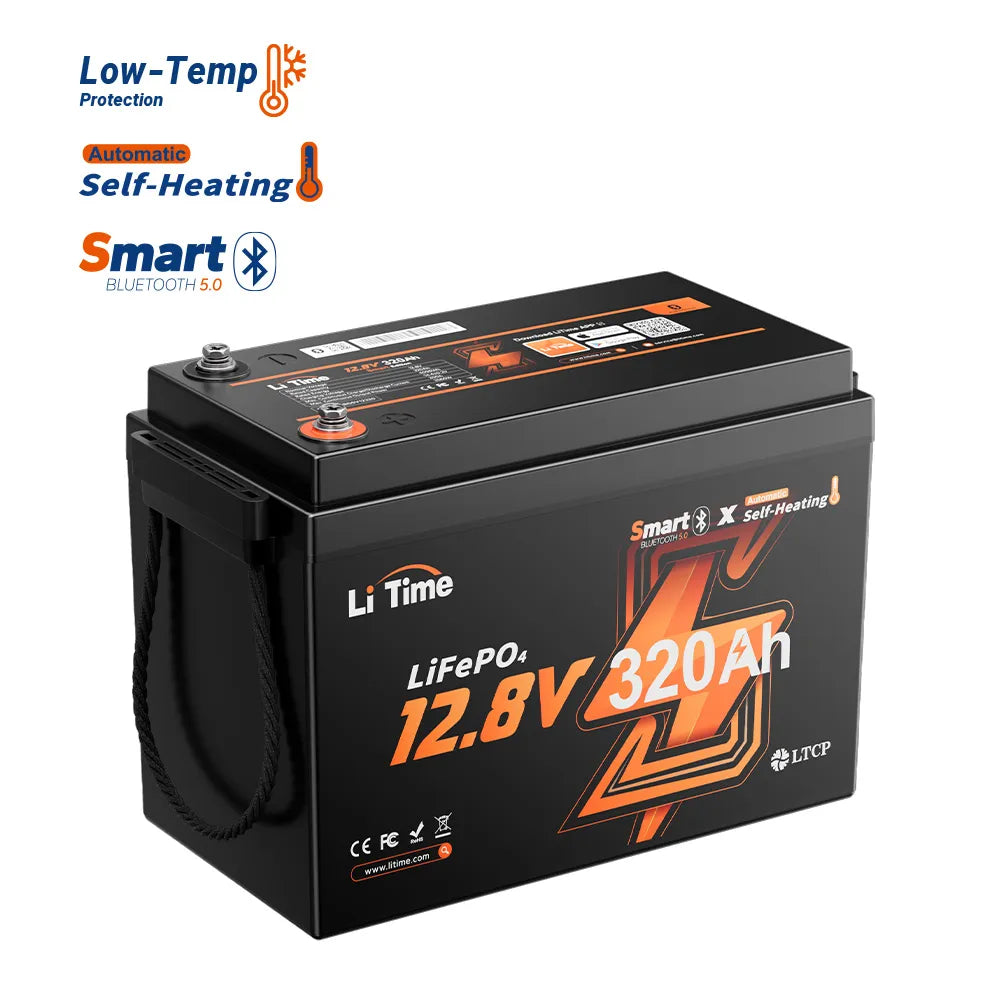
Single Battery Upgrade Pick: LiTime 12V 200Ah Xtra Mini RV Smart
This battery packs massive 4096Wh energy into a compact footprint, simpler to install than multi-battery banks.
Best for: Travel trailers, Class C RVs, truck campers, weekend campers, and owners replacing multi-battery setups with a single powerful solution.
LiTime Product Specs:
- 12.8V, 320Ah, 4,096Wh, 2560W max continuous output
- 200A BMS, 1000A peak discharge (1s)
- Bluetooth 5.0 real-time monitoring via LiTime App
- Weight: 57.3 lbs | Dimensions: 14.49 x 7.44 x 10.04 in
- 4,000–15,000 cycles, 10-year lifespan
- Built-in smart self-heating + low-temperature protection (heats below 41°F/5°C)
Tight Space Solution: LiTime 12V 100Ah Ultra Slim Lithium Battery
Ultra-thin form factor solves fitment issues with standard battery boxes that cannot accommodate thicker lithium packs.
● Best for: Camper vans, truck campers, SUV conversions, under-seat storage, side compartment mounting, and owners traveling in cold climates
LiTime Product Specs:
- 12.8V, 100Ah, 1,280Wh
- Bluetooth 5.0
- Integrated self-heating + low-temperature protection
- IP65 dust/water resistance
- Weight: 33.51 lbs
- Dimensions: 19.69 x 11.02 x 2.44 in

Recommended Charging Hardware: LiTime 12V 40A DC-DC Charger with MPPT
The DC-DC charger safeguards your vehicle’s alternator while delivering multiple reliable charging methods for your lithium deep cycle battery for RV.
Best for: RV owners who want to charge their house battery bank via vehicle alternator and solar panels simultaneously
LiTime Product Specs:
- 40A maximum charging current
- Supports up to 600W solar panel input
- Compatible with 12V lithium, AGM, gel, and SLA batteries
- Peak charging efficiency up to 93%
The DC-DC charger safeguards your vehicle’s alternator while delivering multiple reliable charging methods for your lithium deep cycle battery for RV.

For more top-rated storage units, read our curated list: The 6 Best Lithium Batteries for RV
Final Summary
Upgrading to an RV LiFePO4 battery is a transformative modification that elevates your camping experience and cuts long-term vehicle operating costs. When shopping, stick to three core criteria: reputable brand hardware with robust integrated BMS, capacity sized to your actual power draw, and optional premium features aligned with your travel habits.
LiTime offers entry-level standalone lithium RV batteries and all-in-one DIY solar-lithium kits with in-stock inventory shipped fast from U.S. warehouses and a 5-year official warranty balancing safety, value, and long cycle life.
Select a configuration matching your camping frequency and power demands—phased upgrades are entirely viable to achieve full off-grid RV power freedom without overwhelming your budget.
Read More:
The 6 Best Lithium Batteries for RV
How to Hook Up Solar Panels to RV Batteries
RV Battery Not Charging When Plugged In?
Frequently Asked Core Questions
LiTime lithium RV batteries feature fully sealed casings, multi-layer BMS protection, and rigidly secured internal cells that pass international transportation vibration testing, standing up to rough road conditions. LiFePO4 chemistry boasts exceptional thermal stability, vastly safer than ternary lithium cells, making it suitable for long-term use in the harsh variable environment of an RV.
This is not a mandatory pairing. Simply swapping in a LiTime RV LiFePO4 battery immediately resolves core pain points of lead-acid power systems: limited runtime, excessive weight, and short service life. Solar panels count as a secondary advanced upgrade for campers seeking full off-grid independence, and most RV owners opt for phased retrofits to spread out upfront costs.
Matching LiTime lithium deep cycle battery for RV units support parallel expansion of up to four batteries and series wiring up to 51.2V. Equipped with intelligent independent BMS boards and installed strictly per official manual guidelines, parallel banks avoid uneven cell degradation, and all units will age at a synchronized rate.

