



Ansel Adams’s Yosemite Sanctuary
Ansel Adams spent a lifetime capturing landscapes in light. The great landscape photographer Ansel Adams spent a lifetime translating America into light—tetons, deserts, seacoast—yet his camera kept circling back to one sanctuary. Yosemite was the place where his science met his awe, where f-stops and heartbeats found the same rhythm.
Light and Natural Cycles
Yosemite’s valley reveals cycles of nature. Between granite domes and a valley carved clean by ice, light pours off the ridgelines like liquid gold, falling into the Merced's lift of mist and pollen, evaporating, condensing, returning—closing the loop of a measurable energy and water cycle. Rock stores a dialogue between pressure and time; trees archive the climate's pulse in their rings; at dusk, alpenglow turns the cliffs into a fleeting experiment in spectrum and scatter. Here, beauty and data don't compete. Every gust rides a pressure gradient; every waterfall's thunder is gravity translating potential into motion and sound. Yosemite braids romance and science into a single breath.

Iconic Peaks and Seasonal Views
El Capitan and Half Dome define Yosemite’s grandeur. Step into the valley and El Capitan rises, a near-vertical kilometer of stone that feels like a geology text cracked open—chapters on uplift, jointing, and the long patience of erosion. Half Dome's curve, polished by ice, catches the sun in minute-by-minute shifts that redraw the edge of shadow. In late spring, snowmelt fattens Yosemite Falls and Bridalveil into bright white lines, their spray hanging rainbows among the pines. At first light, fog skims the river; incense-cedar and sugar pine breathe resin; a mule deer flashes through understory. After dark, star trails ladder the granite, the Milky Way sliding downslope like a ruler marked in light-years.
Adams’s Zone System and Legacy
Adams merged technical skill with artistry. Ansel Adams turned this place into a conversation between optics and heartbeat. His Zone System—ten deliberate steps from black to white—gave him a way to predict the sheen of snow, the grain of rock, the layered weight of cloud. Patience in the darkroom became images both sharp and restrained, and those photographs became testimony for public lands—proof that beauty can be a civic argument. In Adams's hands, moments hardened into memory, and aesthetics became a lever for preservation.
Experiencing Yosemite in an RV
An RV allows intimate, flexible exploration. If you want to see these scales with your own eyes, an RV is a smart way to keep close to nature while staying nimble. Think of it as a mobile blind: arrive before dawn at a viewpoint, retreat to shade before a thunderhead pops, listen at night to river and wind from your small, familiar room. Twisting roads and quiet campgrounds slow the trip from rushing to noticing, from passing through to living there.

Planning Routes Through the Park
Careful route planning enhances the experience. Getting in and getting around deserves a plan with layers. From California's Central Valley in late spring to early summer, follow CA-41 north through pine forest, settle into a Valley campground, and link meadows and falls by bike or on foot. When Tioga Road opens, push up to Tuolumne Meadows and cover, in a single day, a transect from temperate forest to subalpine grassland. In summer from the Bay Area, take I-580 to CA-120 past Groveland and enter at Big Oak Flat—linger a couple nights in the Valley for water and stone, then spend two under dark high-country skies. In fall, if Glacier Point Road is open, catch sunset from the Tunnel View rim and watch the granite turn rose-gold. Whatever your approach, check seasonal openings and length limits—grace on the road begins with knowing the rules.
RV and Landscape Harmony
Respect for nature and rig ensures smooth travel. Inside the park, your rig and the landscape need to meet each other halfway. Most Valley sites are non-electric, and dense shade is tough on solar. Nights swing cool; mornings stir with wildlife. Pack and clean with care. Mind length restrictions for parking and turnarounds. Black bears are exquisitely tuned to smell—store all food and scented items correctly, manage trash and gray water by the book, use soft light after dark to keep the stars bright. Arrive early at trailheads to avoid threading a big chassis through pinch points at peak hours. Stow the awning when winds pick up, watch for soggy ground after rain, and carry paper maps and offline navigation when service drops out.

Battery and Energy Management
Batteries are crucial for RV planning. Batteries are where planning meets reality. Top off house and starter batteries before you roll into the Valley. Front-load your heavy electrical tasks for midday when the sun is high: cooling, water heating, charging gear. After sunset, trade air-conditioning for ventilation and insulation; let propane handle heat so your batteries don't face cold and high load together. Shade will dent solar output; wipe pollen and dust from your panels. With lithium systems, mind low-temp charging protection and insulate the battery compartment. In a string of stormy days, trim inverter idle losses and favor DC ports. Respect quiet hours: run a generator only in permitted windows and sparingly—silence is part of the night sky.
Sizing Systems for Comfort
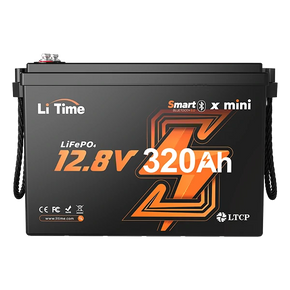
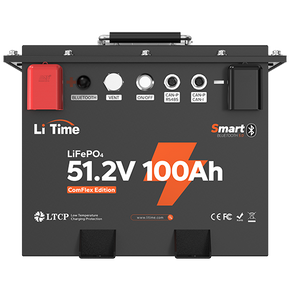
Proper system sizing ensures comfort and freedom. Spec'ing a system depends on season, appliances, and how long you'll boondock. For two nights at a non-hookup site in summer—daytime ventilation, evenings of lights and small devices—aim for at least 1.5–2 kWh of usable capacity, with a more comfortable 3–4 kWh to ride out clouds. Practically, that means roughly 12V lithium at 200–300 Ah for basics; if you plan short stints of rooftop A/C or electric water heating, consider 400–600 Ah or more, paired with a 2000–3000 W pure-sine inverter and a DC-DC charger in the 40 A class or higher.
Solar Setup and Energy Independence
Solar setup enhances energy independence. On the solar side, 300–400 W fixed is a floor under trees; a steadier solution is 600–800 W total plus a portable folding panel to chase the sun. For shoulder seasons, choose lithium with low-temp heating in the BMS and add light insulation around the battery bay to widen your charge window. Put the numbers in service of the poetry, and your small moving cabin will breathe quietly under the stars—waiting for the next morning's gold to slide down the granite again.


