


Experiment at Sea
Experiment is the only truth. Max Planck said experiment is the sole criterion of scientific truth. Offshore, the rule holds: hypothesize, then verify.
Let data guide you. Let contingencies blunt the random. Wind has a temperament, current has moods, and battery reserve is a number—not a feeling. Test-drift, check range, watch amps and tracks until guesses turn into grip. At the end of grip lies margin—the space we save for the unknown.
Negotiating with Waves
Early morning sets the scene. It’s 5 a.m., and the marina is still yawning. Jack dips a hand over the gunwale. "She's got an attitude today," he says of the swell. I tease him.
Let the motor lead. He taps the bow-mounted trolling motor. "Let this guy do the arguing." Outside the breakwater, a gust grabs the helm. The motor holds the bow like an old friend on your shoulder. Jack keeps it simple: a thousand pounds of boat wants at least fifty-five pounds of thrust; the steadier the voltage, the longer your calm lasts. "This isn't a sprint," he says. "It's a negotiation in waves."

Anchors Set, Hull Sighs
Anchoring is craft and choice. We tuck into the lee of a reef where the chop turns to lace. Jack works the anchor locker like a spice rack. "Danforth in the river. Bruce on the reef." As the breeze builds, he runs the scope from five to seven, then to ten. The flukes settle into sand and mud. There’s a soft structural “mm” from below, like a house taking its footings, and the hull relaxes with it.
Drift and adjust. Near the mark, we let the skiff drift from upwind and up-current fifty yards out. Wind, chop, and tide write a hidden map down the rail—what looks straight bends in practice. Thirty seconds later, the GPS draws a gentle diagonal. "See? Fish love the corner," Jack grins, like he’s whispered the day’s password. Spot-Lock keeps the motor correcting patiently. Big wind? Nose into it. Hard tide? Hold the flow. When the rig drops, the boat exhales—the line runs plumb, and the rod loads with a calm weight, like a late letter that still knows what to say.
Safety Always On
Callable and findable. Before noon, Jack slips a handheld VHF into my life vest. The fixed set has DSC and a clean MMSI—push a button and someone knows who and where we are.
Preparedness is peace of mind. In my pocket, a waterproof card lists boat name, headcount, last position. The AIS winks. The EPIRB sits quiet. Safety is making “callable and findable” a reality you never have to prove.
The 36-Volt Heart
Power keeps composure. On the ride home, rough spray drums the hull. Jack points at the battery screen. "We kept a thirty percent cushion."
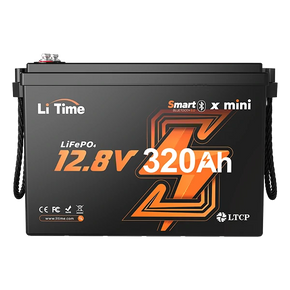
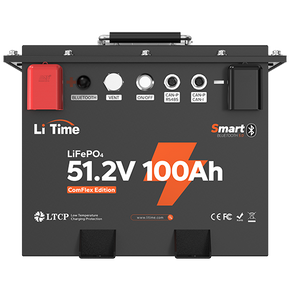
Technology and intuition meet. Today he’s running a LiTime 36V 100Ah LiFePO4 marine drive pack —about 3.84 kWh, 100A continuous, IP65, ABYC E-13 compliant. Bluetooth 5.0 monitors volts, amps, temps, and cycles. Below freezing, it refuses to charge to protect itself. In wind and chop, he budgets two to three tenths an hour; every bar on the app has a story, and that 36-volt heart beats steady. On long days, he brings a second pack or portable charger, sipping a little back at lunch. At sunset, we hit Return-to-Home, and the track stitches across the plotter like a seam well sewn. Beyond the tech, what we really learn out here is how to save our composure for the final mile.


