

When choosing a communication method for monitoring batteries or other electronic systems, RS485 and Bluetooth are two popular options. Each has its strengths and ideal use cases, so understanding the differences between RS485 vs Bluetooth monitor systems is essential for making the right decision.
In this guide, we’ll break down what RS485 and Bluetooth monitors are, compare their performance, reliability, and application scenarios, and help you decide which solution is best for your needs.
Table of Contents
What is an RS485 Monitor?
An RS485 monitor uses the RS485 serial communication standard to collect and transmit data. It's commonly used in industrial, off-grid, and marine applications due to its robust performance in harsh environments.
Key Features of RS485 Monitor:
- Wired Communication: RS485 uses a twisted-pair cable for data transmission.
- Long-Distance Communication: Up to 4000 feet (1,200 meters).
- Multi-Device Support: Can communicate with up to 32 devices on the same bus.
- High Reliability: Immune to electromagnetic interference (EMI), making it ideal for industrial environments.
- No Internet Required: Communication is hardwired and doesn’t depend on Wi-Fi or mobile signals.
What is a Bluetooth Monitor?
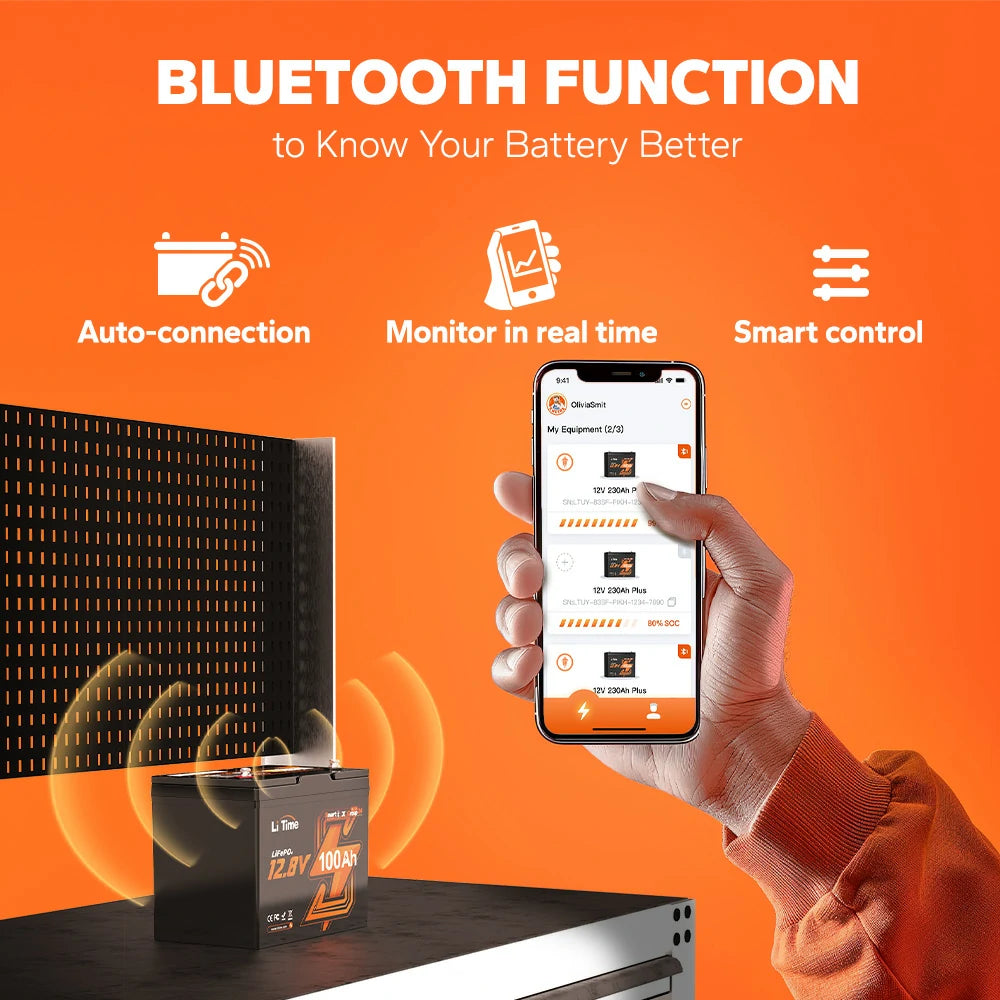
A Bluetooth monitor is a wireless device that transmits data (such as battery voltage, state of charge, and temperature) to a smartphone via an App or tablet using Bluetooth technology.
Key Features:
- Wireless Communication: No cables needed; connects via Bluetooth.
- Short Range: Typically up to 30–50 feet (10–15 meters).
- User-Friendly: Easily connects to mobile apps for real-time data viewing.
- Low Power Consumption: Suitable for portable and mobile setups.
- Ideal for Consumer Use: Common in RVs, boats, golf carts, and solar systems for convenience.
RS485 vs Bluetooth Monitor: Head-to-Head Comparison
|
Feature |
RS485 Monitor |
Bluetooth Monitor |
|
Communication Type |
Wired (twisted pair) |
Wireless (Bluetooth) |
|
Range |
Up to 4000 ft (1,200 m) |
Up to 50 ft (15 m) |
|
Connection Stability |
Extremely stable, immune to EMI |
Can be affected by signal interference |
|
Power Consumption |
Typically higher due to active transmission |
Low power, ideal for battery-powered devices |
|
Setup Complexity |
Requires wiring and sometimes programming |
Simple, plug-and-play via mobile apps |
|
Multi-Device Support |
Yes (multi-drop bus with up to 32 devices) |
Limited—usually 1-to-1 connection |
|
Use Case |
Industrial, marine, off-grid solar |
RVs, boats, golf carts, DIY solar setups |
|
Data Security |
High (physical connection) |
Moderate (depends on encryption in app) |
When to Use an RS485 Monitor
Choose RS485 if:
- You need long-distance data transmission.
- The environment is noisy or industrial.
- You’re setting up a permanent or large-scale system.
- Remote monitoring through a central controller or BMS is required.
- Your application involves solar systems, lithium battery packs, marine vessels, or industrial equipment.
When to Use a Bluetooth Monitor
Choose Bluetooth if:
- You want a quick, wireless setup.
- You need local monitoring on a smartphone or tablet.
- You're using it in consumer-grade applications like RVs, e-bikes, golf carts, or portable solar systems.
- You prioritize convenience and mobility over range and network integration.
Final Verdict: RS485 or Bluetooth?
|
Your Priority |
Recommended Option |
|
Long-distance monitoring |
✅ RS485 |
|
Simple mobile monitoring |
✅ Bluetooth |
|
Industrial-grade systems |
✅ RS485 |
|
DIY or casual use |
✅ Bluetooth |
|
Hybrid functionality |
✅ Both (if available) |
Featured Product with RS485 Communication
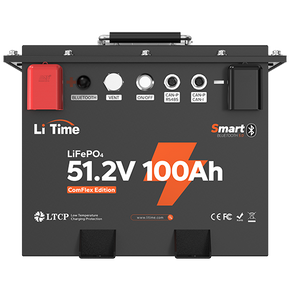
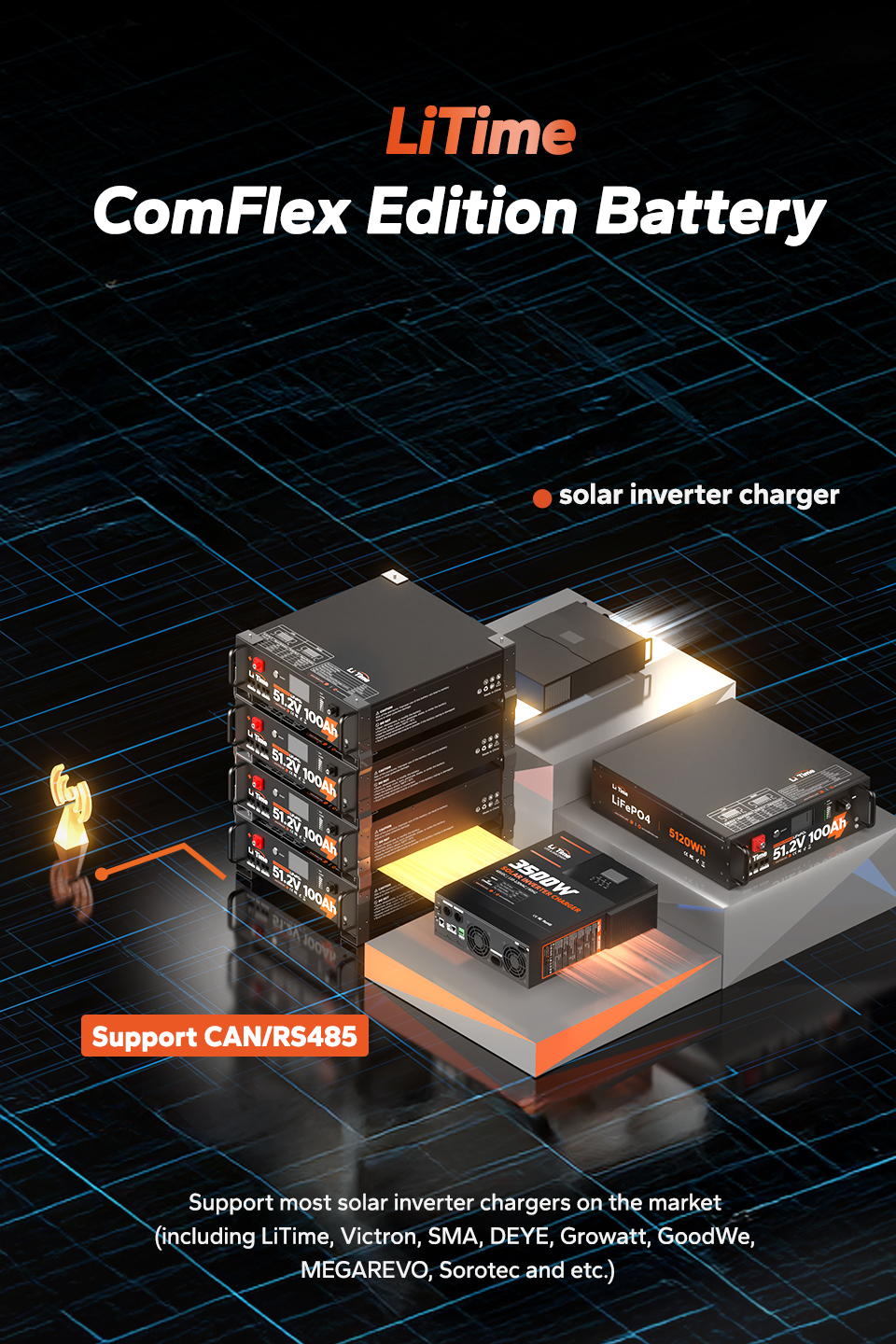
If you're looking for a high-performance battery system with reliable RS485 monitoring, the LiTime 48V 100Ah Lithium Home Storage Battery is a top-tier solution built for serious off-grid, solar, and backup power users.
Key Features:
- Integrated RS485 & CAN Communication: Supports real-time data exchange with inverters, BMS, and energy monitoring systems for seamless system integration.
- Expandable Capacity: Connect up to 81.92kWh (Max 16 in Parallel) for large-scale home energy storage needs.
- Grade-A LiFePO4 Cells: Offers 10+ years of lifespan with 6,000+ deep cycles at 80% DOD.
- Smart BMS: Built-in Battery Management System with high/low voltage, temperature, and current protections.
- Rack Mountable Design: 19-inch server rack size fits perfectly in home energy cabinets or solar storage rooms.
- Wide Compatibility: Works with popular inverters like Growatt, Schneider, Victron, and more via RS485/CAN protocols.
Why It’s Perfect for RS485 Monitoring
With its RS485 interface, this battery enables:
- Stable long-distance data transmission
- Multi-unit communication (daisy-chaining batteries together)
- System-wide integration for automated control and diagnostics
Unlike Bluetooth monitors that rely on nearby mobile devices, RS485 allows this battery to be fully managed through a centralized energy management system, making it ideal for homes with solar + storage setups or small businesses needing consistent power.
Conclusion
Both RS485 and Bluetooth monitors have their place in modern energy systems. RS485 excels in reliability, distance, and professional applications, while Bluetooth shines in ease-of-use and wireless convenience.
If your system demands long-term stability, multiple device connections, or integration with other controllers, go with RS485. If you prefer quick setup and mobile access, Bluetooth is the way to go.
LiTime provides LiFePO4 lithium batteries with RS485 communications and also bluetooth function, shop now to upgrade.
