

Building Resilient Land Systems with a Reliable Portable Power Station
Most of my work happens out in the field. So before getting into the power setup, it probably helps to share what my day-to-day actually looks like.
Q: What kind of work do you do in the field?
A: My name is Ryan Steva, and I’m the founder of The Homestead Consultant in Carthage, Tennessee. My work centers on helping homesteaders, small farmers, and landowners design regenerative, resilient land systems—ranging from small backyards to full-scale farms. Most of that work happens on-site, not behind a desk.

Why I Needed a Quiet and Clean Portable Power Station for Field Work
Once you’re on location, power becomes a practical problem you have to solve—especially when there’s no reliable grid access. For me, it wasn’t just about having power, but having the right kind of power.
Q: What made power such a challenge during site visits?
A: A lot of my projects take place in locations without reliable grid power. Early on, I considered a gas generator, but the drawbacks were obvious: it was noisy, not environmentally friendly, and inconvenient to carry during frequent site visits. What I really needed was something quiet, clean, and dependable.

Choosing LiTime: A Mobile Power Solution Designed for Off-Grid Consulting
Once I was clear on what I needed, the next step was comparing options that could realistically travel with me and still keep up with long workdays.
Q: How did you come across LiTime?
A: I first discovered LiTime while researching mobile battery and power-storage systems that could support off-grid consulting. I needed something portable enough for site visits, powerful enough for workshops and tools, and flexible enough to serve as backup power at home.
Q: What stood out during that search?
A: LiTime’s LiFePO₄ battery systems, clear specifications, and strong price-to-performance ratio consistently stood out. It felt like a solution built for real-world use, not just lab conditions.

My Mobile Setup: 12V 100Ah Battery + 12V 1000W Inverter + 60A 12V-48V Charge Controller
I wasn’t trying to build the biggest system possible. I wanted something practical—reliable power that fits the way I actually work on the road.
Q: What setup are you using as a portable power station?
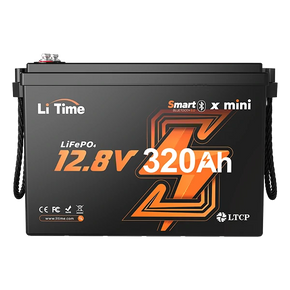
A: I built a LiTime mobile setup using a 12V 100Ah Battery, a 12V 1000W Inverter, and a 60A 12V–48V Charge Controller.
Q: Why this specific combination?
A: My work often takes place in unpredictable environments—fields, forests, and developing homestead sites. This setup gives me reliable runtime, strong safety protection, and quiet operation, so I can move away from generators without sacrificing performance.
Real-World Use: How My Portable Power Station Performs in the Field
Specs are one thing, but daily use is what really matters. I put the system to work right away on real site visits and workshops.
Q: What does the system power during real workdays?
A: Over the past few months, it has powered my site-visit electronics, work lights during evening assessments, small tools, and backup power needs at both client locations and my home.
Q: How has it performed overall?
A: In practice, it’s delivered stable, consistent output across tasks. It’s helped me streamline site visits and work without the usual limitations of traditional power sources.


Reliable Power That Lets Me Focus on Clients, Not the Equipment
For field work, the best power solution is the one you don’t have to think about. When the power is steady, I can stay focused on the land and the people I’m there to help.
Q: What matters most to you after using it in the field?
A: The balance of performance and peace of mind. Runtime has met my needs, and the built-in BMS safety monitoring gives me confidence across different environments. With dependable power in place, I can focus fully on my clients and their land.
From Installation to Support: My Experience with LiTime
A system only becomes daily-use if the setup is smooth and the support is reliable. That mattered to me just as much as performance.
Q: How was the experience beyond the product itself?
A: Installation was straightforward, performance matched expectations, and customer support follow-up was timely and helpful. The setup has become a reliable, everyday part of my consulting toolkit.

A Portable Power Station I Confidently Recommend
After months of real workdays, my opinion is based on how it performs when it matters—not first impressions. Here’s who I think this setup is for.
Q: Who would you recommend this setup to?
A: I’d recommend LiTime to small farmers, homesteaders, regenerative agriculture practitioners, and anyone who needs reliable mobile or backup power. If your work depends on steady, portable energy, this portable power station setup fits naturally into real-world off-grid use.
FAQ
How long can a 12V 100Ah battery run a 1000W inverter?
It depends on the actual load, inverter efficiency, and how deeply the battery is discharged. As a simple rule, a full 1000W load will drain a 12V 100Ah battery quickly, while lighter loads can run much longer. I plan my usage around the real equipment I’m powering in the field, not the maximum inverter rating.
What can a 1000W portable power station setup run?
A 1000W inverter is great for many everyday field needs like charging electronics, running work lights, and powering small tools, as long as total watts stay within the inverter’s continuous rating. For high-surge appliances or larger tools, I check starting watts and avoid pushing the system beyond what it’s designed to handle.
Do I need a charge controller if I’m using solar?
Yes. A charge controller helps manage solar input safely and efficiently so the battery charges properly. In my setup, the 60A 12V–48V charge controller is a key part of making solar charging practical and reliable for real off-grid days.
What does “12V–48V” mean on a charge controller?
It typically refers to the range of battery system voltages the controller can support. I always match the controller settings to the battery system voltage and follow the wiring and configuration guidance to avoid misconfiguration.
Can this kind of setup replace a gas generator?
For many of my site-visit needs, yes. The biggest difference is the experience: quiet, clean, and low-hassle power. For very high-demand loads or long runtimes at high watts, a generator can still have a place, but for my workdays this mobile solar setup covers what I need most often.
Is it safe to run tools and electronics from a battery + inverter setup?
It can be, as long as the inverter is properly sized, connections are secure, and the battery has appropriate protection. I also avoid exceeding inverter limits and keep an eye on load levels to prevent overheating or nuisance shutdowns.
How do I choose the right portable power station components?
I start with what I actually need to power, then work backward: total watts, expected runtime, and charging plan. From there, I size the battery capacity, pick an inverter that fits the load, and choose a charge controller that matches the battery voltage and solar input plan.
