


As camping, RV travel and off-grid living become more popular, more people are looking for a portable power station with solar panel. But before you buy, you’ll quickly discover there are three very different paths:
- Buy a finished portable power station kit
- Choose a semi-DIY kit (like LITime DIY Solar Generator)
- Build a full DIY solar power system from scratch
In this guide, we’ll use OPZ Mega 2, several mainstream portable power brands, and LITime kits as examples. We’ll also reference resources from the U.S. Department of Energy (DOE), the National Renewable Energy Laboratory (NREL) and universities to give you a practical, evidence-based comparison.

Table of Contents
- Overview: Three Types of Solar Power Setups
- Finished Portable Power Stations (with OPZ Mega 2 as Example)
- Semi-DIY Solutions: LITime Battery + Inverter + Charger Kits
- Full DIY Solar Power Systems
- Side-by-Side Comparison Table
- FAQ: 5 Common Questions
- Conclusion: Which Path Would You Choose?
1. Overview: Three Types of Solar Power Setups
Before we dive into products, it helps to clarify the three basic categories:

Finished portable power station with solar panel
- Examples: OPZ Mega 2, EcoFlow Delta series, Jackery Explorer series, BLUETTI AC/EP series.
- All-in-one design that integrates battery, inverter, BMS, MPPT, display and ports, usually paired with foldable or rigid solar panels.
- Plug-and-play, with safety and compatibility handled by the manufacturer.
Semi-DIY kits (LITime-style solutions)
- LiTime DIY Solar Generator: Pre-matched LiFePO4 battery + MPPT charge controller + pure sine wave inverter + breakers and cables.
- You do a one-time installation following the wiring diagram.
- After that, day-to-day use feels very similar to a finished power station, but with lower cost and better upgradability.
Full DIY systems
- You choose everything: batteries, inverters, charge controllers, PV modules, fuses, breakers, wiring, monitoring, enclosures and so on.
- Lowest long-term cost and highest flexibility, but requires electrical knowledge and must follow local codes and standards for PV and energy storage systems.
2. Finished Portable Power Stations (with OPZ Mega 2 as Example)
2.1 What finished power stations do well
Major brands like EcoFlow, Jackery, BLUETTI and OPZ Mega 2 all share several strengths:
- Highly integrated: battery pack, BMS, inverter, MPPT, AC/DC/USB outputs, display and app connectivity are all inside a single box.
- True plug-and-play: just connect solar panels or AC charging and plug in your appliances—no need to understand PV design theory.
- Safety & reliability: reputable manufacturers design to meet PV and electrical codes, test modules, inverters and systems for long-term performance, and address safety issues like insulation, over-current protection and thermal management.
- Portability: one box plus a few panels is easy to move for camping, overlanding, field work or emergency backup.
2.2 Why OPZ Mega 2 is considered one of the best value options
Based on your notes, OPZ Mega 2 is often compared to EcoFlow Delta 2 Max, Jackery 2000, DJI Power 2000 and similar “mid-range” stations. Its highlights include:
- Solid 2500 W pure sine wave inverter
- Many similarly sized units only offer 1800–2400 W; 2500 W makes it easier to run kitchen appliances like kettles, rice cookers and small microwaves.
- Long-life LiFePO4 battery
- The manufacturer claims about 4,000 cycles before noticeable degradation.
- Academic and industrial research confirms that LiFePO4 (LFP) cells have excellent chemical and thermal stability and long cycle life, making them a strong candidate for large-scale storage and EVs.
- Very strong solar input
- Up to ~2100 W PV input per main unit—quite high for a mid-size portable station.
- Compared with many competitors in the 500–1200 W range, Mega 2 can “use and recharge at the same time” much more effectively on sunny days.
- Battery and solar expansion
- Each main unit supports up to four matching expansion batteries, giving you roughly 10 kWh of usable capacity.
- Uniquely, each expansion battery also has its own solar input, so the whole stack can take advantage of separate PV strings.
- Powerful DC output
- 12 V 30 A DC output per unit; two units together can supply 12 V 60 A, very handy for RV pumps, fridges and other DC loads.
2.3 Structural drawbacks of finished stations
Even with those advantages, finished products share three structural weaknesses:
- They are always more expensive than DIY
- Integrated housings, tooling, certifications, app development, support and warranty all add cost.
- If you look at cost per kWh of storage, LiFePO4 systems assembled DIY are typically cheaper.
- Limited upgradability
- Inverter power, MPPT rating and port selection are fixed.
- OPZ Mega 2’s modular batteries help, but you still can’t simply swap to a 3000–5000 W inverter the way you can in a DIY system.
- Hard to repair
- Because everything is integrated, users generally cannot repair internals.
- Failures usually require shipping the whole unit back; once out of warranty, repairs may be uneconomical.
- University safety guides also stress that lithium batteries and packs require proper handling and disposal if damaged—another reason why sealed, integrated packs are not user-serviceable.
So it’s fair to say: OPZ Mega 2 is a strong value inside the finished-product camp, but the camp itself is structurally more expensive and less repairable than DIY.
3. Semi-DIY Solutions: LITime DIY Solar Generator Kits

3.1 What “semi-DIY” really means
Semi-DIY sits between “appliance-style finished product” and “full DIY”:
The manufacturer pre-selects and matches:
- LiFePO4 battery (12/24/48 V options)
- MPPT solar charge controller
- Pure sine wave inverter
- Breakers, bus bars and cable kits
Your job:
- Follow the wiring diagram to connect battery, inverter, MPPT, PV modules and loads
- Mount everything in an RV bay, cabinet or on a wall
Once installed, everyday use is very close to a finished power station:
- PV connects to the controller, which charges the battery
- AC outlets are on the inverter, DC loads connect to the DC bus
- You don’t move the “box” around—you move the vehicle or rely on a fixed installation.
3.2 LITime example bundles
DIY Solar Start Series — Plug-and-play solar for beginners
Perfect for first-time RVers who want a clean, reliable way to start charging from the sun—without complicated wiring.
Includes
-
12V 100Ah Xtra-Mini Smart Battery
-
30A 12V/24V MPPT Smart Controller
-
Battery Box
Best for: weekend trips, basic 12V loads, simple solar charging
Start simple and upgrade anytime.
DIY Solar Lite Series — Portable off-grid power for weekend adventures
A step up in convenience: add AC power for small appliances while keeping the system compact and travel-friendly.
Includes
-
12V 100Ah Xtra-Mini Smart Battery
-
30A 12V/24V MPPT Smart Controller
-
1000W 12V Inverter
-
1.5ft 4AWG Battery Cables
-
150A Circuit Breaker
Best for: laptops, fans, small kitchen gadgets, short off-grid stays
Grab-and-go power that feels effortless.
DIY Solar Pro Series — Reliable energy for RV trips and long journeys
Built for frequent travelers who want stable off-grid performance—ideal when you need AC power daily and want a more complete setup.
Includes
-
12V 100Ah Xtra-Mini Smart Battery
-
30A 12V/24V MPPT Smart Controller
-
1000W 12V Inverter
-
1.5ft 4AWG Battery Cables
-
150A Circuit Breaker
Best for: longer trips, consistent AC usage, dependable daily power
Upgrade to a “daily-driver” solar kit
DIY Solar Max Series — High-capacity solar backup for serious power needs
When you want fewer compromises: bigger battery, stronger MPPT, and a powerful inverter charger for fast charging + true off-grid capability.
Includes
-
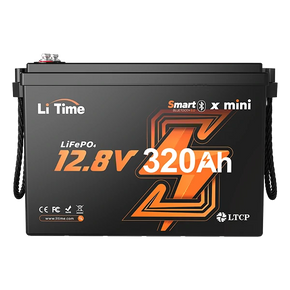
12V 320Ah Mini Smart Battery
-
60A 12V–48V MPPT Smart Controller
-
3000W 12V Inverter Charger
-
250A Circuit Breaker
Best for: heavy loads, longer autonomy, faster recharging, emergency backup Go big—stay powered longer.
DIY Solar Home Series-24V — Compact off-grid solution for higher-efficiency setups
Designed for users who want more efficient energy flow and scalability—great for home backup or larger off-grid systems.
Includes
-
12V 320Ah Mini Smart Battery
-
60A 12V–48V MPPT Smart Controller
-
3000W 12V Inverter Charger
-
250A Circuit Breaker
Best for: efficient system building, home backup, scalable off-grid power
Build a smarter system with room to grow.
Not sure which kit fits you?
Choose Start for simple solar charging, Lite/Pro for AC appliances on the road, and Max/Home-24V for maximum runtime and serious backup capability.
3.3 Pros and cons vs finished stations
Advantages:
- Lower cost
- For similar Wh capacity and AC power, LITime-type kits are often 20–50% cheaper than finished stations (exact numbers depend on region and configuration).
- Better upgradability
- Add more batteries, swap to a higher-power inverter, expand PV arrays—as long as you respect controller and wiring limits.
- Component-level repair
- If the inverter fails, replace the inverter only; if a battery fails, replace that unit. No need to scrap the whole system.
- Meets “I want to buy and use today, but I accept one day of installation” users
- For people who want 1–3 kW AC, frequent camping or RV use, and are willing to do a one-time install, semi-DIY is often the sweet spot.
Drawbacks:
- Requires tools, a bit of electrical literacy and time.
- Safety depends on your installation quality: correct wire size, protective devices, ventilation and mounting. DOE and NREL emphasize that PV and storage systems must conform to local electrical and fire codes—this responsibility shifts more toward the user in semi-DIY and DIY setups.
4. Full DIY Solar Power Systems
Full DIY means you’re not just the owner—you’re the system designer and installer.
4.1 Maximum freedom
- Choose battery chemistry, brand and capacity (e.g., multiple LiFePO4 banks in parallel).
- Decide on 12/24/48 V architecture.
- Select off-grid or hybrid inverters from 3 kW to 8 kW or more.
- Size and configure PV arrays (string length, parallel strings, tilt, wiring).
- Design protection: fuses, breakers, disconnects, surge protection and grounding.
DOE and NREL have published numerous design guides that help homeowners and professionals size and configure PV systems safely and effectively.
4.2 Higher requirements and risk
- You must understand DC and AC fundamentals, PV system architecture and protective devices.
- You must comply with local codes and standards (such as NEC in the U.S.), especially if you plan to connect to the grid.
- Lithium battery safety and thermal management are critical. Research from MIT, NREL and multiple universities highlights that misuse, damage or overheating can lead to fire or thermal runaway if packs are not properly designed and protected.
In short, full DIY offers the lowest long-term cost and highest performance potential, but it’s not the right path for everyone.
5. Side-by-Side Comparison Table
| Feature | Finished stations (OPZ Mega 2 / EcoFlow / Jackery / BLUETTI) | Semi-DIY (LITime LiFePO4 kits) | Full DIY |
|---|---|---|---|
| Price | Highest | Medium (often 20–50% less than finished) | Lowest |
| Portability | Best | Medium (mainly fixed in RV/cabin) | Poor (fixed systems) |
| Installation | None | Low (one-time wiring and mounting) | High (full design & install) |
| Upgradability | Limited | Good (swap batteries/inverter/PV) | Excellent |
| Repairability | Poor (whole-unit service) | Medium (component replacement) | Best (fully modular) |
| Safety handling | Manufacturer-engineered | Depends on user following instructions | Depends entirely on design & workmanship |
| Typical use | Camping, overlanding, emergency | RV travel, mobile office, cabins | Whole-house off-grid, large backup |
| Ideal user | Wants zero tinkering | OK with one day of installation | Enjoys engineering & electrical work |
6. FAQ: 5 Common Questions
Q1: Are LiFePO4 batteries really safer than other lithium chemistries?
Yes—LiFePO4 (LFP) cells are widely recognized for their superior chemical and thermal stability compared with many cobalt- and nickel-based chemistries, and they typically offer longer cycle life. That said, all lithium batteries can pose fire and injury risks if overcharged, shorted, physically damaged or exposed to high temperatures, which is why university safety offices publish detailed handling guidelines.
Q2: If I only camp a few times a year, is OPZ Mega 2 overkill?
If you camp infrequently and your loads are small, a lower-capacity power station or a modest LITime kit (like 12 V 100 Ah + 1000 W inverter) may offer better value. OPZ Mega 2 shines for people who camp or travel regularly, run heavier loads, or also want backup power at home.
Q3: What safety rules should I follow for semi-DIY and DIY systems?
At minimum, follow your local electrical code and PV installation standards. DOE and NREL emphasize appropriate conductor sizing, over-current protection, grounding, disconnects and certified equipment for safe PV and storage integration. If you’re unsure, consult a licensed electrician or solar installer.
Q4: Can I mix third-party solar panels with a finished power station or LITime kit?
Yes, as long as the array’s voltage, current and power fall within the MPPT or station’s input specifications. PV design guides from DOE/NREL stress that string configuration must meet controller and inverter limits to avoid over-voltage or over-current conditions. Always verify specs or ask the manufacturer before mixing hardware.
Q5: How do I quickly decide which category fits me?
Ask yourself three questions:
- Will I spend zero, one day or many days learning and installing?
- Is my system mostly mobile (camping/RV) or fixed (cabin/home)?
- Do I value convenience more, or long-term flexibility and cost savings?
If you want maximum convenience and portability → choose a finished station like OPZ Mega 2.
If you accept a one-time install and want better value and expansion → go semi-DIY with a LITime kit.
If you love engineering, plan a large off-grid system and want rock-bottom cost per kWh → go full DIY.
7. Conclusion: Which Path Would You Choose?
To wrap up:
- Finished portable power stations are the easiest and safest to deploy, but also the most expensive and least upgradeable.
- Semi-DIY kits like LITime hit a sweet spot: one day of effort, long-term convenience, good pricing and decent flexibility.
- Full DIY systems let you build exactly what you want, at the lowest cost per kWh, but they demand knowledge, time and responsibility for safety and compliance.
Now the fun part:
- If you had to choose today, which route would you take—finished, semi-DIY or full DIY?
- What’s your main use case (camping, RV, cabin, whole-house backup)?
- Have you tried any of these paths already—what went wrong, what worked great?
Share your experience, questions or horror stories in the comments or on social media—your lessons may save someone else a lot of money and frustration.

