


An electric boat conversion replaces or adds propulsion using an electric motor, compatible battery, controls, charging equipment, and electrical protection. For most small boats, the simplest approach is to install an electric outboard on an unpowered boat or replace an existing gas outboard.
This guide explains the suitable boat types, conversion routes, motor and battery sizing, kit components, costs, and basic installation steps.
- 1. What Is an Electric Boat Conversion?
- 2. Is Your Boat Suitable for an Electric Conversion?
- 3. How to Plan a Small Boat Electric Conversion?
- 4. How to Choose an Electric Outboard Motor and Battery?
- 5. What Does an Electric Boat Conversion Kit Include?
- 6. How Much Does a Small Electric Boat Conversion Cost?
- 7. How to Install an Electric Outboard Conversion Kit?
- 8. Electric Boat Conversion FAQs
What Is an Electric Boat Conversion?
An electric boat conversion replaces or adds propulsion using an electric motor, battery, controls, electrical protection, and charging equipment. The appropriate conversion route depends primarily on the boat’s existing propulsion and structure.

Unpowered Boat to Electric Outboard Boat
An unpowered boat relies on paddles, oars, pedals, or sails. Conversion typically means adding an electric outboard motor to an approved transom or motor mount, then installing a compatible battery.
Gas Outboard to Electric Outboard
A gas to electric boat conversion replaces the complete gas outboard and fuel system. It does not normally involve rebuilding the gasoline engine itself as an electric motor. Explore our comparison between gas and electric outboards.
Gas or Diesel Inboard to Electric Inboard
An inboard conversion replaces an engine inside the hull. It may retain the propeller shaft but requires assessment of the coupling, shaft alignment, motor speed, battery placement, cooling, and charging system.
Electric Inboard vs. Electric Outboard Conversion
| Electric outboard | Electric inboard |
|---|---|
| Common on small boats | Common on sailboats and larger displacement boats |
| Mounted on the transom | Installed inside the hull |
| Usually requires fewer structural changes | May involve mounts, shaft, coupling, and drivetrain work |
| More accessible for suitable DIY projects | Professional support is generally recommended |
| Often Use Smaller Battery System | Usually Install Larger and integrated System |
For most small boats, an electric outboard motor conversion is the simpler route because it avoids modifying an internal drivetrain.
Is Your Boat Suitable for an Electric Conversion?
Many small boats can accept electric propulsion, but suitability depends on structure, weight, use, and water conditions. A boat being “small” does not automatically mean that any electric motor will work.
Small Boats Commonly Suitable for Electric Outboards
Small, lightweight boats are generally the best candidates for an electric outboard conversion. The appropriate motor still depends on loaded weight, hull resistance, wind, current, speed, and runtime.
| Boat type | Suggested conversion | Best suited for | Key checks |
|---|---|---|---|
| Inflatable boat | Lightweight electric outboard | Leisure, short trips | Motor mount, load limit |
| Dinghy | Low-power electric outboard | Tender use, harbor cruising | Loaded weight, shaft length |
| Jon boat | Low- to mid-power outboard | Fishing, calm inland water | Total load, current, weeds |
| Small fishing boat | Mid-power electric outboard | Trolling, recreational fishing | Primary vs. auxiliary power |
| Small aluminum boat | Low- to mid-power outboard | Fishing, lake cruising | Transom rating, payload |
| Paddle boat | Compact auxiliary outboard | Occasional powered assistance | Manufacturer approval, mount |
| Small sailboat | Auxiliary electric outboard | Docking, low-speed backup | Mounting position, wind |
| Small pontoon boat | Higher-thrust electric outboard | Low-speed cruising | Windage, drag, loaded weight |
Electric conversion may not be practical if the boat lacks a safe motor mount or battery space, exceeds its load limit, or requires sustained high-speed or offshore operation. Consult a qualified marine installer if suitability is uncertain.
What Should You Check Before Converting?
Before selecting an electric boat conversion kit, record the following:
- Boat type, length, and hull design
- Maximum permitted motor and load ratings
- Fully loaded weight, including passengers and equipment
- Transom or motor-mount condition
- Required cruising speed
- Expected runtime and range
- Typical wind, current, and wave conditions
- Space for securing the battery
- Available charging method
These are planning inputs, not guarantees of performance. Actual speed and runtime vary with the complete boat-and-motor setup.
How to Plan a Small Boat Electric Conversion?
Planning a small boat electric conversion means identifying what must change before choosing or installing any equipment. Start with the boat’s current propulsion, mounting structure, fully loaded weight, normal operating conditions, and the performance you actually need.
How to Electrify an Unpowered Boat?
For a boat that currently relies on paddles, oars, pedals, or sails, first confirm that the manufacturer permits motor installation. A rigid transom may accept a clamp-on electric outboard directly, while another boat may require an approved motor mount. If neither is available, do not improvise a mounting point without professional guidance.
Next, calculate the expected loaded weight:
Loaded weight = boat + motor + battery + passengers + gear
Decide whether the motor will provide primary propulsion or occasional assistance. A lightweight inflatable or dinghy used on calm water may need only moderate power, while a loaded fishing boat operating in current requires more thrust and reserve capacity.
Also identify a secure battery location. The battery should remain fixed during movement without upsetting the boat’s balance or exceeding its capacity limit.
How to Replace a Gas Outboard With an Electric Outboard?
Before removing the gas motor, record its horsepower, weight, shaft length, mounting position, and normal cruising performance. Note the boat’s usual passenger load, trip distance, throttle use, and water conditions rather than focusing only on the old motor’s maximum rating.
A gas to electric boat conversion usually replaces the complete gas outboard and removes or safely decommissions the fuel tank and fuel lines. Inspect the existing transom for damage and confirm that the new motor’s mounting arrangement and shaft position are suitable.
One mechanical horsepower equals approximately 746W, so a 700W motor converts to about 0.94HP by the standard power formula. However, this calculation measures power units—not how two outboards will perform on the water. The Argoseeker A1 may be described as comparable to a 2HP gas outboard in suitable small-boat applications based on its thrust and propulsion performance. Our guide explains why LiTime 700W electric outboard is equivalent to 2HP.
Use the old motor as a performance reference, then select the electric system according to the speed and runtime you actually require.
How to Choose an Electric Outboard Motor and Battery?
Choose the right electric outboard according to the boat’s loaded condition and intended use, then match the battery to the motor’s voltage, current, and runtime requirements. A larger motor alone does not create longer range.
How to Choose the Electric Motor Based on the Boat and Use?
Start with the boat’s fully loaded weight, including passengers, battery, fishing equipment, and other gear. Hull design also matters: a lightweight, easily driven hull generally requires less power than a wider or higher-drag boat carrying the same load.
Then define how the motor will be used:
- Primary propulsion: The motor must provide sufficient power for normal cruising, maneuvering, and expected wind or current.
- Auxiliary propulsion: Lower power may be acceptable when the motor is mainly used for docking, calm conditions, or emergency assistance.
- Gas outboard replacement: Base the decision on actual cruising performance, not only the old motor’s maximum horsepower.
- Unpowered boat conversion: Prioritize mounting compatibility, low system weight, and the boat’s total capacity.
For lighter small boats and moderate propulsion needs, the LiTime Argoseeker A1 24V 700W electric outboard provides approximately 60 lbs of thrust. Boats carrying more weight or requiring greater thrust may be better candidates for the Argoseeker A2 48V 2000W electric outboard, which provides approximately 120 lbs of thrust.
 Match the Battery Voltage and Capacity to the Motor
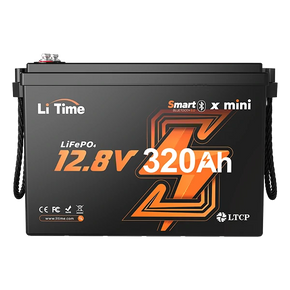
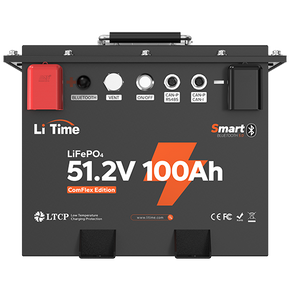
Battery voltage must match the motor’s supported system voltage. A 24V motor requires a compatible 24V/25.6V battery system. A 48V motor requires a compatible 48V/51.2V battery system.
After matching voltage, calculate the energy needed for the desired operating time:
Battery energy (Wh) = Voltage (V) × Capacity (Ah)
A 25.6V 50Ah LiFePO₄ battery, for example, stores:
25.6V×50Ah=1,280Wh
Estimate runtime with:
Runtime (hours) = Battery energy (Wh) × planning factor average power draw (W)
This is a planning estimate rather than a guaranteed result. Throttle, load, hull design, wind, current, water conditions, and temperature affect actual runtime. See the detailed electric outboard range & runtime guide for additional examples.
What Does an Electric Boat Conversion Kit Include?
An electric boat conversion kit usually includes the main propulsion and control components, but contents vary by manufacturer. Batteries, chargers, and external circuit protection are not always included.
Typical Electric Outboard Motor Kit Components
A typical electric outboard motor kit may include:
- Electric motor and propeller
- Motor controller
- Steering or throttle control
- Power connection cable
- Mounting system and hardware
- Remote or display
- Emergency-stop controls
- Installation and adjustment tools
Items that may be sold separately include the battery, charger, main fuse or circuit breaker, disconnect switch, additional cable, battery box, and custom motor mount. Always check the package list before comparing electric boat conversion kit prices.
LiTime Argoseeker Electric Outboard Motor Kits
The integrated Argoseeker system reduce the number of separate control components needed for many small-boat conversions. The A1 and A2 packages include the motor, wireless remote, battery connection cables, clamp-on mounting system, fin, installation hardware, and adjustment tools.

Batteries and chargers are selected separately according to the motor voltage and required runtime. A complete package breakdown is available in what comes with the Argoseeker electric outboard motor kit.
How Much Does a Small Electric Boat Conversion Cost?
The total electric boat conversion cost depends primarily on motor power, battery capacity, mounting work, charging equipment, and installation labor. A single universal price would be misleading because an unpowered inflatable and an inboard cruiser require very different systems.
Use this cost framework:
Total cost=motor kit+battery+charger+protection and wiring+mounting+labor
An unpowered boat may require a new motor mount and complete electrical installation. A gas outboard replacement may instead involve removing the old motor and fuel system, adapting controls, and repositioning weight. Battery capacity often has a major effect on cost because longer runtime requires more stored energy.
How to Install an Electric Outboard Conversion Kit?
A small DIY electric boat conversion may be possible when the boat has a compatible transom and the system uses straightforward low-voltage connections. Follow the motor, battery, and boat manufacturers’ instructions.
- Prepare the boat. Remove the gas outboard and fuel components, or install an approved motor mount on an unpowered boat.
- Inspect the mounting area. Check the transom or bracket for damage, movement, and adequate strength.
- Mount the electric outboard. Set the correct height and confirm propeller and steering clearance.
- Secure the battery. Position it within load limits and prevent movement in every direction.
- Install electrical protection. Use correctly sized marine cable, a suitable fuse or circuit breaker, and a disconnect where required.
- Verify polarity and connections. Keep the propeller clear before energizing the system.
- Test at the dock. Check steering, forward, reverse, remote control, and emergency-stop functions.
- Begin with a low-speed water test. Monitor balance, handling, connections, battery use, and actual runtime.
For the LiTime Argoseeker, installation is much simpler once you have confirmed that the boat has a compatible transom and battery.

Electric Boat Conversion FAQs
Can you add an electric motor to a boat with no motor?
Yes, if the boat manufacturer permits it and the boat has a suitable transom or approved motor mount. The motor, battery, passengers, and equipment must remain within the boat’s weight and motor limits.
Can you convert a gas outboard motor to electric?
You can replace a gas outboard with an electric outboard system. This normally means removing the complete gas motor and fuel system rather than modifying the combustion engine internally.
What size electric motor does a small boat need?
Motor size depends on loaded weight, hull design, required speed, propulsion role, and water conditions. Boat length or the old gas motor’s horsepower alone is not sufficient.
Does an electric boat conversion kit include a battery?
Not always. Many kits contain the motor and controls but sell the battery, charger, wiring, and protective equipment separately.
What about converting an inboard boat to an outboard?
It may be technically possible, but it can require sealing the original shaft opening, adding or reinforcing an outboard mounting structure, and reassessing balance and buoyancy. A marine engineer or qualified installer should evaluate the boat before structural changes are made.

