


- 1. What Is an Electric Outboard Motor?
- 2. How Does an Electric Outboard Motor Work?
- 3. Is an Electric Outboard Motor Right for Your Boat?
- 4. How Much Electric Outboard Power Do You Need?
- 5. What Battery Voltage and Capacity Do You Need?
- 6. Shaft Length, Mounting, and Installation
- 7. How Much Does a Complete Electric Outboard System Cost?
- 8. LiTime Argoseeker: A Small-Boat Electric Outboard Motor Option
- 9. Frequently Asked Questions
- 10. Conclusion: Choose the Complete Propulsion System
What Is an Electric Outboard Motor?
An electric outboard motor is a battery-powered propulsion unit mounted outside the boat, usually on the transom. It converts electricity into propeller thrust without an internal-combustion engine.
Modern electric outboard boat motors are commonly used on kayaks, canoes, inflatables, dinghies, fishing boats, tenders, pontoons, and sailboats. Depending on the product, an electric boat motor outboard system may include forward and reverse control, remote steering, cruise control, GPS, and battery information.

Inboard vs. Outboard Electric Motors
Both systems use electric power, but their installation and intended applications differ.
| Factor | Electric inboard motor | Electric outboard motor |
|---|---|---|
| Location | Installed inside the hull | Mounted outside the hull |
| Installation | Usually permanent and more complex | Often simpler and removable |
| Interior space | Uses space inside the boat | Preserves more interior space |
| Maintenance access | May require internal access | Propulsion unit is easier to reach |
| Typical application | Purpose-built or larger vessels | Small boats, tenders, and repowering |
An outboard electric boat motor is generally the more accessible option for owners who want to add electric propulsion without making major modifications to the hull.
Gas vs. Electric Outboard Motors
Electric boat outboard motors provide quiet operation, low vibration, and no exhaust at the point of use. They also eliminate oil changes, spark plugs, and many of the seasonal maintenance tasks associated with a gas engine.
A gas outboard still has practical advantages when the boat requires sustained high speed, rapid refueling, long offshore range, or substantial power without carrying a large battery bank.
LiTime full guide on gas vs electric outboard motor
Trolling Motor vs. Electric Outboard Motor
A trolling motor is primarily designed for low-speed fishing, positioning, and precise maneuvering. It is normally rated in pounds of thrust.
An electric outboard motor for a boat is intended to function as a more complete propulsion system. It usually provides a broader operating range, continuous forward and reverse control, steering, and more detailed system monitoring.
Read Litime Guide on Outboard Motor VS Trolling Motor: Differences and How to Choose
How Does an Electric Outboard Motor Work?
An electric outboard draws DC power from a battery and uses a motor controller to regulate the output according to the throttle input. The electric motor turns the propeller, pushing water backward to move and steer the boat.
A complete electric outboard system typically includes:
- Electric motor and controller
- Propeller, shaft, and mounting bracket
- Tiller or remote controls
- Battery and compatible charger
- Marine cables, connectors, and overcurrent protection
- Emergency-stop device
Some portable electric outboards use integrated or removable batteries, while others require an external battery system. Before buying, confirm which components are included and whether the battery, charger, cables, or controls are sold separately.
Is an Electric Outboard Motor Right for Your Boat?
An electric outboard is a good option when your normal route is predictable, charging is readily available, and quiet, efficient operation matters more than maximum speed or instant refueling.
It may be suitable if you:
- Use a kayak, canoe, inflatable, dinghy, jon boat, or small fishing boat
- Fishing in lakes, reservoirs, or slow-moving rivers
- Make short or medium-distance trips
- Prefer quiet operation around fish and wildlife
- Can recharge the battery between outings
- Want fewer routine engine-service requirements
A gas outboard may be more practical if you regularly travel offshore, operate in strong currents, carry heavy loads, or need to run at high speed for long periods.
Consider the complete trip. A motor that performs well during a calm outbound journey must still provide enough capability and stored energy for the return trip if the wind or current changes.

How Much Electric Outboard Power Do You Need?
Select power according to the boat’s hull, fully loaded weight, expected water conditions, and required performance. Boat length alone does not provide enough information.
Start With Fully Loaded Boat Weight
Fully loaded weight should include:
- Boat hull
- Passengers
- Motor
- Battery or battery bank
- Fishing and camping equipment
- Water and supplies
- Anchors and safety equipment
- Mounting hardware
- Other onboard accessories
Two boats of the same length can require very different motors. A narrow kayak moves through the water differently from a wide inflatable or flat-fronted pontoon carrying the same total weight.
Wind, waves, and current also matter. If these conditions are common, choose additional performance margin rather than sizing the system only for calm-water operation.
Understand Watts, Horsepower, Equivalent Horsepower, and Thrust
Electric outboard specifications use several measurements that should not be treated as interchangeable.
- Watts or kilowatts: Measure the motor’s electrical power. They help determine battery and energy requirements but cannot predict speed alone.
- Mechanical horsepower: Another unit of power, calculated using 1 hp≈746 W (1kW ≈ 1.34hp). This mathematical conversion does not indicate equivalent on-water performance.
- Gas-HP equivalent: A manufacturer’s comparison between an electric motor and a gasoline outboard based on propulsion performance. It is not a standard watts-to-horsepower conversion.
- Thrust in pounds: Measures static pushing force. It is useful for comparing similar motors but does not directly determine horsepower or boat speed.
- Tested boat speed: Shows performance with a specified hull, load, battery, and water condition. It is the most useful reference when the tested setup resembles your boat.
The watt and horsepower conversion formula only converts units. It does not account for propeller efficiency, gear design, torque curve, test speed, hull resistance, or how the manufacturer defines gas-outboard equivalence.
For example, 700W is approximately 0.94 mechanical horsepower. However, LiTime positions the 700W Argoseeker A1 as approximately a 2HP equivalent based on its propulsion positioning, while the 2,000W A2 is positioned as approximately a 5HP equivalent.
Manufacturers may use different relationships. A 3,000W Torqeedo Cruise model, for example, is marketed as comparable to a 6HP gas outboard. Therefore, there is no universal formula that converts electric watts into equivalent gas horsepower.
Quick Power Selection by Boat Size
The following ranges combine common market positioning with the electric-outboard categories used by retailers. They are starting points rather than fixed engineering rules.
| Boat category | Typical boats | Electric power | HP-equivalent |
|---|---|---|---|
| Small boats | Kayaks, canoes, small inflatables, paddleboards, rubber boats, inflatable boats, and lightweight dinghies | 500W–2kW | 2–5HP equivalent |
| Medium boats | Jon boats, skiffs, larger inflatables, tenders, and small sailboats | 2–6kW | 5–10HP equivalent |
| Large recreational boats | Pontoons, larger sailboats, and heavier fishing boats | 6–15kW | 10–20HP equivalent |
| Heavy-duty boats | Large pontoons, workboats, and commercial vessels | 15kW+ | 20HP equivalent and above |
2–5HP is approximately used for kayaks, canoes, dinghies, and small inflatables; 5–10HP for fishing boats and skiffs; and 10–20HP for pontoons, large sailboats, and mid-sized craft. These categories are useful for orientation but do not replace the boat manufacturer’s maximum-horsepower rating or motor-specific test data.
Explore what Size Electric Outboard Motor Do you Need for Small Boat
What Battery Voltage and Capacity Do You Need?
The battery must match the motor’s required voltage, current demand, and expected energy use. Matching voltage is essential, but it is only the first step.
Match Battery Voltage to the Motor
Use the voltage specified by the motor manufacturer. A higher-voltage battery should never be connected simply because the user wants more power.
| System voltage | Common applications | Key characteristic |
|---|---|---|
| 12V | Trolling motors and auxiliary propulsion | Simple, but draws more current at higher power |
| 24V | Kayaks, inflatables, dinghies, and small boats | Good balance of power and portability |
| 36V | Larger trolling motors and medium-power systems | Supports more power with lower current |
| 48V | Higher-power outboards and heavier small boats | Common for multi-kilowatt propulsion |
| Above 48V | Large or specialized boats | Requires compatible high-voltage equipment |
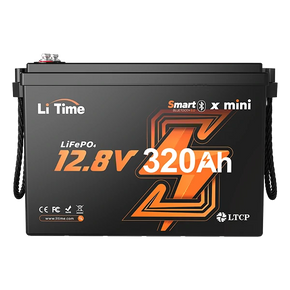
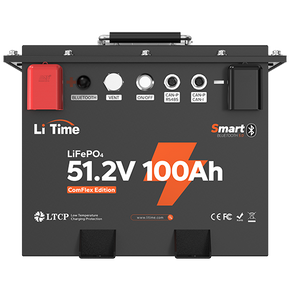
For example, the Argoseeker A1 requires a 24V system and can be paired with a matched 25.6V LiFePO₄ battery. The A2 requires a 48V system and can use a matched 51.2V LiFePO₄ battery.
Also verify:
- Continuous discharge current
- Peak-current capability
- BMS output limit
- Motor startup requirements
- Cable gauge
- Connector rating
- Fuse or circuit-breaker specification
- Charger compatibility
Two batteries with the same nominal voltage and amp-hour rating may have different discharge capabilities.
Calculate Battery Energy, Runtime, and Range
Battery energy is measured in watt-hours:
Battery energy (Wh)=Voltage (V) × Capacity (Ah)
For example:
25.6V × 100Ah=2,560Wh
Estimated runtime can be calculated as:
Runtime(hours)= Usable battery energy (Wh) / Average power draw (W)
Range can then be estimated from average boat speed:
Range=Average speed×Estimated runtime
For example, If a 700W motor operates continuously at its rated power, a 2,560Wh battery provides a theoretical runtime of approximately 3.7 hours. If the boat averages 4 mph, the estimated travel distance is about 14.8 miles under ideal conditions.
However, real runtime will be lower after accounting for system losses, operating temperature, battery condition, and reserve energy. If only 80% of the battery is allocated to planned travel, the usable energy becomes 2,048Wh and the estimated full-power runtime falls to approximately 2.9 hours. The estimated travel distance can be 11.6 miles.
Do not calculate runtime only at the motor’s rated power unless you expect to remain at full throttle. A realistic trip plan should use the expected average draw across low-speed, cruising, and high-power operation.
Build in a Return Reserve
Plan to reach your destination with energy remaining. A 20%–30% reserve is a reasonable starting recommendation for protected water, while difficult or highly variable conditions may require more.
Do not use the reserve as planned travel energy. It is intended to cover changes in wind, current, route, battery performance, or unexpected delays.
Shaft Length, Mounting, and Installation
The correct installation must hold the motor securely while placing the propeller at an effective depth. Adjustable components improve compatibility, but the boat must still be measured.
Choose the Correct Shaft Length
A shaft that is too short may allow the propeller to draw air, producing noise, ventilation, and unstable thrust. A shaft that places the lower unit too deep increases drag and the risk of hitting the bottom or submerged objects.
Measure from the motor-mounting surface to the waterline and follow the manufacturer’s installation guidance.
Argoseeker uses a shaft with an adjustable clamp position. The motor height can therefore be moved up or down for a broader range of transom and mounting arrangements, but users must still verify propeller depth, steering clearance, and bottom clearance.
Check the Transom and Mount
Before buying, confirm:
- Transom height
- Maximum motor or horsepower rating
- Allowable transom weight
- Clamp-opening range
- Mounting-surface strength
- Steering clearance
- Propeller clearance
- Tilt and shallow-water positions
- Need for reinforcement or drilling
The motor’s static weight is only one consideration. The transom must also withstand the forces produced while accelerating, reversing, turning, and operating in waves.
Plan the Electrical Installation
Secure the battery so that it cannot move during operation. Position it where the weight will not make the boat unstable or create excessive bow- or stern-heavy trim.
Use appropriately sized marine cable, overcurrent protection, moisture-resistant connections, and an accessible disconnect. Follow the motor, battery, and boat manufacturers’ instructions, especially for higher-voltage or permanently installed systems.
How Much Does a Complete Electric Outboard System Cost?
A complete electric outboard system can cost from approximately $1,500 for a basic small-boat setup to more than $30,000 for a high-output recreational or commercial installation. The battery is often one of the largest expenses.
Estimated Complete System Cost by Boat Category
| System category | Motor class | Approximate total cost |
|---|---|---|
| Entry-level small boat | 500W–1kW / 2–3HP equivalent | $500–$3,000 |
| Higher-power small boat | 1–2kW / 3–5HP equivalent | $15,00–$4,000 |
| Medium boat | 2–6kW / 5–10HP equivalent | $2,000–$5,000 |
| Large or high-power boat | 6kW+ / 10HP equivalent and above | $35,00–$1,0000+ |
These are approximate budgeting ranges. Actual costs depend on motor power, battery capacity, package contents, brand, and installation requirements.
Typical Cost Breakdown for Small Boat
| Component | Approximate cost |
|---|---|
| Electric outboard motor | $500–$3,000 |
| LiFePO₄ battery or battery bank | $500–$1,500+ |
| Charger | $150–$500 |
| Cables and electrical protection | $100–$500 |
These ranges provide general budgeting guidance for kayaks, canoes, inflatables, dinghies, and other small boats. Prices vary by brand, power, battery capacity, package contents, and current promotions.
Matched packages can make budgeting and compatibility easier because the motor, battery, and charger are selected to work together. LiTime Argoseeker provides one example of this approach for small-boat propulsion.
LiTime Argoseeker: A Small-Boat Electric Outboard Motor Option
LiTime Argoseeker electric outboard motors are purpose-built for kayaks, canoes, inflatables, dinghies, and other small boats. The range includes a lightweight 700W model, priced at $1,699.99, for lighter craft and a 2,000W model, priced at $2,699.99, for boats carrying greater loads.
| Model | Argoseeker A1 | Argoseeker A2 |
|---|---|---|
| Rated power | 700W | 2,000W |
| Voltage | 24V | 48V |
| Performance positioning | 2HP equivalent | 5HP equivalent |
| Approximate thrust | 60 lb | 120 lb |
| Motor weight | 13.45 lb | 16.53 lb |
| Typical boat type | Kayak, canoe, small inflatable | Dinghy, aluminum boat, larger inflatable |
| Distinctive feature | Lightweight portable design | Weed-cutting blade inside the propeller assembly |
| Motor Price | $1699.99 | $2,699.99 |
| Motor + Battery + Charger Price | $2,235.97 - $2,575.97 | $3,109.98 - $3,699.98 |
Both models keep the motor separate from the external battery, reducing the weight mounted on the transom. Their wireless control provides stepless speed adjustment, approximately ±40° directional control, cruise control, and an emergency-stop function.
The Argoseeker A1 model may suit lighter boats and relaxed cruising. The Argoseeker A2 offers more thrust and load-handling capability for larger small boats or fishing trips with additional people and equipment.
Frequently Asked Questions
How much horsepower is a 1,000W electric outboard?
One thousand watts equals approximately 1.34 mechanical horsepower, but this does not automatically equal a 1.34HP gas outboard in real use. Check the manufacturer’s gas-HP-equivalent rating and boat-test results separately.
Can I choose an electric outboard by watts alone?
No. Watts indicate electrical input or rated power, but they do not describe hull resistance, propeller efficiency, thrust at different speeds, or actual boat performance.
How long will an electric outboard motor run?
Divide usable battery watt-hours by the motor’s average power draw. Adjust the result for system losses, operating conditions, battery temperature, and a safe return reserve.
How fast can an electric outboard motor go?
Speed depends on power, hull shape, waterline length, load, propeller, battery condition, installation, wind, waves, and current. Use tests from a comparable boat instead of relying on horsepower or watts alone.
Can an electric outboard be used in saltwater?
Only use a model approved for saltwater operation. Follow the manufacturer’s instructions for freshwater rinsing, corrosion inspection, anode maintenance, electrical connections, and storage.
Does higher battery voltage provide more range?
Not automatically. Higher voltage can reduce current for a given power level, but range depends mainly on total usable watt-hours and average energy consumption.
Is an electric outboard cheaper than a gas outboard?
An electric system often has higher upfront costs because of the battery. It may require less routine engine maintenance, but lifetime cost depends on battery replacement, usage hours, electricity and fuel prices, and the original installation.
Conclusion: Choose the Complete Propulsion System
Choosing an electric outboard motor requires more than matching watts or horsepower to boat length.
Small electric outboard boat motors can be practical for quiet fishing, relaxed cruising, and short transportation. Medium and larger systems can serve heavier boats, but their battery, charging, and installation requirements increase quickly.
Choose the system around the real trip you need to complete. A properly matched outboard electric boat motor, battery, and installation will provide more dependable performance—and greater confidence on the water—than any single headline specification.

