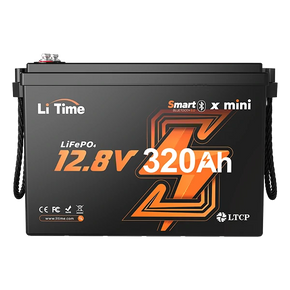


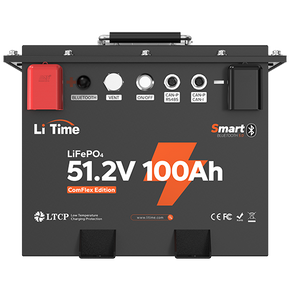

An electric outboard motor may run for less than one hour at full power or for several hours at an efficient cruising speed. The result depends on usable battery energy, actual motor power draw, boat speed, load, hull design, wind, and current. Calculate runtime by dividing usable battery watt-hours by average power draw. Then multiply runtime by average boat speed to estimate range. Always add a safety reserve before planning a round trip.
How Far Can an Electric Outboard Motor Go?
There is no single range figure that applies to every electric outboard boat motor. The same motor and battery may cover a short distance at full throttle or travel much farther at a slower, more efficient cruising speed.
| Operating condition | Boat speed | Power draw | Runtime | Typical use |
|---|---|---|---|---|
| Low speed | Low | Lowest | Longest | Fishing, docking, harbor travel |
| Efficient cruise | Moderate | High | Balanced | Normal trips and exploration |
| Full throttle | Highest | Highest | Shortest | Short bursts, heavy loads, strong current |
These are general relationships rather than promised results. For displacement boats, required propulsive power can increase approximately with the cube of speed, although the exact relationship varies with hull design and operating conditions.
According to the LiTime Argoseeker range and runtime data, the Argoseeker A1 with a 25.6V 50Ah battery has a calculated runtime of 16.67 hours at 50% throttle and 3A power draw, compared with approximately 1.85 h at full throttle and 27A power draw.
This shows why operating continuously at full throttle can substantially reduce electric outboard motor runtime and range.

Electric Outboard Range vs. Runtime
Electric outboard runtime is the length of time the motor can operate, while electric outboard motor range is the distance the boat can travel during that time. Battery capacity determines how much energy is available, but speed and power consumption determine how that energy translates into distance.
The basic relationship is:
Battery energy ÷ average power draw = runtime
Runtime × average speed = range
For example, suppose an electric outboard system provides 1,200Wh of usable battery energy, draws an average of 400W, and moves the boat at 4 mph:
Runtime: 1,200Wh ÷ 400W = 3 hours
Range: 3 hours × 4 mph = 12 miles
A long runtime also does not automatically mean a useful range. An electric outboard may run for many hours at its lowest setting but cover distance very slowly. For most trips, range should be calculated at the expected cruising speed.
How to Calculate Electric Outboard Motor Runtime?
Electric outboard motor runtime can be estimated from battery energy and average motor power draw. There is no universal runtime because battery capacity, throttle use, motor efficiency, and operating conditions vary between setups.
The most practical formula is:
Runtime (hours) = Usable battery energy (Wh) ÷ Average power draw (W)
Step 1: Convert Battery Capacity to Watt-Hours
Battery capacity is often displayed in amp-hours, but Ah cannot be compared across different voltages without additional context. Convert Ah to Wh to determine how much energy the battery stores.
Battery energy (Wh) = Battery voltage (V) × Battery capacity (Ah)
Examples using the nominal LiFePO₄ voltage of the LiTime Argoseeker electric outboard include the following:
| Battery | Calculation | Rated energy |
|---|---|---|
| 25.6V 50Ah | 25.6 × 50 | 1,280Wh |
| 25.6V 100Ah | 25.6 × 100 | 2,560Wh |
| 51.2V 30Ah | 51.2 × 30 | 1,536Wh |
| 51.2V 60Ah | 51.2 × 60 | 3,072Wh |
| 51.2V 100Ah | 51.2 × 100 | 5,120Wh |
A 48V-class 100Ah battery stores approximately twice the energy of a 24V-class 100Ah battery. However, it must only be used with an electric outboard motor designed for the corresponding voltage.
Step 2: Calculate Usable Battery Energy
Rated battery energy is the starting point, but a trip should not be planned around exhausting 100% of it. Reserve capacity is needed for the return journey, changing conditions, battery aging, and unexpected delays.
Usable energy = Rated battery energy × Planned usable percentage
For example, a 1,280Wh battery planned around 80% use provides:
1,280Wh × 0.80 = 1,024Wh of planned usable energy
The 80% figure is a planning assumption, not a universal battery discharge limit. Select a reserve based on the waterway, weather, battery condition, trip length, and available backup propulsion.
Step 3: Divide Usable Energy by Average Power Draw
Once usable energy is known, divide it by average power draw:
Runtime = Usable Wh ÷ Average W
Use the motor’s rated power only when estimating operation near full output. For normal cruising, use measured cruising power or current whenever that information is available.
A 50% throttle position does not necessarily mean 50% power consumption. Throttle position, motor input power, propeller load, and boat speed do not always change in a linear relationship.
If average current is known, runtime may also be estimated with:
Runtime (hours) = Usable battery capacity (Ah) ÷ Average current draw (A)
Runtime Calculation Example
Consider the LiTime Argoseeker A1 24V 700W electric outboard with a 25.6V 50Ah battery. According to LiTime’s Argoseeker range and runtime data, the A1 draws approximately 27A at full throttle under the stated test conditions.
The theoretical runtime using the battery’s full rated capacity is:
50Ah ÷ 27A = 1.85 hours
For trip planning, assume that only 80% of the battery capacity will be used, leaving the remaining 20% as a reserve:
- Planned usable capacity: 50Ah × 80% = 40Ah
- Average current draw at full throttle: 27A
- Planned runtime: 40Ah ÷ 27A = 1.48 hours
The 1.85-hour figure is the theoretical runtime based on the battery’s full rated capacity, while 1.48 hours is the more conservative planning estimate used in this example. Neither figure is a guaranteed real-world result, because actual current draw varies with boat type, load, speed, wind, current, and water conditions.
How to Calculate Electric Outboard Motor Range?
Electric outboard motor range is calculated by multiplying runtime by average boat speed. The speed must represent the expected trip conditions rather than a brief maximum-speed test.
Range Calculation Formula
Range = Runtime × Average boat speed
Using the previous Argoseeker A1 example, LiTime’s stated full-throttle speed under the referenced test conditions is approximately 7–10 km/h.
Using the full theoretical battery capacity:
1.85 hours × 7–10 km/h ≈ 13.0–18.5 km
Using the more conservative 80% trip-planning allowance:
1.48 hours × 7–10 km/h ≈ 10.4–14.8 km
The safe planned distance should be shorter. Wind, current, waves, steering, acceleration, and additional payload may all increase power consumption or reduce speed over the ground.
Electric Outboard Motor Range by Battery Size
The following examples show the theoretical full-throttle runtime and calculated range of the Argoseeker A1 and A2 under LiTime’s stated test conditions. They demonstrate how battery size changes the result within a compatible electric outboard system.
| Motor | Compatible battery | Full-throttle runtime | Speed under stated conditions | Calculated range |
|---|---|---|---|---|
| A1 24V 700W | 25.6V 50Ah | 1.85 hours | 7–10 km/h | 13.0–18.5 km |
| A1 24V 700W | 25.6V 100Ah | 3.70 hours | 7–10 km/h | 25.9–37.0 km |
| A2 48V 2000W | 51.2V 30Ah | 0.71 hours | 9–12 km/h | 6.4–8.6 km |
| A2 48V 2000W | 51.2V 60Ah | 1.43 hours | 9–12 km/h | 12.9–17.1 km |
| A2 48V 2000W | 51.2V 100Ah | 2.38 hours | 9–12 km/h | 21.4–28.6 km |
They demonstrate how battery size changes the result within a compatible electric outboard system. The figures are theoretical calculations based on measured operating current and speed, not guaranteed real-world range.
The examples also show why voltage or Ah alone cannot determine runtime. The Argoseeker A2 48V 2000W electric outboard uses more power than the 700W A1, so a higher-energy battery does not automatically produce a longer runtime.
7 Factors That Affect Electric Outboard Motor Range
Seven major variables explain why calculated and real-world range may differ:
- Throttle and cruising speed: Higher speed normally requires disproportionately more power, especially near a displacement hull’s practical speed limit.
- Battery energy and state of charge: A larger compatible battery generally increases runtime, but an incomplete charge reduces available energy.
- Boat and payload weight: Passengers, fishing gear, cargo, and onboard equipment increase the energy required to maintain speed.
- Hull design and condition: Hull shape, fouling, damage, and incorrect loading affect drag and propulsion efficiency.
- Wind, waves, and current: A headwind or opposing current may increase power demand while reducing speed over the ground.
- Propeller and installation: A damaged or fouled propeller and incorrect shaft depth or trim can reduce efficiency.
- Battery temperature, age, and condition: Cold conditions and battery degradation may reduce usable capacity.
These variables apply to small electric outboard boat motors as well as larger electric outboards. Range claims should only be compared when test conditions are similar.
How to Extend Electric Outboard Range?
The most effective way to extend range is usually to reduce power demand and maintain an efficient cruising speed. A bigger battery can help, but it also adds weight, cost, and charging time.
Practical steps include:
- Cruise below full throttle when conditions allow.
- Accelerate smoothly and maintain a steady speed.
- Remove unnecessary onboard weight.
- Start with a fully charged battery.
- Check wind and current for both directions of the trip.
- Keep the hull and propeller clean.
- Set the motor at the correct depth and angle.
- Monitor battery state of charge during the journey.
- Retain backup propulsion for situations where losing power could leave the boat stranded.
When choosing an electric outboard motor kit, consider the motor, battery, charger, cables, connectors, monitoring, and protection as one system. Component compatibility is as important as battery capacity.
How Much Battery Capacity Do You Need?
Required battery capacity can be estimated from round-trip distance, cruising speed, average power draw, and the planned reserve. Distance can help determine energy needs, but it cannot determine the correct motor power by itself.
Motor power must also account for boat size, hull type, total weight, target speed, wind, current, and the motor manufacturer’s application limits.
Step 1: Calculate Round-Trip Distance
Include the complete route, not just the outbound leg. If the destination is 5 miles away, the basic round trip is 10 miles before adding detours or reserve.
Step 2: Calculate Required Runtime
Required runtime = Round-trip distance ÷ Expected cruising speed
For a 10-mile trip at an average of 4 mph:
10 miles ÷ 4 mph = 2.5 hours
Step 3: Calculate Required Usable Energy
Required usable energy = Average power draw × Required runtime
If average cruising draw is 500W:
500W × 2.5 hours = 1,250Wh
Step 4: Add a Safety Reserve
If you plan to use no more than 80% of rated capacity:
Required rated energy = Required usable energy ÷ 0.80
1,250Wh ÷ 0.80 = 1,562.5Wh
This reserve is an example, not a universal safety rule. Use a larger margin for strong tides, variable weather, cold temperatures, unfamiliar water, heavy loads, or an older battery.
Step 5: Convert Wh Back to Ah
Once the required energy is known, convert it into Ah at the motor’s required voltage:
Required Ah = Required Wh ÷ Battery voltage
At 25.6V:
1,562.5Wh ÷ 25.6V = 61Ah
A compatible battery above that calculated capacity would be needed. Also verify that its BMS continuous discharge rating can support the motor’s maximum current.
FAQs About Electric Outboard Motor Range & Runtime
How far can an electric outboard motor go on one charge?
There is no universal distance. Divide usable battery energy by average power draw to find runtime, then multiply runtime by average speed; finally, reduce the theoretical result to account for reserve and real-world conditions.
How do you calculate electric outboard range?
Use Range = Usable battery energy ÷ Average power draw × Average speed. Keep units consistent and use expected cruising power rather than maximum motor power unless the motor will run at full output.
Does a larger battery increase range?
Yes, a larger compatible battery generally increases runtime and range when the motor, boat, and conditions remain the same. However, the added battery weight may slightly affect performance, and voltage and BMS output must match the electric outboard.
What is the most efficient cruising speed?
There is no universal best speed for every electric boat outboard motor. It is usually a stable speed below full throttle where additional power would produce relatively little extra boat speed; on-water testing is the best way to identify it.
How much battery should be reserved for the return trip?
A 20% reserve is a useful planning example for suitable conditions, but it is not a universal safety requirement. Wind, tides, unfamiliar routes, low temperatures, heavy loads, and battery age may justify a larger reserve.
Does boat weight affect electric outboard range?
Yes. A heavier boat generally requires more power to accelerate and maintain speed, reducing runtime and range with the same battery. Include passengers, equipment, cargo, and the battery itself when estimating total load.
Conclusion
The electric outboard motor range is determined by the complete boat-and-power system, not by one motor or battery specification. Convert battery capacity into Wh, account for usable energy, divide by average power draw to calculate runtime, and multiply by speed to estimate range.
For reverse planning, start with round-trip distance and cruising speed, calculate the required energy, add a safety reserve, and then select a compatible battery. Choose motor power separately according to the boat, payload, required speed, and operating conditions.

