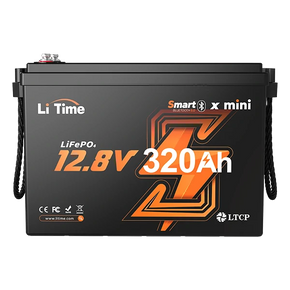


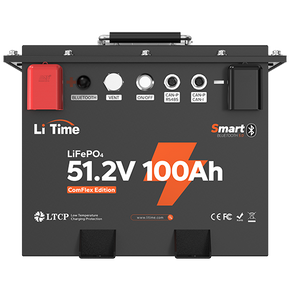
When you upgrade the battery bank in your RV or boat, the decision usually comes down to two popular options: traditional AGM lead‑acid batteries and modern lithium (LiFePO4) batteries. Each chemistry has clear strengths and trade‑offs, and the best choice depends on how often you use your RV or boat, how you charge, and how much power you need off‑grid.
In this guide, we’ll break down how AGM and lithium perform in real RV and marine scenarios so you can choose the setup that actually fits your lifestyle.
Table of Contents
What Are AGM and Lithium Batteries?
AGM Batteries Basics for RV and Boats
AGM (Absorbent Glass Mat) batteries are a sealed type of lead‑acid battery designed to be spill‑proof and maintenance‑free. Instead of liquid electrolyte sloshing around, the acid is absorbed into fiberglass mats between the lead plates, which allows the case to be sealed and reduces the risk of leaks. For RV and marine owners, this translates into a rugged battery that can be mounted in more positions and handled in moving vehicles and boats without worrying about topping up water.
AGM batteries have been the default choice for many RV house battery banks and marine deep‑cycle uses for years. They are widely available, relatively affordable, and compatible with a huge range of existing chargers, converters, alternators and onboard systems. However, they still inherit core lead‑acid limitations: they are heavy for the amount of energy they store, they don’t like being discharged too deeply, and their cycle life drops quickly if they are under‑charged or regularly pushed hard.
Lithium (LiFePO4) Deep Cycle Batteries Explained
Lithium iron phosphate (LiFePO4) batteries are purpose‑built for deep‑cycle applications like RV house banks and marine power systems. Unlike lead‑acid, they use lithium‑based chemistry that offers far higher energy density, meaning more usable energy in a smaller and lighter package. Most LiFePO4 batteries designed for RV and marine use include an integrated Battery Management System (BMS) that controls charge and discharge limits, balances cells, and protects against common abuse such as over‑charge, over‑discharge and short circuits.
For practical use, the big appeal of lithium is that you can safely use a much larger portion of the battery’s rated capacity every day. Voltage stays more stable under load, they recharge quickly, and they typically deliver thousands of cycles before noticeably losing capacity. The trade‑off is a higher upfront price and the need to confirm compatibility with your existing charging equipment, but for serious RVers and boat owners, the performance gains are substantial.

Quick Comparison: AGM vs. Lithium Batteries at a Glance
Before diving into detailed specs, here’s a quick side-by-side view of how AGM and lithium batteries perform across the metrics that matter most — from discharge depth to maintenance and charging compatibility.
| Aspect | AGM Battery | Lithium Battery (LiFePO₄) |
|---|---|---|
| Depth of Discharge (DoD) | ≈50% recommended to avoid sulfation damage | Up to 100% usable capacity without shortening lifespan |
| Cycle Life | 300–500 cycles (≈3–5 years of regular use) | 4,000–15,000 cycles (≈10–15 years depending on depth of use) |
| Size & Weight | Heavier – e.g., Group 31M AGM ≈ 67 lbs | Much lighter – LiTime Group 31M ≈ 25 lbs → saves ~150 lbs in a 4-battery RV or boat setup |
| Energy Density | ~7 Wh/lb | Up to 5–8× higher (≈60 Wh/lb) |
| Charge Efficiency & Speed | 70–80% efficiency; full charge may take 6–8 hours | 95–98% efficiency; charges up to 3× faster with a LiFePO₄-compatible charger |
| Voltage Stability | Voltage drops gradually during discharge | Provides consistent voltage output until near empty |
| Maintenance | Low, but requires periodic full charge to prevent sulfation | Virtually maintenance-free; no watering or equalization needed |
| Charging Compatibility | Works with most standard alternators & lead-acid chargers | Requires LiFePO₄ charger or DC-DC converter for optimal charging |
| Environmental Impact | Shorter lifespan → more frequent replacements and recycling | Longer lifespan → fewer replacements, higher round-trip efficiency |
| Best for Applications | Engine starting, low-cost setups | RVs, boats, solar systems, golf carts, and off-grid energy storage |
| Safety | Stable but may emit hydrogen gas if overcharged; contains acid | Built-in BMS prevents overcharge/overheat; no gas or acid leakage |
| Technology Features | Basic, no monitoring functions | Smart BMS with Bluetooth connectivity and real-time monitoring |
| Initial vs. Lifetime Cost | Lower upfront cost; shorter lifespan = higher replacement frequency | Higher upfront cost; lower total cost of ownership over time |
Example: Swapping four Group 31 AGM batteries in a large RV to LiTime 165Ah Group 31 lithium batteries cuts over 150 lbs of weight. According to the EPA, every 100 lbs reduction can improve fuel economy by 1–2% — extending range and saving fuel on long trips.

Key Differences: AGM vs Lithium for RV and Marine
One of the most important differences is how much of the rated amp‑hour capacity you can actually use without shortening the battery’s life. AGM batteries generally prefer to be kept above roughly half‑empty; regularly going much below about 50% state of charge accelerates wear and reduces their usable lifespan. In practice, that means a 100Ah AGM battery might give you only around 40–50Ah that you feel comfortable using on a daily basis.
Lithium (LiFePO4) batteries behave very differently. They are designed to be discharged deeply and can typically use 80–100% of their rated capacity without a major penalty to cycle life.
A 100Ah lithium battery can deliver close to its full 100Ah in normal use, which effectively doubles the usable capacity compared to an AGM bank of the same size. For RV boondocking or long days offshore, this difference in real usable energy is often more important than the raw amp‑hour number on the label.
Weight, Size and Energy Density
AGM batteries rely on heavy lead plates, so they have low energy‑to‑weight ratio and take up significant space. A common 12V 100Ah AGM battery can weigh well over 60 pounds, and a multi‑battery bank quickly adds up in total weight. In RVs, this eats into payload capacity and can push you closer to axle limits; in boats, extra weight affects trim, performance and fuel burn.
Lithium batteries use lighter materials and pack more energy into a smaller footprint. A 12V 100Ah LiFePO4 pack often weighs only around one‑third of an equivalent AGM battery, making it much easier to handle and install, and freeing up payload and storage space.
For compact camper vans with tight battery compartments or small fishing boats where weight directly impacts speed and efficiency, the lighter lithium bank is a major practical advantage.

Charging Speed and Efficiency
Lead‑acid batteries, including AGM, follow a charging profile with bulk, absorption and float stages. The bulk stage can be reasonably quick, but as the battery approaches full charge, the absorption stage slows down and charge currents taper off.
AGM batteries are also vulnerable to chronic under‑charging, which can cause sulfation and permanently reduce capacity over time. For users who rely on solar panels, short generator runs or limited alternator time, it can be surprisingly hard to fully top off an AGM bank consistently.
Lithium batteries accept higher charge currents over a larger part of the charge cycle, and they do not require long absorption phases near full charge. They are far more tolerant of partial state‑of‑charge and frequent short charges, which fits the reality of off‑grid RV and marine use.
When paired with suitable chargers and solar controllers, lithium banks typically recharge much faster and waste less energy as heat, making them a better match for modern off‑grid systems where every watt counts.
| Feature | AGM Battery | LiFePO₄ Battery |
|---|---|---|
| Alternator Compatibility | Works with most standard alternators | May require DC-DC converter |
| Solar Charge Controller | Most PWM/MPPT work | Must support LiFePO₄ profile |
| Charger Requirements | Standard lead-acid charger | LiFePO4 compatible or smart charger |
| Voltage Cutoffs | ~12.2V safe discharge | BMS enforces precise cutoffs |
| Temperature Sensitivity | Performs well in cold | Charging limited <32°F (0°C) unless supported |

Cycle Life and Long-Term Cost
Cycle life is where lithium usually pulls far ahead. Deep‑cycle AGM batteries, when treated well and not discharged too deeply, often deliver a few hundred useful cycles before capacity drops to a noticeable level. For a light user, that may translate to several years of service; for a full‑time RVer or liveaboard boater who cycles the bank daily, it can mean replacements every few years.
Quality LiFePO4 batteries are typically rated for thousands of cycles at deep discharge, often in the range of 3000–5000 cycles before they drop to around 80% of their original capacity. That can mean a decade or more of heavy use.
Although lithium is significantly more expensive at the point of purchase, its long cycle life and higher usable capacity per cycle usually result in a lower cost per usable kilowatt‑hour over the lifetime of the system. When you spread the investment across many years of reliable power, lithium often becomes the more economical option for serious, frequent use.
Related content: Deep Cycle Marine Battery Prices AGM vs Lead-Acid vs Lithium Cost Comparison
Safety, Maintenance and Cold-Weather Performance
AGM batteries are sealed and considered safer than flooded lead‑acid, since they don’t spill and require no water top‑ups. However, they can still off‑gas under abusive charging and are sensitive to high temperatures. AGM banks also benefit from periodic full charges to prevent sulfation, which means some attention to charging practices is still required.
Lithium iron phosphate chemistry is inherently stable compared to other lithium chemistries, and the integrated BMS in most RV and marine packs closely controls operating limits. From a user’s perspective, lithium systems are effectively maintenance‑free once installed correctly.
Cold weather adds nuance: AGM can charge at lower temperatures but suffers a steep loss of apparent capacity as it gets colder. Lithium batteries deliver more usable power during cold discharge but should not be charged below freezing without thermal management; many modern lithium models designed for RV and marine use now integrate self‑heating features, allowing safe charging even in colder climates when installed with basic insulation and proper controls.
AGM vs Lithium in Real RV Use
Weekend RVers and Occasional Camping
If you use your RV only a handful of times per year and spend most nights on shore power at developed campgrounds, AGM batteries can still be a sensible, budget‑friendly choice. In this scenario, the house bank is rarely cycled deeply, and you are plugged into power most of the time, so the limitations in usable capacity and cycle life are less critical. The lower upfront cost and easy compatibility with existing converters and chargers are attractive, and the familiar behavior of lead‑acid can be reassuring for owners who prefer simplicity.
Lithium is still beneficial for occasional RVers who value lighter weight and quick charging from solar or alternators, but it is not absolutely necessary. You might choose lithium if you plan to gradually increase your off‑grid camping or want to future‑proof your electrical system, yet for purely occasional use, a well‑sized AGM bank matched to your modest loads remains a practical option.
Full-Time RV Living and Boondocking
Full‑time RVers and boondockers place far more stress on their batteries. Running lights, fans, water pumps, laptops, routers, fridges and sometimes inverters every day, all while depending on solar arrays, alternators and occasional generator time, pushes AGM banks near their practical limits. The need to protect cycle life by avoiding deep discharges restricts usable capacity, and slower charging makes it harder to fully recover between long off‑grid days.
In this pattern of use, lithium batteries are usually the better fit. The ability to use nearly the entire rated capacity, combined with fast charging and long cycle life, supports daily heavy use without constant worry about battery health. Voltage stability under inverter loads improves the performance of sensitive electronics and appliances. Over years of living on public lands, in remote campgrounds or on long cross‑country trips, a lithium bank reduces the number of battery replacements, simplifies energy planning and provides a more reliable foundation for a modern off‑grid electrical system.

AGM vs Lithium for Marine and Boating
Trolling Motors and Fishing Boats
Small fishing boats and freshwater rigs often run electric trolling motors, fish finders, GPS units and other electronics entirely from their battery banks. AGM batteries can certainly power this gear, but they tend to show voltage sag under sustained trolling motor loads, and their effective run‑time is limited by both capacity and how deeply you are willing to discharge them.
Lithium batteries change the experience for anglers. With higher usable capacity and a flatter voltage curve, trolling motors run at consistent speeds for longer periods, and electronics remain stable throughout the day. In addition, the reduced weight of a lithium bank improves boat performance, helping it get on plane faster and handle more responsively. For anglers who regularly fish long days and value reliable, steady power, lithium deep‑cycle batteries are often worth the investment.
Sailboats, Cruisers and Liveaboard Setups
Cruising sailboats and liveaboard powerboats treat their battery banks as the heart of onboard life. Navigation instruments, autopilot, refrigeration, lighting, communications devices and inverters all depend on reliable house batteries. AGM banks have long been the standard solution, but on boats that spend extended time at anchor or make multi‑day passages, their weight and limited usable capacity become a real constraint.
Switching to lithium house batteries can drastically reduce weight while increasing real energy availability in the same physical space. This not only improves sailing performance and fuel efficiency but also allows owners to run more equipment with confidence. When paired with solar, wind, high‑output alternators or hydro‑generators, lithium banks handle frequent charging cycles gracefully and retain capacity over many seasons. For serious cruisers and liveaboards, the combination of long cycle life, stable voltage and reduced maintenance makes lithium an attractive upgrade over traditional AGM banks.
How to Choose the Right Battery for Your RV or Boat
Both AGM and LiFePO₄ lithium batteries have clear strengths — the right choice depends on your system, usage pattern, and priorities.
| Application / Priority | Recommended Battery Type | Reasoning |
|---|---|---|
| RVs for weekend trips | AGM | Lower upfront cost, plug-and-play, reliable for light/moderate loads |
| Long-term RV or van life | LiFePO₄ | Deep-cycle, lighter, faster charging, longer lifespan |
| Marine use (engine + accessories) | AGM for engine start / LiFePO₄ for high-load electronics | AGM compatible with legacy alternators; lithium excels for continuous power |
| Solar backup / off-grid systems | LiFePO₄ | High cycle life, consistent output, minimal maintenance |
| Golf carts / electric floor equipment | LiFePO₄ | Lightweight, long-lasting, consistent voltage |
| Budget-conscious / legacy systems | AGM | Lower initial cost, compatible with existing systems |
Choosing between AGM and lithium starts with an honest look at how you actually use your RV or boat:
● If you camp or cruise only occasionally, stay mostly on shore power or short trips, and have modest electrical loads, AGM batteries may be entirely sufficient.
● If you are frequently off‑grid, rely on solar and alternator charging, run inverters and high‑draw equipment, or live full‑time in your vehicle or vessel, lithium batteries are likely to deliver a better experience and value.
Beyond usage patterns, check compatibility and installation requirements. Ensure your chargers, converters and solar controllers have appropriate settings for lithium if you upgrade, and verify that your alternator and cabling can safely handle higher continuous currents. Proper fusing, ventilation where needed, secure mounting and adherence to manufacturer guidelines are essential, regardless of chemistry. It can also be wise to plan battery upgrades alongside any solar or inverter upgrades to create a balanced, efficient system.
FAQs: AGM vs Lithium Batteries for RV and Marine
Q: Can I drop‑in replace my AGM batteries with lithium in my RV or boat?
In many cases, you can replace AGM batteries with lithium units of similar voltage and capacity, but it is not a pure “plug‑and‑play” swap. You must verify that your chargers, converters, solar controllers and alternator regulation are compatible with lithium charging voltages and profiles, and disable any equalization or high‑voltage modes designed for flooded lead‑acid. Proper fuses, cabling and mounting should also be reviewed.
Q: Are lithium batteries safe for marine and RV use?
LiFePO4 batteries designed for RV and marine applications are considered very safe when installed correctly. The chemistry is stable, and the integrated BMS guards against common abuse scenarios. As with any electrical system, safety depends on using correct wiring, fuses and mounting, and following manufacturer recommendations, but there is no inherent reason to consider AGM safer than LiFePO4 in typical installations.
Q: What about winter camping or cold‑weather boating?
AGM batteries can operate and charge at low temperatures but suffer a significant performance drop as it gets colder, meaning less usable capacity on winter trips. Lithium batteries deliver more usable power during cold discharge but should not be charged below freezing unless they include heating or are kept in a temperature‑controlled compartment. For cold‑weather RVers and boaters, insulated battery spaces, temperature‑aware charging and, in some cases, self‑heating lithium packs offer a practical solution.
Q: Do I need to change my solar setup if I switch to lithium?
Often, you can keep the same solar panels and wiring, but you may need to update the solar charge controller settings or replace the controller if it does not support lithium profiles. Because lithium can accept higher currents, you may even choose to expand your solar array to take advantage of faster charging and higher daily energy throughput.
Q: Which option is best if I’m on a tight budget now but plan to travel more later?
If funds are limited today, a well‑sized AGM bank can serve for a few years of moderate use, but it may need replacing earlier as your off‑grid time and daily loads increase. Investing in lithium up front can be more costly, yet it may save you from multiple future battery changes and provide better performance as your RV or boating lifestyle evolves. Weigh your current budget against your long‑term plans, and consider that electrical upgrades are easier to do once, correctly, than in several piecemeal steps.
Related Reading
12V Deep Cycle Marine Battery: How to Choose the Best Power for Your Trolling Motor?
What Type of Battery Is a Marine Battery? A Complete Guide to Marine Battery Types
RV Battery Size Chart Guide: How to choose the Best RV Battery?
Best Marine Deep Cycle Batteries: How to Choose by Boat Type, Runtime, and Budget
