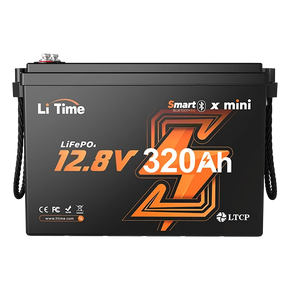


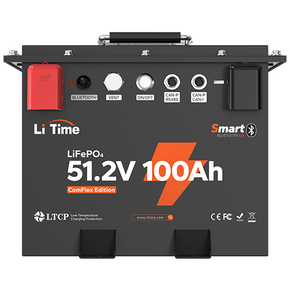
A golf-cart-rated lithium iron phosphate (LiFePO4) battery is a strong choice for owners who prioritize low maintenance, lower weight, and long service life. Flooded lead-acid remains worth considering for a tighter upfront budget, while AGM removes watering without requiring a switch to lithium.
This guide explains how to choose the best battery for golf buggy use by matching chemistry, voltage, capacity, and installation requirements—not just a brand name.
What’ the best type of golf buggy batteries?
The best type depends on your priorities: choose golf-cart-rated LiFePO4 for convenience and long-term ownership, flooded lead-acid for a budget-conscious replacement, or deep-cycle AGM when you want sealed lead-acid technology. None is automatically compatible with every buggy. Your charging system, battery compartment, and driving demands must support the choice.
| Battery type | Main advantage | Main consideration |
|---|---|---|
| Flooded lead-acid | Generally affordable upfront | Needs watering, ventilation, and regular care |
| Deep-cycle AGM | No watering; good vibration resistance | Requires an appropriate AGM charging profile |
| Golf-cart LiFePO4 | Low maintenance and potential for long service life | Needs compatible charging and electrical integration |
These differences make chemistry a practical ownership decision, not simply a performance ranking.
Lithium for convenience and frequent use
Lithium eliminates electrolyte checks and watering, which is useful when maintenance access is awkward or several people share a buggy. Its lower weight and potential for longer service life also make it attractive for owners planning to keep their cart. However, cold-weather charging needs attention: use a battery with suitable temperature protection and follow its charging limits.
Flooded lead-acid and AGM for different budgets
Flooded batteries make sense when keeping initial spending down matters and you can commit to maintenance. AGM holds its electrolyte in glass matting, so there is no routine watering; it also offers good shock and vibration resistance. Neither choice excuses incorrect charging, and a sealed battery still needs periodic inspection of connections.
Best battery for golf cart: key points you should know

The best batteries for golf carts match the whole vehicle, not merely the voltage printed on an old battery. Start with your buggy’s make, model, year, existing pack arrangement, and controller specifications. Manufacturer conversion guidance can be model-specific, including the mounting bracket needed for a particular installation.
1. High Performance
Choose a lithium battery with sufficient continuous and peak current to handle acceleration, hills, and heavier loads. Check your cart controller’s current requirements rather than comparing battery capacity alone.
2. Voltage Compatibility
Confirm whether your golf cart uses a 36V or 48V system and check the complete battery pack configuration. A 51.2V lithium battery marketed for 48V carts is not automatically compatible with every vehicle.
3. Real-Time Monitoring
Bluetooth monitoring lets you check battery status through a compatible smartphone app or battery monitor. This makes it easier to track remaining charge and plan your next trip.
4. Extended Lifespan
LiFePO4 batteries typically offer a longer cycle life than lead-acid batteries, potentially reducing replacement frequency. Compare actual cycle-life specifications and warranty terms before purchasing.
5. Cost Efficiency
Lithium batteries generally cost more upfront but can reduce long-term replacement and maintenance expenses. Compare the total cost of ownership, including the battery, charger, installation, and mounting hardware.
6. Ease of Use
Lithium batteries are lightweight and generally require less routine maintenance than lead-acid batteries. Before buying, confirm battery dimensions, mounting requirements, wiring, and charger compatibility.
7. Longer Runtime
Choose a battery with enough usable energy for your typical routes, passenger loads, and terrain. Actual driving range depends on battery capacity, speed, hills, temperature, and driving habits.
8. Fast Charging
Check the battery’s maximum permitted charging current and the charger’s output to determine charging time. Use a compatible charger and follow the manufacturer’s charging specifications to support battery longevity.
The best lithium batteries for golf buggy

LiTime offers best lithium batteries for golf buggy, including 36V and 48V LiFePO4 solution. With options for different capacities, battery sizes, and monitoring features, you can choose a setup that fits your vehicle and driving needs.
| Model | Size (L × W × H) | Weight | BMS | Energy | Bluetooth | Low-Temp Protection | Max. Expansion |
|---|---|---|---|---|---|---|---|
| 36V 45Ah GC2 | 10.24 × 7.09 × 10.43 in | 31.95 lbs | 90A | 1,728Wh | Yes | Yes | 6P1S |
| 36V 100Ah Bluetooth | 20.47 × 10.55 × 8.66 in | 61.06 lbs | 100A | 3,840Wh | Yes | Yes | 4P1S |
| 48V 30Ah GC2 | 10.24 × 7.09 × 10.43 in | 28 lbs | 100A | 1,536Wh | Yes | Yes | 8P1S |
| 48V 60Ah RS485 | 20.55 × 9.33 × 8.58 in | 56.09 lbs | 120A | 3,072Wh | No* | Yes | 8P1S |
| 48V 100Ah Bluetooth | 20.47 × 10.59 × 8.66 in | 82 lbs | 200A | 5,120Wh | Yes | Yes | 4P |
| 48V 150Ah Golf Cart | 20 × 13 × 10.51 in | 137 lbs | 300A | 7,680Wh | Yes | Yes | 16P1S |
How many Ah batteries do you need for golf buggy?
The right battery capacity for a golf buggy depends on its voltage, how often you drive, the terrain, and how many holes you play per charge. For occasional use on flat ground, a 36V or 48V 60Ah battery may be sufficient, while frequent rounds, steep hills, and heavier loads may call for a 48V 100Ah battery or more.
Use the comparison tables below to estimate your needs based on your buggy type, driving habits, and expected range. They show typical voltage and capacity recommendations alongside estimated driving distances and rounds per charge.


These figures are guidelines rather than guarantees, so check your buggy’s specifications and battery compatibility before choosing a replacement.
What’s the best battery group size for golf buggy?
The best group size is the one specified for your existing installation or approved conversion—not a universally superior size. GC2 is a familiar golf-cart format, but dimensions, terminal arrangements, and electrical specifications still need checking. A single lithium conversion pack may use a different enclosure entirely.

Before selecting an enclosure, record:
- Usable tray length and width: include dividers and brackets, not just the outer compartment.
- Available height: allow for terminals, cable bends, and the seat structure above.
- Restraint locations: identify how the approved mounting hardware secures the replacement.
- Service access: leave access to required connectors, switches, and inspection points.
| Brand | Common Model | Typical System Voltage | Approximate Battery Tray / Compartment Size (L × W × H) |
|---|---|---|---|
| Club Car | DS | 36V / 48V | Approx. 22 × 11 × 11 in (55.9 × 27.9 × 27.9 cm); some models have divided compartments |
| Club Car | Precedent | 48V | Approx. 24 × 12 × 11 in (61.0 × 30.5 × 27.9 cm) |
| E-Z-GO | TXT (48V) | 48V | Approx. 22 × 10 × 11 in (55.9 × 25.4 × 27.9 cm) per side |
| E-Z-GO | RXV | 48V | Rear battery compartment, approx. 26 × 13 in (66.0 × 33.0 cm); a consistent height specification was not available |
| Yamaha | Drive / Drive2 | 36V / 48V, depending on model | Approx. 24 × 12 in (61.0 × 30.5 cm); a consistent height specification was not available |
FAQs about golf buggy battery
How do I know need replace golf cart battery?
Persistent loss of runtime after a correct full charge is a reason to arrange testing. Have the charging system and connections checked too, so you do not replace a serviceable pack unnecessarily.
Is it worth putting lithium batteries in a golf cart?
Yes. Lithium battery is worth considering than lead-acid and AGM battery. Other benefits you cann get:
- Longer service life: LiFePO4 batteries commonly offer thousands of charge cycles, potentially reducing replacement frequency.
- Less maintenance: No regular watering or acid-related maintenance.
- More usable energy: Lithium batteries generally allow deeper discharge than lead-acid batteries, which can help extend driving range.
- Faster charging and lighter weight: Convenient for frequent use and everyday driving.
What's the average lifespan of golf cart batteries?
Approximately four to six years for well-maintained lead-acid golf-cart batteries and says lithium batteries can last ten years or more with proper care and charging. These are planning estimates, not guaranteed outcomes. Usage, storage conditions, charging, and maintenance can change the result considerably.
Conclusion
For a balance of convenience, long service life, and low maintenance, LiFePO4 batteries are an excellent choice for golf carts and buggies. Explore LiTime Golf Cart Batteries for reliable lithium power, lightweight designs, and options to suit different voltage, capacity, and driving needs. Check your cart’s specifications and charger compatibility, then find the right LiTime battery for your next ride. Shop LiTime Golf Cart Batteries today!
