


Choosing the right inflatable boat motor depends on what the motor must do, how many people and how much gear you carry, and where you travel. Choose a trolling motor for mostly low-speed fishing, an electric outboard for regular short trips under its rated conditions, or a gas outboard when longer runs and fast refueling matter. Boat length helps narrow the options, but the hull’s approved motor rating and mount determine what you can actually install.
Which Type of Motor Works Best for Your Inflatable Boat?
Choose the motor type by its main job: positioning the boat, carrying you along a route, or covering longer distances. Before comparing models, note your usual passenger and gear load, desired speed, water conditions, and access to charging or fuel. Those details matter more than choosing by thrust or horsepower alone.
| Motor type | Best suited to | Why it fits | Check before buying |
|---|---|---|---|
| Trolling motor | Slow fishing and frequent position changes on sheltered water | Emphasizes controlled movement at low speed | Whether it can handle your loaded route and the trip back |
| Electric outboard motor | Primary propulsion for planned trips, tender runs, and relaxed cruising | Provides a main propulsion system with controllable forward travel | Hull rating, mounting fit, battery setup, and realistic range |
| Gas outboard motor | Longer runs or sustained higher-speed use where allowed | Fuel can be replenished quickly between trips | Hull power and motor-weight limits, fuel handling, and local rules |
A trolling motor for an inflatable boat is useful when the goal is to hold or change position near fishing areas. Its thrust rating describes a force, not a guaranteed boat speed. A lightly loaded boat on calm water may use one for a short journey, but wind, current, passengers, and gear can change its ability to make headway on the return leg.
An electric outboard motor for an inflatable boat is a stronger candidate when propulsion is the boat’s main task. It is intended for travel as well as low-speed control, provided its output and battery suit the loaded boat and route. It can also avoid carrying gasoline on a fold-up boat.

If your trips regularly demand sustained speed, long range, or quick refueling, evaluate a permitted gas outboard separately.
For a deeper technical comparison, see LiTime’s outboard vs trolling motor guide and gas vs electric outboard guide.
What Motor Should You Choose for Your Boat’s Size and Load?
Use boat length, hull design, actual load, and your normal journey to narrow the choice. Length is one clue, not a horsepower formula. A passenger rating does not describe performance with people, gear, and a battery aboard.
| Boat and load | Typical trip | First motor to compare | Confirm before choosing |
|---|---|---|---|
|
Small fold-up boat; One person and light gear |
Calm-water fishing close to shore |
Trolling motor for positioning; Light electric outboard for regular travel |
Approved mount, room for the battery, and the loaded return route |
|
Small or mid-size boat with a transom; One or two people |
Short cruising or tender trips | Electric outboard, with A1 as a lighter-output candidate | Boat and mount ratings, shaft fit, and handling with both people aboard |
|
Larger boat or more gear; Several people or a heavier load |
Longer trips or more demanding travel |
Higher-output electric outboard such as A2; Gas if sustained speed or fast refueling is needed |
Approved power and motor weight, total system load, and range in actual conditions |
Small fold-up boat with one person
For solo fishing near a launch, slow maneuvering may be enough. A 12V trolling motor can work if the mount and battery fit and the loaded boat can return in expected conditions. For regular travel to fishing spots, you can also choose a lightweight electric outboard; thrust alone does not establish cruising performance.
The exact model’s rating decides outboard size. Check hull and removable mount limits, including motor weight; a stronger mount does not raise the hull’s limit. If the rating rules out your outboard, choose a compatible trolling setup.
Transom-equipped boat with one or two people
For short, predictable trips, an electric outboard may be a practical primary motor. LiTime’s 24V 700W electric outboard (2 HP) is a candidate for lighter-compatible boats. Check the boat and mount, account for passengers and gear, and plan the return trip.
If two people and gear make the loaded trip too slow, compare the higher HP outboard motors, like 3-5 HP, on a transom approved for the complete system.

Heavier inflatable with more people or gear
For a larger inflatable carrying several people or substantial gear, you may start with a higher-output option such as the 5 HP equivalent electric outboard if the boat permits the complete installation. For sustained higher speed or repeated long runs, also evaluate a suitable gas outboard around 6-10HP.
Can Your Inflatable Boat Mount the Motor You Chose?
Confirm the boat’s approved power and motor-weight limits, its mounting structure, and the motor’s physical fit before buying. A motor that clamps onto a board is not automatically approved for that boat. Use the exact boat and mount model in their manuals rather than a general rule for inflatables.
Check the transom or motor mount
For a rigid transom, inspect cracks, softness, and loose fasteners. Measure its clamping area and thickness against the motor clamp’s opening. For a removable bracket, confirm fit with your exact boat model; follow the lower of the hull’s and bracket’s limits.
Separate a maximum permitted rating from a recommended operating choice. Also check how the boat maker describes electric and gas motors; a gas horsepower limit should not be treated as a direct conversion from electric watts or static thrust.
Check shaft position and clearance
Measure the actual transom or fitted mount according to the motor maker’s instructions. Verify that the propeller runs at the required depth and that the clamp fits securely. The motor must steer and tilt without hitting the tubes, floor, or boarding area.
If the boat manual and motor drawing use different shaft measurements, ask the manufacturers to verify the fit. Do this before assuming that every small inflatable needs the same “short shaft.”
What Else Does an Electric Outboard Setup Need?
An electric motor for an inflatable boat needs a compatible battery, a protected cable route, and a place for the extra weight. Check the entire system, not just the motor hanging on the transom.
- Battery and balance: Secure the battery where the boat maker permits it. Check the boat’s attitude with the passengers and gear you normally carry.
- Electrical fit: Match the battery voltage and connections to the motor’s specifications, and follow the manufacturers’ installation instructions.
- Return range: Use estimated runtime (hours) = usable battery energy (Wh) ÷ average power draw (W) as a planning estimate. Power draw changes with throttle, load, wind, and current, so leave a return reserve and test on familiar water.
- Portability: Count the motor, battery, mount, and cables when judging how easy a fold-up boat is to launch and pack away.
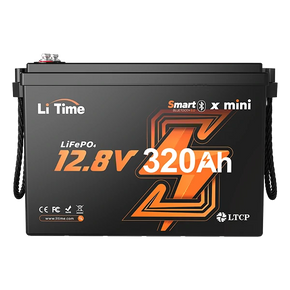
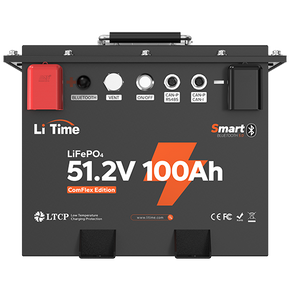
Capacity must be considered alongside motor power. The LiTime 2Hp electric outboard with a 25.6V 50Ah battery has about 1.85 hours of full-throttle runtime; a compatible 100Ah battery increases the calculation to 3.70 hours. The 2,000W 5Hp electric motor with a 51.2V 30Ah battery is calculated at about 0.71 hours at full throttle. These are model-specific estimates, not promised time on your boat; choose capacity for your trip and return reserve, then account for the added battery weight.
Inflatable Boat Motor FAQs
What size motor does a 10-foot inflatable boat need?
There is no universal motor size for a 10-foot inflatable. Check its exact maximum motor rating, motor-weight limit, and mount requirements, then consider the loaded weight and usual route. Boats of similar length can have very different approved limits.
Can you put an outboard motor on any inflatable boat?
No. The boat needs a manufacturer-approved transom or compatible motor mount, and the chosen motor must meet the relevant limits. Do not infer approval from a clamp that happens to fit.
Is a trolling motor enough for an inflatable boat?
It can be enough for slow, short trips on sheltered water when the loaded setup and conditions allow. If the motor must reliably carry passengers and gear along a regular route, compare an outboard intended for primary propulsion and confirm its practical range.
The right inflatable boat motor is a match between the trip, the loaded boat, and the approved installation. Start with the task, shortlist a motor type and output class, then check the exact hull and mount before placing an order.

