



If you have ever wondered why batteries suddenly short circuit without warning, this in-depth safety guide has you fully covered. We will break down the definition of battery short circuits, compare normal vs faulty current flow, explain all common triggers, list clear warning signs, share step-by-step emergency handling protocols, illustrate how short circuit protection systems like BMS work, and offer actionable prevention tips.
- Part1: What is a battery short circuit?
- Part2: What happens when a battery short circuits?
- Part3: What causes a battery to short circuit?
- Part4: How do you know if a battery is short-circuited?
- Part5: What to do if a battery short circuits?
- Part6: What is battery short circuit protection?
- Part7: How can I prevent battery short circuits?
- Part8: FAQs about battery short circuit
Part1: What is a battery short circuit?
To put it simply, a battery short circuit is an abnormal electrical condition where electric current flows through an unintended, low-resistance path outside the designed electrical circuit. When a short circuit occurs, the positive and negative terminals of the battery form a direct connection with almost no resistance, causing an uncontrolled surge of electric current inside the battery pack.
This sudden current spike breaks the battery’s normal working balance, generates massive heat within seconds, and damages internal battery cells permanently.
Battery Short Circuit vs Normal Current Flow
- Normal Current Flow: The circuit includes designed loads with standard resistance. Current flows along a fixed closed loop from the positive terminal to the negative terminal steadily. Current intensity stays within the battery’s rated working range, and the battery maintains a stable temperature and voltage during operation. No extra heat or safety risks are generated.
- Short Circuit Current Flow: The load is bypassed completely, and current travels directly between positive and negative poles with near-zero resistance. The current output instantly rises to dozens or even hundreds of times the rated current. Excessive current accumulates enormous heat inside battery cells in a short time, destroying internal chemical structures and triggering thermal runaway.
In short, normal current flow is controlled and purposeful for powering devices, while a battery short circuit is an uncontrolled, dangerous current leak that serves no functional purpose.
Part2: What happens when a battery short circuits?
A battery short circuit triggers a progressive chain of electrical and chemical hazards that escalate rapidly within seconds. The damage develops in four clear stages listed below:
Sudden High Current
The very first consequence of a battery short circuit is an instantaneous uncontrolled current spike. Unlike normal regulated current flow for powering devices, the direct zero-resistance connection between positive and negative battery poles makes the current surge to 50–100 times the battery’s rated working current in microseconds. This abnormal high current is the root cause of all subsequent hazards, overwhelming the battery’s internal circuits and connected external wiring instantly.
Heat, Sparks, and Melted Wires
Massive unregulated current generates extreme resistive heat inside the battery and connected cables in a short time. The battery surface heats up rapidly to an untouchable high temperature, while external power wires and terminal connectors start overheating quickly. Once the heat exceeds the melting point of plastic insulation, cable skins melt completely. Meanwhile, violent electric sparks pop up around loose terminals and exposed wiring gaps, accompanied by a sharp crackling sound and a distinct burning plastic smell.
Battery Damage or BMS Shutdown
For lithium batteries fitted with a built-in BMS, the protection board will detect the abnormal current immediately and cut off the battery output automatically to stop further damage. However, batteries without protective circuits will suffer permanent internal damage directly. The internal insulating separators, electrodes and electrolyte are destroyed by high heat, leading to broken battery cells, unstable voltage output and permanent capacity loss. Even after cooling down, the battery can never return to its original working condition.
Fire or Explosion Risk in Severe Cases
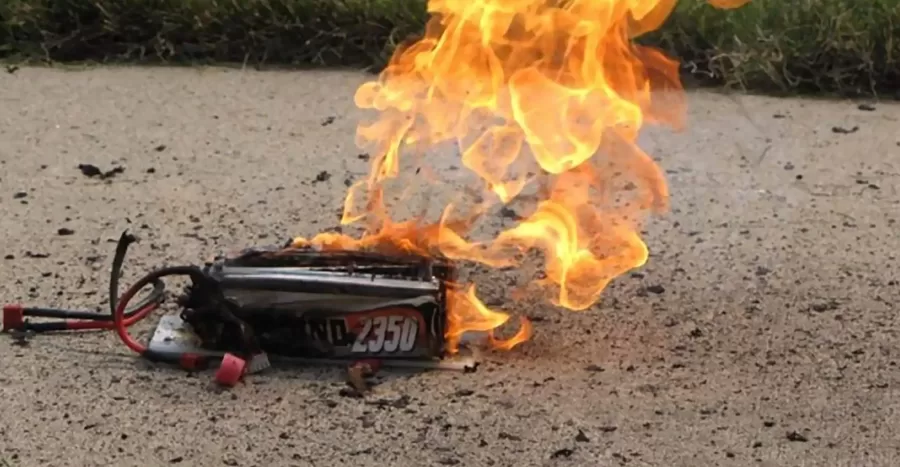
If the short circuit continues without timely interruption, irreversible thermal runaway will take place. Continuous high temperature decomposes the internal liquid electrolyte and produces large volumes of flammable gas, leading to swollen battery casings and electrolyte leakage. Once the flammable gas contacts sparks or high heat, battery fire will break out.
Part3: What causes a battery to short circuit?
Below are the seven most common causes of battery short circuits in residential, commercial and industrial scenarios.
Wrong Wiring or Reverse Polarity
Incorrect wiring is the top cause of external battery short circuits, especially during battery installation, replacement or system maintenance. Connecting positive wires to negative terminals and negative wires to positive terminals (reverse polarity) directly creates a zero-resistance closed loop. Similarly, cross-connected circuit cables, wrong parallel or series battery connections will also trigger immediate short circuits.
Read More: How to Correctly Connect Your LiFePO4 Batteries?
Metal Tools Touching Battery Terminals
During battery inspection or maintenance, metal tools including screwdrivers, wrenches, pliers and metal rulers may accidentally touch both positive and negative battery terminals at the same time. Metal is an excellent conductor, so direct contact instantly bridges two poles and causes an instantaneous short circuit.
Damaged Cable Insulation
Power cables connected to batteries are wrapped with insulating rubber or plastic layers to prevent current leakage. Long-term friction, extrusion, high-temperature baking or rodent bites will crack, peel or wear away cable insulation. When exposed internal metal wires of positive and negative cables contact each other, a hidden external short circuit occurs.
Loose or Corroded Terminals
Corrosion increases unstable contact resistance, while loose terminal screws lead to poor connection gaps. During device vibration or current fluctuation, intermittent short circuits will happen between terminals.
Read More: Loose Battery Terminal Symptoms
Water, Moisture, or Conductive Debris
Water and humid air are conductive. If batteries are used or stored in rainy, damp environments, condensed water droplets will cover battery terminals and form a conductive path between two poles. In addition, conductive debris such as metal shavings, carbon dust and wire scraps falling on battery tops can also connect positive and negative terminals indirectly.
Physical Damage or Internal Cell Failure
External physical damage such as battery extrusion, impact, piercing and bending will rupture the internal insulating separator between battery electrodes. Once the separator fails, positive and negative plates inside a single cell will contact directly, causing an internal short circuit. Moreover, natural battery aging, overcharging for hundreds of cycles and manufacturing defects can also lead to spontaneous internal cell short circuits even without external damage.
Using the Wrong Charger or Electrical Components
Matching chargers and load devices are critical for battery safety. Using a mismatched charger with incompatible voltage, current or protocol will cause abnormal current surges inside the battery, inducing internal short circuits. Meanwhile, connecting unqualified, low-quality electrical components with short-circuit risks to batteries will also transfer circuit faults to battery packs and trigger secondary short circuit failures.
Part4: How do you know if a battery is short-circuited?
Identifying battery short circuit warning signs early can help you cut off hazards before thermal runaway happens.
Battery Gets Hot Quickly
If the battery becomes abnormally hot within dozens of seconds after being connected to a load or charger, and the surface temperature is too high to touch comfortably, it is the earliest warning sign of an ongoing battery short circuit.
Sparks, Smoke, or Burning Smell
Visible sparks around battery terminals or connecting cables mean a severe short circuit has occurred. Accompanied white smoke and a pungent plastic or chemical burning smell indicate internal insulating materials and electrolyte are being burned by excessive heat.
Blown Fuse or Tripped Breaker
Built-in fuses and circuit breakers are designed as the first safety barrier against short circuits. A sudden blown fuse or automatically tripped circuit breaker without any abnormal external reasons is a clear reminder that a short circuit current surge has occurred in the battery circuit.
Sudden Voltage Drop
You can detect hidden short circuits via a multimeter. A healthy battery maintains stable open-circuit voltage within its rated range. A short-circuited battery will show an instant, sharp voltage drop when connected to loads, and cannot maintain stable output voltage at all.
Read More: What Is Sudden Voltage Drop?
Device Shuts Off Immediately
Electronic devices powered by short-circuited batteries will shut down instantly right after startup. Even with sufficient displayed power, the battery cannot supply steady current due to internal short circuit current loss, leading to sudden power failure of connected equipment.
Swelling, Leaking, or Melted Case
In the late stage of a short circuit, high temperature decomposes internal electrolyte to produce large amounts of gas, leading to swollen battery casings. Severe high temperature will melt plastic battery shells, and corrosive electrolyte will leak out. At this stage, the battery is completely scrapped and has extreme fire risks.
Part5: What to do if a battery short circuits?
Panic and incorrect operation will worsen short circuit hazards. Follow these standardized emergency steps to handle a short-circuited battery safely and reduce accident risks.
Stop Using the Battery Immediately
The first and most critical step is to stop all charging and discharging operations right away. Cut off all working commands to connected devices to avoid continuous current output from the battery, which will further aggravate internal thermal accumulation.
Disconnect Loads or Chargers Only If Safe
Disconnect chargers and electrical loads from battery terminals only when there are no sparks, smoke or open flames. Never touch battery cables or terminals directly with bare hands. Use insulated gloves and insulated tools to finish disconnection to avoid electric shock injuries.
Move It Away From Flammable Materials If Safe
If the battery has no open fire risk temporarily, safely move it to an open area far away from wood, paper, gasoline, plastic and other flammable goods. Keep a safe distance of at least 2 meters from people and other electrical equipment to prevent secondary fire spread.
Do Not Recharge a Damaged Battery
Never attempt to recharge a battery that has experienced a short circuit, even if it returns to normal appearance after cooling down. Internal electrode and separator damage is permanent. Recharging will trigger thermal runaway again and cause more serious safety accidents.
Contact the Manufacturer or a Qualified Technician
Do not disassemble or repair short-circuited batteries by yourself, especially sealed lithium battery packs. After safe disposal on site, contact the battery manufacturer or professional electrical maintenance technicians for unified recycling and professional inspection. Discard damaged batteries following local electronic waste disposal regulations.
Part6: What is battery short circuit protection?
Battery short circuit protection refers to electronic safety systems installed inside battery packs or external circuits to monitor current in real time and cut off the circuit automatically once abnormal short circuit current is detected. This protection mechanism can block thermal runaway at the initial stage of a short circuit and protect both batteries and users. The most core protection component for modern rechargeable batteries is the Battery Management System (BMS).
How a BMS detects short circuits
A BMS is an intelligent electronic management board built into lithium battery packs. It monitors real-time current, voltage and temperature data of every single battery cell all the time. When a short circuit happens, the loop current surges instantly beyond the preset safe threshold. The BMS chip identifies this abnormal current signal within microseconds and immediately cuts off the main output circuit of the battery.
BMS vs Fuse vs Circuit Breaker
Three mainstream short circuit protection devices are widely used in battery systems, with different working principles, response speed and reusable performance:
| Protection Device | Device Type | Core Short Circuit Protection Function | Key Features |
|---|---|---|---|
| BMS (Battery Management System) | Intelligent Active Protection System | Monitors real-time current, voltage and temperature; cuts off the main output circuit automatically within microseconds when abnormal short circuit current is detected | Auto-resettable after fault removal; supports multi-protection functions (overcurrent, overvoltage, overheating); ultra-fast response speed |
| Fuse | Passive One-Time Protection Component | Melts the internal metal wire permanently under excessive short circuit current to cut off the circuit completely | Low cost; simple installation; one-time use only; requires replacement after each trigger |
| Circuit Breaker | Mechanical Current Protection Device | Trips to disconnect the circuit automatically when facing short circuit current; stops current flow to prevent battery damage | Reusable via manual reset after troubleshooting; more durable than fuses; slower response speed than BMS |
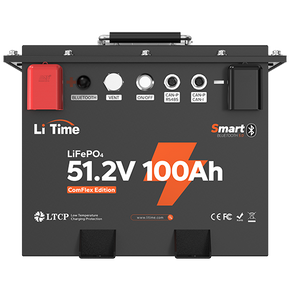
LiTime lithium batteries are engineered with built-in BMS. Every LiTime LiFePO4 battery, covering mainstream 12V, 24V and 48V models, is equipped with a dedicated BMS perfectly calibrated to match internal battery cells.

Besides ultra-fast short circuit cutoff within microseconds, the integrated BMS also provides full protection against reverse polarity, overcurrent, overvoltage, undervoltage and overheating — covering nearly all common electrical faults that may trigger battery short circuits.
Part7: How can I prevent battery short circuits?
Most battery short circuits are preventable with standardized operation and reasonable device configuration. Follow these seven practical prevention methods to eliminate short circuit risks fundamentally.
Use Proper Cable Size and Insulation
Select power cables with matched wire gauge according to battery working current to avoid overloaded cables. Regularly check cable insulation layers, and replace aging, cracked or damaged cables in time to prevent exposed wires from contacting each other.
Install Fuses or Circuit Breakers
Add matched fuses or circuit breakers near battery positive terminals for all battery circuits. These low-cost protective components can serve as the second safety barrier to cut off circuits rapidly when unexpected short circuits occur.
Keep Terminals Covered
Install insulated terminal covers on exposed battery positive and negative poles. Insulated covers can block accidental contact caused by metal debris, tools and dust, avoiding external short circuit faults effectively.
Avoid Metal Tools Near Battery Terminals
Prepare insulated tools specially for battery maintenance. Never place metal tools or metal accessories on battery surfaces. Always disconnect the battery first before any wiring inspection or maintenance work.
Keep Batteries Dry and Clean
Place batteries in dry, ventilated indoor environments. Clean dust and conductive debris on battery surfaces and terminals regularly. Avoid using batteries in rainy conditions or high-humidity closed spaces to prevent moisture-induced short circuits.
Use the Correct Charger
Always use original or officially certified chargers that match battery voltage and current parameters. Do not use universal cheap chargers with unstable output, which can induce internal short circuit damage gradually.
Learn More: How To Choose A Proper Battery Charger?
Choose Batteries With Built-in BMS Protection
For daily and industrial use, prioritize lithium batteries equipped with high-quality built-in BMS. Integrated BMS provides all-round active short circuit protection without extra complicated circuit configuration, which is the most reliable long-term prevention solution.
Part8: FAQs about battery short circuit
Can a short-circuited battery be recharged?
No. Any battery that has suffered a short circuit has irreversible internal damage to separators, electrodes or electrolyte. Even if the battery cools down and returns to normal appearance, hidden internal short circuit risks still exist. Recharging will trigger thermal runaway, fire or explosion easily, so recharging is strictly forbidden.
How to find short circuit current of battery?
Professional testing equipment is required to measure battery short circuit current safely. Users can use a high-precision multimeter and professional battery tester under safe insulated operation environments. For most users, checking battery rated short circuit current via official battery specifications is the safest way.
Can You Wake Up a Dead Battery After a Short Circuit?
It is impossible to wake up a short-circuited dead battery. Short circuits damage the battery’s internal chemical structure permanently, rather than just causing simple power depletion. Common battery recovery methods such as trickle charging cannot repair internal physical damage. The only proper solution is to replace the damaged battery completely.
Read More: How to Jumpstart a Dead Lithium LiFePO4 Battery?
Can a Short-Circuited Battery Be Fixed or Recharged?
Short-circuited batteries cannot be repaired or recharged for reuse. For consumer sealed battery packs, internal damage cannot be fixed manually. Even professional maintenance cannot restore damaged battery cells to original working performance.
Conclusion
A battery short circuit is a dangerous but avoidable electrical fault. From external wiring errors to internal cell aging, clear root causes lead to short circuit hazards, and early warning signs allow users to respond in time. Equipping batteries with BMS, fuses and circuit breakers, following standardized operation rules, and conducting daily maintenance can greatly reduce short circuit risks.
If you want to cut down complicated circuit setup and avoid hidden short circuit risks fundamentally, upgrading to reliable LiTime lithium batteries with factory-built BMS is always the best choice.

