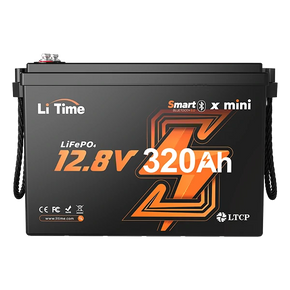


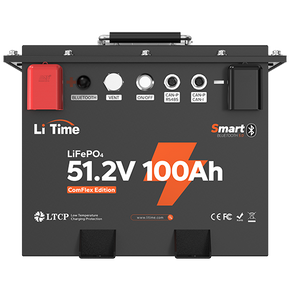

For professional anglers, 36V offers access to higher thrust on compatible trolling motors and lower electrical current at the same power output. Pairing that system with a suitable lithium battery can also reduce onboard battery weight and simplify installation. Those advantages matter when fishing involves long days, loaded boats, frequent GPS anchoring, and changing conditions.
Picture the final hour of a tournament. You have found a productive offshore spot, but the afternoon wind keeps pushing your boat away from the casting angle that produced your last bite. Your trolling motor works harder with every gust. Leaving means losing fishing time; staying demands dependable boat control.
This is where a well-matched 36V system earns its place. This article will explain why 36V batteries are the future for anglers.
Table of Contents
- What Makes 36V Lithium Marine Battery the ‘Future’ for Professional Anglers?
- Why 36V is Crucial for Professional Anglers?
- One 36V Battery or Three 12V Batteries?
- Why is 36V the Gold Standard Voltage for Trolling Motors?
- Recommended Upgrade: LiTime 36V 100Ah Compact Lithium Marine Battery
- Conclusion: Choose 36V for the Fishing You Actually Do
- Frequently Asked Questions
What Makes 36V Lithium Marine Battery the ‘Future’ for Professional Anglers?
The case for 36V lithium starts with sustained fishing activity and demanding boat-control requirements. The 2026 Special Report on Fishing found that 57 million Americans went fishing in 2025, generating 918 million fishing outings—up 3% year over year. These figures show the scale of U.S. fishing activity, although they do not measure trolling-motor battery ownership or 36V adoption. Source: American Sportfishing Association
For anglers using electric trolling motors, reliable power supports positioning, controlled drifts, and GPS anchoring. Minn Kota’s guidance, updated in April 2026, recommends 110Ah per battery as a general guideline for 6–8 hours of runtime, while noting that boat weight, wind, and current affect actual power demand. Long fishing days therefore require careful capacity planning rather than an assumption that any battery will last all day. Source: Minn Kota Power Considerations
A compatible 36V system can also provide additional thrust when conditions become challenging. For example, Minn Kota rates its Ultrex QUEST at 90 pounds of thrust on 24V and 115 pounds on 36V. That additional headroom can help anglers manage a loaded boat in wind or current. The referenced model also lists a 58A maximum draw, highlighting why a lithium battery must supply sufficient continuous current—not simply the correct voltage. Source: Minn Kota Ultrex QUEST Specifications
Leading trolling-motor designs demonstrate the role of 36V in high-output boat control. The Ultrex QUEST supports both 24V and 36V, with its higher thrust rating available at 36V. Garmin’s Force Kraken also supports both voltage classes; its official manual documents greater maximum thrust with the higher-voltage supply under specified test conditions.Sources: Minn Kota specifications, Garmin Force Kraken manual
Lithium battery makes this power system more practical to accommodate onboard. A suitably specified single 36V lithium battery can replace a three-battery series arrangement, reducing external connections and potentially lowering total battery weight. However, capacity, current capability, charging compatibility, and installation fit must all match the existing system.
That is what makes 36V lithium a compelling direction for demanding marine fishing setups: access to higher thrust on compatible motors, combined with a potentially lighter and simpler battery installation.

LiTime 36 Volt 100Ah Lithium Marine Trolling Motor Battery
A dedicated 36V lithium marine battery option for trolling motors and demanding marine power setups.
View Product marine batteryWhy 36V is Crucial for Professional Anglers?
A trolling motor does much more than move a boat between nearby fishing spots. It helps an angler maintain casting distance, control a drift, follow structure, and hold position while working a school of fish.
For professionals fishing exposed water in heavily equipped bass or multispecies boats, those tasks demand dependable power. Passengers, tackle, fuel, batteries, and electronics add weight, while the boat’s above-water profile affects how strongly wind pushes it off course.
A compatible 36V marine battery system can provide access to higher motor thrust and valuable operating reserve. Its importance comes from maintaining control when conditions become challenging—not from voltage alone.

Holding Position in Wind and Current
Boat positioning affects how a lure reaches the fish.
When wind pushes the bow sideways, an angler may lose the angle needed to work a crankbait along a ledge. When current moves the boat toward cover, maintaining the right distance requires enough thrust to correct the drift.
A higher-thrust motor has more capacity to respond when those forces increase. For example, Minn Kota rates its Ultrex QUEST at 90 pounds of thrust on 24V and 115 pounds on 36V. That model-specific difference illustrates how 36V can unlock additional power for demanding conditions.
However, voltage alone does not determine positioning accuracy. GPS control, shaft length, propeller immersion, motor design, and installation all contribute.
LiTime 36 Volt 100Ah Lithium Marine Trolling Motor Battery
Designed for anglers who need a simplified 36V lithium setup for trolling motor power and demanding boat-control conditions.
View Product marine batteryManaging a Heavier, Fully Equipped Boat
A motor that comfortably positions a lightly loaded boat may have less reserve once the boat carries multiple anglers, a full fuel tank, and tournament equipment.
Additional thrust can help counter drift and maintain a useful casting position. This matters when an angler must hold the bow into the wind or follow a productive contour without constant manual corrections.
Boat length alone does not establish a need for 36V. Loaded displacement, hull shape, wind exposure, current, and the existing motor’s performance provide a better basis for choosing a system. There is no universal 21-foot or 3,000-pound threshold that makes the upgrade necessary.
Supporting Sustained Operation With Lower Current
Higher voltage offers an electrical advantage: at the same electrical power input, a 36V system draws less current than a 24V system.
For an illustrative 1,200W load, that means approximately 33.3A at 36V rather than 50A at 24V. With equal cable resistance, lower current reduces wiring losses and cable heating.
That does not automatically prove greater motor efficiency at equal thrust or longer runtime. Those outcomes also depend on motor design, usable battery energy, and operating conditions. Running a higher-output motor harder can consume the available energy faster.
Maintaining Control Throughout a Tournament Day
Automatic positioning changes how anglers use trolling motors. Instead of making occasional moves, the motor may spend extended periods correcting the boat’s position.
Minn Kota’s Ultrex QUEST offers Spot-Lock, recorded paths, contour following, and automatic speed and course control through Drift Mode. These functions make sustained boat control an important part of battery planning.
For tournament anglers and guides, the battery must support both the expected fishing duration and demanding periods when wind or current increases. Sufficient usable energy, adequate continuous discharge capability, and a sensible reserve matter as much as selecting the correct voltage.
If you are a professional angler and are planning to take part in a competition, you may wish to take a look at the products we recommend for the MLF Fishing Clash Team.

One 36V Battery or Three 12V Batteries?
Anglers can build a 36V-class system using one dedicated battery or three suitable 12V-class batteries connected in series.
Both approaches require compatible batteries, charging equipment, and installation practices.
| Consideration | One dedicated 36V battery | Three 12V batteries in series |
|---|---|---|
| Layout | One enclosure to mount | Three enclosures to arrange |
| Connections | Fewer external battery connections | Additional series links and terminals |
| Charging | Requires a charger approved for the complete battery | May use an approved isolated multibank arrangement |
| Serviceability | Battery service involves the complete unit | Replacement must follow bank-matching requirements |
| Compatibility | Check operating voltage and current limits | Each battery must explicitly permit the intended series configuration |
Series wiring increases voltage, but it does not add amp-hour capacity.
For example, three compatible 12.8V 50Ah batteries in series create a 38.4V 50Ah bank, with approximately 1,920Wh of rated energy. They do not create a 150Ah bank.
A dedicated battery can simplify connections. Three separate batteries may fit some compartments more conveniently.
LiTime 36 Volt 100Ah Lithium Marine Trolling Motor Battery
A dedicated 36V lithium option for anglers who want to reduce series wiring and simplify the onboard battery setup.
View Product marine batteryWhy is 36V the Gold Standard Voltage for Trolling Motors?
Greater thrust
Compared to standard 12V or 24V systems, a 36V system delivers superior performance for trolling motors. This means the motor can maintain a more consistent speed and offer better control in strong currents, high winds or when propelling heavier boats.
Greater efficiency
For the same power output, a higher voltage means a lower current. A lower current reduces energy loss (heat generation) in the cables, allowing more energy to be effectively used for propulsion, thereby extending the running time per charge.
Compatibility with high-performance motors
Most high-end trolling motors from leading brands (such as Minn Kota and MotorGuide) are specifically designed for 36V systems to unlock their full performance potential, delivering maximum thrust and longer running times.
The electrical relationship is straightforward:Power = Voltage × Current
For an illustrative 1,200-watt electrical load:
| System voltage | Current required |
|---|---|
| 24V | 50A |
| 36V | Approximately 33.3A |
These simplified figures use nominal system voltages and equal electrical power. Actual battery voltage and motor demand vary during operation.
Lower current can reduce losses in the wiring. Cable heating follows the relationship P loss = I²R, where R represents cable resistance. With the same resistance, the lower current in this example produces approximately 56% less cable heating.
Lightweight
Lithium-ion batteries have virtually no memory effect and very low internal resistance. More importantly, they provide a virtually constant voltage right up until they are fully discharged. This means your trolling motor maintains optimal performance throughout its operation, unlike lead-acid batteries, which lose power as they discharge.
Furthermore, lithium batteries can be safely discharged to 100 per cent of their capacity (compared to lead-acid batteries, where it is typically recommended to discharge only to 50 per cent), effectively doubling the available energy. (Differences between lithium and lead-acid batteries)
Recommended Upgrade: LiTime 36V 100Ah Compact Lithium Marine Battery
For anglers looking to replace a three-battery bank with a single lithium unit, the LiTime 36V 100Ah Compact Lithium Marine Battery is worth considering.
- 100–120 lb Trolling Motor Power: Runs about 6.8h at 25% thrust or 3.3h at 50% thrust. Compatible with Minn Kota, Garmin Force, Lowrance, Power-Pole and more.
- Peak Power for Electric Outboards: Delivers 120A for 60s, 300A for 15s and 500A for 1s to handle sudden load demands in compatible 36V–72V systems.
- Smaller & Lighter: 15.35 × 7.99 × 10 in, 34% smaller than typical 36V 100Ah LFP batteries and 65% lighter than a comparable lead-acid setup at just 67.46 lb.
- Simplified 36V Setup: One 3840Wh battery replaces a three-battery 12V setup, reducing series wiring, installation effort and onboard complexity.
- Bluetooth 5.0 Monitoring: Check SOC, voltage, current and battery status in real time through the LiTime App while on the water.
- Built for Marine Conditions: IP67 water and dust protection, ABYC E-13 compliant, with FCC, CE, RoHS and UN38.3 certifications.
- EV-Grade Cells & BMS: 4,000+ cycles at 100% DOD plus 20+ BMS protections, including low-temperature cut-off, for safer long-term use.
- Scalable Power: Supports electric outboard systems up to 30.72kW, with 4P2S expansion for higher voltage, capacity and longer runtime.
Choose it for a simpler 36V installation—not an automatic thrust increase or guaranteed all-day runtime. Before upgrading, confirm motor compatibility, charger requirements, compartment fit, and sufficient energy reserve for your fishing routine.
Subscribe for LiTime Updates & Exclusive Offers
Subscribe to get exclusive LiTime offers, limited-time discounts, new product updates, and practical battery tips delivered to your inbox.
Conclusion: Choose 36V for the Fishing You Actually Do
For professional anglers, reliable boat control matters most when wind rises, current strengthens, and a productive spot demands sustained positioning. A compatible 36V trolling motor can provide additional thrust reserve, while a properly sized lithium battery can reduce battery weight, simplify connections, and support demanding fishing routines.
The right upgrade starts with your motor’s voltage and current requirements, then accounts for usable energy, charging equipment, and installation space. Higher voltage alone does not guarantee longer runtime, and replacing an existing 36V battery bank does not increase the motor’s rated thrust.
If you want to consolidate three batteries into one, explore the LiTime 36V 100Ah Compact Lithium Marine Battery. Match it to your equipment and leave enough energy reserve for changing conditions—so you can spend more of your fishing day working the water instead of correcting your boat.
Frequently Asked Questions
Does a 36V trolling motor battery last longer than a 24V battery?
Not automatically. Runtime depends on usable watt-hours and average power demand. At equal amp-hour capacity, a higher-voltage battery stores more rated energy, but a more powerful motor can also consume that energy faster.
Can I connect a 36V battery to a 24V trolling motor?
Only if the manufacturer explicitly approves 36V operation for that exact motor. A motor designed exclusively for 24V should not receive a 36V battery supply.
Is one 36V lithium battery better than three 12V batteries?
One dedicated battery can reduce external connections and simplify installation. Three approved batteries in series may suit an existing compartment layout. Compare current capability, rated energy, total weight, charging, and manufacturer requirements.
How much battery capacity do I need for a full tournament day?
Estimate average electrical demand over the expected operating period, then add a reserve. For example, an average demand of 200W over eight hours requires 1,600Wh before adding reserve. Use actual consumption data where available, especially when wind and current frequently increase motor load.


