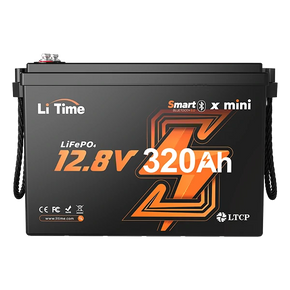


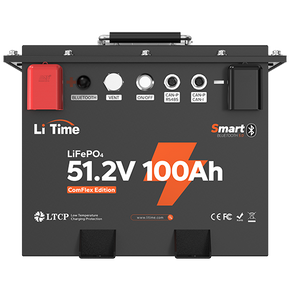

The 2026 MLF Fishing Clash Team Series does not publicly require competitors to bring a particular battery voltage, capacity, chemistry or brand. Under the official 2026 Team Series rules, Major League Fishing supplies the competition boats and equips them with the essentials needed to meet state water-safety requirements. The published rules do not list a required marine battery specification.
An angler competing in the Team Series is using an MLF-provided boat, not selecting and installing a personal battery system for the event. However, anglers who want to build a tournament-style bass boat electrical system can learn from the loads involved: engine starting, a high-thrust trolling motor, sonar and displays, pumps, lighting and other onboard electronics.

Table of Contents
- No Competitor-Supplied Battery Specification Is Published
- What Battery Systems Does a Tournament-Style Bass Boat Typically Need?
- 1. Marine Starting Battery: Match the Outboard First
- 2. Trolling Motor Battery: Voltage Must Match the Motor
- 3. Electronics Battery: Size It by Daily Energy Use
- Why LiFePO4 Batteries Appeal to Tournament Anglers
- A Practical Battery Blueprint for an MLF-Inspired Bass Boat
- How to Choose Capacity for a Full Tournament Day
- Charging a Multi-Bank Bass Boat System
- Does MLF Allow Anglers to Add Their Own Batteries or Electronics?
- Choosing LiTime Batteries for a Tournament-Style Fishing Boat
- Final Answer
- Frequently Asked Questions
No Competitor-Supplied Battery Specification Is Published
The official rules, updated January 16, 2026, state that MLF supplies the boats used in Team Series competition. They do not specify that anglers must bring a 12V, 24V, 36V or 48V battery, nor do they mandate lead-acid, AGM or LiFePO4 chemistry.
The rules also limit changes to supplied equipment. For example, anglers may not add forward-facing or 360-degree sonar transducers or units to the boats. This reinforces the central point: the Team Series is not an event in which each competitor arrives with a personally configured bass boat and battery bank.
The 2026 series features four Cup events with two-person teams fishing from the same boat. The announced competition dates are August 16–21, October 18–23, November 15–20 and December 6–11, 2026. Host fisheries are kept undisclosed until shortly before each event, increasing the importance of versatile, fully prepared event boats.
What Battery Systems Does a Tournament-Style Bass Boat Typically Need?
Although MLF does not publish the installed battery specifications for its 2026 Team Series fleet, a modern bass boat generally has three distinct electrical jobs. Each job should be sized separately.
| Battery Function | Typical System Role | Common Nominal Voltage | Main Selection Factor |
|---|---|---|---|
| Marine starting battery | Cranks the gasoline outboard and may support boat accessories | 12V | Engine-approved cranking performance and compatibility |
| Trolling motor battery bank | Powers bow-mounted propulsion and boat positioning | 24V or 36V on many larger bass boats | Exact trolling motor voltage and maximum current draw |
| Electronics or house battery | Powers sonar, chartplotters, live sonar modules, pumps and other accessories | Commonly 12V; some specialized electronics systems use other voltages | Total amp-hours consumed during the fishing day |
These are general bass-boat configurations, not confirmed specifications of the MLF-supplied boats.
1. Marine Starting Battery: Match the Outboard First
The starting battery must satisfy the outboard manufacturer’s requirements. Check the engine manual for the required battery type, nominal voltage, cold cranking amps, marine cranking amps, reserve capacity and any restrictions on lithium batteries.
Do not assume that a deep-cycle LiFePO4 battery can start a gasoline outboard. A battery must be specifically designed and rated for marine starting, and the engine manufacturer must permit that battery type. The battery’s BMS must also tolerate the starting current and the engine charging system.
A dual-purpose marine battery may combine engine starting and accessory support, but only when the exact model is approved for both jobs. For a boat carrying multiple large displays, sonar modules, and pumps, placing every load on the starting battery can increase the risk of arriving at the end of the day without enough reserve to restart the outboard.
Starting Battery Checklist
- Confirm the engine’s required CCA, MCA and reserve capacity.
- Verify lithium compatibility with the engine manufacturer.
- Check the battery’s starting rating at the relevant temperature.
- Confirm alternator or stator charging compatibility.
- Size cables, fuses and switches for the engine manufacturer’s requirements.
- Keep enough reserve for a reliable restart after hours of fishing.
2. Trolling Motor Battery: Voltage Must Match the Motor
The trolling motor determines the required battery-bank voltage. A 36V trolling motor requires a 36V nominal system; it cannot be correctly powered by a single 12V battery unless the motor manufacturer specifically provides another architecture.
As an example of the loads used in serious fishing applications, a current Minn Kota 112-pound-thrust model is specified for 36V and lists a maximum amp draw of 52A. It shows why a tournament-grade trolling system needs substantial energy and current capability.
A 36V bank may be built with one purpose-designed 36V battery or three compatible 12V batteries wired in series. The best choice depends on the trolling motor, charger, available space, weight distribution and service strategy.
One 36V Battery vs. Three 12V Batteries
| Configuration | Potential Advantage | Important Limitation |
|---|---|---|
| One 36V battery | Fewer interconnect cables and a simpler bank | Requires a compatible 36V charger; one battery is the entire propulsion bank |
| Three 12V batteries in series | Individual batteries may be easier to source or replace | All batteries must be approved for series use and closely matched; more connections require inspection |
Never mix battery models, capacities, ages or chemistries in a series bank. Follow the exact battery manufacturer’s series-connection rules and the trolling motor manual.
3. Electronics Battery: Size It by Daily Energy Use
Modern competitive bass fishing can involve multiple displays, sonar modules, networking equipment, pumps and the official scoring device. The MLF rules confirm that each competition boat carries a SCORETRACKER scoring device, while the exact power architecture is not disclosed.
Electronics need stable voltage throughout the competition day. A dedicated electronics battery can isolate sensitive equipment from voltage drop caused by engine cranking or other high-current loads. Whether that is necessary depends on the boat’s wiring and total load.
Required capacity (Ah) = average current (A) × operating time (hours) ÷ planned usable fraction
Suppose a personal bass boat’s electronics and accessories average 12A for 10 hours. With a planning target of using no more than 80% of rated capacity:
12A × 10 hours ÷ 0.80 = 150Ah
This example suggests a 150Ah planning capacity at the load’s operating voltage. It is not an MLF requirement. Actual consumption must be calculated from the installed equipment, duty cycles and manufacturer specifications.
To improve the estimate:
- List every display, sonar module, network device, pump and accessory.
- Record its rated or measured current draw.
- Multiply current by expected daily operating time.
- Add the amp-hour results.
- Include a reserve for cold weather, wiring loss, battery aging and a longer-than-planned day.
Why LiFePO4 Batteries Appeal to Tournament Anglers
LiFePO4 batteries are widely considered for fishing boats because they can offer lower weight, stable usable voltage and substantial usable energy compared with many conventional configurations. But chemistry alone does not make a battery suitable for every job.
For a tournament-style installation, evaluate the exact model for:
- Correct system voltage
- Continuous and peak discharge limits
- Trolling motor compatibility
- Marine starting capability, if needed
- Permitted series or parallel configurations
- Charging voltage and current
- Low-temperature charging behavior
- Physical size and mounting method
- Protection against moisture, vibration and accidental short circuits
Bluetooth monitoring, self-heating, low-temperature protection and marine starting capability are model-specific features. They should never be assumed across an entire lithium battery catalog.
A Practical Battery Blueprint for an MLF-Inspired Bass Boat
For a privately owned tournament-style bass boat—not an MLF-supplied Team Series boat—a practical planning blueprint might look like this:
| Load Group | Planning Approach | Do Not Proceed Until |
|---|---|---|
| Gasoline outboard | Use an engine-compatible marine starting or dual-purpose battery | The outboard manufacturer’s battery requirements are confirmed |
| 24V or 36V trolling motor | Use a matching-voltage deep-cycle bank with adequate current and runtime | Motor voltage, maximum amp draw and overcurrent protection are confirmed |
| Sonar and boat electronics | Size a dedicated or shared house bank from measured daily Ah use | Total load, desired reserve and acceptable voltage drop are calculated |
| Charging system | Use chargers approved for every battery bank | Profiles, voltage, current and bank isolation are verified |
This separation prevents a common purchasing mistake: choosing one battery solely by amp-hour capacity without checking whether it can handle the specific electrical job.
How to Choose Capacity for a Full Tournament Day
For a trolling motor, energy use depends heavily on speed, wind, current, vegetation, hull weight and GPS anchoring. Maximum-current runtime can be estimated as:
Runtime (hours) ≈ usable battery capacity (Ah) ÷ motor current (A)
For example, a 36V 100Ah battery with an assumed 90Ah planning allowance would theoretically support a 50A load for:
90Ah ÷ 50A = 1.8 hours at that constant load
That does not mean only 1.8 hours of fishing. Trolling motors rarely remain at maximum draw continuously, so a variable-speed fishing day may last much longer. Conversely, strong wind, current or continuous high-speed travel can consume energy rapidly. Use measured on-water data and retain a safe return reserve.
For electronics, amp-hours are usually easier to model because displays and sonar modules have more consistent current draw. Still, pumps and intermittent accessories need realistic duty-cycle assumptions.
Charging a Multi-Bank Bass Boat System
A tournament boat may return to the ramp with different batteries at different states of charge. Each bank needs an approved charging method.
- Match charger output voltage to each bank.
- Select the profile approved for the exact battery chemistry and model.
- Keep charging current within the battery’s published limit.
- Use an onboard multi-bank charger only when it supports the installed battery arrangement.
- Do not charge a series bank by attaching an unsuitable 12V charger across the complete 24V or 36V system.
- Inspect terminals, fuses, cables and ventilation or environmental conditions before charging.
- Respect the battery’s permitted charging-temperature range.
Alternator charging deserves special attention. A lithium starting or house battery must be compatible with the engine charging system, and some configurations require additional charge-control equipment. Confirm the design with the engine, battery and charger manufacturers or a qualified marine electrician.
Does MLF Allow Anglers to Add Their Own Batteries or Electronics?
The 2026 rules say MLF supplies the competition boats and prohibit anglers from adding forward-facing or 360-degree sonar transducers or units, including mapping chips. The published rules do not provide a general permission for competitors to replace or add batteries.
An invited competitor should follow the equipment instructions provided by MLF and contact the Tournament Director about any item not expressly addressed. Recreational and local-tournament anglers should instead follow the rules of their own tournament organization.
Choosing LiTime Batteries for a Tournament-Style Fishing Boat
LiTime offers separate marine battery categories for trolling motors, fish finders and marine starting applications. This application-based selection is more useful than choosing by voltage or capacity alone.
LiTime has sponsored MLF tournaments and received widespread acclaim. October 3, 2025,We’re proud to be the exclusive battery sponsor of Major League Fishing (MLF).
Before selecting a model, collect four pieces of information:
- The outboard manufacturer’s starting-battery requirements.
- Trolling motor voltage and maximum amp draw.
- Measured or calculated daily electronics consumption.
- The available battery-tray dimensions and weight allowance.
Then compare exact model specifications, manuals and charger requirements on the LiTime marine battery page. Do not use a trolling motor battery to start an outboard unless that exact model is explicitly rated and approved for the application.
Choose by Electrical Job, Not Battery Count
| Application | Recommended Category | Best For | Key Check | Action |
|---|---|---|---|---|
| Engine starting | Marine starting battery | Gasoline outboard cranking and reserve support | Confirm engine-approved CCA / MCA requirements | Shop |
| Trolling motor | Trolling motor batteries | 24V or 36V bow-mounted propulsion | Match motor voltage and maximum current draw | Shop |
| Marine electronics | Lithium marine batteries | Sonar, displays, pumps and house loads | Calculate total daily amp-hour consumption | Shop |
| Charging system | LiFePO4 battery chargers | Multi-bank or matched-voltage charging | Verify voltage, profile and current limits | Shop |
The 2026 MLF Fishing Clash Team Series does not publish a competitor-supplied battery requirement. MLF provides the boats and essential equipment, so anglers are not asked to choose a standard 12V, 24V, 36V or 48V battery for Team Series competition.
For an MLF-inspired personal bass boat, however, plan the electrical system by function: an engine-compatible starting battery, a voltage-matched trolling motor bank and enough house or electronics capacity for the full fishing day. Confirm every component against the outboard, trolling motor, electronics, battery and charger manuals before installation.
Frequently Asked Questions
Does the 2026 MLF Fishing Clash Team Series require lithium batteries?
No published 2026 Team Series rule requires competitors to bring lithium batteries. MLF supplies the competition boats, and the rules do not identify a mandatory battery chemistry.
Do MLF Team Series anglers bring their own boats?
No. The official 2026 rules state that MLF supplies the boats used for Team Series competition. Anglers must use the provided boats.
Is a 36V battery required for MLF fishing?
The MLF Team Series rules do not publish a 36V battery requirement. A privately owned bass boat may use a 36V battery bank when its trolling motor requires 36V, but the motor specification—not the tournament name—sets that requirement.
Can one lithium battery run the outboard, trolling motor and fish finders?
Usually these loads require different voltage, current and safety characteristics. A gasoline outboard needs an approved starting battery, while a high-thrust trolling motor may require a 24V or 36V deep-cycle bank. Electronics may use a separate 12V or specialized house system. Follow every equipment manual.
How many batteries does a tournament bass boat need?
There is no universal number. It depends on whether the boat uses a single higher-voltage trolling battery or multiple series-connected batteries, whether electronics have a dedicated bank and whether the starting battery also supports house loads. Design by electrical function rather than battery count.
Sources and claim-verification notes
● Major League Fishing, 2026 Official Team Series Rules, updated January 16, 2026: MLF-provided boats, safety obligations, supplied equipment, sonar restrictions and SCORETRACKER device.
● Major League Fishing, 2026 Fishing Clash Team Series dates announced, April 6, 2026: format, four dates, two-person teams and hidden fisheries.
● Minn Kota, Riptide Terrova 112 lb. specifications: example only for a 36V, 52A-max trolling motor; not evidence of MLF boat equipment.
● Lowrance, Elite FS Specifications: example of 12V marine-electronics loads; not evidence of the exact MLF fleet configuration.

