


LiTime Argoseeker electric outboards are designed for compatible small boats, including kayaks, canoes, inflatable boats, aluminum boats, dinghies, and small fiberglass boats. They can also suit related craft such as jon boats, small skiffs, and tenders. The boat must have a strong, compatible transom or motor mount, enough room for the battery, and the capacity to carry the complete propulsion system safely.
Boat type is only the first check. Before choosing an Argoseeker motor, confirm the boat manufacturer's horsepower limit, transom or bracket compatibility, total loaded weight, operating conditions, shaft clearance, and battery-system requirements.
Table of Contents
- Quick Compatibility Guide
- 1. Motor-Ready Kayaks
- 2. Canoes With a Proper Motor Mount
- 3. Inflatable Boats With Rigid Transoms
- 4. Small Aluminum Boats
- 5. Dinghies and Tenders
- 6. Small Fiberglass Boats
- Which Argoseeker Model Fits Your Boat?
- Five Checks That Matter More Than the Hull Material
- When Argoseeker May Not Be the Right Fit
- The Bottom Line
- FAQs
Quick Compatibility Guide
| Boat Type | Typical Use | What to Check Before Installation |
|---|---|---|
| Kayak | Fishing, exploring, longer trips with less paddling | A motor-ready stern or reinforced motor bracket, steering clearance, balanced battery placement, and the kayak's motor rating |
| Canoe | Fishing, camping, and calm-water cruising | A purpose-built motor mount, secure clamping surface, battery position, and stable weight distribution |
| Inflatable boat | Portable recreation, fishing, and tender use | A rigid, motor-rated transom; never clamp the motor directly to an inflatable tube |
| Aluminum boat | Fishing, utility trips, and lake cruising | Sound transom, horsepower limit, loaded displacement, and appropriate motor power |
| Dinghy | Harbor transport, tender duty, and short recreational trips | Motor-rated transom, safe battery storage, passenger/load allowance, and expected wind or current |
| Fiberglass boat | Fishing, leisure cruising, and small-boat transport | Solid transom condition, flat clamping contact, horsepower rating, and protection of the gelcoat at mounting points |
For more guidance, read this article: Electric Outboard Motor Buying Guide 2026
What Types of Boats Are LiTime Argoseeker Electric Outboards Suitable For?
1. Motor-Ready Kayaks
Argoseeker can be a practical choice for fishing and recreational kayaks that are designed to accept an electric motor. Electric propulsion helps an angler move between fishing spots or return to the launch with less paddling, while the wireless control system lets the operator adjust steering and speed without remaining next to a tiller at the stern.
Not every kayak is motor-ready. A suitable kayak needs either a reinforced transom or a manufacturer-approved motor bracket. The mount must support the motor's weight and propulsion loads, not merely hold it while the boat is stationary. The battery should sit low and secure, with its weight distributed so the kayak remains within its rated capacity and trims evenly.
Check local registration and operating rules as well. Adding a motor can change how a kayak is classified in some jurisdictions.
2. Canoes With a Proper Motor Mount
Canoes used for fishing, camping, or lake exploration can also be compatible with an Argoseeker electric outboard. Because most canoes do not have a conventional stern transom, they generally require a model-specific or properly engineered motor mount.
Mount position matters. A side-mounted motor can affect balance and handling, so the battery and gear may need to be positioned to offset the motor while keeping the canoe level. Stay within the canoe manufacturer's maximum capacity, including the motor, battery, passengers, and equipment.
Electric power is best treated as an aid to controlled small-craft travel, not as permission to operate an open canoe in conditions beyond its design.
3. Inflatable Boats With Rigid Transoms
Many inflatable boats are sold with rigid transoms specifically rated for outboard motors. These are among the most straightforward portable boats to pair with a clamp-on electric outboard, provided the motor stays within the boat manufacturer's limits.
The transom must be fully installed, structurally sound, and designed for propulsion loads. Do not attach an outboard to an air chamber or improvised board. Before launching, verify tube pressure, transom hardware, clamp security, propeller clearance, and the route of the power cable. Secure the battery so it cannot slide or tip as passengers move around.
Inflatables can be strongly affected by wind, current, and load. Choose motor power based on the fully loaded boat and the water where it will operate—not on hull length alone.
4. Small Aluminum Boats
Small aluminum fishing boats, jon boats, and utility skiffs are natural candidates for electric outboards because they commonly have flat, accessible transoms. They are often used on lakes, ponds, and protected waterways where quiet, low-maintenance propulsion is attractive for fishing and casual cruising.
Even when the motor physically clamps onto the transom, confirm that the boat is a good performance match. A lightly loaded aluminum boat may need less power than the same hull carrying multiple people, fishing gear, and a large battery. Windage, current, hull form, and desired speed all affect the result.
Inspect older aluminum transoms for flex, corrosion, loose hardware, or damaged reinforcement before installation. The outboard should clamp to a firm surface and remain aligned under load.
5. Dinghies and Tenders
Rigid and inflatable dinghies can use Argoseeker electric outboards for trips between a larger boat and shore, harbor movement, fishing, or relaxed cruising. Electric propulsion is particularly appealing when quiet operation and avoiding onboard gasoline are priorities.
A tender still needs enough reserve power for the return trip. Headwind, current, added passengers, and repeated high-speed operation can reduce practical range. Plan with a safety margin rather than assuming the best-case runtime will be available in every condition.
For an inflatable dinghy, follow the rigid-transom requirements above. For a hard dinghy, inspect the clamping area and confirm that motor and battery weight do not exceed the boat's ratings.
6. Small Fiberglass Boats
Compatible small fiberglass fishing boats, skiffs, and dinghies can also accept a clamp-on Argoseeker motor. The key is the transom—not the fact that the hull is fiberglass. It must be structurally sound, within the permitted thickness and shape for the mount, and rated for the selected motor.
Check for soft spots, cracks, delamination, or previous repairs around the mounting area. The clamps need full, even contact without crushing trim or stressing an irregular surface. Use only manufacturer-approved protective pads or mounting hardware; improvised soft material can compress and allow the clamps to loosen.
Larger or heavier fiberglass boats may fall outside the intended small-craft use case even if the motor can be attached physically. Match the motor to the complete boat and operating environment.

Which Argoseeker Model Fits Your Boat?
LiTime currently lists two Argoseeker models for the US market. The A1 is a 24V, 700W model listed at 60 lb of thrust and 2 hp equivalent, while the A2 is a 48V, 2,000W model listed at 120 lb of thrust and 5 hp equivalent. Both use a clamp-on transom mount, a 28.22-inch shaft, brushless electric drive, and wireless remote control. LiTime lists motor weights of 13.45 lb for the A1 and 16.53 lb for the A2.
Compare Argoseeker A1 and A2 Electric Outboards
 Argoseeker A1
 Argoseeker A2
These are selection directions, not universal boat-size guarantees. Boat length alone cannot determine the right motor. Use the boat's rated limits and account for hull shape, displacement, load, wind, waves, and current. Also match the battery system to the exact motor voltage and current requirements stated by LiTime; a 24V battery setup is not interchangeable with a 48V setup.
Subscribe for LiTime Updates & Exclusive Offers
Subscribe to get exclusive LiTime offers, limited-time discounts, new product updates, and practical battery tips delivered to your inbox.
Five Checks That Matter More Than the Hull Material
1. Is the boat rated for a motor?
Look for the capacity plate, owner's manual, or manufacturer's specifications. Do not exceed the stated horsepower, motor weight, passenger, or total-load limits.
2. Is there a compatible transom or approved bracket?
Argoseeker uses a clamp-on mounting structure. The contact surface must be strong, appropriately shaped, and able to resist thrust and vibration. Paddle craft without a transom need a motor mount approved for that specific boat.
3. Will the shaft and propeller sit correctly?
The propeller needs adequate immersion and clearance without being unnecessarily deep. Check the exact installation guidance rather than assuming one setup works on every stern height.
4. Can the boat carry the complete system?
Count the motor, battery, cables, passengers, safety equipment, and gear. Place the battery in a secure location that supports stable trim and keeps connections protected.
5. Does the power level match real conditions?
A calm pond, a windy lake, and tidal water impose very different demands. Leave enough energy and performance margin to return safely if conditions change. Follow applicable boating laws and carry required safety equipment.
Recommended Argoseeker Battery Options
| Product | System | Best For | Key Advantage | Recommended Use | Action |
|---|---|---|---|---|---|
 LiTime 24V 100Ah Group 31 Marine Lithium Battery LiTime 24V 100Ah Group 31 Marine Lithium Battery
|
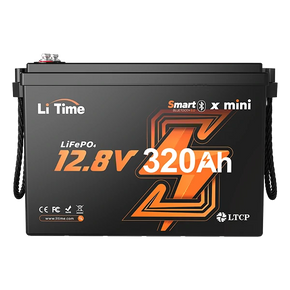
24V LiFePO4 | Argoseeker A1 power system | Longer runtime planning for 24V setups | Fishing, cruising, and reserve power for A1 | View |
 LiTime 48V 60Ah RS485 Marine Battery LiTime 48V 60Ah RS485 Marine Battery
|
48V LiFePO4 | Argoseeker A2 power system | Balanced 48V capacity with RS485 communication | Everyday fishing, cruising, and onboard monitoring | View |
 LiTime 48V 100Ah Marine Battery LiTime 48V 100Ah Marine Battery
|
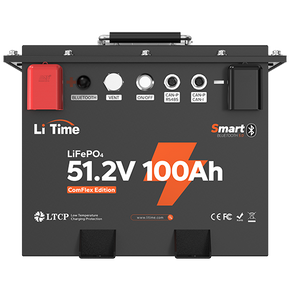
48V LiFePO4 | Longer Argoseeker A2 runtime | Higher-capacity 48V energy reserve | Extended cruising and high-capacity onboard power | View |
When Argoseeker May Not Be the Right Fit
An Argoseeker electric outboard may not be appropriate when the boat lacks a motor-rated transom or approved bracket, exceeds the motor or mount limits, requires planing performance beyond the selected model, or will routinely operate in conditions that demand more reserve power. It is also not a substitute for a safety plan or auxiliary propulsion where regulations or operating conditions require one.
If any rating or fit measurement is unclear, check the exact Argoseeker manual and ask the boat manufacturer or a qualified marine installer before drilling, reinforcing, or modifying the hull.
The Bottom Line
LiTime Argoseeker electric outboards are suitable for many motor-ready kayaks, canoes with proper brackets, inflatable boats with rigid transoms, aluminum boats, dinghies, and small fiberglass boats. Related small craft—including jon boats, skiffs, and tenders—may also be compatible. The best match is a boat whose rated transom, load capacity, battery space, and operating conditions align with the selected A1 or A2 system.
Before buying, compare your boat's specifications with the current LiTime Argoseeker Series Electric Outboard Motors and the exact product manual.


FAQs
Can I put a LiTime Argoseeker electric outboard on a kayak?
Yes, if the kayak is designed for a motor and has a reinforced transom or a manufacturer-approved motor mount. Confirm the kayak's motor, total-load, and weight-distribution limits before installation.
Can Argoseeker be used on an inflatable boat?
Yes, on an inflatable boat with a rigid, motor-rated transom that is compatible with the clamp-on mount. Never attach the motor directly to an inflatable tube or an improvised support.
Will an Argoseeker fit a jon boat?
Many small jon boats are potential matches because they have accessible transoms. Final compatibility depends on the transom condition and dimensions, the boat's ratings, loaded weight, water conditions, and the selected motor model.
Can Argoseeker be mounted on a canoe?
It can be used on a canoe with a secure, canoe-specific motor mount and sufficient capacity for the motor, battery, passengers, and gear. Because an offset mount changes balance, careful weight distribution is essential.
Is the Argoseeker A1 or A2 better for my boat?
The A1 is the lower-power 24V option, while the A2 is the higher-power 48V option. Choose using the boat manufacturer's limits, total loaded displacement, desired performance, and operating conditions—not boat length alone.

