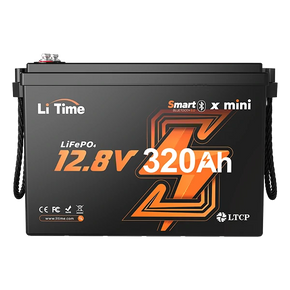


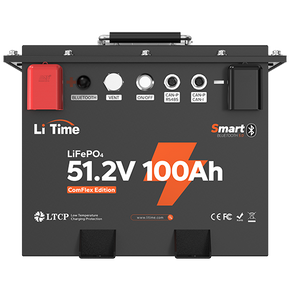

For long-haul truck drivers, having reliable power during rest periods is essential for maintaining comfort, productivity, and efficiency on the road. Traditional solutions like engine idling or fuel-powered auxiliary power units (APUs) can increase fuel costs, create unnecessary noise, and contribute to emissions. As more truck owners look for smarter and more sustainable solutions, DIY APUs powered by semi lithium truck batteries are becoming an increasingly popular alternative.
In this guide, we will explore what a truck auxiliary power unit is, whether a DIY APU powered by lithium batteries is worth investing in, how to choose the best semi truck lithium battery, and recommend some reliable LiTime lithium battery solutions for different truck power needs.
What is a Truck Auxiliary Power Unit (APU)?
A Truck Auxiliary Power Unit (APU) is an independent power system installed on a semi-truck to provide electricity and climate control functions when the main engine is turned off.
Traditionally, many long-haul truck drivers rely on engine idling to maintain a comfortable cabin temperature and power onboard appliances. However, continuous idling consumes additional fuel, increases operating costs, creates unnecessary engine wear, and produces noise and emissions. An APU provides a more efficient alternative by supplying power separately from the truck’s main engine.

A conventional APU typically consists of a small internal combustion engine, generator, and air conditioning system. The auxiliary engine generates electricity to support onboard equipment while reducing fuel consumption compared with traditional engine idling.
Is a DIY APU by Semi Lithium Truck Batteries Worth It?
With the development of battery technology, electric Auxiliary Power Units (eAPUs) have become an increasingly popular solution. Unlike fuel-powered APUs, eAPUs use high-capacity battery systems—such as lithium batteries—to store and deliver energy for truck appliances. A complete eAPU system usually includes a lithium battery pack, inverter, DC-DC charger, solar panel with MPPT controller, and AC-DC charger, creating a cleaner, quieter, and more efficient power solution.

While commercial eAPU systems provide an integrated solution with pre-matched components and easier installation, they are often more expensive and offer limited flexibility in terms of battery capacity, system configuration, and future upgrades. As a result, more truck owners are turning to DIY APU solutions.
A DIY APU is compared with ready-made eAPU systems, a DIY setup provides greater freedom to choose battery capacity, expand energy storage, and optimize the system for different applications, such as running air conditioners, refrigerators, and other onboard electronics during long rest periods.
How to Choose the Best Lithium Battery for Semi Truck?
Choosing the right lithium battery for a semi-truck DIY APU requires more than simply selecting the largest capacity available. The ideal battery should match your truck’s power requirements, available installation space, charging system, and driving conditions. When selecting a semi-truck lithium battery, consider the following key factors:
Battery Capacity
Measured in Ampere-hours (Ah), battery capacity determines how long your APU can run off-grid.
| Device | Voltage | Power Consumption | Typical Usage | Load Type |
|---|---|---|---|---|
| Microwave Oven | AC 120V | 700-900W (700W typical, up to 1100W peak) | Short-term use | High-power intermittent load |
| Refrigerator | 12V DC | 45-100W (60W typical) | Continuous operation | Long-term load |
| Truck Cabin Air Conditioner | 12V DC | 720-960W (800W typical) | Long-term operation | Main energy consumption |
| Diesel Heater / Cabin Heater | Fuel powered | Mainly diesel consumption | Cold-weather heating | Low electrical load |
| Coffee Maker | AC 120V | 600-1000W | Short-term use | High-power intermittent load |
| TV | AC 120V | 20-70W (40W typical) | Optional load | Low-power intermittent load |
| Electronics (Laptop, Phone, Devices) | AC/DC | <300W | Daily use | Medium load |
| LED Lighting & Ventilation Fan | DC | <50W | Daily use | Low-power load |
Based on approximately 13 hours of daily usage, a long-haul semi truck typically requires around 6.6 kWh of energy per day, and considering inverter efficiency, battery conversion losses, and reserve capacity, a battery system of approximately 7.3 kWh usable energy capacity is recommended to ensure reliable power for extended parking and off-grid operation.
Cold Weather Performance
Semi-trucks operate in extreme temperature conditions, from freezing northern winters to scorching summer highways. Opt for lithium batteries with built-in self-heating technology and wide temperature operating ranges. Standard lithium batteries struggle below 32°F (0°C), but self-heating models maintain full capacity in subzero temperatures, ensuring reliable APU operation year-round.
Smart BMS Protection
A built-in Battery Management System (BMS) is non-negotiable for semi-truck lithium batteries. A high-quality BMS safeguards against overcharging, over-discharging, short circuits, overheating, extending battery life and preventing safety hazards during long-haul travel.
Size and Mounting Compatibility
Semi trucks have limited battery compartment space. Before purchasing a battery, verify:
- Battery dimensions
- Weight
- Terminal position
- Compatibility with your existing battery tray
So choose slim, compact, group 31 compatible batteries for easy installation without modification. Lightweight designs also reduce strain on truck chassis and improve weight distribution.
Durability and Waterproof Rating
Road vibrations, dust, and occasional moisture exposure demand rugged battery construction. Look for IP65 waterproof ratings, shock-resistant casing, and vibration-proof design to withstand harsh commercial truck operating environments.
Reliable brand
As the top pick for semi-truck DIY APU builds, LiTime delivers premium quality and industry-leading after-sales assurance, backed by a formal 5-year warranty for full peace of mind. Equipped with core innovative technologies including self-heating, Bluetooth monitoring, and smart BMS protection.
Best Lithium Semi Truck Battery for DIY APU Recommended
These LiTime truck batteries are industry-trusted, purpose-built for semi-truck use, and ideal for custom APU power systems.
| Feature | LiTime 12V 320Ah Mini Self-Heating Smart Lithium Battery | LiTime 12V 200Ah Xtra Mini Group 31 Lithium Battery | LiTime LiHeat™ 12V 100Ah Ultra Slim Lithium Battery |
|---|---|---|---|
| Voltage | 12.8V | 12.8V | 12.8V |
| Capacity | 320Ah | 200Ah | 100Ah |
| Energy | 4096Wh | 2560Wh | 1280Wh |
| Dimensions | 14.49 × 7.44 × 10.04 in | 13.11 × 6.93 × 9.45 in | 19.69 × 11.02 × 2.44 in (Ultra Slim) |
| Bluetooth Function | ✓ Yes | ✓ Yes | ✓ Yes |
| Self-Heating Function | ✓ Yes | ✕ No (Low-temperature charging protection) | ✓ Yes |
| BMS | 200A Smart BMS | 200A Smart BMS | 100A Smart BMS |
| Protection Rating | IP65 | IP65 | IP65 |
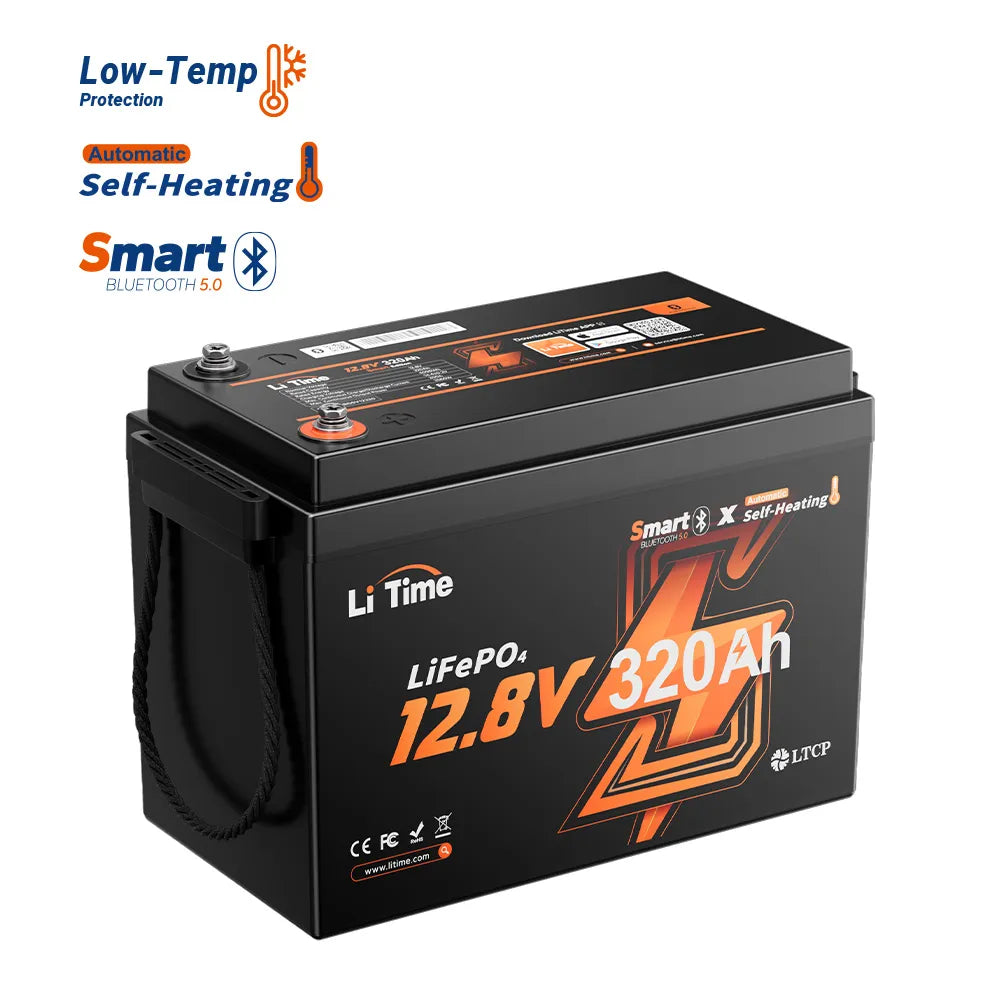
LiTime 12V 320Ah Mini Self Heating Smart Lithium Battery
The LiTime 12V 320Ah Mini Self-Heating Smart Lithium Battery is a high-capacity compact power solution designed for semi-truck DIY APU systems that require extended runtime, reliable cold-weather performance, and efficient energy storage.
LiTime 12V 200Ah Xtra Mini Group 31 Lithium Battery
The LiTime 12V 200Ah Xtra Mini Group 31 Lithium Battery is a compact and efficient battery option for semi-truck owners who need reliable auxiliary power while maintaining easy installation and space efficiency.

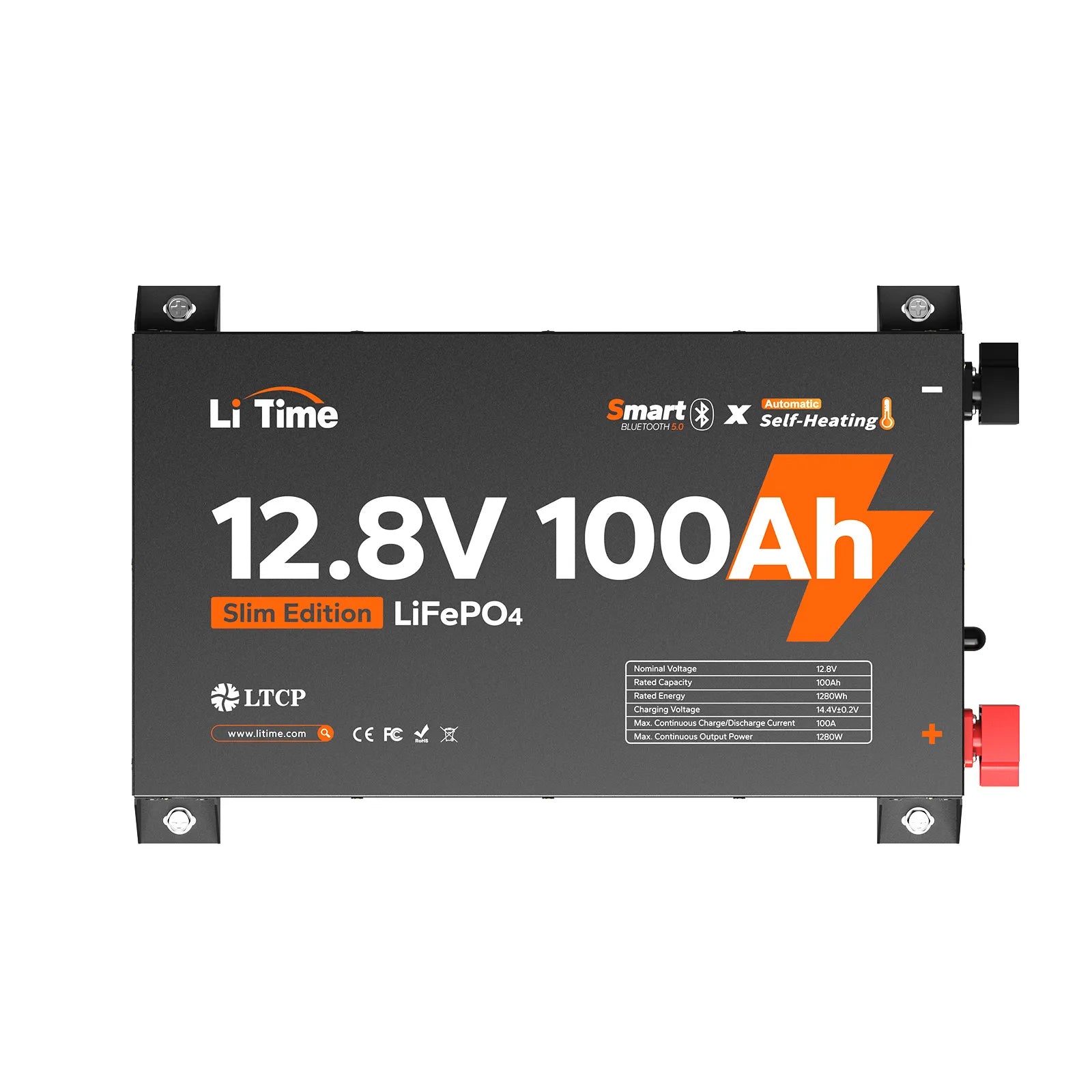
LiTime LiHeat™ 12V 100Ah Ultra Slim Lithium Battery
The LiTime LiHeat™ 12V 100Ah Ultra Slim Lithium Battery is a lightweight and space-efficient power solution designed for semi-truck applications where installation space is limited.
How to Install the Best Truck Battery on a Semi-Truck?
Installing a lithium battery system for a semi-truck DIY APU requires careful planning to ensure safe operation, efficient power delivery, and proper integration with other APU components.
Choose the Proper Battery Installation Location
Semi-truck battery installation locations vary depending on the truck model, and available space. The most common installation locations include:
- Under the Driver Sleeper Compartment
- Behind the Rear Axle / Center Chassis Position
- Truck Side Storage Box (Fuel Tank Side)
Required Components and Battery Installation
A complete lithium battery-powered APU system typically includes the following components:
Lithium Battery Pack:The core energy storage unit of the APU system.
Inverter: Converts DC power stored in the lithium battery into AC power required by household-style appliances.
DC-DC Charger: Connects the truck alternator to the lithium battery system and allows the battery to recharge while driving.
AC-DC Charger: Allows the battery system to recharge from external shore power sources.
The wiring configuration allows the truck to charge the lithium battery while driving and provide stable AC power for onboard appliances during parking:
Alternator → DC-DC Charger → Lithium Battery Pack → Inverter → AC Appliances
FAQS
How to charge semi lithium truck batteries?
Semi lithium truck batteries can be charged through multiple methods, including the truck alternator, solar panels, and shore power. For a DIY APU system, a DC-DC charger is commonly used to connect the alternator to the lithium battery, providing safe and stable charging while driving. Solar panels with an MPPT controller and AC-DC chargers can also be added for additional charging flexibility during long-term parking.
How long a lithium semi-truck battery lasts?
A high-quality LiFePO4 semi-truck battery typically lasts 8-10 years or more, depending on usage conditions and charging habits. Compared with traditional lead-acid batteries, lithium batteries offer a much longer cycle life, deeper discharge capability, and better energy efficiency, making them ideal for frequent APU applications.
Do I need lithium semi-truck battery for cold weather?
A lithium semi-truck battery with self-heating capability is highly recommended for cold-weather operation. Standard lithium batteries may have limited charging performance at low temperatures, while self-heating LiFePO4 batteries can warm the cells automatically before charging, ensuring reliable performance in freezing environments.
Conclusion
Upgrading your semi-truck with a lithium battery DIY APU is one of the most practical, cost-saving improvements for 2026 long-haul driving. Far superior to traditional lead-acid batteries in lifespan, energy efficiency, and all-weather stability, lithium power delivers steady off-engine power to cut idle fuel waste and reduce truck maintenance costs.
For reliable, worry-free DIY APU builds, LiTime stands out as the ideal choice. Backed by a 5-year warranty, exclusive self-heating tech, smart BMS protection, and intuitive Bluetooth monitoring, LiTime’s full lineup—from 320Ah high-capacity to 100Ah ultra-slim models—fits all semi-truck space and power demands.

