

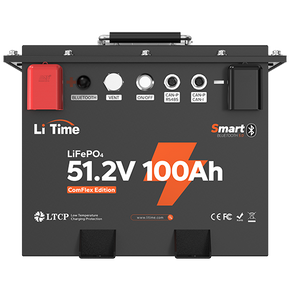

If you are upgrading power systems for RVs, camper vans, small boats, kayaks, or compact off‑grid cabins, you have likely run across the term “small deep cycle battery”. Many buyers get confused: does “small” mean low capacity, or compact physical dimensions? And how do you calculate exactly how many amp‑hours you need for your adventures? This complete buying guide breaks down core definitions, compares major battery chemistries, lists top‑performing compact lithium models, and delivers actionable capacity recommendations tailored to real‑world RV and camping use cases.
Part1: What is Small Deep Cycle Battery?
The adjective “small” for a small deep cycle battery refers to compact physical footprint and reduced overall size, not low amp‑hour capacity. Many modern small‑form‑factor deep‑cycle batteries can deliver 100Ah, 200Ah or even higher capacity while occupying far less space than traditional bulky battery units.
It is critical to draw a clear line between deep‑cycle batteries and starting batteries, since they serve fundamentally different jobs.
Deep‑cycle batteries: Built for repeated, sustained deep discharge cycles. They are designed to deliver steady power over hours for lights, refrigerators, trolling motors, and off‑grid appliances. You can safely discharge most lithium deep‑cycle units down to 100% depth of discharge (DOD) without severe damage.
Starting (cranking) batteries: Optimized to produce huge short‑burst current for engine ignition. They are not meant for long‑duration discharge. Draining a starting battery deeply will quickly ruin its internal plates and shorten its lifespan drastically.
Small deep‑cycle batteries fill a key market gap: they deliver genuine deep‑cycle storage performance, but fit inside narrow battery bays, under vehicle seats, in kayak storage compartments, and other tight installation spots where standard‑size batteries simply cannot physically fit.
Part2: Small Deep Cycle Battery Types: Lithium VS Lead‑acid
Two primary chemistries dominate the small deep‑cycle battery category: lead‑acid (including flooded, AGM) and lithium iron phosphate (LiFePO4). While compact AGM lead‑acid batteries are widely available at lower upfront prices, LiFePO4 lithium technology offers overwhelming advantages for space‑constrained mobile applications.
Small Lead‑acid Deep‑cycle (AGM / Flooded) Compact lead‑acid deep‑cycle batteries are widely stocked aftermarket options. They require only basic charging hardware and carry low initial purchase cost. However, they suffer from major drawbacks: heavy weight, large physical size for a given usable capacity, limited safe depth of discharge (most AGM units should only be discharged to 50% DOD), short cycle life, and self‑discharge over weeks of storage. For mobile, space‑limited setups, they waste valuable cargo space and add significant vehicle weight.
Small LiFePO4 Lithium Deep‑cycle Compact LiFePO4 deep‑cycle batteries are the modern upgraded solution for RV, marine and off‑grid use. Built‑in smart Battery Management Systems (BMS) handle cell balancing, over‑charge, over‑discharge, and temperature protection. Lithium batteries support near‑complete discharge, feature thousands of charge‑discharge cycles, and cut down both size and weight dramatically. Even high‑capacity variants maintain a relatively small housing footprint. Though upfront cost is higher, their long service life greatly reduces total‑cost‑of‑ownership over time. For most modern outdoor power builds, small LiFePO4 deep‑cycle batteries represent the smarter long‑term investment.
| Comparison Item | Small Lead‑acid (AGM) Deep‑cycle | Small LiFePO4 Lithium Deep‑cycle |
| Safe Usable DOD | 40‑50% | Up to 100% |
| Typical Cycle Life | 300‑500 cycles @50% DOD | 4000‑15000 cycles (varies by DOD) |
| Weight (same Ah rating) | Heavy | 50‑70% lighter |
| Physical Size | Bulky | Highly compact, high energy‑density |
| Self‑discharge Rate | 3‑5% per month | <2% per month |
| Maintenance | Minimal for AGM; flooded needs watering | Zero regular maintenance |
| Cold‑weather performance | Poor | Configurable low‑temp protection / self‑heating options |
| Upfront Price | Low | Higher initial investment |
| Total Cost of Ownership | High (short service life) | Low (multi‑year lifespan) |
Given the clear performance gap, we strongly recommend selecting small LiFePO4 deep‑cycle batteries for your compact mobile power projects whenever your budget permits.
Part3: Do You Need Small Deep Cycle Battery
You need a small deep‑cycle battery if your available installation space is limited, yet you require reliable stored energy for non‑cranking loads. Many RV, van, boat and DIY enthusiasts mistakenly purchase standard‑size batteries only to discover their factory battery compartment cannot physically accommodate them. This is where small deep‑cycle batteries deliver irreplaceable value.
A small deep‑cycle battery is the correct power solution for these typical real‑world scenarios:
- Compact RV & camper vans: Teardrop trailers, pop‑up campers, Class‑B camper vans with narrow factory battery bays or under‑seat mounting locations.
- Marine & kayak fishing: Small fishing boats, kayaks and pontoons running trolling motors, fish finders and onboard lighting.
- Off‑grid tiny builds: Tiny cabins, backyard shelters, and small solar backup setups with constrained enclosure room.
- Special‑purpose equipment: Mobility scooters, floor scrubbers, portable workstations that require durable deep‑cycle power within tight housing limits.
- Secondary backup power: Auxiliary battery banks added to existing vehicle electrical systems without major structural modification.
If you have plenty of open storage space and weight is not a concern, standard‑size batteries can work fine. But for most mobile outdoor builds today, space is at a premium, and a small‑form‑factor deep‑cycle battery unlocks flexible installation while still delivering substantial stored energy.
Part4: The Best 12V Small Deep Cycle Lithium Batteries
LiTime’s compact 12V LiFePO4 product lineup brings high‑capacity performance to mini housings. Below we break down each model’s dimensions, weight, key functional features and best‑fit use‑cases.
LiTime 12V 100Ah Xtra‑Mini Deep Cycle Battery
Dimensions & Weight: 9.02 × 5.43 × 8.19 inches; weight 19.13 lbs; Group 22NF footprint.
It is 50% smaller and 23% lighter than standard‑size 12V‑100Ah lithium batteries, and roughly 70% lighter than equivalent AGM lead‑acid options.

self‑developed smart BMS with over 20 built‑in safety protections;
Bluetooth 5.0 real‑time monitoring through the LiTime mobile App;
low‑temperature charging cut‑off protection;
IP65 dust‑ and water‑resistant enclosure.
▶ View Product Details
Best use scenarios: Teardrop trailers, compact camper vans, kayak trolling motor systems, small off‑grid solar setups, mobility equipment. Perfect for users who want full 100Ah energy capacity inside an extremely restricted physical battery bay.
LiTime 12V 100Ah Ultra Slim Self Heating Battery
Dimensions & Weight: 19.69 × 11.02 × 2.44 inches; weight 33.5 lbs; ultra‑thin 2.44‑inch thickness profile.
Bluetooth 5.0 app monitoring;
heavy duty metal casing;
IP65 environmental resistance;
full BMS safety suite. ▶ View Product Details
Best use scenarios: Camper vans and RVs with flat under‑floor or behind‑panel hidden mounting positions; overland vehicles operating in cold winter regions; narrow marine compartments. This unit is ideal when height is severely limited, even if length and width have more available room.
LiTime 12V 165Ah Self Heating Lithium Battery
Dimensions & Weight:13 × 6.77 × 8.5 inches; weight 33.49 lbs; standard Group 31 footprint.
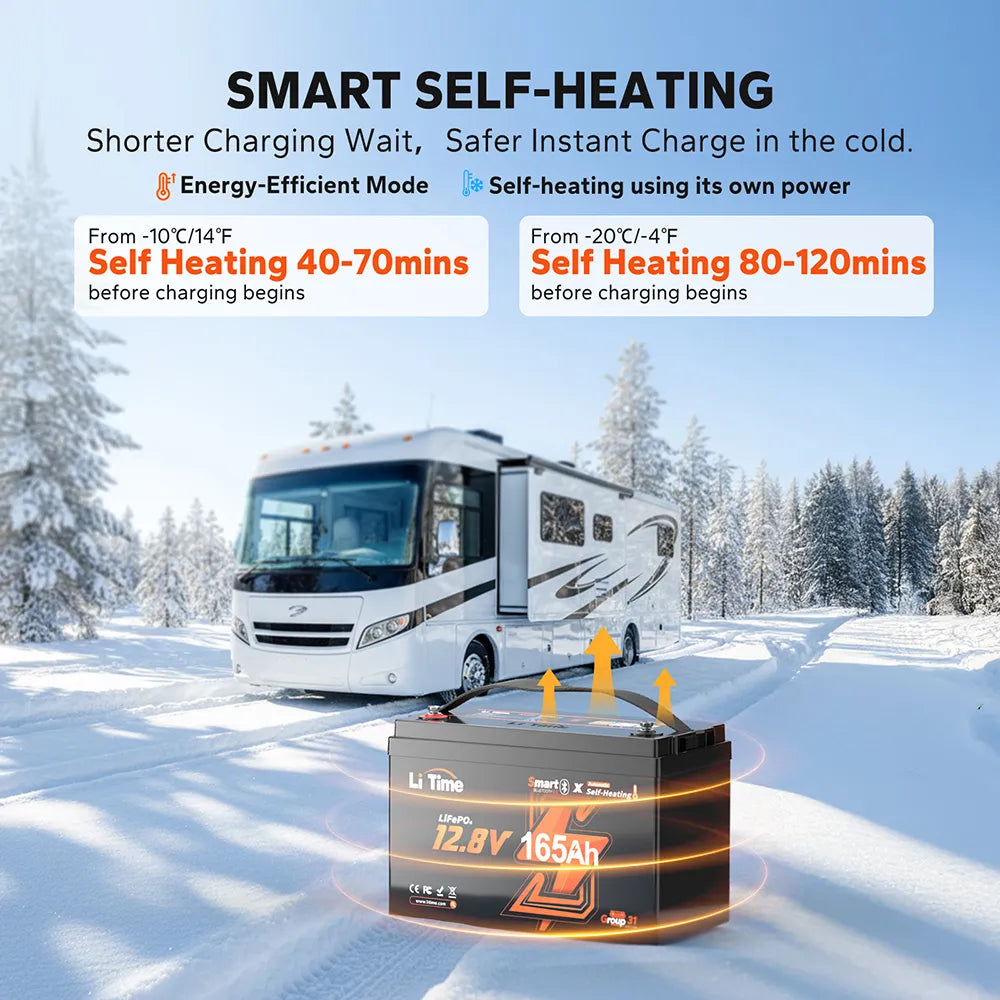
integrated self heating module for safe low temperature charging;
Bluetooth 5.0 smart monitoring;
robust 165A BMS protection system; EV grade cells with long cycle life;
IP65 rating; expandable up to 4S4P system configurations. ▶ View Product Details
Best use scenarios: Mid‑size travel trailers, Class‑B / Class‑C RVs, small‑to‑medium fishing boats, boondocking for multiple days. It strikes an excellent balance: higher 165Ah capacity within the widely‑compatible Group31 small‑standard battery tray footprint.
LiTime 12V 200Ah Xtra Mini Lithium Battery
Dimensions & Weight:13.11 × 6.93 × 9.45 inches; weight 44.5 lbs; compact Group 31 form‑factor, 41% smaller than conventional 12V‑200Ah lithium batteries.

200A built in BMS; Bluetooth 5.0 for remote status checking;
IP65 dust and water resistance;
low temperature protection; supports parallel and series expansion. ▶ View Product Details
Best use scenarios: Mid‑size RVs, travel trailers, medium‑size trolling motor rigs, multi‑day boondocking. It delivers 200Ah capacity without needing to fit two separate 100Ah batteries inside your limited battery compartment space.
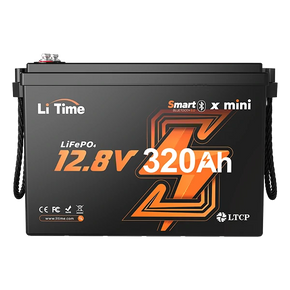
LiTime 12V 320Ah Mini Self Heating Battery
Dimensions & Weight:14.49 ×7.44 ×10.04 inches; weight 57.17 lbs; mini‑sized housing for its large 320Ah capacity rating.
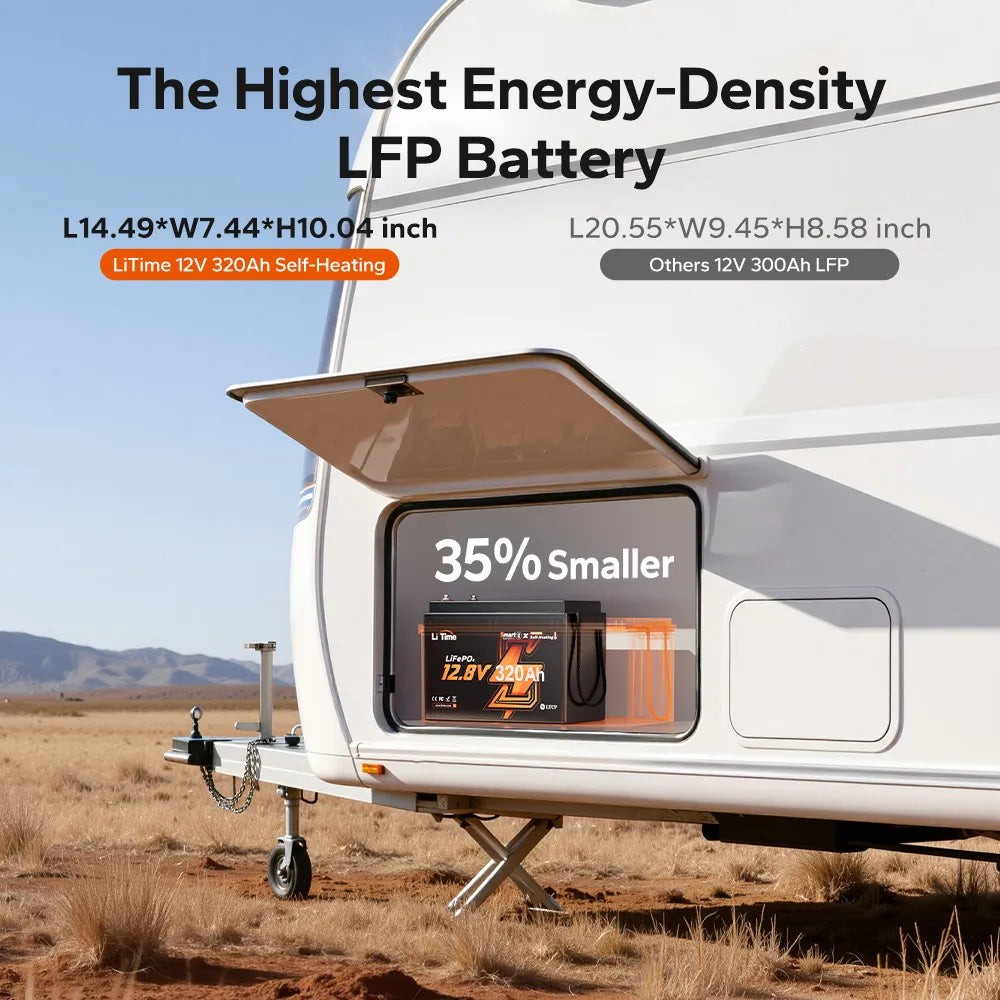
built in self heating for cold weather deployments;
Bluetooth 5.0 real time telemetry;
200A BMS with comprehensive safety protections;
IP65 outdoor grade protection;
4S4P expandable architecture. ▶ View Product Details
Best use scenarios: Larger Class‑C RVs, fifth‑wheel trailers, full‑time boondocking / off‑grid living, high‑demand onboard appliances including rooftop air‑conditioning units. This model provides very high amp‑hour capacity while still remaining far more compact than traditional 320Ah battery designs.
Part5: What Size Small Deep Cycle Batteries do I Need for RV?
Your required battery capacity depends on two major variables: what type of RV you own, and how many days you plan to boondock (camp without shore‑power hook‑ups). Remember that LiFePO4 lithium batteries can safely deliver nearly their full rated Ah capacity, unlike lead‑acid batteries that lose half their usable output at 50% DOD. Below are practical capacity recommendations for small‑form‑factor deep‑cycle lithium batteries for common RV categories and camping durations.
| RV Type | Typical Load Profile | 1‑2 Days Boondocking | 3‑5 Days Boondocking | 5+ Days / Full‑Time Boondocking |
| travel trailer | Lights, phone charging, small fan, minimal electronics | 100Ah Small LiFePO4 | 200Ah Xtra‑Mini LiFePO4 | 2×200Ah Xtra‑Mini bank |
| Class‑B Van / Small Travel Trailer | 12V fridge, lighting, laptop, fan, occasional small inverter use | 100‑165Ah Small LiFePO4 | 200Ah Xtra‑Mini LiFePO4 | 320Ah Mini Self‑Heating LiFePO4 |
| Mid‑size Class‑C / Standard Travel Trailer | Compressor fridge, TV, microwave, moderate inverter draw | 165Ah Self‑Heating LiFePO4 | 200Ah‑320Ah Mini LiFePO4 | 320Ah Mini Self‑Heating or multi‑battery bank |
| Large 5th‑Wheel / Large Class‑A Motorhome | Full‑time living loads: residential‑style fridge, air‑con, washer‑dryer | 200Ah Xtra‑Mini LiFePO4 (minimum) | 320Ah Mini Self‑Heating LiFePO4 | Multiple 320Ah Mini units configured as expanded battery bank |
Practical tip: If you frequently camp in cold winter conditions, prioritize self‑heating small deep‑cycle lithium battery. Cold temperatures reduce raw battery performance, and self‑heating hardware preserves charging capability in freezing environments. Always pair your battery bank with properly sized solar panels or DC‑DC alternator chargers to replenish capacity while camping off‑grid.
Conclusion
Small deep-cycle batteries deliver big power in compact housings — “small” describes size, not capacity. LiFePO4 lithium beats lead-acid with deeper discharge, longer cycles, lighter weight and smaller packaging. Before buying, measure your battery bay and calculate daily power use to match capacity with your boondocking needs. LiTime Mini LiFePO4 batteries spans 100Ah to 320Ah self-heating models, ideal for travel trailer and full-time RV off-grid living alike.

