








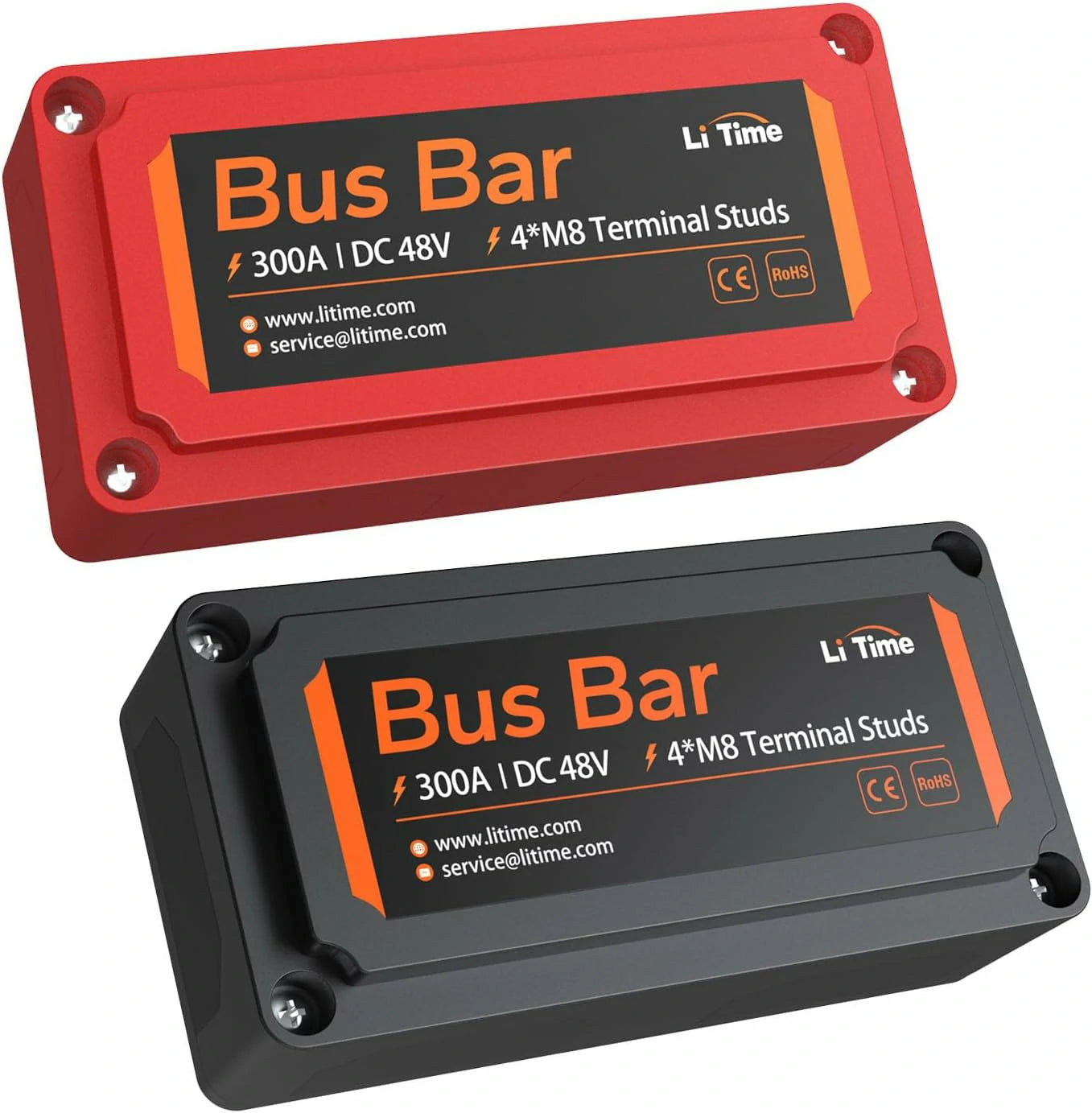


LiTime 300A Battery Bus Bar
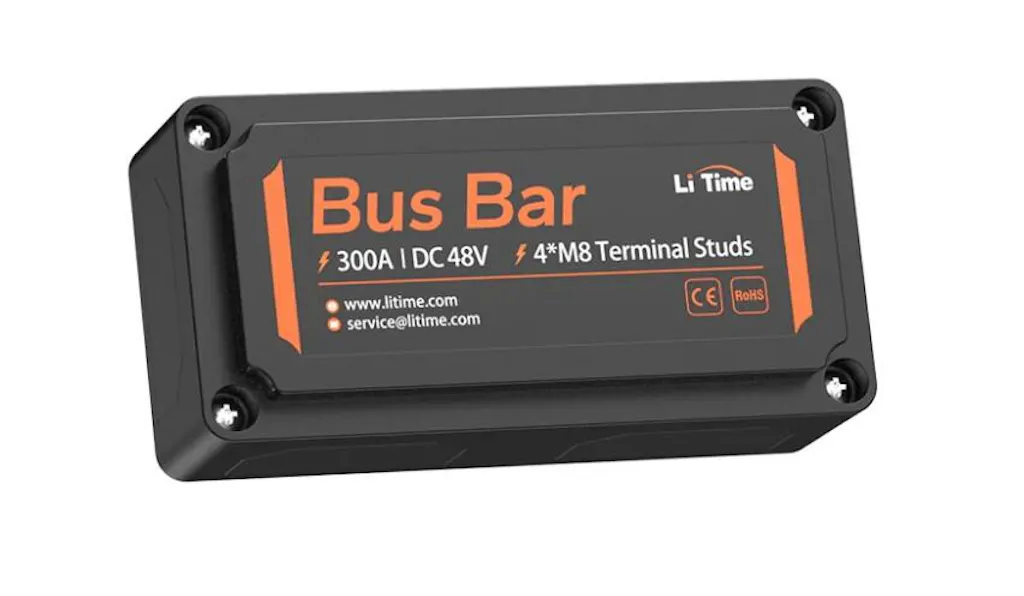
【For High Power Needs】 Designed for high-power equipment and circuits, with a maximum operating voltage of DC 48V and a continuous current of 300A.
【High-quality Build】 Constructed with high-quality copper for stable, long-lasting performance with excellent conductivity and durability.
【Easy to install】 Features a user-friendly screw fixing method for fast and easy installation and disassembly.
【Multi-functional application】Compatible with LiFePO4 batteries on the market, also a versatile solution for automotive, marine, solar panel applications, and more.


FedEx, UPS, or Amazon Logistics.


Father's Day Flash Sale



What does a battery bus bar do?
A bus bar(also written as busbar) is a metallic strip or bar used to conduct electricity within an electrical distribution system. The battery bus bar serves as a central point for connecting batteries and devices in a power system.
What is battery bus bar used for?
A battery bus bar(LiTime 300A bus bar) is used to connect multiple batteries in a bank (for RVs, solar, marine) into a single, clean output, replacing a messy web of individual cables and ensuring reliable, high-current connections.
What considerations should be made when selecting bus bars for a specific application?
When selecting bus bars, factors such as the required current-carrying capacity, voltage rating, environmental conditions, and space constraints should be taken into account.
LiTime Bus Bar is constructed with high-quality copper for stable, long-lasting performance with excellent conductivity and durability.
How do I know if my battery terminal bus bar is bad?
If the LiFePO4 battery bus bar gets unusually hot, looks burnt or corroded, has loose connections, or causes voltage drop and intermittent power, it may be damaged and should be checked or replaced.
Can I use cable instead of battery bus bar?
Yes, but only for simple systems with very few connection points. However, in systems with multiple batteries connected in parallel, a bus bar helps ensure more balanced current across each battery, provides more reliable connections, and creates a cleaner layout, so a bus bar is usually the better choice.
How to connect bus bar for lithium battery?
The battery positive terminal goes to the positive bus bar, and the negative terminal goes to the negative bus bar. Then connect inverters, chargers, fuse, circuit breaker, or other loads to the appropriate bus bar, using properly sized cables and fuses.
I used the LiTime 300A bus bar for a recent wiring project in my camping trailer, and it worked out perfectly. The build quality feels solid, and the heavy-duty studs handle thick gauge wire securely without any flexing. I also appreciate the included cover—it snaps on well and keeps the whole setup looking clean while adding a necessary layer of safety.
Great Busbar! Have twice bought these for my golf cart when switching to 48v lithium. Easy to remove cover and all you’re connections tucked away.
Just put in 2 new 300 Li Time bus bars in my Ice Fishing Wheel House for my 4-bank LiTime Lithium Battery Setup. They look good and work great ! They are very heavy-duty!
Just replaced my old bus bars with my new Li Time bus bars, and what a difference they made. It cleaned up my setup, and it works much better!
Being pleased with this brands quality, there is no reason to mix match components, IMAO each component complements each other
Appears to be very well built.
Awesome build quality
It has plenty of room for all of your terminations, I have run a lot of amps through it winching off of a second battery while simultaneously running an electric AC compressor, amp, multiple lights and whatever else is on my 12v system without compromising the bus bar and I do it quite often. It has not even discolored or loosened up from the heat of the current going through it. I like it so much I bought a spare and I have been running it for a year now with dual primary batteries.
Official Website Only
Advantages of Buying from LiTime.com: Benefits, Discounts, And VIP Service


Why LiTime is Your Best Choice

TOP 1 LiFePO4 Brand
As the #1 LiFePO4 battery brand, LiTIme leads the market with the most complete power solutions—covering RVs, home storage, marine, golf carts, off-grid systems, and beyond.
15-Year Expertise
With 15 years of industry experience, LiTime serves over 350,000+ users globally, ensuring quality and trust. LiTime keeps innovating and has your back, always.
24/7 Expert Support
With 24/7 expert support and an average 24-hour response time, we ensure you get the help you need, anytime. Whether it's pre-sales or after-sales, we guarantee 100% support every step of the way.
Expert-Backed Quality
LiTime is certified by top organizations like RVDA, backed by over 70+ patents and recognized for quality. Let authorities and patents prove why LiTime leads the way.
Industry-Leading Tech
With EV-grade cells passing 80+ tests and a self-developed BMS with under 1% margin of error, LiTime batteries ensure 15,000 cycles, 20+ protections, and up to 10 years of reliable performance.
Cutting-Edge Features
LiTime batteries offer a range of advanced features, including Bluetooth, low-temperature protection, self-heating, high-rate discharge, pre-charging, ensuring reliable power and peace of mind in any environment.User-Driven Power Stories
See how LiTime batteries are changing the way real users power their lives.


Power You Can Trust, Backed By Experts
The Power Behind Experts, Adventures, And The World’s Best


