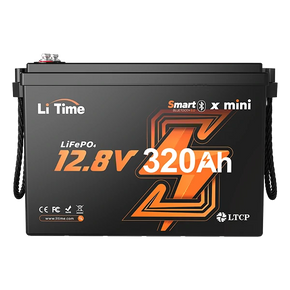


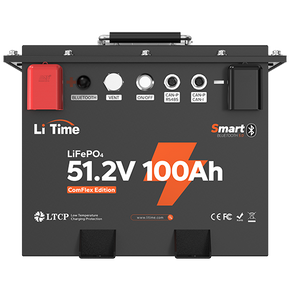

When you start building or upgrading a campervan electrical system, one of the first challenges you will face is how to power everyday household appliances while you are off-grid. Unlike a home, a van’s electrical system is based on stored DC energy from a leisure battery, which cannot directly run most standard AC devices. This is where a campervan inverter becomes essential.
So, how do you choose the right inverters for your campervan?
This guide explains how campervan inverters work, which type is best, how to calculate the right inverter size, how to install one safely, and how battery capacity affects runtime.
Do You Need an Inverter in a Campervan?
You need a campervan inverter if you want to run AC appliances from your leisure battery when your van is not connected to shore power. If all of your equipment operates directly from 12V or USB power, you may not need an inverter at all.
What is an campervan inverter?
A campervan battery normally stores DC (direct current) electricity, which is the standard form of power used in most vehicle electrical systems. Many common van appliances, including LED lights, 12V refrigerators, roof fans, water pumps, and USB charging ports, can operate directly from this DC power without any conversion.
However, most household appliances are designed to run on AC (alternating current) electricity, which is the type of power supplied by home wall sockets. A campervan inverter is an electrical device that converts the 12V DC power stored in the battery into usable 230V AC power, allowing you to run standard home appliances while traveling or living off-grid.
The basic power flow is:
Battery → Inverter → AC Appliance
For example, if you want to use a 230V coffee machine in a campervan with a 12V lithium battery, the inverter converts the battery’s 12V DC output into the AC voltage required by the coffee machine.
Common Campervan Inverter Applications
A campervan inverter can be useful for powering:
- Laptop chargers
- Camera equipment
- Televisions
- Coffee machines
- Microwaves
- Small induction cooktops
- Hair dryers
- Kitchen appliances
- Power tool chargers
- CPAP devices
- Standard wall outlets
The important distinction is that not every campervan appliance needs an inverter. Whenever a device can operate efficiently from 12V or USB power, using DC directly can avoid unnecessary DC-to-AC conversion losses.
Is a Campervan Inverter Worth Installing?
For many campervan users, installing a campervan inverter is worthwhile, especially if you often use mains-powered appliances off-grid or away from hookups. It provides standard AC power on the road, making household devices easy to use and improving overall comfort.
Key benefits include access to AC outlets, the ability to run household appliances, more freedom when boondocking, reduced reliance on shore power, better remote work flexibility, and easier charging of AC-only devices.
However, an inverter also adds cost, wiring complexity, and some energy loss during conversion. In larger systems, it can place a noticeable load on the battery bank, especially with high-power appliances.
What Is the Best Type of Inverter for a Campervan?
For most modern campervan and motorhome applications, a pure sine wave inverter is the best choice because it produces cleaner AC power and is compatible with a wider range of appliances and sensitive electronics. Campervan inverters generally fall into three main categories.
Pure Sine Wave Inverter
A pure sine wave inverter produces AC electricity that closely resembles the power supplied by a normal household electrical grid. It is suitable for most electronics and appliances, including:
- Laptops
- TVs
- Audio equipment
- Medical devices
- Microwaves
- Coffee machines
- Refrigerators
- Variable-speed motors
- Sensitive electronics
Pure sine wave inverters generally cost more than modified sine wave models, but they offer better compatibility and are usually the safest choice when you do not know exactly how every appliance will respond.
For a campervan that will power a variety of AC appliances, a pure sine wave inverter is usually the best option, and reliable brands such as LiTime offer high-quality inverter solutions specifically designed for campervan and motorhome electrical systems.

Modified Sine Wave Inverter
A modified sine wave inverter produces a less smooth and more stepped AC waveform compared to a pure sine wave system. It is capable of running basic resistive loads and simple electronics, but its performance is not ideal for all appliances. In some cases, devices may run less efficiently, generate additional noise, operate at higher temperatures, or even fail to function correctly, which can also lead to a shorter overall service life.
Because of these limitations, modified sine wave inverters are generally only suitable for basic equipment. Their reduced compatibility with modern electronics and appliances makes them a less attractive option for contemporary campervan electrical systems.
Inverter Charger
An inverter charger combines an inverter and a battery charger in one unit. It converts battery DC power into AC for onboard use and charges the batteries when shore power is available.
Many models also include automatic transfer switching. When connected to shore power, it powers the camper and charges the batteries at the same time. When disconnected, it automatically switches back to inverter mode using battery power.This setup is ideal for motorhomes, full-time campervans, and RV systems that frequently switch between shore power and off-grid use.
Campervan Inverter Type Comparison
| Inverter Type | Main Advantage | Main Limitation | Best For |
|---|---|---|---|
| Pure sine wave | Broad appliance compatibility | Higher cost | Most campervans and motorhomes |
| Modified sine wave | Lower purchase price | Limited compatibility | Basic, simple loads |
| Inverter charger | Inverter and charger in one unit | Higher cost and installation complexity | Full-time RV and advanced van systems |
For most users searching for the best inverter for motorhome or campervan use, a pure sine wave inverter is the most practical choice. An inverter charger becomes more attractive when shore-power charging and automatic AC switching are also important.
What Size Inverter Do You Need for a Campervan?
The correct campervan inverter size depends on the maximum wattage of all AC appliances that may operate at the same time, plus any startup or surge power they require.
The basic sizing formula is:
Required Inverter Power = Total Simultaneous Appliance Wattage + Safety Margin
(A 20–25% safety margin is often a practical starting point.)
For example, suppose you expect to run:
- Laptop charger: 100W
- TV: 80W
- Coffee machine: 1,000W
Total simultaneous load:
100W + 80W + 1,000W = 1,180W
Adding a 20% margin:
1,180W × 1.2 = 1,416W
A 1,500W pure sine wave inverter would therefore be a reasonable minimum starting point. However, startup surge must also be considered. Some appliances with motors, compressors, or transformers briefly require more power when starting than their normal running wattage.
Common Campervan Appliance Wattages
| Appliance | Typical Power Range | Suggested Inverter Range |
|---|---|---|
| Phone charger | 10–30W | 300W+ |
| Laptop | 45–150W | 300–500W |
| TV | 50–150W | 300–500W |
| Small blender | 300–600W | 800–1,000W |
| Coffee machine | 800–1,500W | 1,500–2,000W |
| Microwave | 1,000–1,500W+ | 1,500–2,000W+ |
| Hair dryer | 1,200–2,000W | 2,000–3,000W |
| Induction cooktop | 1,200–2,000W+ | 2,000–3,000W |
1,000W Campervan Inverter
A 1,000W power inverter for van applications is suitable for short to medium trips such as weekend getaways or trips up to around one week, where users need basic comfort and light AC usage without relying on high-power appliances.
It can support:
- Laptops, tablets, and multiple device charging
- Small kitchen appliances (low-wattage blenders, milk frothers)
- Small TVs and entertainment systems
- Occasional use of compact AC devices
This size is ideal for light off-grid camping where energy consumption is kept low and efficiency is a priority. However, it is not suitable for high-demand appliances such as kettles, coffee machines, microwaves, or hair dryers, which often exceed 1,000W or require high startup surge power.

2,000W Campervan Inverter
A 2,000W campervan inverter is well suited for extended travel such as multi-week road trips or part-time vanlife, where users want more comfort and the ability to use household-style appliances while staying off-grid.
It can support:
- Coffee machines and espresso makers
- Small microwaves (low to medium power)
- Compact induction cooktops
- Hair dryers (low/eco settings)
- Small kitchen appliances used intermittently
This inverter size is ideal for travelers who spend longer periods away from shore power and want a more flexible cooking and living setup. It enables a semi-home-like experience in a campervan, but requires a stronger battery system due to higher power demand.

3,000W Campervan Inverter
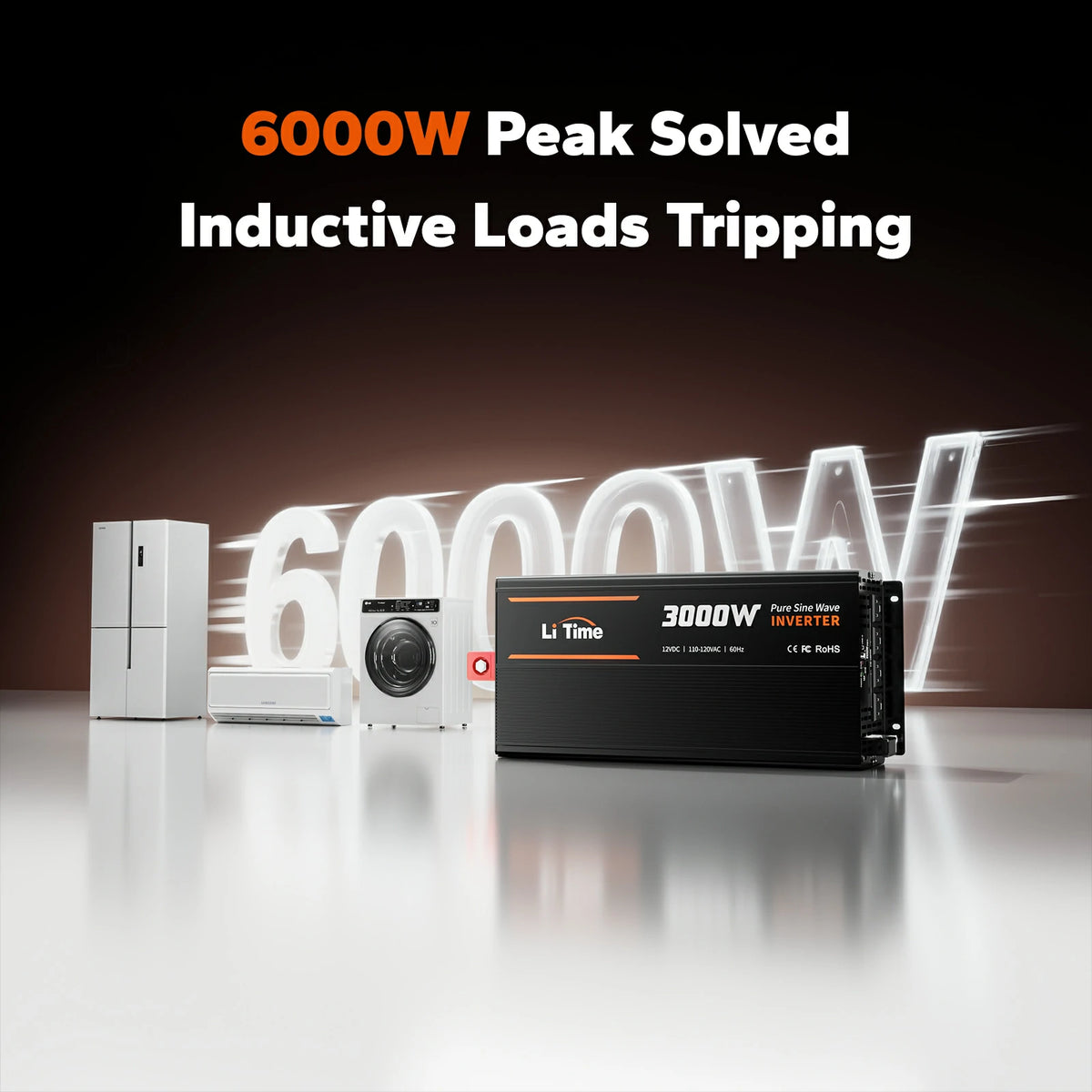
A 3,000W campervan inverter is designed for full-time vanlife, long-term off-grid travel, or large motorhome systems where users require maximum appliance flexibility and near-home-level electrical capability.
It can support:
- High-power coffee machines
- Larger microwaves
- Induction cooktops at higher settings
- Hair dryers and grooming appliances
- Multiple AC appliances running simultaneously
This level of inverter is best suited for users who rely heavily on AC appliances during daily life on the road. It is commonly used in systems with large lithium battery banks and strong charging sources, such as solar arrays and high-output DC-DC or alternator charging.
Because of its high power demand, system design becomes critical, and higher-voltage setups (24V or 48V) are often preferred to reduce current, improve efficiency, and ensure safe long-duration operation.
Do Not Size the Inverter by Battery Capacity Alone
A common mistake is to assume that a large battery automatically supports a large inverter.Battery capacity and battery output capability are different specifications. A battery may store 200Ah, but its BMS may only allow a limited continuous discharge current, which directly restricts how much power the system can safely deliver.
Before choosing an inverter, it is important to consider not only battery voltage and capacity, but also the BMS discharge limit, inverter efficiency, expected maximum appliance load, surge requirements, and whether the cables and fuses are rated to handle the current safely.
The best inverter for motorhome use is therefore not simply the largest available model. It is the one that properly matches your real appliance demand and works within the safe operating limits of your entire battery system.
Read More: How to Choose the Right Inverter for Different Load Types
How to Install a Campervan Inverter?
A campervan inverter should be installed close to the battery bank, securely mounted in a dry and ventilated location, and connected using properly sized cables and overcurrent protection.
A simplified installation layout is:
Battery → Fuse → Battery Disconnect → Inverter → AC Loads
In larger systems, the inverter may connect through busbars:
Battery → Main Fuse → Disconnect Switch → Busbar → Inverter
Step 1: Choose the Installation Location
Install the inverter close to the battery in a dry, well-ventilated area, away from direct heat sources. Keeping cable runs short is important for efficiency and safety, and the unit should always remain accessible for inspection and maintenance.
Avoid sealed compartments where heat can build up, as inverters naturally generate heat, especially under heavy load.
Step 2: Check Battery and Inverter Compatibility
Before installation, make sure the system voltage matches the inverter and that the battery BMS can handle the required current. The inverter’s continuous power rating should suit your expected loads, and its surge capacity must cover short peak demands. Also confirm that your battery bank has enough usable energy capacity.
A 12V battery system must use a 12V inverter, and a 24V inverter must never be connected to a 12V battery bank.
Step 3: Determine Cable Size
Correct cable sizing is critical because the inverter is one of the highest-current devices in a campervan system. Cable requirements depend on inverter wattage, system voltage, cable length, maximum current, and acceptable voltage drop.
For example, a 2,000W inverter on a 12V system may draw around 180A or more under load, requiring much thicker cables than a small 500W setup. Keeping DC cables as short as possible helps reduce voltage loss, especially at high currents. Always follow the manufacturer’s cable recommendations.
Step 4: Install the Main Fuse
The inverter’s positive cable must be protected by a correctly rated fuse placed close to the battery or positive busbar. Common options include ANL, Class T, and MEGA fuses.
Fuse sizing depends on the inverter’s maximum current, cable rating, and manufacturer guidance. Its main purpose is to protect the wiring from overloads and short circuits.
Step 5: Install a Battery Disconnect Switch
A high-current disconnect switch allows you to safely isolate the inverter circuit for maintenance, storage, troubleshooting, or emergency shutdown. It must be rated for both the system voltage and expected current.
Step 6: Connect the DC Side
The basic wiring path is:
Battery Positive → Fuse → Disconnect Switch → Inverter Positive
Battery Negative → Inverter Negative
In systems using busbars, the connection is typically routed through a main fuse and positive/negative busbars before reaching the inverter. If a battery monitor with a shunt is installed, ensure it is wired correctly so all inverter current is measured accurately.
Step 7: Ground the Inverter Correctly
Many inverters include a chassis grounding terminal, but grounding requirements vary depending on system design, vehicle architecture, shore power integration, and local regulations.
Always follow the manufacturer’s instructions carefully. When shore power and inverter charging systems are combined, neutral bonding and grounding can become complex, so professional installation is recommended if you are unsure.
Step 8: Connect AC Loads
The inverter’s AC output may supply a dedicated socket, multiple camper outlets, a small distribution panel, or an automatic transfer switch.
It is critical to ensure the inverter output is never accidentally connected to shore power without proper switching equipment, as two AC sources must never be linked directly.
Step 9: Test the System
Before using high-power appliances, carefully verify the installation. Check polarity, tighten all terminals, confirm fuse ratings, and ensure correct battery voltage. Start the inverter without load, then test a small appliance first.
Gradually increase the load while monitoring battery voltage, current draw, and cable temperature. Any signs of overheating or instability should be addressed immediately.
A high-power inverter system should always be treated as a complete electrical installation rather than a simple plug-and-play device.
Read More: The Ultimate RV Inverter Installation Guide
FAQs
How Long Will a 12V Battery Last With a 3000W Inverter?
A 12V battery typically lasts only about 20–50 minutes under a 3000W load. This is because high power demand drains the battery very quickly, and real-world runtime is further limited by inverter efficiency losses and BMS discharge restrictions, which can reduce usable time even more.
Can I Leave My RV Inverter on All the Time?
Yes, you can, but it is not recommended for long off-grid periods. Even when no appliances are running, the inverter still consumes standby power, which continuously drains the battery and significantly reduces overall available runtime.
How Big of a Battery Do I Need to Run a 2000W Inverter?
You should start with at least a 200Ah 12V lithium battery. A 2000W load draws around 170A or more from the battery, so you need not only enough capacity to support the power output but also sufficient energy storage to maintain reasonable runtime.
How Long Will a 200Ah Battery Last With a 3000W Inverter?
It will typically last around 40–50 minutes. A 200Ah battery is rapidly discharged under a 3000W load, and actual runtime is further reduced by inverter losses, voltage drop, and BMS protection limits.
What Should You Not Plug Into an Inverter?
You should not connect devices that exceed the inverter’s rated power or surge capacity. High-load appliances such as heaters, large induction cooktops, and air conditioners are especially risky, as they may trigger overload protection or potentially damage the system.
Conclusion
A campervan inverter is essential for running AC appliances off-grid, but selecting the right one is about system balance rather than just wattage. In most cases, a pure sine wave inverter is the best option due to its clean output and wide compatibility with household devices. It ensures sensitive electronics such as laptops, cameras, and medical devices operate safely and efficiently, making it the preferred choice for most campervan and motorhome setups.
For a dependable and high-performance solution, LiTime inverter is a great choice. LiTime offers pure sine wave inverters designed for campervans and motorhomes, delivering stable power, strong efficiency, and excellent compatibility with modern off-grid electrical systems.

